Watercolor Tattoos and What to Consider Before Getting One
There is something special about watercolor tattoos that makes them hard to ignore. The colors blend into one another, the edges look like brushstrokes, and the whole design can resemble a painting on the skin. A flower might have pink and purple petals that fade into blue splashes. A butterfly might look as if someone painted its wings with a wet brush. It is a beautiful style, especially if you want a tattoo that feels artistic rather than bold and traditional.
But there is more to choosing watercolor tattoos than finding a pretty design on Pinterest. You also need to think about the artist, the colors, the placement, and how the tattoo may look after several years. Some designs need stronger outlines to remain recognizable. Others need more space than you might expect. And if you choose the wrong artist, the result may not look anything like the picture that convinced you to book an appointment.
So, before you commit to one, here is what you should know about watercolor tattoos, including how to choose a design, what to expect during healing, and how to make a more informed decision.
10 Watercolor Tattoo Ideas to Inspire Your Next Ink
1. Watercolor Flower Tattoos
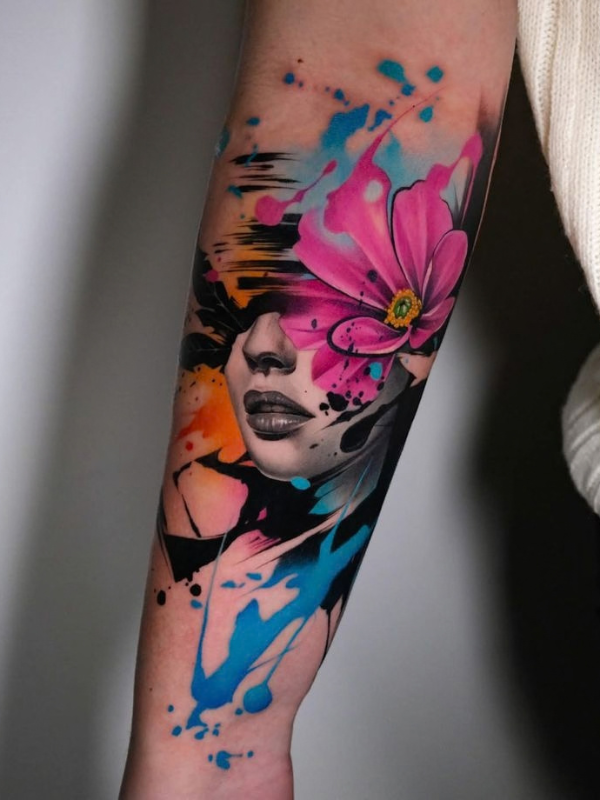
Watercolor flower tattoos are a lovely choice if you want something colorful without making the design feel too heavy. Flowers already have natural shapes, curves, and layers. Adding watercolor effects gives the petals a softer, more artistic appearance.
Roses, peonies, poppies, and wildflowers are all worth considering. A rose can combine pink and red shades, while a peony can feature soft purple petals with deeper color near the center. You can also add green leaves or let a few loose strokes of color extend beyond the flower.
One thing I like about this design is that you do not need several flowers to make it interesting. A single bloom can look beautiful on the forearm, shoulder, or thigh. If you prefer a larger piece, a small arrangement of flowers gives the artist more room to blend colors.
Think about the mood you want before choosing your palette. Soft pinks and purples create a delicate look, while red, orange, and deep blue can make the artwork more striking.
2. Watercolor Butterfly Tattoos
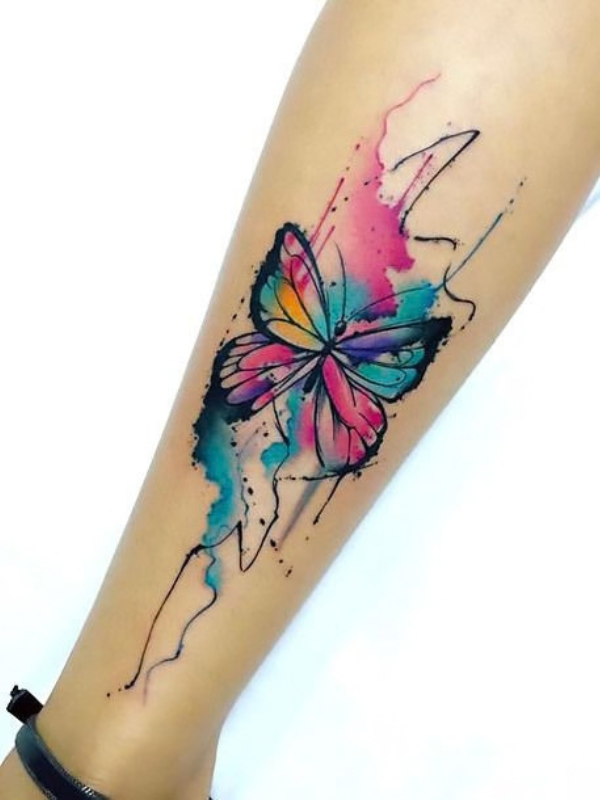
Butterflies and watercolor effects work well together because their wings provide plenty of room for color. You can choose a symmetrical butterfly with blended shades or a more expressive design with splashes extending beyond the wings.
For example, a butterfly with blue and purple wings can look soft and dreamy. Adding small areas of pink or orange creates contrast without overwhelming the design. You could also choose a black outline around the wings and let the colors blend inside them.
Placement makes a difference here. A butterfly on the shoulder or upper arm gives the wings enough room to spread out. A wrist or ankle tattoo can work too, but the design may need fewer details.
Before choosing a reference image, look closely at the wing patterns. Very small shapes and thin lines may become less distinct as the tattoo ages. A simpler design with clear wings can be just as beautiful as one packed with tiny details.
3. Watercolor Bird Tattoos
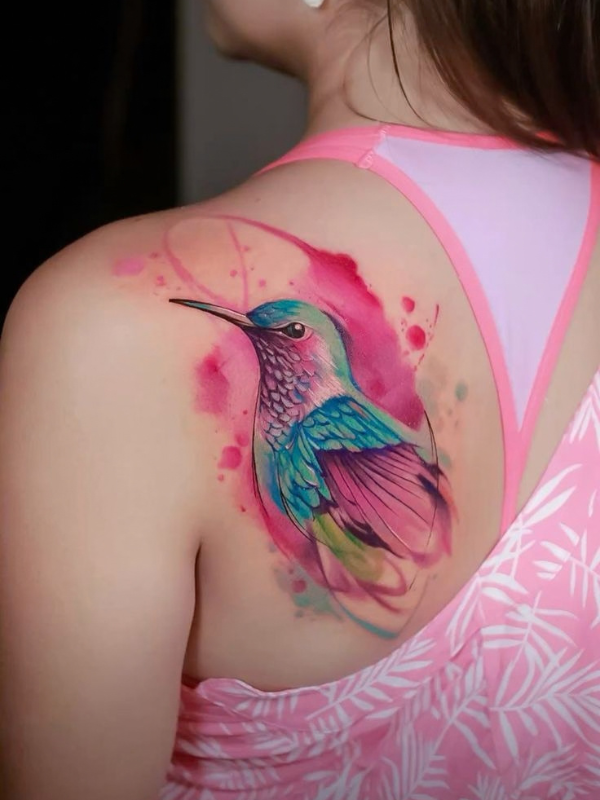
If you prefer something with movement, consider a watercolor bird tattoo. Birds can be designed with flowing colors that extend beyond their feathers, giving the artwork a light and expressive appearance.
Hummingbirds are a popular option because their wings and slender bodies work well with bright shades. You could also choose a swallow, a small songbird, or a bird in flight.
Imagine a hummingbird with turquoise and green feathers, a touch of pink near its wings, and a few loose brushstrokes around its body. The colors create movement without needing a complicated background.
The important thing is to keep the bird recognizable. Watercolor effects can be loose, but the main shape should still be clear. If you want a detailed bird with visible feathers, choose a size that gives the artist enough space to create those details.
The forearm, upper arm, shoulder, and back are all worth considering, depending on the size of the artwork.
4. Abstract Watercolor Splash Tattoos
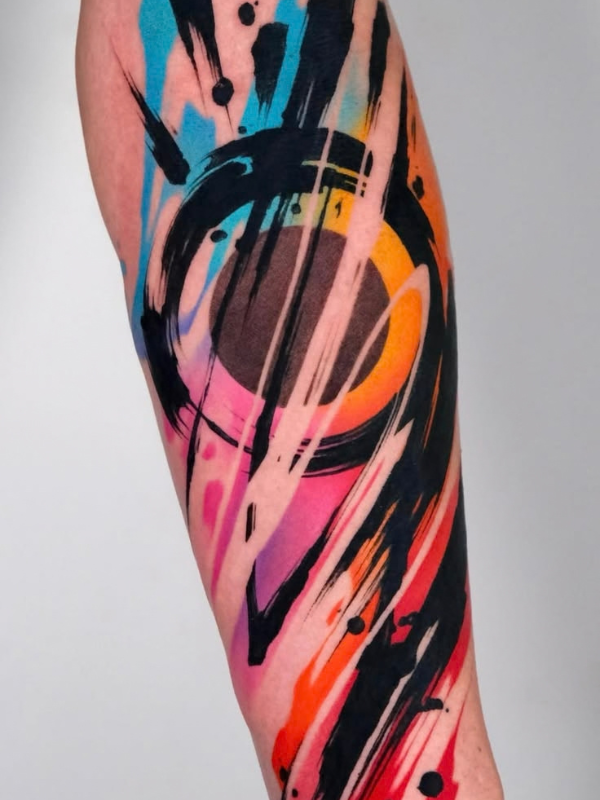
Not every tattoo needs to represent a flower, animal, or other recognizable object. Abstract watercolor tattoos are a good option if you prefer color, movement, and shapes without a clearly defined subject.
These designs can include overlapping colors, irregular shapes, loose brushstrokes, and splashes that seem to spread across the skin. Some use a few shades, while others combine several colors for a more dramatic effect.
One advantage of abstract artwork is that it gives you room to personalize the design. You can choose colors that you enjoy or work with your artist to create a composition that feels meaningful to you.
However, more color does not always mean a better tattoo. If every part of the design competes for attention, the final result can look crowded. Ask your artist to balance the colors and leave enough space between the different elements.
The forearm and upper arm can work well for medium-sized designs. Larger abstract pieces may suit the shoulder or thigh, especially when the color splashes extend beyond the central artwork.
5. Watercolor Landscape Tattoos
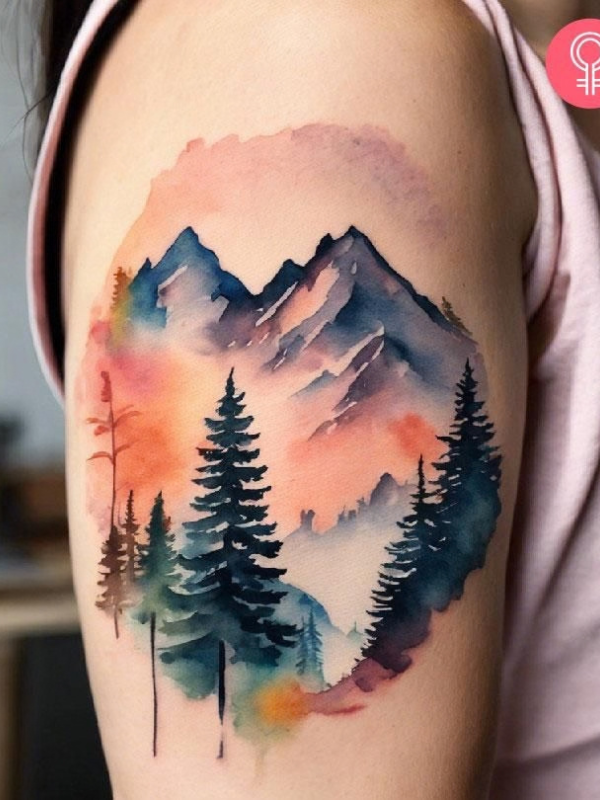
If you love nature, a watercolor landscape tattoo can turn a favorite scene into a small piece of wearable art. Mountains, sunsets, forests, and ocean views all work well with blended shades.
A mountain design might combine blue and green peaks with a soft orange sunset. An ocean scene could blend shades of blue and turquoise, while a forest tattoo might use several greens with touches of brown and gold.
These designs can feel personal, especially if you choose a landscape connected to a place you love or a memorable experience.
The main thing to consider is size. Landscapes often contain several elements, and squeezing them into a tiny space can make the scene difficult to distinguish. If you want visible mountains, trees, or waves, give the artist enough room to create them.
The upper arm, thigh, and back can accommodate larger landscape designs. A smaller version can work too, provided the artist simplifies the scene rather than trying to include every detail.
6. Watercolor Tattoos With Black Outlines
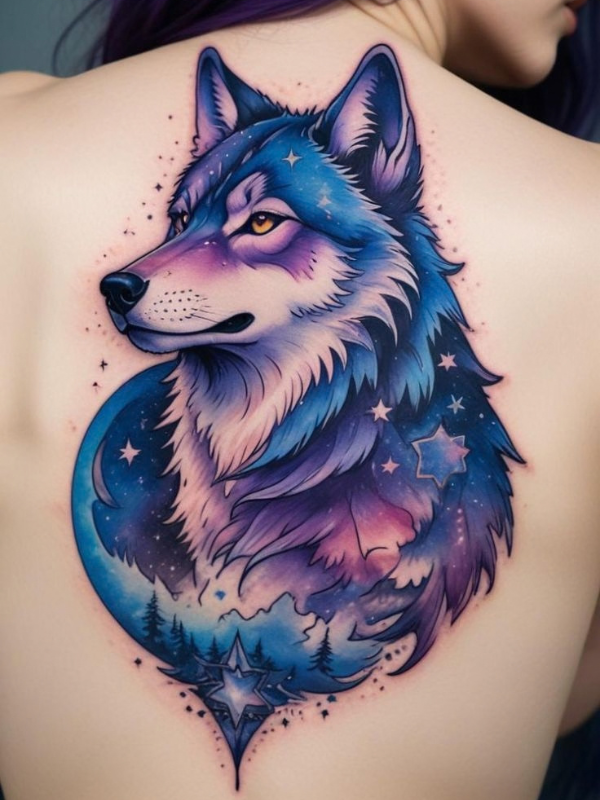
If you love watercolor tattoos but worry that a design without outlines may look unclear over time, consider combining colorful shading with fine black linework.
This style combines two different effects. The black lines help define the main subject, while the watercolor shading adds softness and movement.
For example, a rose can have clear outlines around its petals, with pink and red pigments blending inside them. A butterfly can use fine lines to define its wings while bright colors extend beyond the edges.
This approach works well if you want the artistic look of watercolor without losing the structure of the design.
Still, outlines are not a guarantee that a tattoo will never fade or blur. All tattoos change with time, and the result depends on the artist’s technique, the design, and aftercare.
Before booking, look at examples of both outlined and outline-free watercolor tattoos. You may find that one approach suits your taste much better than the other.
7. Small Watercolor Tattoos for the Wrist or Ankle
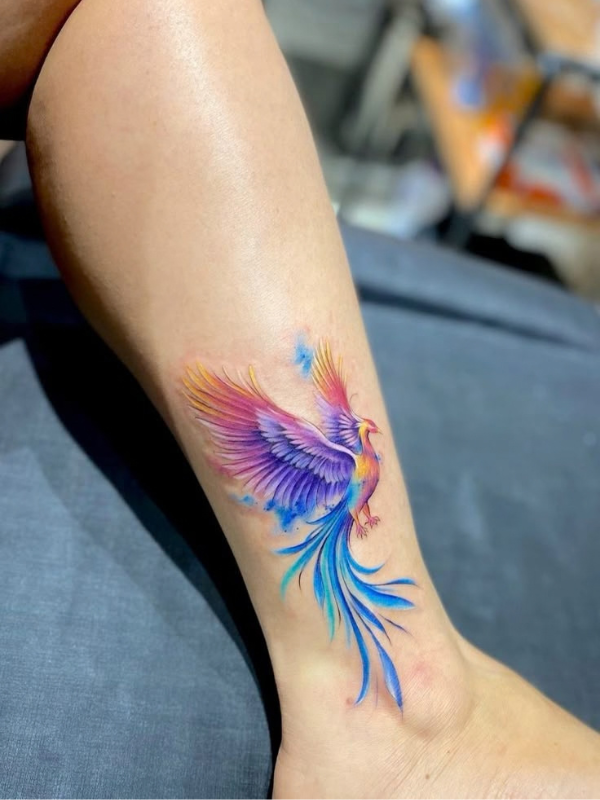
You do not need a large tattoo to enjoy this style. Small watercolor tattoos can look lovely when the design is simple and the colors are carefully chosen.
A small flower, butterfly, bird, or abstract splash can work well on the wrist or ankle. These placements make the tattoo easy to see, and you can choose a design that feels subtle rather than dramatic.
However, small watercolor tattoos need thoughtful planning. A tiny design with too many colors, fine lines, and little details may lose definition as it ages. The artist may need to simplify the artwork or increase its size slightly.
For example, a small flower with three or four visible petals may work better than a highly detailed bouquet squeezed into the same space.
Think about how the tattoo will look from a normal viewing distance, not just when you zoom in on a picture. If the main subject is easy to recognize and the colors have enough contrast, a small design can be a beautiful choice.
8. Large Watercolor Tattoos for the Thigh
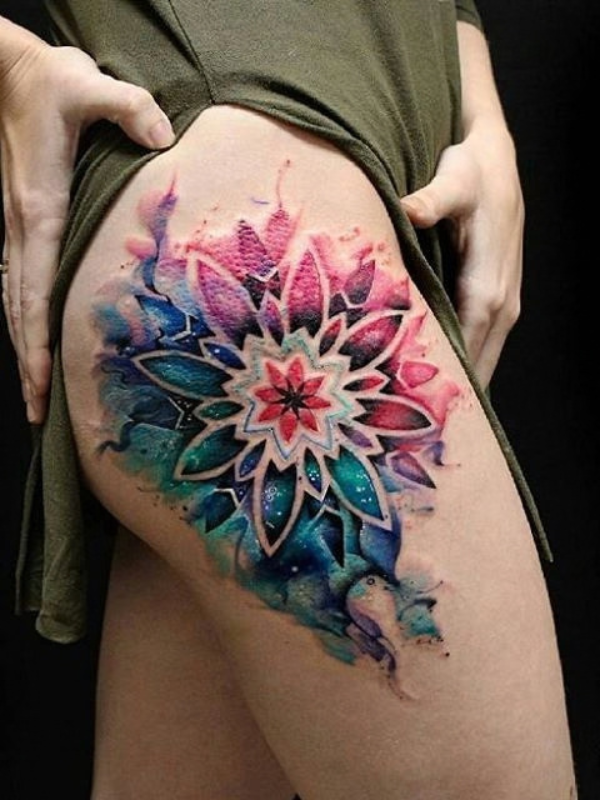
If you prefer artwork with more detail, the thigh offers plenty of room for a larger watercolor tattoo. This placement can accommodate flowers, birds, butterflies, and abstract compositions without forcing every element into a small space.
A large rose with flowing color is one option. You could also choose a group of flowers, a bird surrounded by paint splashes, or a design that combines several shades into one composition.
The extra space gives the artist more freedom to create color transitions and preserve the important details. It can also make the tattoo easier to read as a complete piece of artwork.
Of course, a larger tattoo usually takes more time and may cost more than a small one. You should also consider your comfort during the session and follow your artist’s aftercare instructions carefully.
If you are unsure about committing to a large piece, start with a consultation. An artist can help you understand how much space the design needs and whether it would work better on the thigh or another body area.
9. Watercolor Animal Tattoos
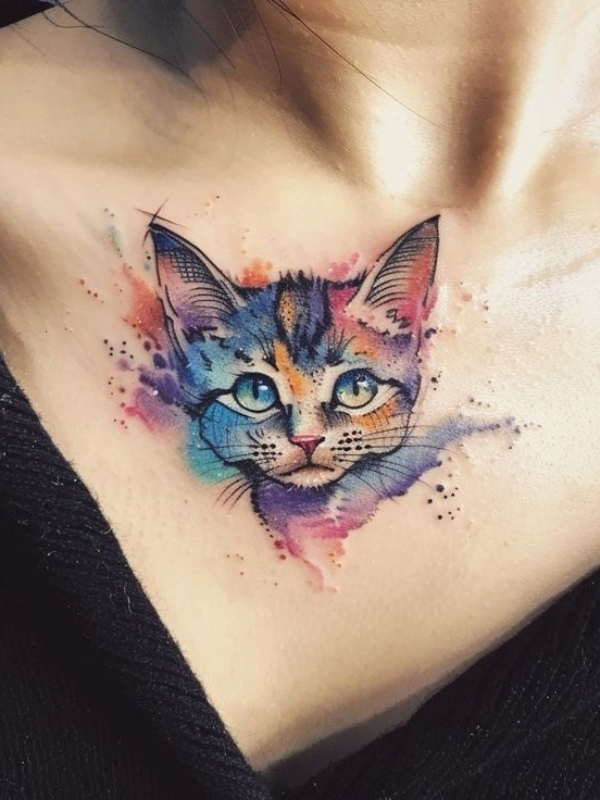
Flowers and butterflies are not your only options. Watercolor effects can also bring animals to life, especially when the design combines a recognizable shape with expressive color.
You could choose a fox with orange and red shading, a koi fish with flowing blue and orange colors, or a cat with soft washes of purple and pink. The right design depends on the animal you like and the style you want.
Some people prefer a realistic animal surrounded by abstract splashes. Others prefer a more artistic interpretation, where the colors become part of the animal’s shape.
Either approach can work, but the main features should remain recognizable. If you choose a fox, for example, its face and ears should not disappear into the surrounding colors.
Think about the amount of detail you want before choosing the size. A detailed animal portrait may need more room than a simple silhouette with watercolor shading.
10. Watercolor Tattoos With Soft Pastel Colors
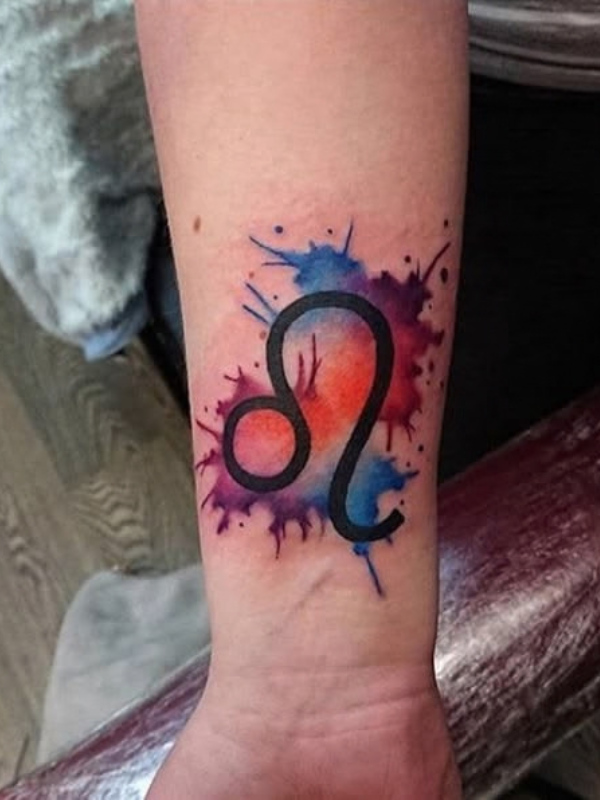
If bright red, orange, and blue feel too bold for your taste, pastel watercolor tattoos offer a softer alternative. They often use pale pink, lavender, mint green, light blue, and other muted shades.
Pastel colors can give flowers, butterflies, and abstract shapes a delicate appearance. They also work well if you prefer a subtle color palette rather than a tattoo with strong contrast.
However, very pale pigments may be less noticeable on some skin tones, and light colors can become harder to distinguish as a tattoo ages. This does not mean you need to avoid pastels. It simply means your artist should plan the colors carefully.
You could combine pale pink with a deeper rose shade or add a few darker accents to help define the main subject. This keeps the design soft without making every part of it equally faint.
If you have a pastel design saved on Pinterest, bring it to your consultation. Ask the artist how they would adapt the palette to your skin and placement rather than assuming the final result will look exactly like the reference photo.
What to Consider Before Getting Watercolor Tattoos
Now that you have some design ideas, it is time to think about the practical side. A beautiful reference image can help you decide what you like, but it cannot tell you everything about how a tattoo will look or heal.
Choose an Artist With Watercolor Experience
Watercolor tattooing requires an understanding of color, shading, composition, and how the design works on skin. An artist who specializes in another style may be talented but may not have the same experience with watercolor effects.
Start by checking the artist’s portfolio. Look for designs similar to the one you want, and ask to see healed examples when available.
Fresh tattoos can look especially bright under studio lighting. Healed photos give you a better idea of how the colors and details look after recovery.
You should also feel comfortable discussing your design with the artist. They should be able to explain which parts may need simplifying, whether outlines would help, and how the tattoo might change with time.
Do not book simply because an artist has a large following. Look for experience, consistent work, good hygiene practices, and clear communication.
Think About How the Tattoo Will Age
Watercolor tattoos can change over time, just like other tattoo styles. Ink can spread slightly beneath the skin, colors can fade, and fine details may become less distinct.
This matters because watercolor designs often depend on soft transitions and light shades.
To make a more informed choice, look for a design with enough contrast between its main elements. Avoid squeezing too many tiny details into a small space, and ask your artist whether darker accents would help.
Sun exposure can also contribute to fading. Once your tattoo has fully healed, protect exposed skin with broad-spectrum sunscreen of SPF 30 or higher.
Remember that no design or aftercare routine can keep a tattoo looking exactly as it did on the first day. The goal is to choose a design that can still look good as it naturally changes.
Choose Colors That Suit Your Skin Tone
Your favorite colors are a good starting point, but the final palette should also suit the design and your skin.
The same pigment can look different on different people. Lighting and photo editing can also make an inspiration image look different from a real tattoo.
Ask your artist which colors would create enough contrast and whether any shades should be adjusted. You do not need to avoid light colors or follow a strict set of rules based on skin tone.
Instead, focus on making the main subject clear and choosing a palette that works well with the artwork.
Find the Right Placement and Size
Placement affects the space available for the design, how visible it is, and how much sunlight it receives.
The wrist and ankle may suit small, simple designs. The forearm and upper arm can accommodate medium-sized artwork, while the thigh and back offer more room for larger compositions.
Think about your daily activities, too. Consider how often the area will be exposed to sunlight or experience friction, and follow your artist’s instructions about protecting the tattoo while it heals.
Size matters just as much. If you want a detailed flower, landscape, or animal, ask whether the design needs more space. Sometimes simplifying a design creates a better result than trying to preserve every detail.
Understand the Cost and Healing Process
The price of a watercolor tattoo depends on its size, complexity, the artist’s experience, and the time required to complete it.
Ask for an estimate before booking and find out whether any future touch-up would involve an additional charge. Do not choose an artist based on price alone, especially when the tattoo will be on your body permanently.
After your appointment, follow the artist’s aftercare instructions. Keep the area clean, avoid picking at peeling skin, and do not soak the tattoo while it heals.
Some redness, tenderness, and peeling can occur during normal healing. However, worsening pain, spreading redness, pus, or fever can indicate a problem that needs medical attention.
Give the tattoo time to heal before judging its final appearance. If you have concerns about the colors or lines after healing, discuss them with your artist.
Common Mistakes to Avoid When Choosing a Watercolor Tattoo
A little planning can save you from disappointment later.
- Choosing a design only because it is trending. Make sure you genuinely like the artwork rather than choosing it simply because you have seen it everywhere.
- Ignoring healed tattoo photos. Fresh work does not show how a tattoo will look after recovery or several years of wear.
- Making a detailed design too small. Give the artist enough room to preserve the important features.
- Choosing colors without considering contrast. A beautiful palette still needs to make the design easy to distinguish.
- Rushing into an appointment. Take time to compare artists, discuss placement, and understand the cost.
- Neglecting aftercare. Follow your artist’s instructions and protect healed tattooed skin from excessive sun exposure.
The idea is not to make the process complicated. It is to give yourself enough information to make a decision you feel good about.
Summary
Watercolor tattoos offer plenty of room for personal expression. You can choose a delicate flower, a colorful butterfly, a bird in flight, an abstract design, or a detailed landscape. You can also decide whether you prefer bright colors, soft pastels, fine black outlines, or a larger composition with flowing shades.
Start with the designs that catch your eye, but do not stop there. Consider the size, placement, color contrast, and the artist’s experience before booking.
Most importantly, remember that the best tattoo is not necessarily the one that looks most impressive in a Pinterest photo. It is the one that suits your taste, works well on your skin, and meets your expectations for the years ahead.
Take your time, ask questions, and work with an artist who understands the style. A little planning can make the experience much more rewarding.
This Post Showed You Watercolor Tattoos and What to Consider Before Getting One
You may also like:
15 Hip Tattoo Ideas for a Stylish Look
15 Thigh Tattoo Ideas You’ll Love
2 Comments