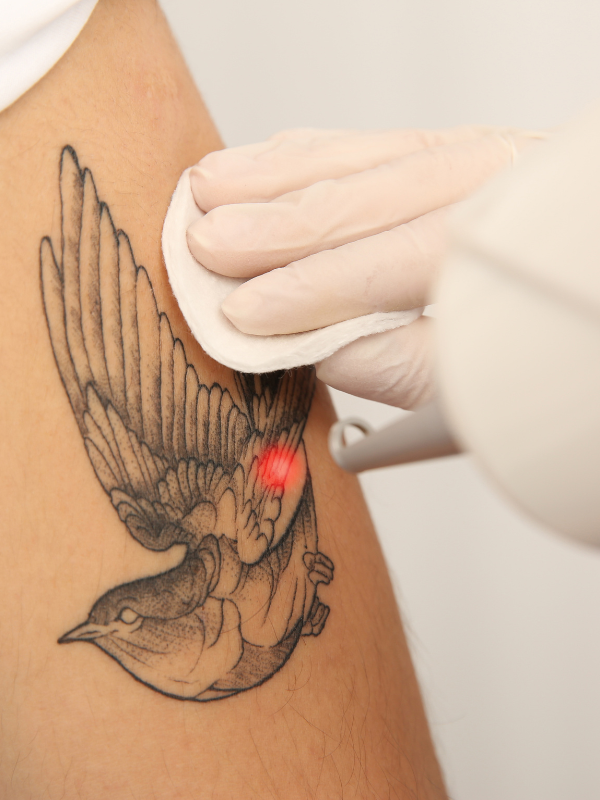
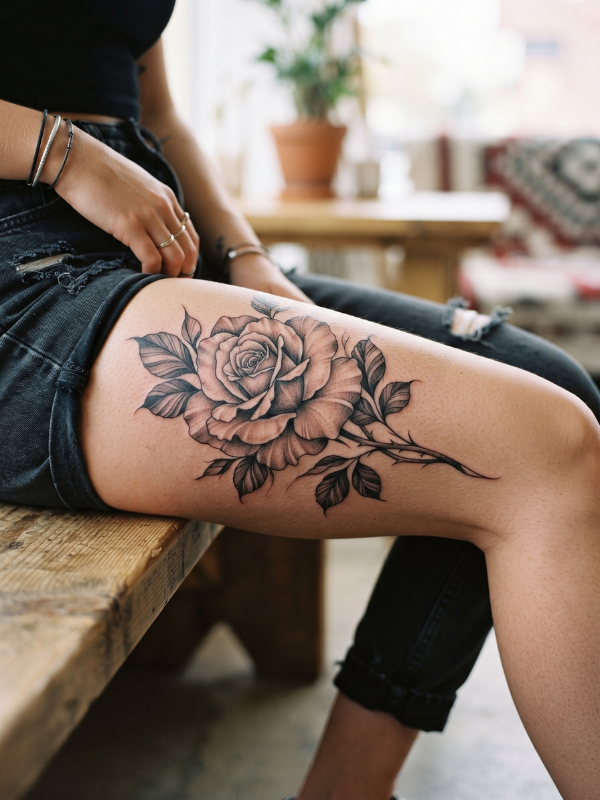
A good tattoo starts with the correct tools for drawing. The right tattoo drawing tools can help you create clean lines, better details, smooth shading, and balanced designs. You do not need a huge collection of expensive supplies to get started. In fact, a few basic tools can help you create beautiful tattoo designs while you improve your skills.
Even if you are a beginner or already practicing tattoo art, knowing which tools to use can make drawing much easier. So, let’s look at the essential tools you need to draw tattoo designs.
1. Pencils
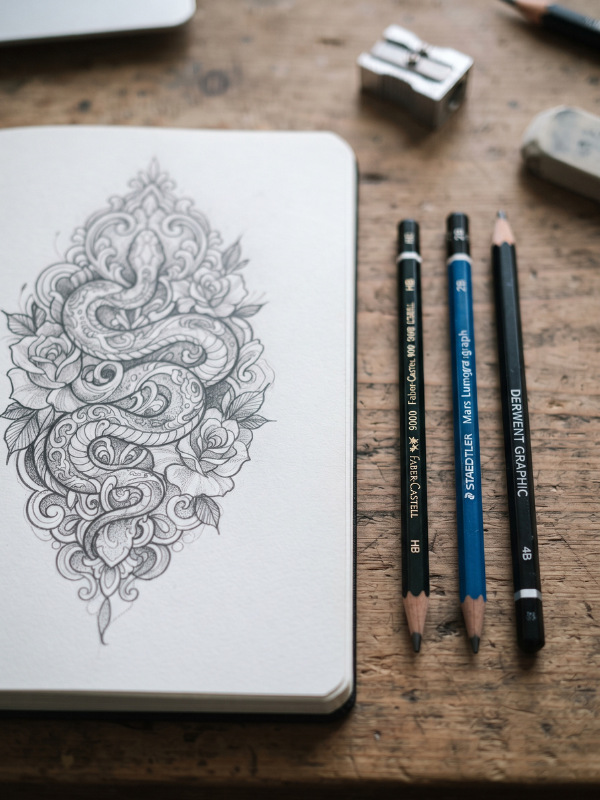
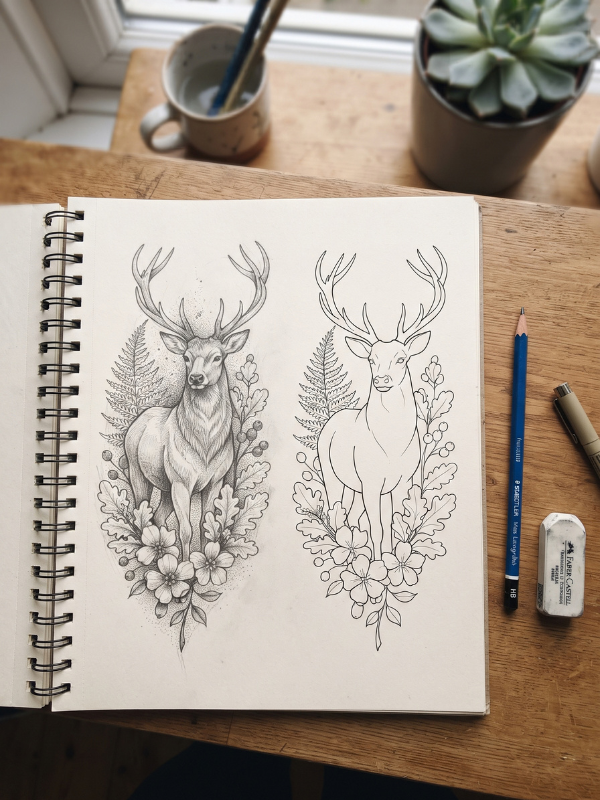
Pencils are one of the most important tattoo drawing tools you will need. Most tattoo designs start as simple pencil sketches before they are refined.
Different pencil grades can give you different results. An HB pencil is great for light sketches and basic outlines. Meanwhile, 2B or 4B pencils can help you create darker lines and shading.
Mechanical pencils are also useful. They have a fine tip that can help you work on small details.
You do not need every pencil grade when you are starting. A few good pencils are enough to practice with.
2. Fine-Line Pens
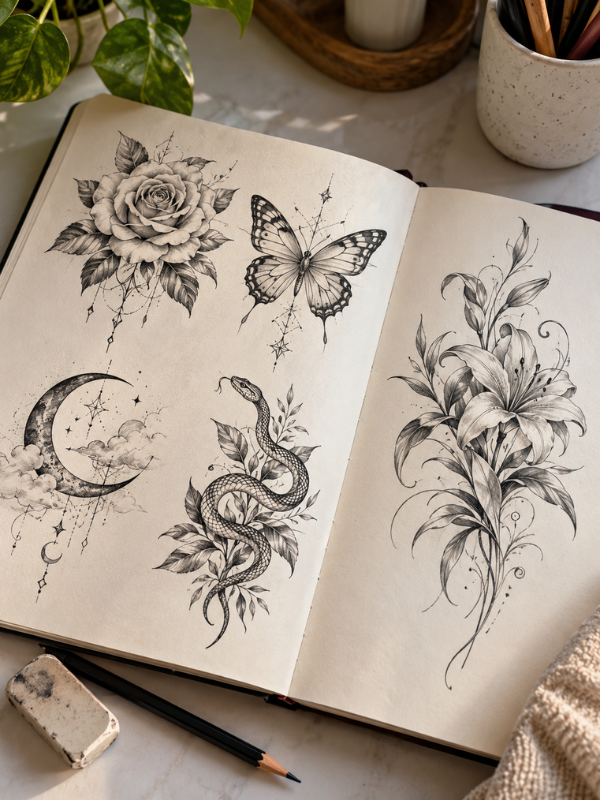
Once your pencil sketch is ready, you can use fine-line pens to create cleaner lines.
Fine-line pens are especially useful for detailed tattoo designs. They can help you create thin outlines, small details, and precise patterns.
Choose pens with different tip sizes if possible. A smaller tip works well for tiny details. A slightly thicker tip can help with stronger outlines.
Most importantly, use pens that dry quickly and do not smudge easily. A smudged line can make an otherwise good design look messy.
3. Sketchbook or Drawing Paper
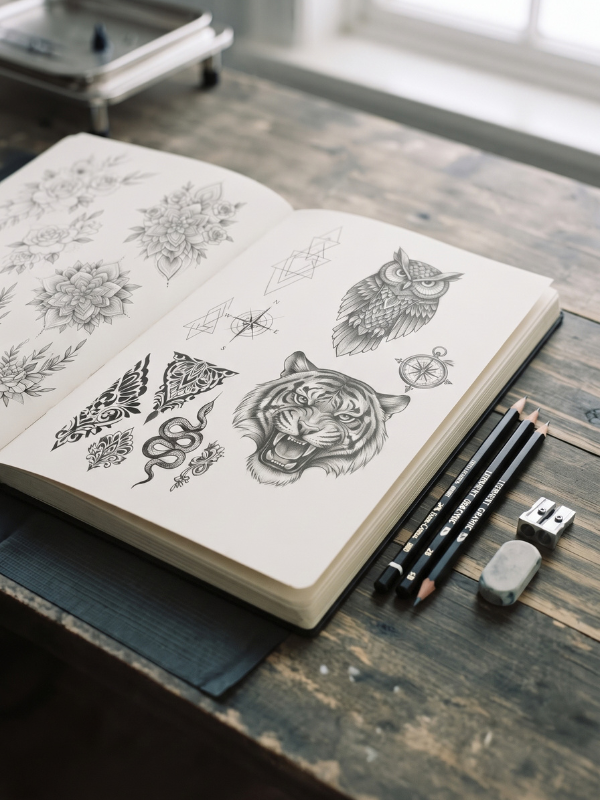
Good tattoo drawing tools are not limited to pencils and pens. The paper you draw on also matters.
A smooth sketchbook can make it easier to create clean lines. Bristol paper is another good option because it has a smooth surface that works well for detailed drawings.
You can also use regular drawing paper when practicing. The most important thing is to choose a surface that allows your pencil and pen to move smoothly.
If you are still learning, there is no need to spend too much money on paper. Start with something comfortable and build from there.
4. Erasers
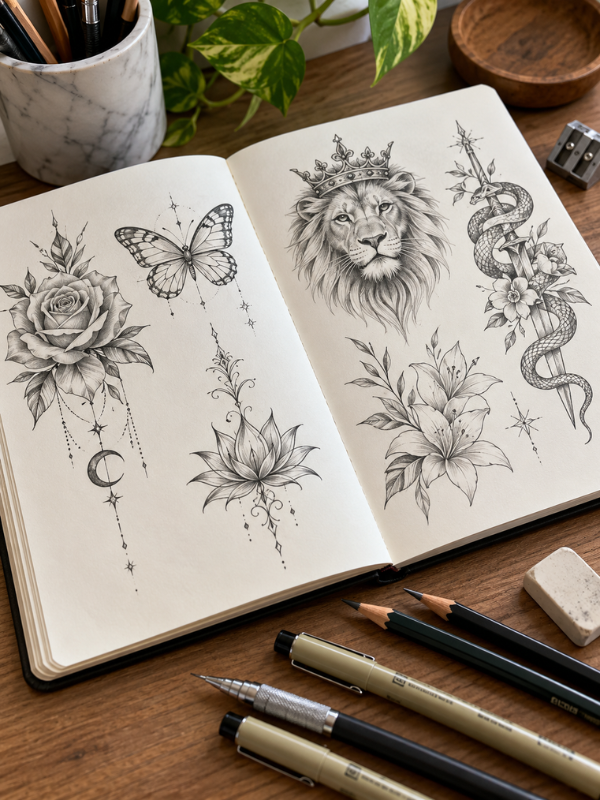
Mistakes are part of drawing. Therefore, a good eraser should always be part of your tattoo drawing tools.
A regular vinyl eraser can remove larger pencil marks. A kneaded eraser is useful when you want to gently lighten part of a sketch without removing everything.
A precision eraser can also help when working on small areas.
This is especially helpful when creating detailed tattoo designs. You can clean up small mistakes without damaging the rest of your drawing.
5. Pencil Sharpener
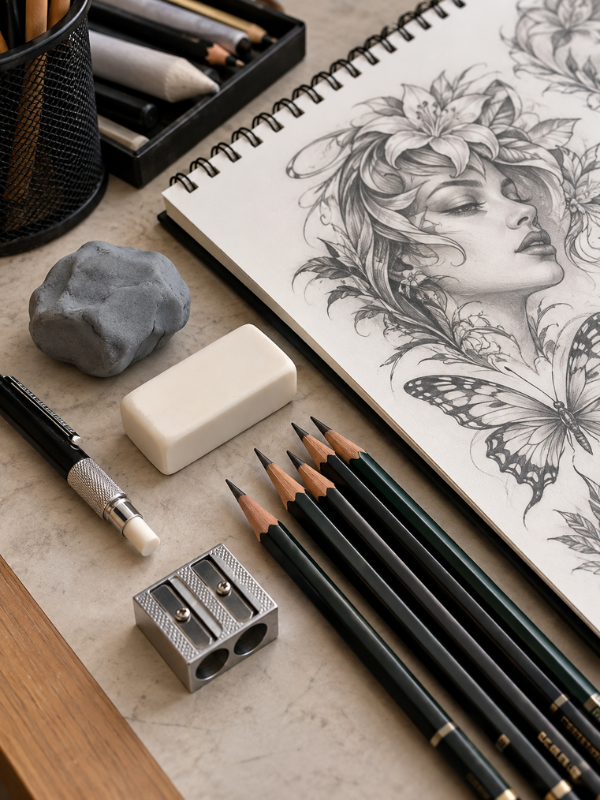
A sharp pencil makes a big difference when you are working on small tattoo details.
A good pencil sharpener helps you maintain a fine point. This allows you to create thinner and more controlled lines.
Avoid using a sharpener that constantly breaks your pencil tips. A quality sharpener is worth having, especially if you draw often.
You can also keep more than one pencil ready. This saves time when you need different pencil grades during the same drawing session.
6. Ruler
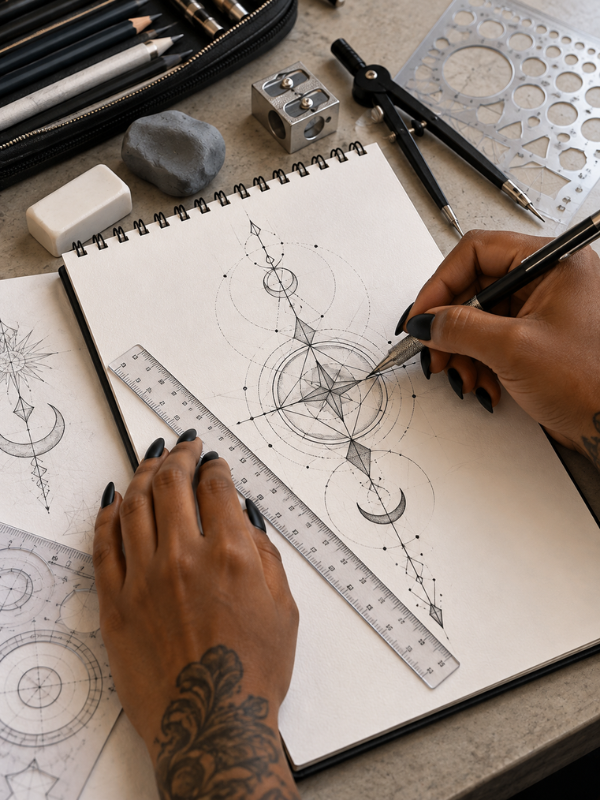
A ruler may seem simple, but it can be very useful when creating certain tattoo designs.
It is especially helpful for geometric tattoos, lettering, straight lines, and symmetrical designs.
For example, if you are creating a geometric tattoo, small measurement mistakes can affect the entire design. A ruler helps you keep your lines more accurate.
You do not need a fancy ruler. A simple clear ruler can work perfectly well.
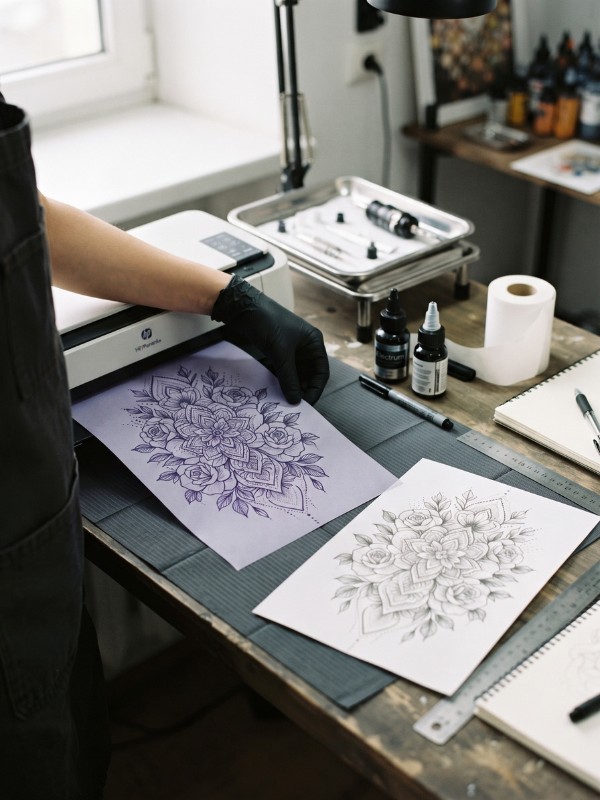
7. Tracing Paper
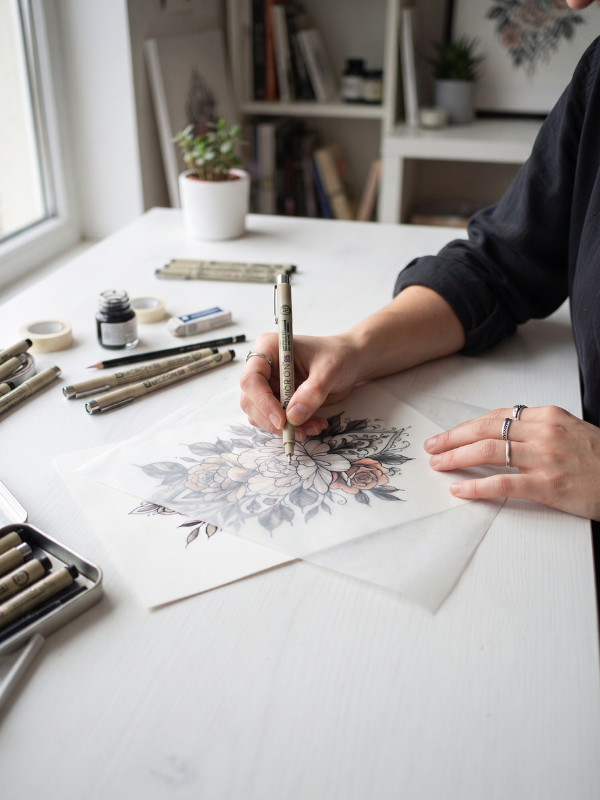
Tracing paper is another useful tool for tattoo design drawing.
It allows you to copy parts of a design without having to redraw everything. You can also use it to test changes before making them permanent.
For example, you may like the main shape of your tattoo but want to change the flowers or add more details. Tracing paper lets you experiment with these changes.
It is also useful when you want to create a cleaner version of an original sketch.
8. Drawing Templates and Stencils
Drawing templates can save time when you need specific shapes.
Circle templates are useful for round designs. Geometric templates can help with triangles, squares, and other shapes.
Lettering guides can also help when creating tattoo designs with names, words, or numbers.
These tools are not necessary for every design. However, they can make certain types of tattoo drawing much easier.
9. Lightbox
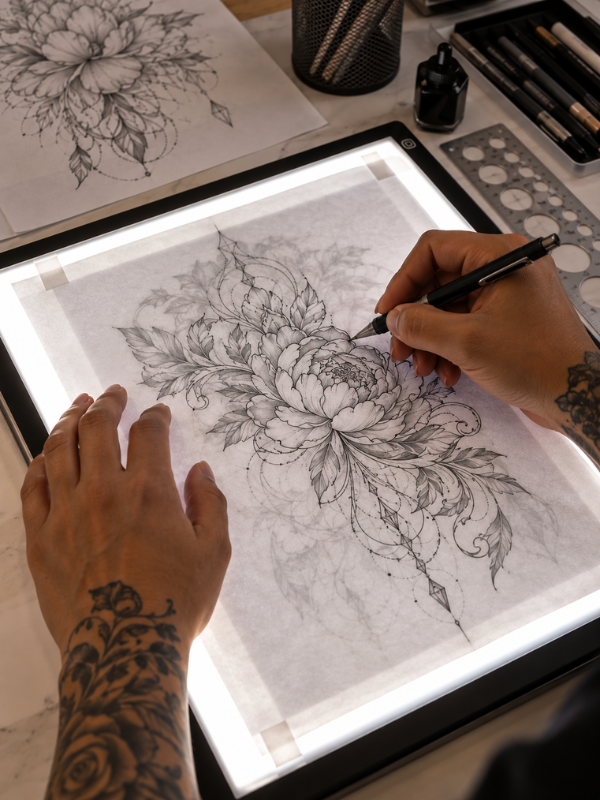
A lightbox is a helpful tool when you need to trace and refine a tattoo design.
It works by shining light through your paper. This allows you to see the sketch underneath a clean sheet of paper.
You can then trace the parts you like and make changes to the design.
A lightbox is especially useful when working on detailed or symmetrical tattoos. It can also save you from repeatedly erasing and redrawing the same design.
If you are a beginner, you do not need to buy one immediately. You can start with basic tattoo drawing tools and add a lightbox later.
10. Markers
Markers can be useful when you want to see how a tattoo design will look with darker areas.
Fine-tip markers are good for outlines and small details. Black markers can help you test bold areas and strong contrast.
Markers can also help you understand how much black space your design needs.
However, be careful when using them. Markers can be difficult to erase, so it is better to use them after your main sketch is already developed.
11. Shading Tools
Shading can add depth and dimension to a tattoo design. Therefore, having a few tools for shading can be helpful.
Different pencil grades can create different levels of darkness. A softer pencil can create deeper shades, while a harder pencil can create lighter marks.
Blending stumps and tortillons can also help blend pencil shading. You can use them to create smoother transitions between light and dark areas.
Even tissue paper can work for simple blending when you are practicing.
The goal is not to have every shading tool. It is to learn how each one affects your design.
12. Digital Drawing Tablet
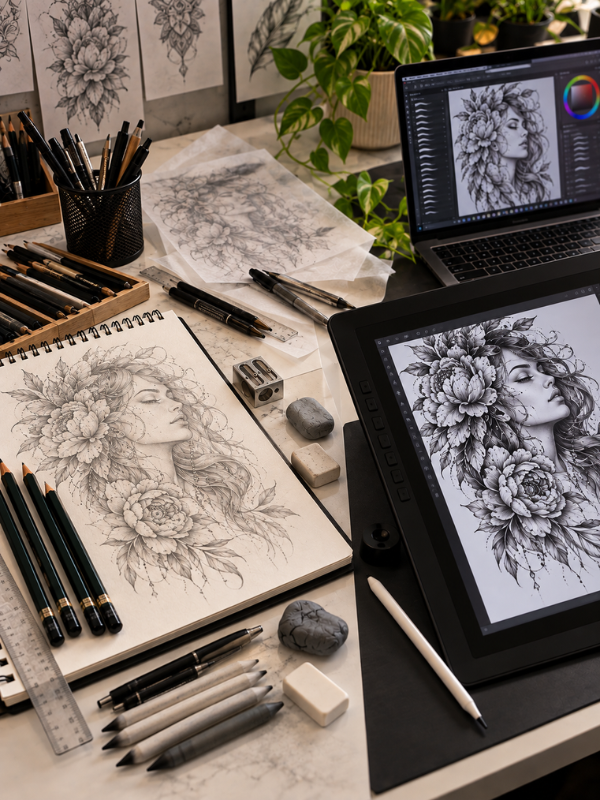
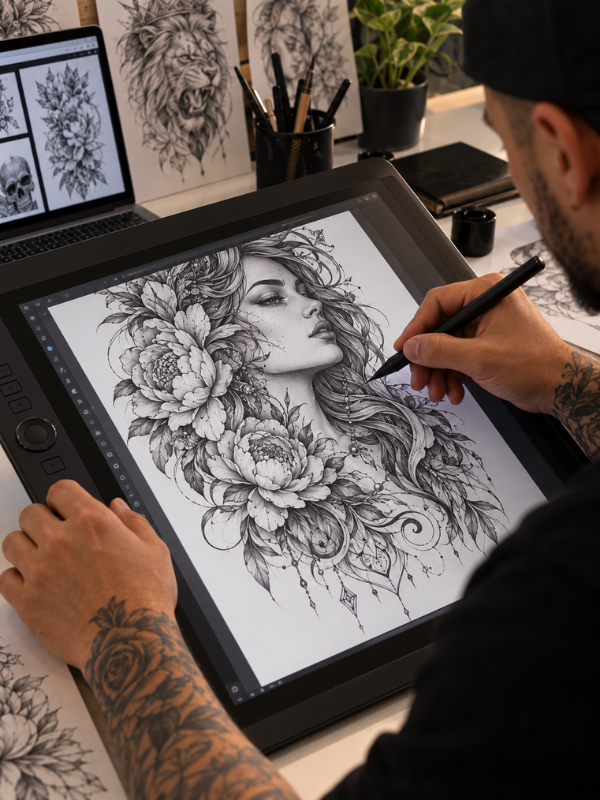
Traditional drawing is not the only way to create tattoo designs. Many artists also use digital tools.
A drawing tablet allows you to create and edit designs digitally. You can use a stylus to draw directly on the tablet or computer.
Digital drawing is useful because you can easily undo mistakes. You can also resize designs, move elements, duplicate shapes, and work with different layers.
However, you do not need a digital tablet to become good at tattoo drawing. Traditional tattoo drawing tools are still great for learning the basics.
13. Digital Drawing Apps
If you decide to create tattoo designs digitally, you will also need drawing software.
Apps such as Procreate, Adobe Fresco, Photoshop, and Clip Studio Paint offer tools for digital drawing.
You can use different brushes for lines, shading, and textures. Layers also make it easier to separate different parts of your design.
For example, you could keep your sketch on one layer and your clean outline on another. This makes editing much easier.
If you are a beginner, start with one drawing app. There is no need to learn several programs at the same time.
14. Tattoo Drawing Tools for Beginners
If you are just starting, you do not need a complicated setup.
A simple beginner kit can include:
- HB pencil
- 2B pencil
- Fine-line black pens
- Sketchbook
- Eraser
- Pencil sharpener
- Ruler
- Tracing paper
These basic tattoo drawing tools are enough to help you practice outlines, shapes, lettering, shading, and different tattoo styles.
As your skills improve, you can add other tools such as a lightbox, better paper, markers, or digital equipment.
15. How to Choose the Right Tattoo Drawing Tools
The best tattoo drawing tools for you will depend on your drawing style and experience.
First, think about the type of tattoos you want to design. If you enjoy fine-line tattoos, invest in good pencils and fine-tip pens.
If you prefer geometric tattoos, a ruler and shape templates can be useful.
If you enjoy detailed digital artwork, a drawing tablet and digital software may be worth considering.
Your budget also matters. Start with the tools you actually need. You can always upgrade later.
Most importantly, choose tools that feel comfortable in your hands. A tool may be highly recommended, but that does not mean it will work perfectly for your personal drawing style.
16. Do You Need Expensive Tattoo Drawing Tools?
No. You do not need expensive equipment to start drawing tattoo designs.
A good pencil, smooth paper, quality eraser, and fine-line pen can take you a long way.
Your drawing skills matter more than having a large collection of supplies.
In fact, buying too many tools at once can sometimes make learning more confusing. Start with the basics. Learn how each tool works. Then add new tools when you actually need them.
17. How to Use Tattoo Drawing Tools From Sketch to Final Design
Your tattoo drawing tools work best when you use them together.
Start with a light pencil sketch. Do not worry about making it perfect at this stage. Focus on the overall shape and placement.
Next, use your eraser to correct proportions and remove unwanted lines.
Then, add the smaller details. This could include flowers, leaves, symbols, patterns, or lettering.
Once you are happy with the sketch, use a fine-line pen to create the clean outlines.
After that, add shading where needed. You can use different pencil grades or blending tools to create depth.
Finally, you can trace, scan, or recreate the finished design digitally if you want to make further adjustments.
This process gives you more control and helps you turn a rough idea into a clean tattoo design.
18. Common Mistakes When Using Tattoo Drawing Tools
Having the right tools does not automatically make drawing easier. You also need to know how to use them properly.
One common mistake is pressing too hard with a pencil. This can make your sketch difficult to erase.
Another mistake is using a pen too early. If you start outlining before you are happy with the sketch, correcting mistakes becomes harder.
Using rough paper can also make fine lines look uneven.
Some beginners also buy too many tools before they have learned the basics. This is not necessary.
Start simple. Practice often. Learn what each tool does. Then build your collection as your drawing skills improve.
Frequently Asked Questions
What tools do you need to draw a tattoo design?
You can start with a pencil, sketchbook, eraser, sharpener, fine-line pens, ruler, and tracing paper. You can add tools such as markers, a lightbox, or digital equipment as you progress.
What pencil is best for tattoo drawing?
An HB pencil is great for basic sketches. A 2B or 4B pencil can be useful for darker lines and shading. Mechanical pencils can also work well for small details.
What paper is best for tattoo designs?
Smooth drawing paper or Bristol paper works well for tattoo designs. A good sketchbook can also be enough for beginners.
Do you need special pens to draw tattoo designs?
You do not need extremely specialized pens. Fine-line pens with different tip sizes can work well for creating clean tattoo outlines and details.
Can you draw tattoo designs with a regular pencil?
Yes. A regular pencil is enough for creating tattoo sketches. In fact, pencils are one of the best places to start because they allow you to make changes easily.
Do beginners need a drawing tablet for tattoo designs?
No. A drawing tablet is optional. You can learn the basics with traditional tattoo drawing tools first. Digital tools can be added later if you enjoy digital design.
What tools are used for tattoo shading?
Pencils with different grades, blending stumps, tortillons, and tissue paper can all be useful for practicing shading in tattoo designs.
How can I make my tattoo sketches cleaner?
Start with light pencil marks. Use a sharp pencil for details. Take your time with proportions and use tracing paper when you need to create a cleaner version of your design.
summary
A good tattoo starts with the correct tools for drawing. You do not need a huge collection to create a great design. A few reliable tattoo drawing tools can give you everything you need to start practicing.
Begin with the basics. Get comfortable with your pencils, pens, paper, and eraser. As your skills grow, you can add tools such as a lightbox, markers, or digital drawing equipment.
Most importantly, remember that the tools are there to support your creativity. The more you practice, the easier it becomes to turn your ideas into clean and detailed tattoo designs.
This Post showed You What Tools You Need to Draw Tattoo Designs.
You may also like:
15 Hip Tattoo Ideas for a Stylish Look
15 Thigh Tattoo Ideas You’ll Love