Chest Tattoo Ideas and How to Plan a Design Around Your Anatomy
You have probably seen a chest tattoo that looks incredible in a photo, saved it for inspiration, and imagined how it would look on your own body. Maybe it was a pair of detailed wings stretching across the chest. Perhaps it was a lion sitting over one pectoral or a fine-line design running beneath the collarbone. The design looked perfect on the person wearing it. However, there is one thing worth considering before you book your appointment. Will that same design work with your chest shape, proportions, and preferred placement?
This is where choosing chest tattoo ideas becomes more than finding a picture you like. Your chest has natural curves, changes in width, and areas that move when you breathe or change posture. A design that looks balanced on one person may need a different size or arrangement to achieve the same effect on someone else.
For example, you might love a symmetrical tattoo that covers both pectorals. However, after looking at the design more closely, you may realize that a smaller piece on one side suits your style better. You might also discover that a tattoo you planned to place near your collarbone looks more balanced when it follows the natural line of the bone.
The goal is not to find a design that makes your body look like someone else’s. It is to choose a tattoo that feels right for you.
From small chest tattoos to bold, full-chest pieces, these chest tattoo ideas will help you explore different designs, understand placement, and plan a tattoo that works with your anatomy.
15 Chest Tattoo Ideas and How to Make Each Design Work for Your Body
Choosing a chest tattoo becomes easier when you know what you want the design to achieve. You might want a bold piece that covers both sides of your chest, a small tattoo that sits just below your collarbone, or a delicate pattern that follows the natural curves of your body.
However, the design itself is only part of the decision. Its size, direction, spacing, and placement all influence the final result. This is especially important for tattoos that cross the sternum, sit between the breasts, or follow the curve beneath them.
The following chest tattoo ideas explore different styles and placements, with practical details to help you decide which direction suits you best.
1. Symmetrical Ornamental Chest Tattoo Ideas
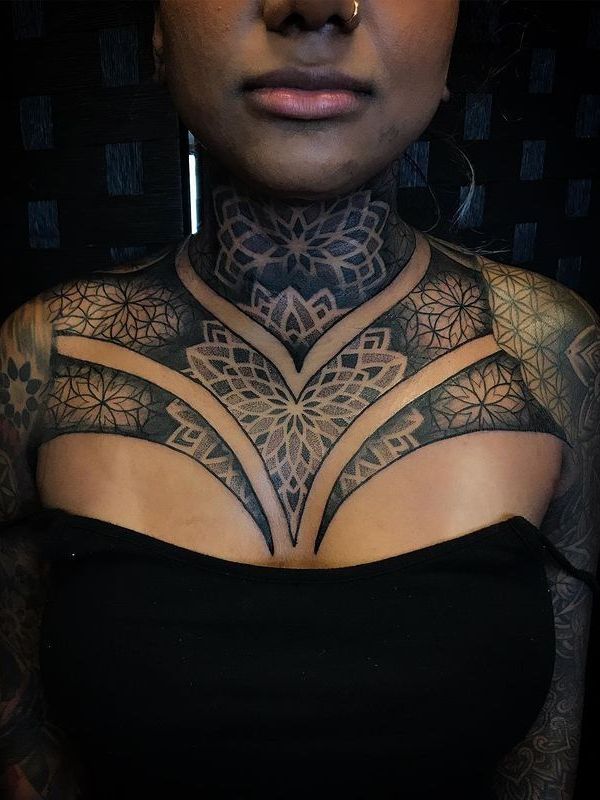
Symmetrical ornamental tattoos use decorative curves, repeated patterns, and balanced shapes to create a design that extends across the chest. Some resemble intricate mandalas, while others feature pointed details, flowing lines, or patterns inspired by decorative architecture.
The main feature is the central point. In many designs, the artwork begins around the sternum and extends outward toward the pectorals or collarbones. This creates a balanced composition without relying on a large image such as a portrait or animal.
Where it works best
For men, an ornamental design can extend across both pectorals, with the central pattern following the sternum. For women, a smaller version can sit between the breasts and extend upward, or a wider design can follow the upper chest.
Neither version needs to cover the entire chest. You can keep the outer edges light and delicate or choose bolder patterns for greater contrast.
How to plan the design
Start by deciding how wide you want the tattoo to be. A design that covers both sides needs enough room for its central details and outer patterns. If it is too compressed, the individual shapes may become difficult to distinguish.
Ask your artist to check the symmetry while you stand naturally. Your body does not have to be perfectly symmetrical for the tattoo to look balanced, but the stencil should be positioned carefully.
What to consider before choosing it
Ornamental tattoos can contain many fine details. Therefore, avoid shrinking a complicated reference image simply because you want a smaller tattoo. Your artist may need to simplify the pattern or increase its size so the details remain clear as the tattoo ages.
2. Lion Chest Tattoo Ideas
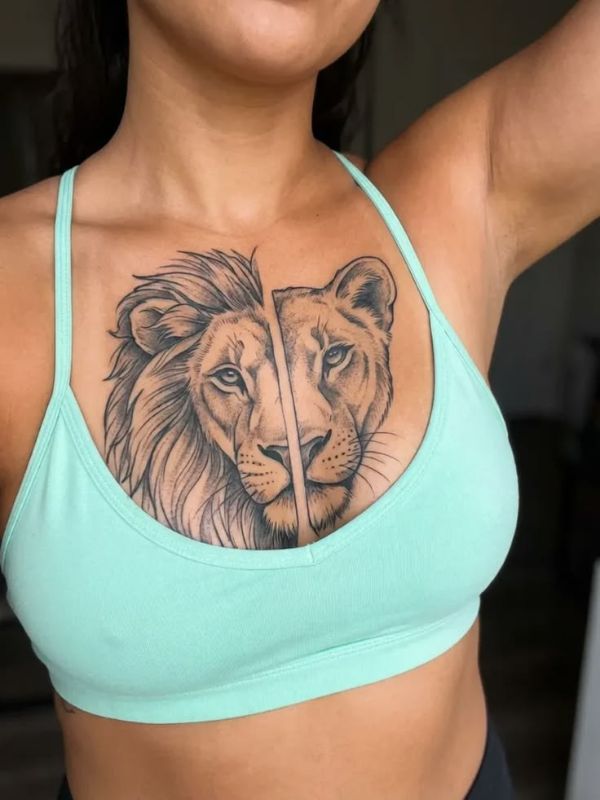
A lion tattoo can create a strong focal point, especially when you want one main image rather than a pattern covering the entire chest.
Some designs feature a realistic lion’s face. Others show the animal’s head in profile, use geometric outlines, or combine the lion with roses, ornamental shading, or lettering.
The style makes a difference. Realistic tattoos rely on detailed shading and careful contrast, while illustrative designs can use cleaner outlines and fewer details.
Where it works best
One pectoral can provide enough space for a lion’s face, particularly if the design is sized to suit the available area. A larger composition can place the lion near the center of the chest, with decorative details extending outward.
Women can choose this style too. A smaller lion portrait on the upper chest or one side of the chest can look just as intentional as a larger piece.
How to plan the design
Pay attention to the direction of the lion’s face. A forward-facing portrait creates a different effect from one looking toward the shoulder. The direction can also affect how the tattoo relates to other images you may want to add later.
Ask your artist how much space the facial details require. The eyes, nose, whiskers, and mane need enough room to remain distinguishable.
What to consider before choosing it
A highly realistic lion may require a larger tattoo than you first expect. Look for an artist experienced in animal portraits and review healed examples of their work.
If you want to extend the design toward the shoulder later, discuss that possibility before the first session.
3. Wing Chest Tattoo Ideas
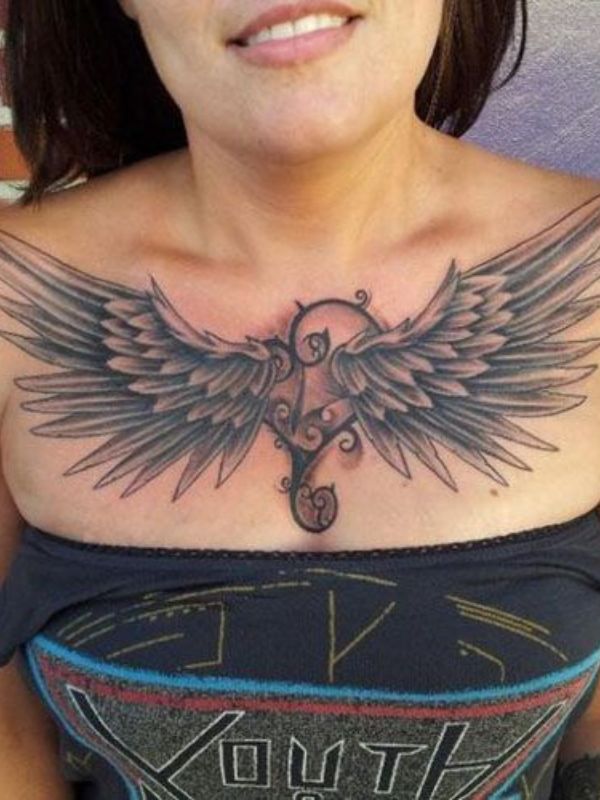
Wing tattoos are a natural option for the chest because their shape can follow the body’s width. They can represent freedom, protection, remembrance, spirituality, or simply a preference for the artwork.
Some designs use detailed feathers. Others feature simplified outlines, dark ornamental wings, or abstract shapes.
Where it works best
A pair of wings can extend across both pectorals, with the central point positioned near the sternum. This creates a wide composition that uses the chest as one connected canvas.
For a smaller design, you could choose one wing near the collarbone or a compact pair of wings high on the chest. These options allow you to enjoy the style without committing to a large piece.
Women can also choose a wider wing design, a smaller upper-chest tattoo, or an arrangement that sits above the breasts rather than across them.
How to plan the design
Consider the shape of the feathers and how they spread outward. If the wings are too short, the design may look cramped. If they extend too far toward the shoulders, you may need to consider how they connect to the rest of your body.
The central point also matters. A symmetrical design needs careful placement so the wings appear balanced when viewed from the front.
What to consider before choosing it
Detailed feathers require sufficient space. Ask your artist if the reference design needs simplifying or resizing.
Also decide if you want a standalone chest tattoo or a piece that could eventually connect to your shoulders. Planning that connection early can help the overall composition feel complete.
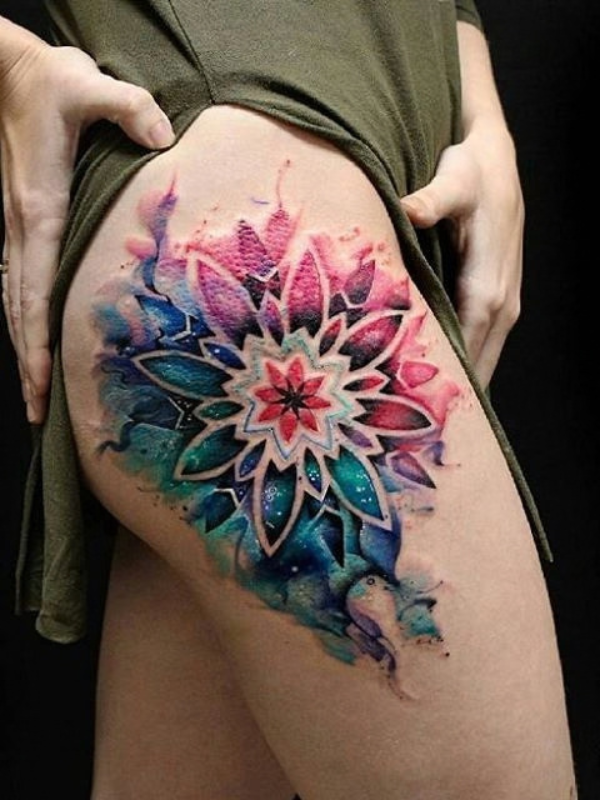
4. Floral Chest Tattoo Ideas
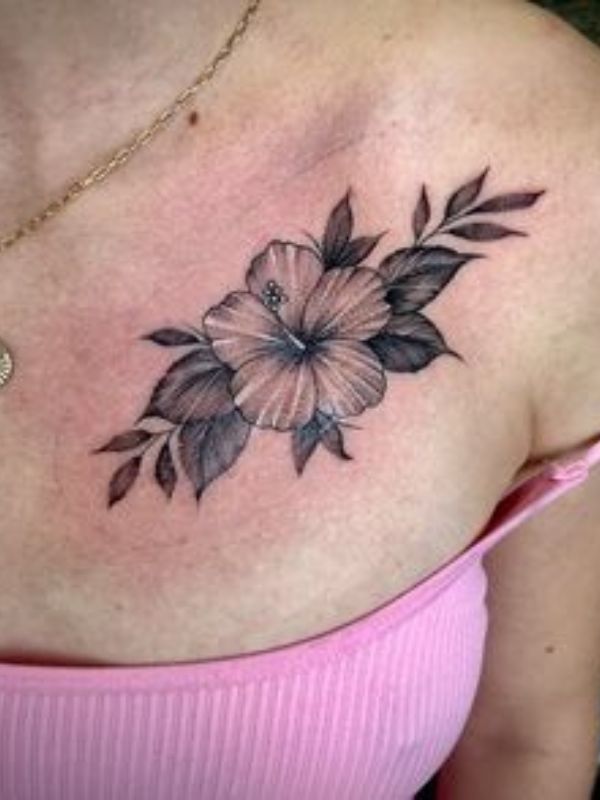
Floral tattoos offer a wide range of possibilities, from one small flower to a detailed arrangement that follows the chest’s natural contours.
Roses, peonies, lilies, and wildflowers each create a different look. Large blooms can become the focal point, while smaller flowers and leaves help connect the design.
You can choose fine-line outlines, black-and-grey shading, or bold traditional artwork. The flower itself does not have to carry a symbolic meaning unless that matters to you.
Where it works best
A single flower can sit near the collarbone or over one pectoral. A longer arrangement can extend across the upper chest, while a curved floral composition can follow the lower chest.
For women considering an underboob tattoo, flowers and leaves can be arranged along the natural curve beneath the breasts. The artist should assess the natural fold and account for friction from clothing during healing.
Men can explore larger roses, bold botanical patterns, or flowers combined with other imagery.
How to plan the design
Think about the relationship between the flowers and their stems. A cluster of blooms may suit a compact placement, while branches and leaves can help a design flow across a wider area.
Consider the size of each flower. If you want recognizable petals and detailed shading, the artist may recommend fewer, larger blooms rather than many tiny flowers.
What to consider before choosing it
Do not choose a flower arrangement solely because it looks good on another person’s body. The direction of the stems, the spacing between blooms, and the size of the design may need to change.
Ask to see healed floral tattoos from your artist, especially if you prefer fine lines or intricate petal details.
5. Small Collarbone Chest Tattoo Ideas
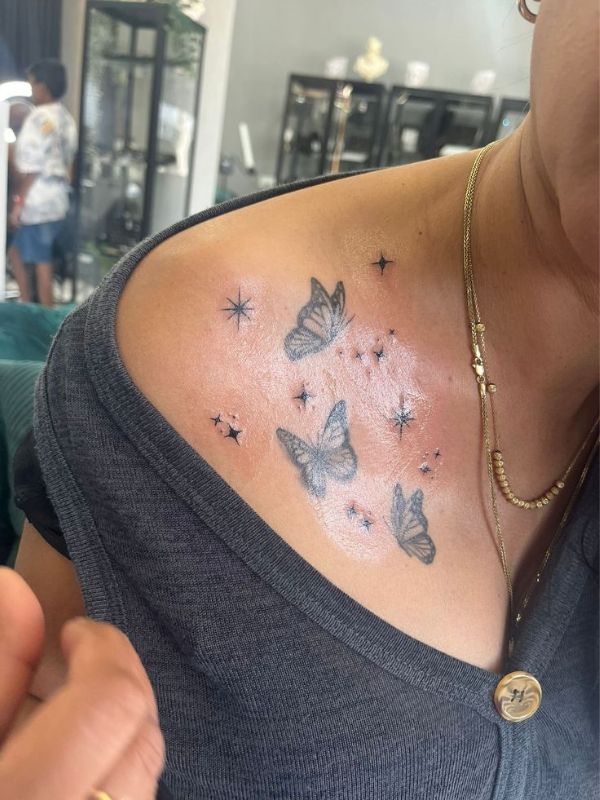
A collarbone tattoo is worth considering if you want something subtle that does not cover a large part of the chest.
Popular options include tiny flowers, stars, short words, initials, delicate branches, and simple symbols. You can place the tattoo beneath one collarbone or follow the natural line of the bone.
This placement also gives you some control over visibility. A tattoo near the collarbone may show with a low neckline but remain covered by a higher-necked shirt.
Where it works best
For women, a small flower or fine-line branch can follow one collarbone. For men, a simple symbol or short design can sit near the outer collarbone, closer to the shoulder.
The tattoo does not need to be centered. An asymmetrical placement can look intentional when the design is positioned carefully.
How to plan the design
Think about the direction of the collarbone. A long, narrow design can follow its natural line, while a small symbol may work better just below it.
If you want lettering, consider how much space each letter needs. A phrase that looks readable on a screen may become difficult to read if it is reduced too much.
What to consider before choosing it
The collarbone area can be sensitive during tattooing. Also, clothing and bag straps may rub against a fresh tattoo, so ask your artist about comfortable clothing and aftercare.
If you want the design to extend toward the shoulder later, leave enough room for that possibility.
6. Sternum Chest Tattoo Ideas
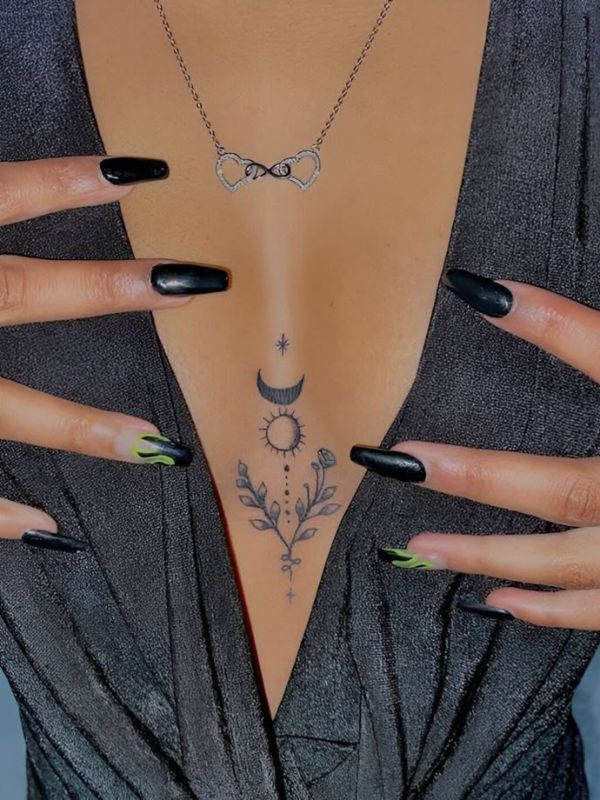
Sternum tattoos sit along the center of the chest, over the breastbone. They can be minimal and delicate or form part of a large ornamental composition.
Common designs include vertical floral arrangements, geometric symbols, mandala-inspired patterns, and decorative lines that extend upward or downward.
The appeal of this placement is its natural center point. A vertical design can create a clear focal line without needing to cover both sides of the chest.
Where it works best
For women, a sternum tattoo can sit between the breasts, with the design extending upward toward the upper chest or downward toward the upper abdomen.
For men, the sternum can anchor a larger geometric pattern or a symmetrical composition across the pectorals.
The available space will depend on your anatomy and the design you choose. You do not need to extend the tattoo across the full chest to make it look complete.
How to plan the design
Consider if the artwork should be narrow and vertical or spread outward from the center. A narrow design may suit a small symbol, while a wider ornament needs enough space to keep its details clear.
Ask your artist to check the center line and the placement while you stand naturally. A stencil that looks straight on paper can appear different when positioned on the body.
What to consider before choosing it
The sternum is close to bone, so some people experience more discomfort here. A larger, detailed design may also require a longer session.
If you have sensitive skin or concerns about healing, discuss them with your tattoo professional before the appointment.
7. Underboob Chest Tattoo Ideas
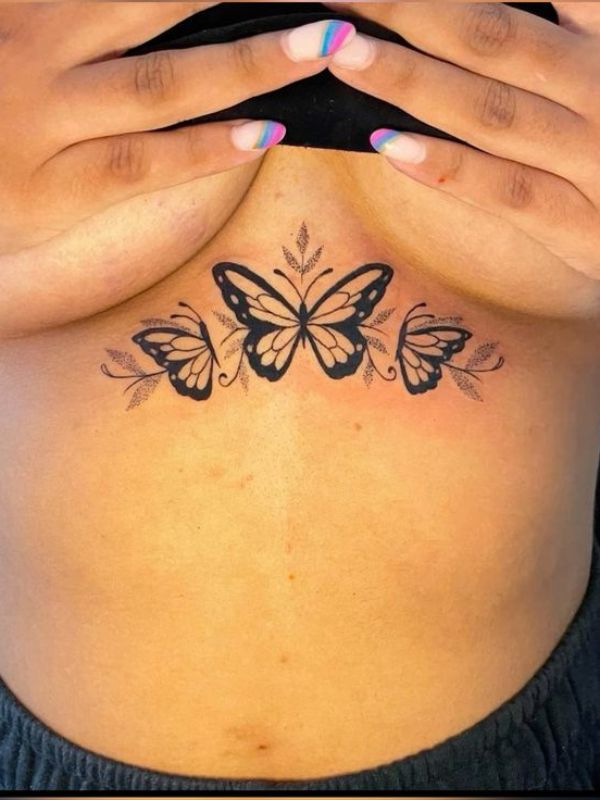
Underboob tattoos follow the curve beneath the breasts. They are often chosen for their flowing appearance and the way the design can complement the body’s natural contours.
Popular styles include ornamental patterns, curved floral arrangements, fine-line branches, and decorative designs inspired by lace. Some extend across both sides, while others focus on one area.
This placement is not limited to one breast size or shape. The important part is finding a design that fits your anatomy and can be cared for properly while healing.
Where it works best
A curved pattern can follow the lower breast line, while a symmetrical design can extend across the center. A smaller composition can sit beneath one breast without spanning the entire area.
Some women prefer a tattoo that follows the natural fold. Others choose a design positioned slightly lower on the upper abdomen. These placements create different effects and should be assessed individually.
How to plan the design
Breast shape, the position of the natural fold, and the way the skin rests when standing can all influence the final result.
Ask your artist to discuss the placement with you before finalizing the stencil. Consider how your usual bras, sports bras, and fitted tops may contact the area during healing.
You should also decide how wide the tattoo needs to be. A pattern that extends too far can feel crowded, while a smaller design may leave more room around the central details.
What to consider before choosing it
The underboob area can experience moisture and friction from clothing. These factors matter during healing, so follow your artist’s aftercare instructions carefully.
Do not rush the stencil placement. Check the design in a natural standing position and ask questions if you are unsure how it will sit.
8. Butterfly Chest Tattoo Ideas
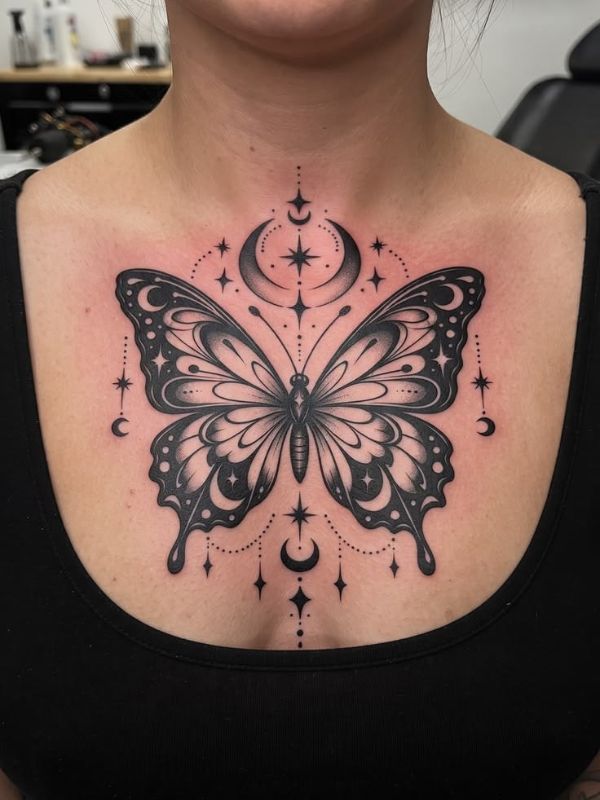
Butterfly tattoos can be delicate, bold, realistic, or highly stylized. Their wings provide a recognizable shape, making them suitable for both small symbols and larger compositions.
You might choose one butterfly, a pair of matching butterflies, or several butterflies arranged with flowers and other decorative details.
Where it works best
A small butterfly can sit near one collarbone or on one side of the upper chest. A larger butterfly can become the central element of a sternum design.
Women may prefer a delicate butterfly between the breasts or a small design above the breast area. Men can explore bold outlines, dark shading, or butterflies combined with geometric patterns.
How to plan the design
Think about the direction the butterfly faces and if you want the wings open, folded, or viewed from an angle.
If you want two butterflies, decide if they should mirror each other or create a more natural, asymmetrical arrangement.
The wing pattern also matters. Intricate details need enough space, so a smaller design may benefit from a simpler outline.
What to consider before choosing it
Fine-line butterflies can lose clarity if the markings are too small or closely packed. Ask your artist how the design can be simplified without losing the look you want.
If the butterfly has a personal meaning, consider if you want it to stand alone or form part of a larger composition.
9. Snake Chest Tattoo Ideas
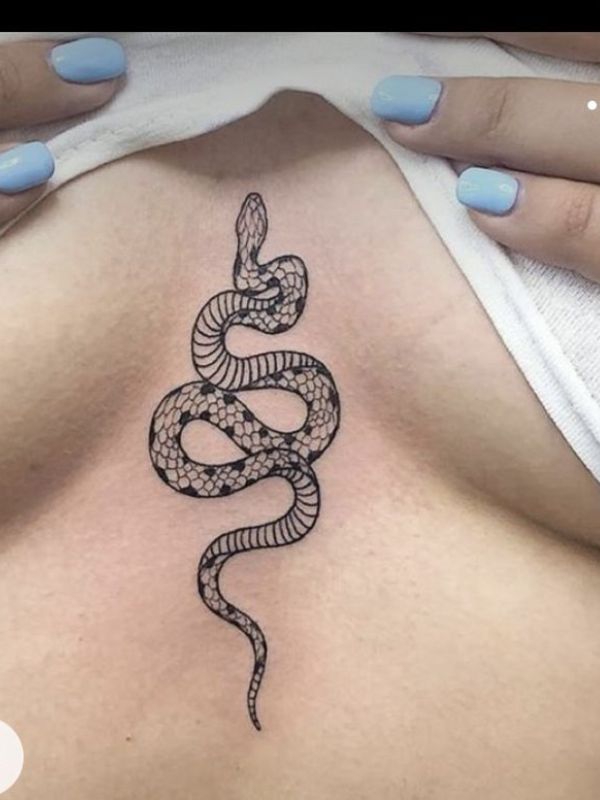
Snake tattoos are flexible because the long body can follow different directions across the chest. The snake can curve around a flower, extend toward the shoulder, or form a vertical composition near the sternum.
Depending on the artwork, the design can feel delicate, bold, realistic, or abstract.
Where it works best
A snake can sit across one pectoral, curve toward the collarbone, or extend from the upper chest toward the shoulder.
For women, a fine-line snake can follow one collarbone or create a curved composition between the breasts. For men, a larger snake can cross one pectoral or form part of a wider chest piece.
How to plan the design
Decide where the head will sit first. The direction of the head influences how the body and tail should flow.
Then consider the number of curves. Too many tight bends can make the design feel crowded, particularly in a smaller area. A longer, more open curve may be easier to read.
If you want to combine the snake with a flower or another symbol, make sure the two elements have enough space to remain distinct.
What to consider before choosing it
The snake’s body should follow the intended placement without forcing the design into an awkward shape. Ask your artist to test the stencil from different angles.
If you are planning a future extension toward the shoulder or arm, discuss it before the original design is finalized.
10. Heart Chest Tattoo Ideas
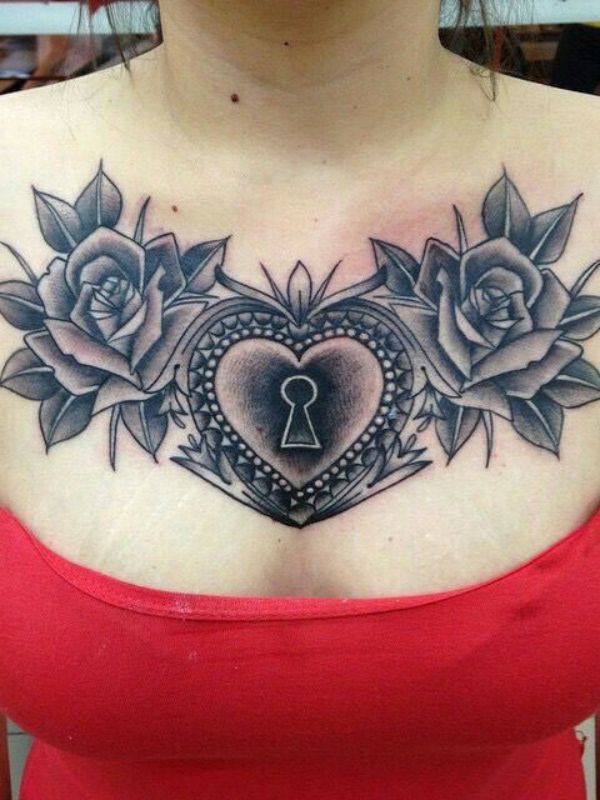
Heart tattoos can be simple and understated or detailed and realistic. You might choose a small outline, a traditional heart, or an anatomical heart with carefully drawn details.
The style you select affects how much space the design requires and the overall feeling it creates.
Where it works best
A small heart can sit near one collarbone or on one side of the chest. A central heart can form the focal point of a larger ornamental design.
For women, a small heart between the breasts can be a delicate option. Men may prefer a larger anatomical heart over one pectoral or a design combined with flowers and lettering.
How to plan the design
Think about if you want the heart to be the entire tattoo or one element in a larger composition.
If you are adding a date, initials, or a short phrase, make sure the text has enough space. The heart and lettering should work together rather than compete for attention.
An anatomical heart requires more room for its internal details than a simple outline. Ask your artist to recommend a size that suits the style.
What to consider before choosing it
If the tattoo represents a person or an important event, take time to decide which details matter most to you.
Avoid adding too many symbols just because they all have meaning. A clear, well-spaced composition can be more effective than a crowded design.
11. Fine-Line Botanical Chest Tattoo Ideas
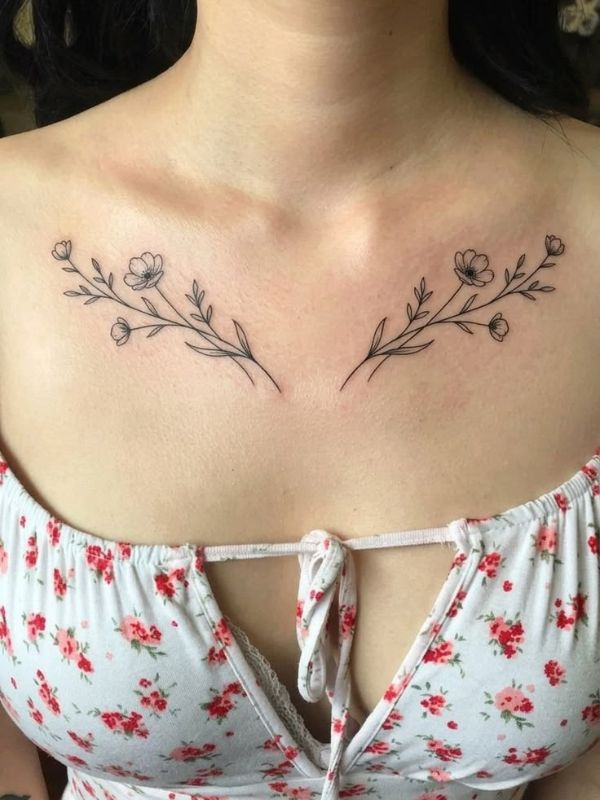
Fine-line botanical tattoos feature slender stems, leaves, flowers, and delicate branches. They are a good option if you prefer detailed artwork without heavy blocks of shading.
These designs can be adapted to several areas of the chest, making them useful for people who want something personal but not overly large.
Where it works best
A branch can follow one collarbone, while a floral arrangement can sit on one pectoral or across the upper chest.
For women, a curved botanical design may also follow the area beneath the breasts or sit between them. Men can choose a narrow branch, a flower, or a larger botanical arrangement.
How to plan the design
Look at the direction of the stems and leaves. A long branch can guide the eye along the collarbone, while a cluster of flowers creates a more compact focal point.
If you want several flowers, decide which one should stand out. Supporting leaves and smaller buds can fill the composition without making it too busy.
What to consider before choosing it
Fine-line work requires careful spacing and execution. Tiny leaves, overlapping stems, and closely packed petals may become less distinct over time.
Ask your artist if the design needs to be enlarged or simplified. A few clear details can work better than trying to reproduce every detail in a small reference image.
12. Geometric Chest Tattoo Ideas
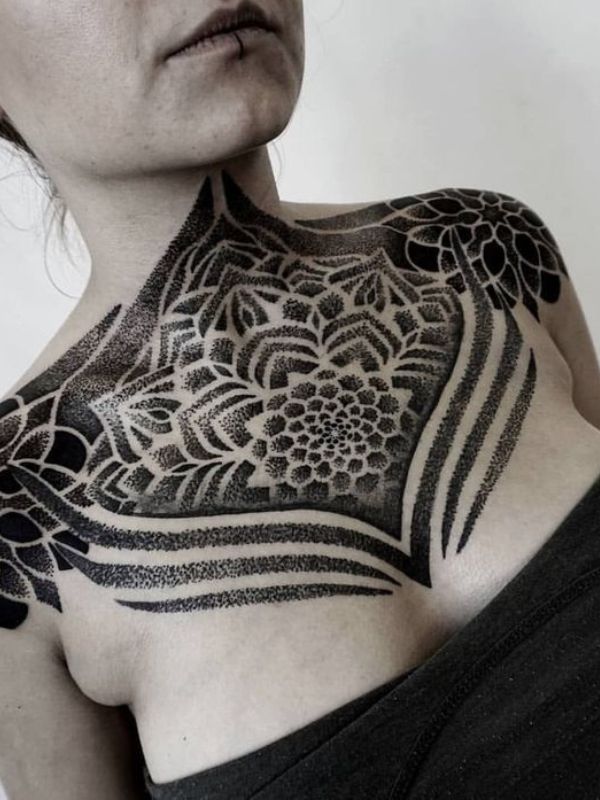
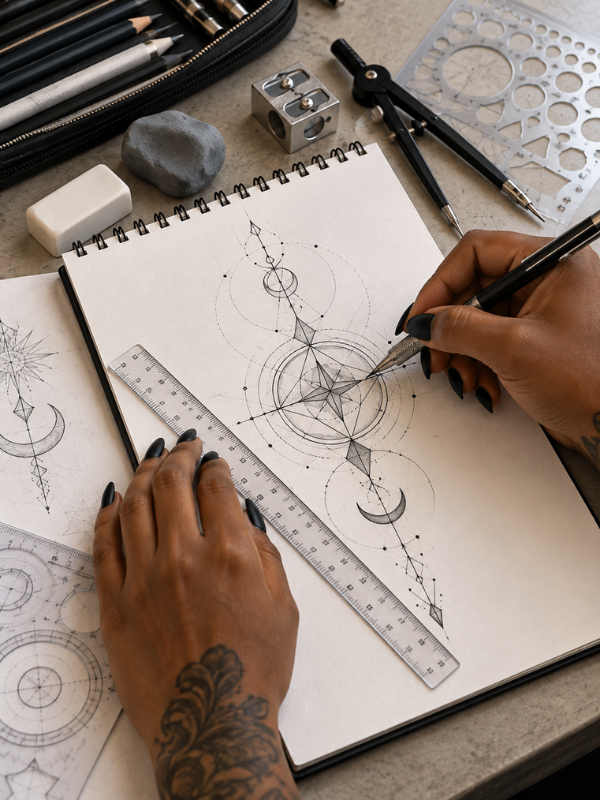
Geometric tattoos use lines, circles, triangles, repeated shapes, and structured patterns. Some are minimalist, while others combine multiple patterns into a detailed composition.
This style can create a strong visual effect without relying on portraits, animals, or floral imagery.
Where it works best
A large geometric design can extend across both pectorals, with the sternum serving as the center. A smaller pattern can sit on one side of the chest or form a vertical design over the breastbone.
Women can choose fine-line geometric ornaments between the breasts, while men may prefer broader patterns across the pectorals. Either approach can be adapted to the individual’s anatomy.
How to plan the design
Decide if you want perfect symmetry or a more relaxed arrangement of shapes.
If the design contains repeated lines, circles, or precise angles, placement becomes particularly important. The artist should check how the shapes align when the stencil is positioned on your body.
Consider the size of the smallest shapes, too. Tiny geometric details may need to be enlarged or simplified to remain clear.
What to consider before choosing it
Look for an artist who has experience with geometric work. Precision and spacing are central to the style, so reviewing healed examples can help you understand the artist’s results.
Allow enough time for the stencil to be checked carefully before the tattoo begins.
13. Moon and Celestial Chest Tattoo Ideas
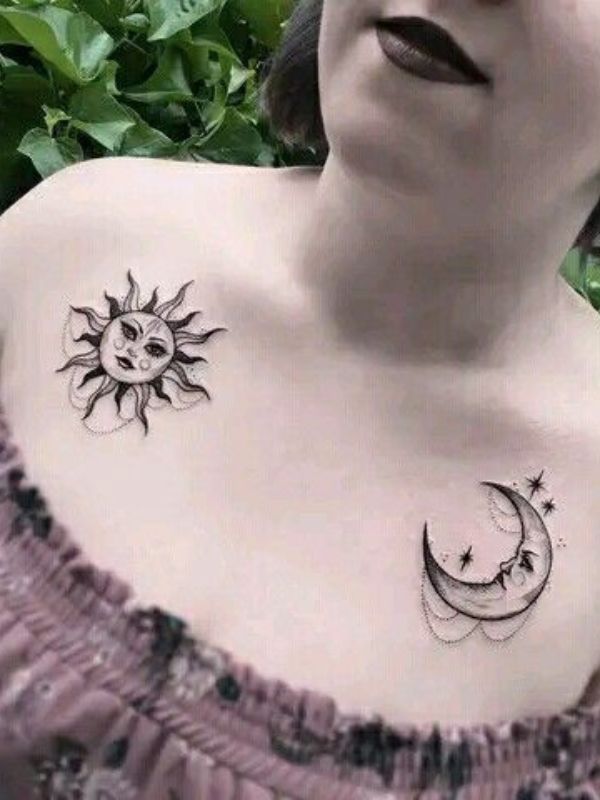
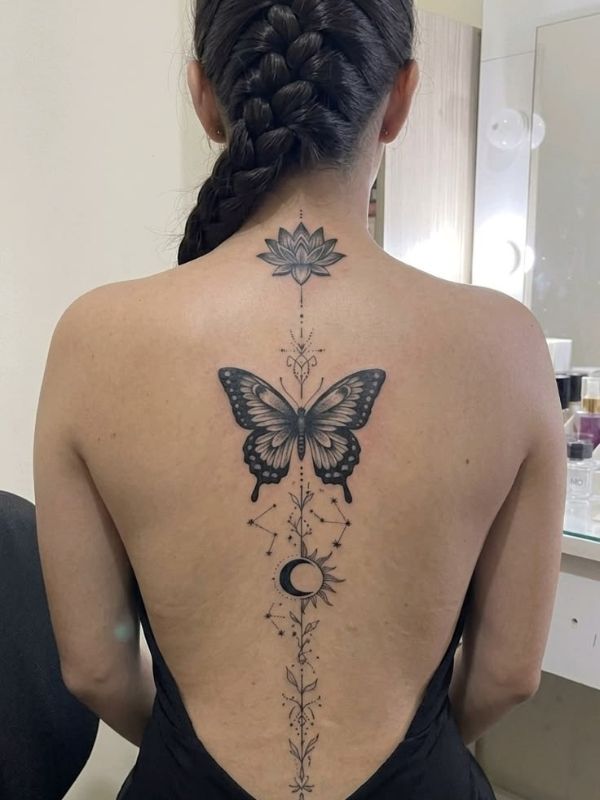
Celestial tattoos feature moons, stars, suns, and other symbols associated with the night sky. They can be simple and minimal or form part of a more detailed ornamental composition.
You might choose a single crescent moon, a row of moon phases, or a combination of celestial symbols and delicate linework.
Where it works best
A row of moon phases can follow the upper chest, while a small crescent moon can sit near one collarbone.
For women, a vertical arrangement can sit between the breasts or form part of a sternum tattoo. Men can explore a larger moon design over one pectoral or combine celestial symbols with geometric patterns.
How to plan the design
Think about the arrangement before choosing the exact size. A horizontal row of symbols needs different spacing from a vertical composition.
Decide if the symbols should be identical in size or gradually change. Leave enough space between them so each remains distinct.
If you are adding stars or small decorative dots, avoid crowding the main symbols.
What to consider before choosing it
Small celestial designs can look simple, but their spacing and proportions still matter. A tiny moon with too many fine details may not age as clearly as a cleaner outline.
Choose the level of detail that suits the available space.
14. Script and Lettering Chest Tattoo Ideas
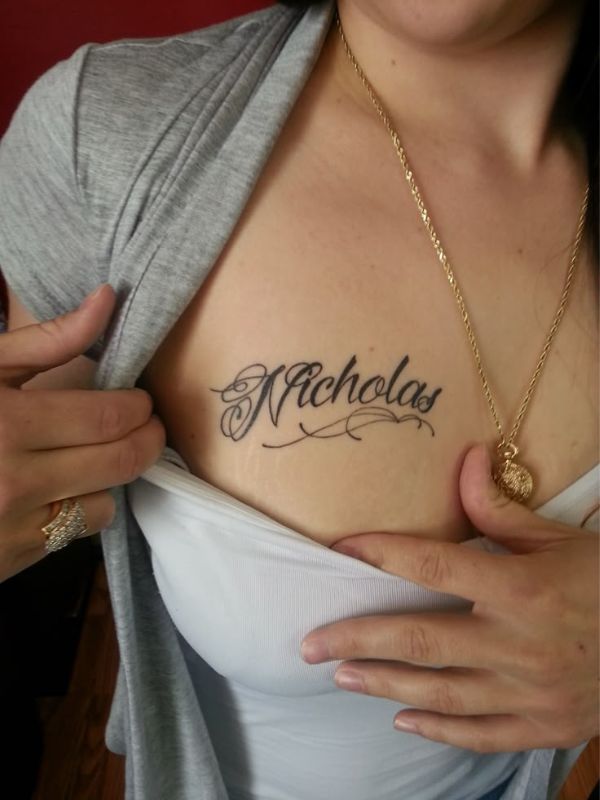
Lettering tattoos can feature a name, a date, a short phrase, or a word that holds personal meaning. They can be subtle or become part of a larger chest composition.
The style of the lettering influences the overall appearance. Fine script can feel delicate, while bold lettering creates a stronger visual effect.
Where it works best
A short phrase can follow one collarbone, while a single word or date can sit on one side of the chest.
For women, fine script can sit on the upper chest or form part of a sternum composition. Men can choose lettering across one pectoral or a short phrase beneath the collarbone.
How to plan the design
Choose the wording first, then consider the font and size. Different fonts require different amounts of space, even when they contain the same words.
Ask your artist to show you the lettering at its actual tattoo size. Looking at it on a large screen can make the text appear more readable than it will be on your skin.
If the wording is in another language, verify its spelling and meaning before the appointment.
What to consider before choosing it
Think about if you want the text to stand alone or sit alongside another image.
Avoid choosing a very small font simply to fit a long phrase into a narrow area. Shortening the wording or increasing the size may produce a clearer result.
15. Abstract Blackwork Chest Tattoo Ideas
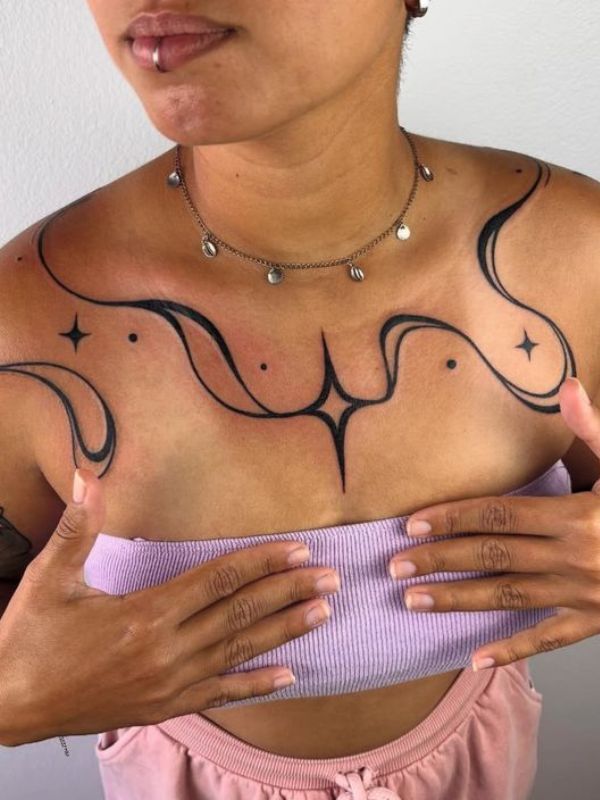
Abstract blackwork uses dark shapes, flowing lines, irregular patterns, and negative space to create a design without a single recognizable subject.
Some compositions are bold and cover a large area. Others use lighter lines and smaller shapes to follow the natural contours of the chest.
This style is particularly useful if you want something distinctive that can be developed around your body.
Where it works best
A bold design can cover one pectoral or extend across both sides of the chest. Smaller abstract patterns can sit near the collarbone or form a flowing composition around the sternum.
Women can explore delicate abstract linework between the breasts or across the upper chest. Men can choose larger blackwork patterns, although the style is suitable for any body type.
How to plan the design
Start with the direction and overall shape of the composition. Decide if you want the design to flow horizontally, follow a curve, or use a central focal point.
Negative space is especially important in blackwork. Leaving parts of the skin uncovered can help the dark shapes stand out and prevent the design from becoming one solid mass.
Ask your artist to explain how the design will fit the available space and if it may need to be expanded in stages.
What to consider before choosing it
Large blackwork tattoos can involve significant time and commitment. Consider the size, cost, healing requirements, and how the design may affect future tattoo plans.
Choose an artist with experience in the specific blackwork style you want. Review healed work and discuss the final composition before committing to a large piece.
How Your Chest Anatomy Affects Tattoo Placement
Your chest is not a flat surface. It has several natural features that can influence the size, shape, and direction of a tattoo.
Understanding these areas will help you communicate more clearly with your artist.
The Pectoral Muscles
The pectoral muscles create much of the chest’s visible shape. Their width and curvature can influence how a tattoo looks when viewed from the front or at an angle.
Large images, ornamental patterns, and bold compositions can work well across these areas.
However, consider how the design looks when you stand naturally. Flexing your chest for a photograph may make a tattoo appear different from how it looks during everyday activities.
If you exercise regularly or expect significant changes in muscle size, mention this during your consultation. Your artist can help you consider placement and the long-term appearance of the design.
The Sternum
The sternum is the central bone running down the front of your chest. It creates a natural reference point for symmetrical and vertical designs.
A central symbol, ornamental pattern, or vertically arranged composition can work well here.
However, the sternum is also an area where some people experience more tattooing discomfort because the skin is close to bone.
Think about both the visual effect and the practical experience before choosing a detailed design that covers this area.
The Collarbone Area
The collarbones create a natural horizontal line across the upper chest.
This makes the area suitable for short lettering, fine-line symbols, flowers, and elongated designs.
A tattoo can follow one collarbone or extend across both sides. However, the shape should complement the natural line rather than forcing the artwork into an awkward position.
Consider how much of the tattoo you want visible when wearing different necklines. This is particularly important if you prefer to keep your tattoos covered in certain settings.
The Lower Chest
The lower chest offers space for curved patterns, larger images, and designs that follow the lower edge of the pectorals.
Some people prefer a tattoo that stays within this area. Others use it as part of a larger composition that connects to the upper abdomen.
If you are planning a large piece, discuss how the lower edge should finish. A design that ends abruptly may look less balanced than one with a deliberate outline or natural transition.
The Space Between Your Chest and Shoulders
If you want your chest tattoo to connect with another piece later, explore these shoulder tattoo ideas for inspiration on how designs can follow the shape of the shoulder. The outer chest creates a natural connection between the pectorals and shoulders.
This is worth considering if you might want to expand your tattoo later. A design can be planned to connect with the shoulder without making the original piece feel incomplete.
However, future expansion should not be an afterthought. Tell your artist if you eventually want a larger composition so the first tattoo can be positioned with that possibility in mind.
Chest Tattoo Ideas for Different Body Shapes
There is no single chest shape that works best for tattoos. A good design should suit the person wearing it rather than follow a narrow idea of what a tattooed body should look like.
The following approaches can help you think about proportions and composition.
Chest Tattoo Ideas for Broad Chests
A broad chest can provide space for wide compositions, including wings, large ornamental designs, and images that stretch across both pectorals.
If you prefer a symmetrical tattoo, the extra width may give the artist room to develop the central image and its surrounding details.
However, avoid choosing a design simply because it covers a large area. The artwork should still have a clear focal point.
You may prefer a large central image with open space around it rather than a pattern that fills every available inch.
Chest Tattoo Ideas for Narrow Chests
If your chest is relatively narrow, consider designs that work with your proportions instead of trying to create the appearance of a wider chest.
Vertical symbols, compact central images, elongated botanical patterns, and carefully placed geometric designs are all options worth discussing.
A smaller composition does not need to look less impressive. The right amount of detail and well-planned spacing can make a design feel intentional.
Your artist can also adjust the width of a symmetrical tattoo to suit your chest rather than copying the proportions of a reference image.
Chest Tattoo Ideas for Muscular Chests
Muscular chests can accommodate a range of designs, from large images to smaller symbols.
The important consideration is how the tattoo follows the chest when your body is relaxed. Muscle definition can change the appearance of the skin, particularly when you flex or change posture.
Ask your artist to assess the placement while you stand naturally. If the design crosses both pectorals, check that the central elements remain balanced.
Also, remember that your body may change over time. A well-planned tattoo should not depend entirely on maintaining one exact level of muscle definition.
Chest Tattoo Ideas for Softer or Fuller Chests
If you have a softer or fuller chest, you can still explore symmetrical patterns, floral designs, large images, and minimalist tattoos.
Flowing lines and curved compositions may suit the natural contours of your chest. Alternatively, you might prefer a compact design that occupies only one area.
There is no need to choose artwork simply because you think it will make your chest look different. Start with the designs you genuinely like, then work with your artist to determine the best placement.
Chest Tattoo Ideas for Different Body Proportions
Your chest does not exist in isolation. The width of your shoulders, the length of your torso, and the position of your collarbones can all affect how a tattoo looks.
For example, a design that stretches from shoulder to shoulder may create a different visual effect from a narrow image centered over the sternum.
Think about the complete composition rather than focusing on the tattoo alone. The goal is to find a design that looks balanced on your body from several angles.
Full Chest Tattoos vs. Smaller Chest Tattoos
One of the biggest decisions you will make is how much of your chest you want to cover.
A full chest tattoo can create a dramatic effect. A smaller design can be easier to incorporate into your everyday style. However, the choice involves more than appearance.
Full Chest Tattoos
Full chest tattoos often connect several elements into one composition. They might feature a central image, symmetrical patterns, and details extending across both pectorals.
This approach is worth considering if you already know you want a large piece.
However, full chest tattoos usually require more time and planning. Depending on the complexity, they may also require multiple sessions.
Think about your budget, pain tolerance, work schedule, and willingness to manage a larger healing area.
Half-Chest Tattoos
A half-chest tattoo covers one side of the chest rather than both.
This can work well for a large animal portrait, a floral composition, a meaningful symbol, or an abstract design.
The main advantage is flexibility. You can keep the tattoo contained or explore an extension toward the shoulder later.
However, the design should still look complete on its own. You do not want it to feel as though an important part is missing simply because you chose not to tattoo the other side.
Upper-Chest Tattoos
Upper-chest tattoos sit near the collarbones and shoulders.
They can include small symbols, short lettering, ornamental patterns, and designs that follow the natural horizontal line of the upper chest.
This placement may suit you if you want a tattoo that is visible with certain shirts but covered by others.
Before choosing the size, consider how the design will sit with your usual clothing. A tattoo that looks balanced without a shirt may be partly hidden by a neckline.
Small Central Chest Tattoos
A small central tattoo can create a clear focal point without covering a large area.
Popular approaches include simple symbols, compact geometric designs, and short vertical compositions.
This option may appeal to someone who wants a chest tattoo but is not ready for a large piece.
Still, think carefully about future plans. If you eventually want a full chest design, let your artist know before the first tattoo is placed.
Chest Tattoo Ideas Based on Different Tattoo Styles
The style of a tattoo affects how it looks, how much detail it requires, and how well it works at different sizes.
Before choosing an image, decide if you prefer clean lines, realistic shading, bold patterns, or something more expressive.
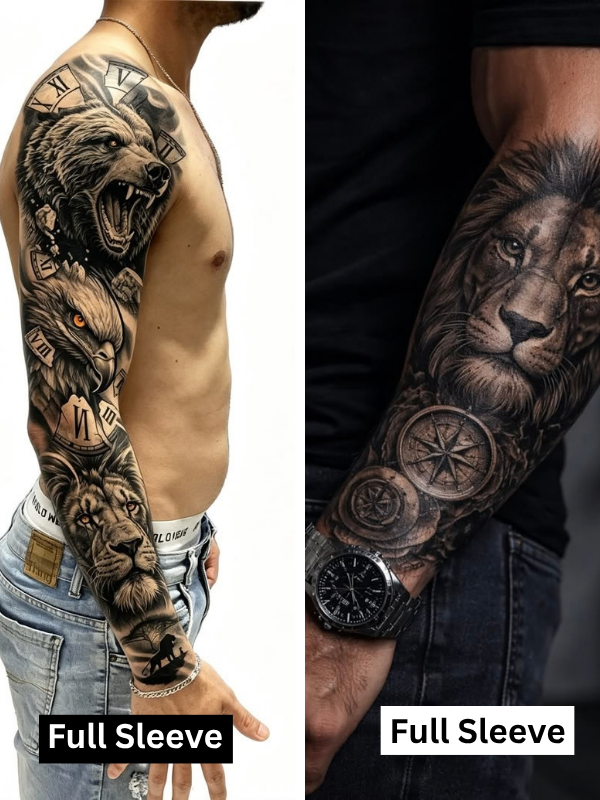
Realistic Chest Tattoos
Realistic tattoos reproduce the appearance of people, animals, and other subjects through detailed shading and careful contrast.
Lions, eagles, portraits, and mythological figures are common choices.
These designs usually benefit from enough space to show the important features clearly. A detailed face, for example, may not work well if it is reduced too much.
Look for an artist with healed examples of realistic work. Fresh tattoos can look different from healed ones, so it helps to see how the details settle over time.
Geometric and Ornamental Chest Tattoos
Geometric designs use shapes, repeated patterns, and precise lines. Ornamental tattoos often incorporate decorative details and symmetrical arrangements.
These styles can work particularly well around the sternum and across both pectorals.
However, placement matters. Small alignment errors can become noticeable when a design relies heavily on symmetry.
Choose an artist who has experience with the specific style you want, and allow enough time for careful stencil placement.
Fine-Line Chest Tattoos
Fine-line tattoos use delicate lines to create simple symbols, lettering, flowers, and other detailed designs.
They can work well for smaller chest tattoo ideas, especially around the collarbone.
However, fine-line work is not automatically suitable for every design. If the artwork contains too many tiny details, the artist may recommend simplifying it or increasing the size.
Discuss how the tattoo is expected to age, and avoid choosing a size that forces the artist to place details too close together.
Abstract Chest Tattoos
Abstract designs can follow the chest in ways that traditional images may not.
Curved lines, irregular shapes, and flowing blackwork can move across the pectorals or extend toward the shoulders.
This makes abstract work an option worth exploring if you want something distinctive without relying on a recognizable subject.
Bring references that show the kind of movement and contrast you like. Your artist can then develop an original composition that suits your body.
Lettering and Symbolic Chest Tattoos
Some tattoos carry a personal meaning through a name, date, phrase, or symbol.
These designs can be small and understated or form part of a larger chest piece.
If you choose lettering, pay attention to font size, spacing, and placement. Text that looks clear on a phone screen may be harder to read when tattooed at a smaller size.
Read the wording carefully before the appointment. For a phrase in another language, verify the spelling and meaning with a reliable source or fluent speaker.
Most importantly, choose wording you will still feel comfortable wearing years from now.
How to Plan Chest Tattoo Ideas Around Your Natural Lines
Finding a design you like is only the beginning. The next step is making sure the artwork works with your chest.
Here is a practical way to approach the process.
Start With One Main Idea
It is tempting to combine several reference images into one tattoo. You might like the wings from one design, the lettering from another, and the shading from a third.
However, too many competing elements can make the final composition feel crowded.
Start by identifying the main subject. Decide if it is a portrait, symbol, abstract pattern, or ornamental design.
Once the main idea is clear, add supporting details only when they improve the overall composition.
Decide Where the Tattoo Should Sit
Think about the area you want to use before choosing the exact dimensions.
Do you want the tattoo centered over the sternum? Should it sit on one pectoral? Would you prefer it to follow the collarbone or stretch across the upper chest?
These choices influence the artwork itself.
A vertical design may need a different arrangement from a wide composition. Therefore, it is better to decide on the intended placement before asking an artist to finalize the design.
Consider the Direction of the Design
The direction of a tattoo can affect its visual balance.
Horizontal designs can extend across the chest. Vertical designs can draw attention toward the sternum. Curved patterns can follow the collarbones or lower pectorals.
None of these approaches is automatically better.
Choose the direction that suits your preferred design and natural proportions. Your artist can help you compare options before the stencil is finalized.
Leave Room for Negative Space
Negative space is the skin left uncovered around and between tattooed elements.
It gives the design room to breathe and helps individual details remain distinct.
For example, a large chest tattoo does not necessarily need to cover the entire area. Leaving some skin visible can create a cleaner composition.
This is especially important when combining several images, patterns, or lettering.
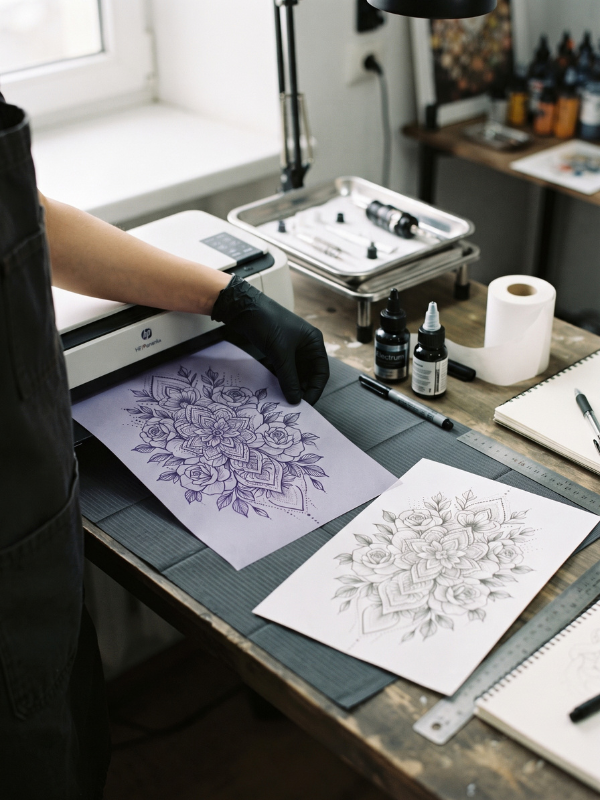
Check the Stencil While Standing Naturally
A design may look balanced on paper but feel different when positioned on the body.
Before tattooing begins, ask to see the stencil in place. Stand naturally rather than holding an exaggerated pose.
Check the design from the front and, where possible, from different angles. Make sure the central elements sit where you expect and that the edges follow the intended contours.
If something looks wrong, speak up before the tattoo begins. Moving a stencil is much easier than changing a finished tattoo.
Think About Future Body Changes
Your chest may change with age, exercise, weight changes, and other factors.
You cannot predict every change, but you can avoid planning a tattoo around an extremely specific temporary appearance.
If you expect major changes in muscle size or body weight, discuss your concerns with your artist. They can help you think about placement and design flexibility.
Plan for Possible Extensions
If you are considering a larger body composition, these back tattoo ideas can help you explore different approaches to scale, coverage, and design flow.
Perhaps a design on one pectoral could eventually connect to the shoulder. Alternatively, a central symbol might become part of a larger chest composition.
If that possibility interests you, mention it before the first appointment. The artist can consider spacing and positioning so future work has room to develop.
How Painful Are Chest Tattoos?
Pain is one of the questions worth considering before booking a chest tattoo.
The experience varies from person to person. The size of the tattoo, the technique used, the length of the session, and the exact placement can all influence discomfort.
Areas with more soft tissue may feel different from areas close to bone. For some people, the sternum and collarbone regions are particularly uncomfortable.
A large chest piece may also involve several hours of tattooing or multiple sessions. It is worth discussing the expected session length before committing to the full design.
You can prepare by getting enough sleep, eating a proper meal beforehand, and staying hydrated. Wear clothing that allows the artist to access the area comfortably.
Do not hesitate to discuss breaks with your artist. You do not need to prove how much discomfort you can tolerate.
If you are planning a large tattoo, ask if dividing the work into multiple sessions makes sense for your design and circumstances.
Common Mistakes to Avoid When Choosing Chest Tattoo Ideas
A little planning can prevent problems that are difficult or expensive to correct later.
Copying a Tattoo Without Considering Your Anatomy
A reference image is useful, but it should not be treated as a template that must be reproduced exactly.
The original tattoo may have been designed for a different chest width, shoulder position, or body proportion.
Use the reference to explain what you like. Then allow your artist to adapt the design to your body.
Choosing Too Much Detail for a Small Space
Tiny lettering and intricate patterns can lose clarity when they are squeezed into a small area.
If you love a detailed design, ask if increasing the size or simplifying certain elements would produce a better result.
It is better to make that decision before the tattoo begins.
Ignoring Natural Alignment
Symmetrical tattoos require careful positioning.
If the central point is misplaced or the design sits unevenly, the imbalance may be noticeable.
Ask your artist to check the stencil while you stand naturally. Take the time to review it before approving the placement.
Filling Every Inch of Skin
A large tattoo does not need to cover every available area.
Leaving negative space can help the main subject stand out. It can also make the composition easier to expand later.
Think about the overall design rather than assuming more ink will automatically create a better result.
Choosing an Artist Based Only on Price
Price matters, especially for larger tattoos. However, choosing an artist solely because they offer the lowest rate can be risky.
Review healed work, check that the artist follows appropriate hygiene practices, and look for experience with the style you want.
A detailed chest tattoo requires more than a good reference image. The artist must also understand composition, placement, and how to execute the design well.
Rushing the Decision
You may feel excited after finding a design that seems perfect. Still, give yourself time to consider the size, location, meaning, and long-term commitment.
Save your references. Compare a few options. Discuss your preferences during a consultation.
If you are still uncertain about a large design, it is reasonable to take more time before booking.
How to Prepare for a Chest Tattoo Consultation
A consultation helps you and your artist agree on the design before the actual tattooing begins.
You do not need to arrive with every detail decided. However, bringing a few clear references can make the conversation easier.
Start with images that show the styles you like. You might prefer bold blackwork, realistic shading, fine lines, or geometric patterns.
Next, explain what you want the tattoo to communicate, if it has a personal meaning. If the design is purely decorative, that is fine too.
Be clear about the placement you have in mind. Tell the artist if you want a small piece, a half-chest design, or something that covers both sides.
It also helps to discuss your budget. Your artist can explain what is realistic within that amount and if the design needs to be simplified or completed in stages.
Ask questions such as:
- Have you worked on chest tattoos with a similar design?
- How would you adapt this reference to my chest shape?
- Would the design look better at a larger size?
- How many sessions might be needed?
- Could this design be extended toward my shoulder later?
- What should I expect during healing?
- What is included in the quoted price?
Most importantly, give yourself time to review the proposed design. You should understand the placement and feel comfortable with the plan before the tattoo begins.
Chest Tattoo Aftercare and Long-Term Appearance
Planning the tattoo is important, but looking after it properly matters too.
Follow your artist’s aftercare instructions. Keep the area clean, avoid unnecessary friction, and do not pick at peeling skin or scabs.
Wear clothing that does not rub excessively against the fresh tattoo. Your artist can also advise you on exercise, showering, and other activities during the initial healing period.
Avoid swimming and soaking the tattoo until it has healed sufficiently, as advised by your tattoo professional.
Sun protection matters once the tattoo has healed. Excessive sun exposure can affect the appearance of tattoo ink over time, so protect the area when it is exposed.
Remember that a fresh tattoo may look different as the skin heals. Do not judge the final result too early.
If you notice signs of infection, such as worsening redness, increasing pain, spreading warmth, or unusual discharge, seek medical advice rather than relying on routine aftercare alone.
A well-planned design and sensible aftercare give you a better foundation for enjoying your tattoo over the long term.
Frequently Asked Questions
What Are the Best Chest Tattoo Ideas?
The best chest tattoo ideas depend on your style, preferred placement, and the amount of coverage you want. Popular options include realistic animal portraits, symmetrical ornamental designs, abstract patterns, floral tattoos, geometric work, and meaningful lettering.
Start with the designs you genuinely like, then consider how they will fit your chest.
What Are the Best Small Chest Tattoo Ideas?
Small chest tattoo ideas include initials, tiny flowers, dates, simple symbols, stars, and fine-line designs near the collarbone.
Choose a design with enough space for its details to remain clear. Your artist may recommend simplifying the artwork if it contains too many tiny elements.
Do Chest Tattoos Look Good on Every Body Type?
Chest tattoos can be designed for a wide range of body types.
The important factors include placement, scale, proportions, and the relationship between the design and the natural contours of your chest. You do not need a particular body shape to enjoy a chest tattoo.
Should a Chest Tattoo Be Symmetrical?
No. Symmetrical tattoos can create a balanced look, especially when they extend across both pectorals. However, asymmetrical designs can also work beautifully.
A tattoo on one side of the chest, for example, can feel complete when the composition is planned intentionally.
Choose the arrangement that suits your design rather than assuming every chest tattoo needs a matching side.
How Do I Choose the Right Size for a Chest Tattoo?
Consider the available space, the level of detail, your preferred visibility, and your budget.
Large designs provide room for more detail, while smaller tattoos can offer a more understated appearance. However, the artwork must be sized appropriately to remain clear.
Your artist can help you find a suitable size before the stencil is finalized.
Are Chest Tattoos More Painful Than Other Tattoos?
Pain varies with the person, placement, tattoo technique, and session length.
Some people find areas near the sternum and collarbones more uncomfortable because they are close to bone. Other areas may feel more manageable.
Discuss the expected experience with your artist, especially if you are planning a large piece or this is your first tattoo.
Can I Extend a Small Chest Tattoo Later?
Yes, some small chest tattoos can be extended into larger compositions.
However, the original placement and spacing can affect what is possible. If you think you may want to add more work later, tell your artist before the first tattoo is done.
Planning ahead can help you avoid unnecessary limitations.
How Long Does a Chest Tattoo Take to Heal?
The initial healing period commonly takes a few weeks, but complete healing can take longer depending on the tattoo, your skin, and how well you follow aftercare instructions.
Large or heavily shaded tattoos may need more attention during recovery.
Follow your artist’s advice and seek medical guidance if you notice symptoms that suggest infection.
Conclusion
Choosing a chest tattoo involves more than finding an image that looks good on someone else. You also need to think about placement, size, body proportions, and how the design will look when you move naturally.
Some people will prefer a large piece that covers both pectorals. Others will be happier with a small symbol near the collarbone or a design that occupies one side of the chest.
There is no single right choice.
Take time to explore chest tattoo ideas, save references that reflect your taste, and discuss your plans with an experienced tattoo artist. Most importantly, make sure the final design feels right for your body and the way you want to express yourself.
A tattoo is a long-term commitment. Giving the design proper thought before your appointment can help you make a choice you feel comfortable wearing for years to come.
One Comment