
20 Starter Loc Mistakes Beginners Should Avoid
When I started my locs, my hair was just three months old. I was starting my loc journey with very short hair, and I knew there was a lot I still had to learn about taking care of locs. Looking back, I understand why beginners need patience and the right information from the beginning.
Starting locs is exciting. You finally get to begin the journey you have been thinking about, and you start imagining how your hair will look in the coming months. However, the early stages can also leave you with so many questions.
Why does my hair look fuzzy? Why are some locs looking different from others? Is my hair growing? Am I doing something wrong?
These are the kinds of questions that can make you worry about your hair, especially when you are new to locs.
One thing I want you to understand is that your locs will change as they develop. They will not look freshly installed every day, and not every change means something is wrong.
Still, there are some starter loc mistakes you should know about before they become habits. Some involve how you wash and maintain your hair. Others come from expecting too much too soon or trying to make your locs look perfect all the time.
Here are 20 starter loc mistakes beginners should avoid, along with simple ways to care for your hair as you learn your own loc journey.
1. Starting Locs Without Understanding the Process
One of the first starter loc mistakes beginners can make is starting their loc journey without understanding what comes next.
It is easy to focus on installation day. You think about how your hair will look, the loc size you want, and how excited you will feel when you finally see your new locs.
But what happens after that?
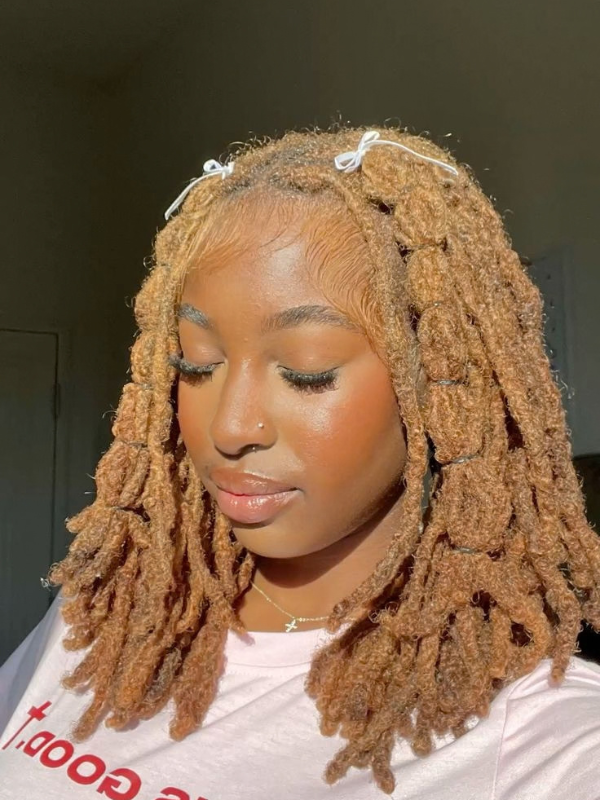
Your starter locs will go through different stages. They may look neat at first, become fuzzy after a while, and change in size and texture as they develop. Depending on your hair and starter method, some sections may also loosen.
If you do not know what to expect, these changes can make you think you have done something wrong.
Many starter loc mistakes happen because beginners do not know what to expect during the first few months.
This is why I believe beginners should learn about the loc process before getting started. Understand the method you want to use, how to maintain it, and what changes are normal during the early stages.
You do not need to know everything before starting. However, having realistic expectations can save you a lot of unnecessary worry.
2. Choosing the Wrong Starter Loc Method
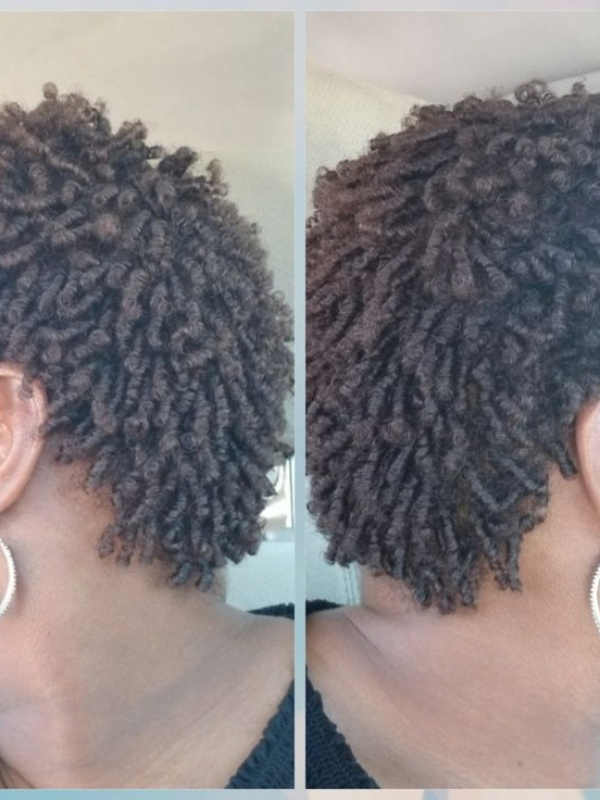
Another mistake is choosing a starter loc method simply because you like how it looks on someone else.
You may see someone with beautiful comb coils and decide that is exactly what you want. However, the method that works well for one person may not be the best choice for your own hair.
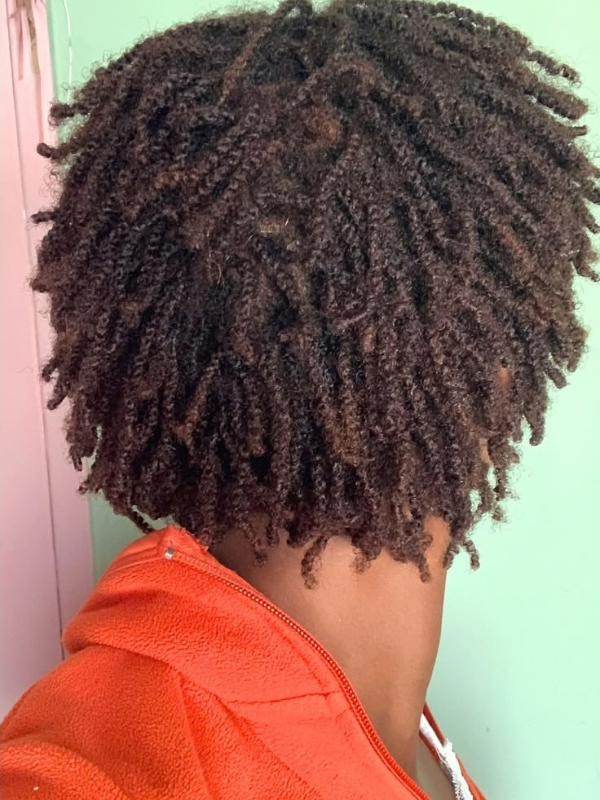
Common starter loc methods include comb coils, two-strand twists, braids, and interlocking. Each method has its own characteristics, and the best choice depends on factors such as your hair texture, length, density, desired loc size, and maintenance routine.
For example, comb coils can unravel more easily during the early stages, especially when they are exposed to friction or frequent manipulation. Other methods may be more suitable for certain hair types or lifestyles.
Since I started my locs when my hair was just three months old, I know that starting with very short hair is a detail worth considering. However, hair length alone does not determine which method you should choose.
Before installing your locs, speak with an experienced loctician. Explain the look you want and ask which method is suitable for your hair.
It is better to make an informed decision from the beginning than to choose a method based only on pictures.
3. Starter Loc Mistakes to Avoid When Choosing Your Loc Size
Have you ever admired someone’s locs and thought you wanted exactly the same look?
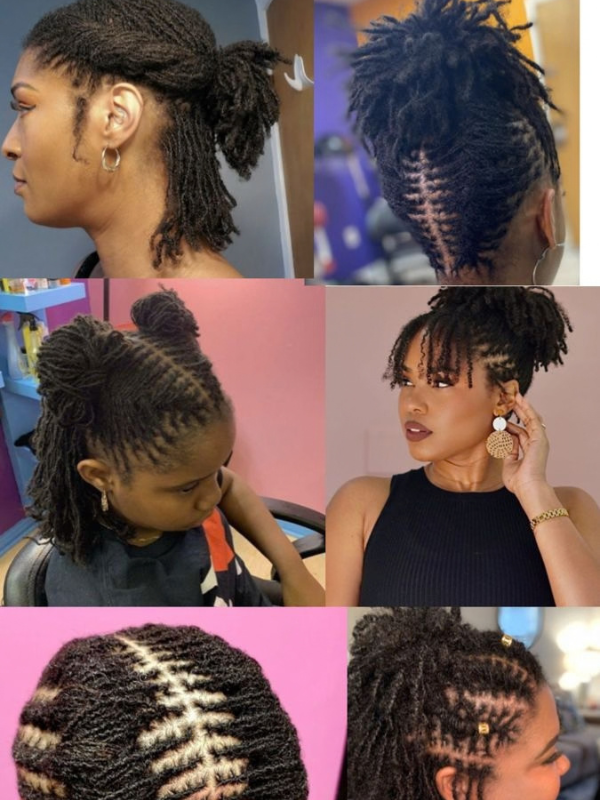
You may love how full their locs appear or how neatly their parts are arranged. However, your final result will depend partly on the size of your sections and your natural hair.
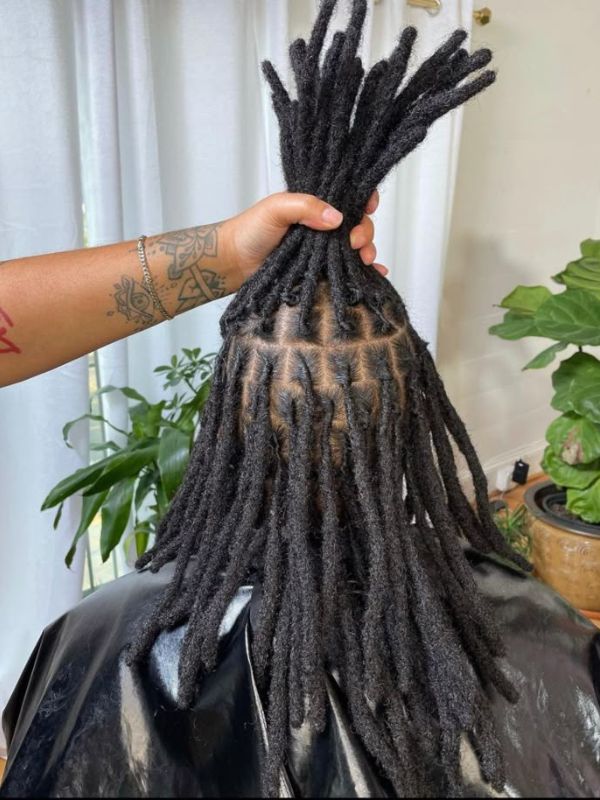
Smaller sections generally produce smaller locs, while larger sections tend to produce thicker locs. Your hair density and texture also influence the result.
This is why you should think about loc size before installation.
If you want thick locs, choosing very small sections may not give you the look you expect. Similarly, if you prefer smaller locs, large sections may not suit your plans.
Parting also affects how your scalp looks when your hair is styled. A pattern that looks beautiful on someone else may not be exactly what you want for yourself.
Before starting, look at examples of mature locs in the size you like. Do not rely only on pictures taken immediately after installation.
Discuss your preferences with your loctician and ask how the sections may develop over time.
One of the starter loc mistakes you want to avoid is making a decision about size without thinking about the long-term result.
4. Starter Loc Mistakes That Come From Expecting Perfect Locs
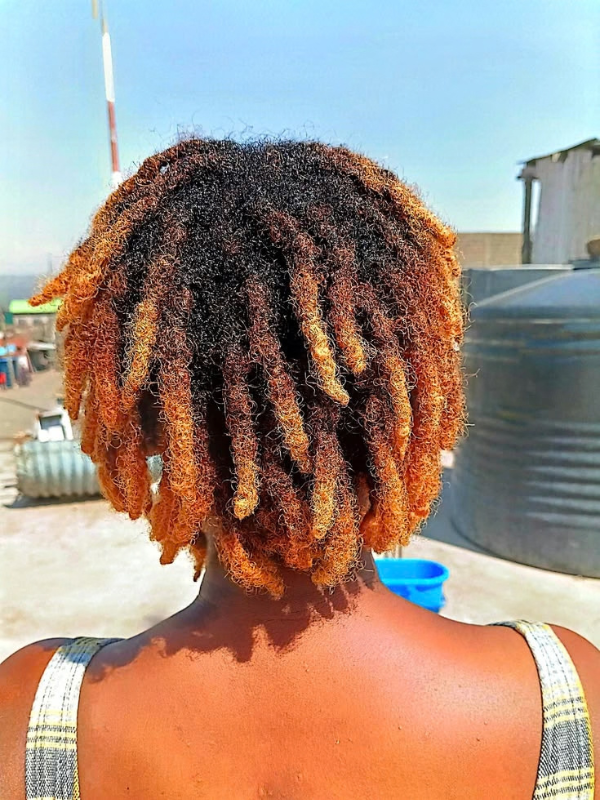
Let me tell you something. Your starter locs do not have to look perfect every day.
When your locs are new, you may pay attention to every little detail. You notice a loose hair here, a fuzzy section there, and a loc that seems different from the others.
Before you know it, you are checking your hair repeatedly to see whether everything still looks right.
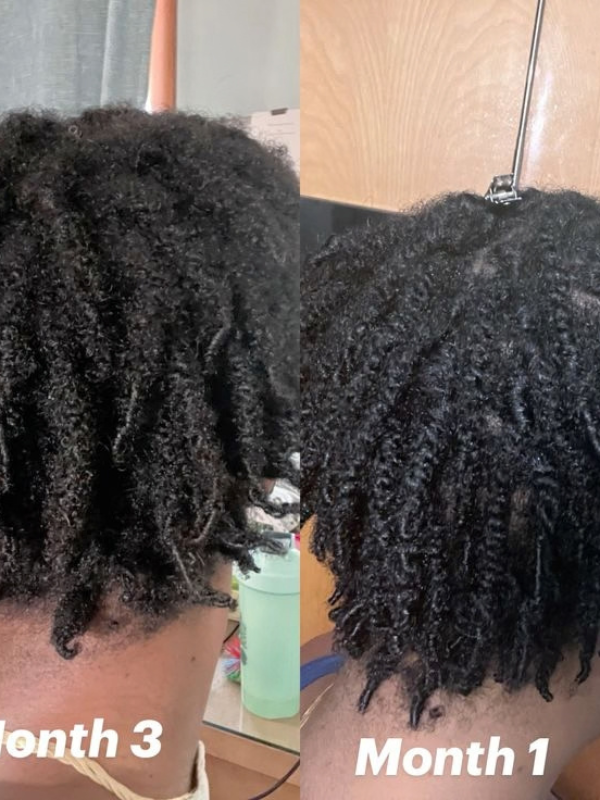
However, frizz and changes in appearance are common during loc formation. Your hair is developing, and it will not always have the same neat appearance it had on installation day.
This is something beginners need to understand because unrealistic expectations can make the early stages more stressful than necessary.
Instead of trying to remove every bit of frizz, learn what is normal for your starter method.
Of course, you should pay attention to persistent thinning, painful tension, or sections that repeatedly unravel. Those issues may need professional attention.
But ordinary frizz is not automatically a sign that your locs are failing.
Give your hair room to develop. You do not have to fix everything you see in the mirror.
5. Constantly Touching and Retwisting Your Locs
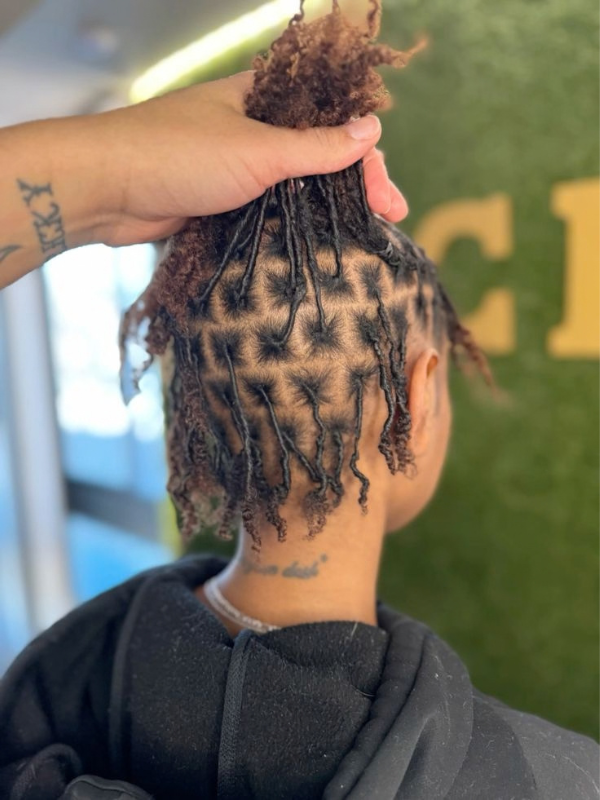
One of the starter loc mistakes you should try to avoid is constantly touching your hair.
When you first start locs, it can be tempting to twist them with your fingers whenever you have a free moment. You may check whether they are still in place or try to make them look neater.
I understand the temptation. Your hair is new, and you want to make sure everything is going well.
However, frequent manipulation can interfere with your locs, especially during the early stages. Repeated twisting can also place unnecessary tension on your roots.
You do not need to handle your locs every time you notice a loose hair.
Try to leave your hair alone between maintenance sessions. If something genuinely concerns you, examine it without pulling or twisting it repeatedly.
Your locs need time to develop. Constantly checking them will not make that process happen faster.
Sometimes, learning to leave your hair alone is one of the most useful things you can do during your loc journey.
6. Starter Loc Mistakes to Avoid When Your Locs Unravel
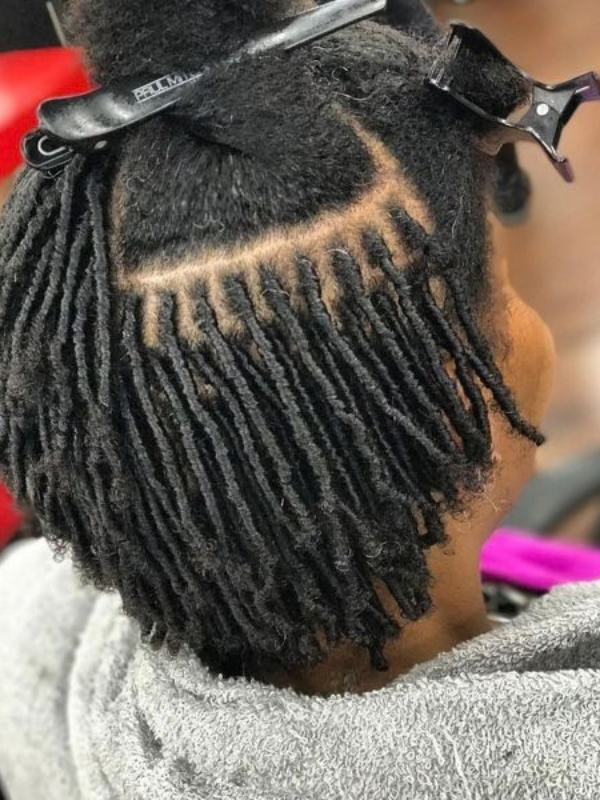
Imagine getting your locs installed and feeling happy with how they look. Then, after washing your hair or a few weeks of normal activity, you notice that some sections have loosened.
Your first thought may be, “Have I ruined my locs?”
Unraveling can be frustrating, especially when you are new to locs. However, some loosening can happen during the early stages, depending on your starter method and hair texture.
Comb coils, for example, may loosen more easily than some other methods. Friction, water, and frequent handling can also contribute.
The important thing is not to panic or immediately assume you need to start again.
If one or two sections have loosened, ask your loctician whether they need to be corrected. If several sections keep unraveling, review your maintenance routine and washing technique with someone experienced.
Do not keep twisting loose hair aggressively in an attempt to force it into place.
Also, remember that not every loose hair needs immediate attention. Understanding your starter method will help you decide when to leave your hair alone and when to seek help.
7. Retwisting Too Frequently
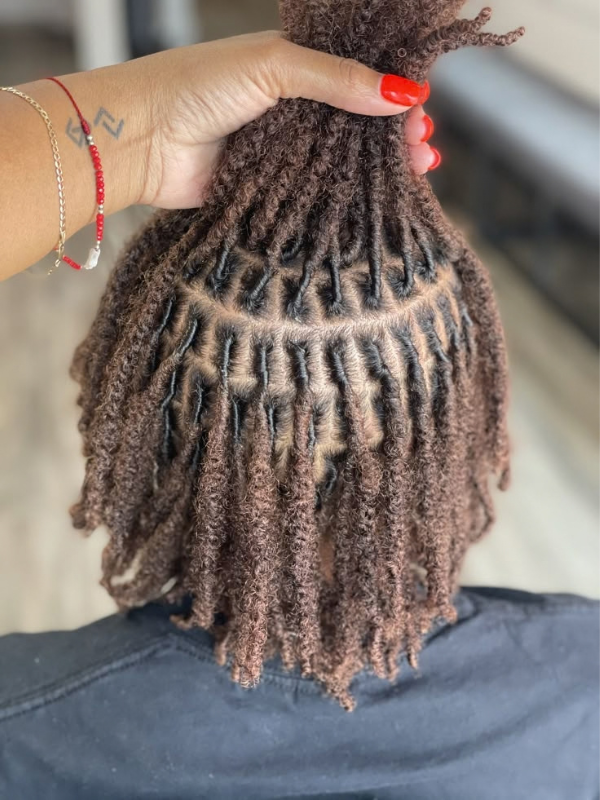
Freshly retwisted locs can look neat and beautiful. The roots are defined, and your parts may be easier to see.
Naturally, you may want your hair to look that way all the time.
Frequent retwisting is one of those starter loc mistakes that can affect your roots when you do it too often or too tightly.
However, your roots will continue to grow. New growth and fuzzy roots are normal parts of having locs.
You do not need to retwist every time your hair starts looking less neat.
Frequent retwisting, especially when it is too tight, can place stress on your roots. Over time, repeated tension may contribute to thinning and breakage.
Your maintenance schedule should depend on your hair, starter method, and how your locs are developing.
If you are unsure how often to retwist, ask an experienced loctician for advice. Avoid following someone else’s schedule without considering your own hair.
Remember, the goal is not to keep your roots looking freshly retwisted every day. It is to maintain your locs without putting unnecessary stress on your hair.
8. Avoiding Shampoo Because You Fear Unraveling
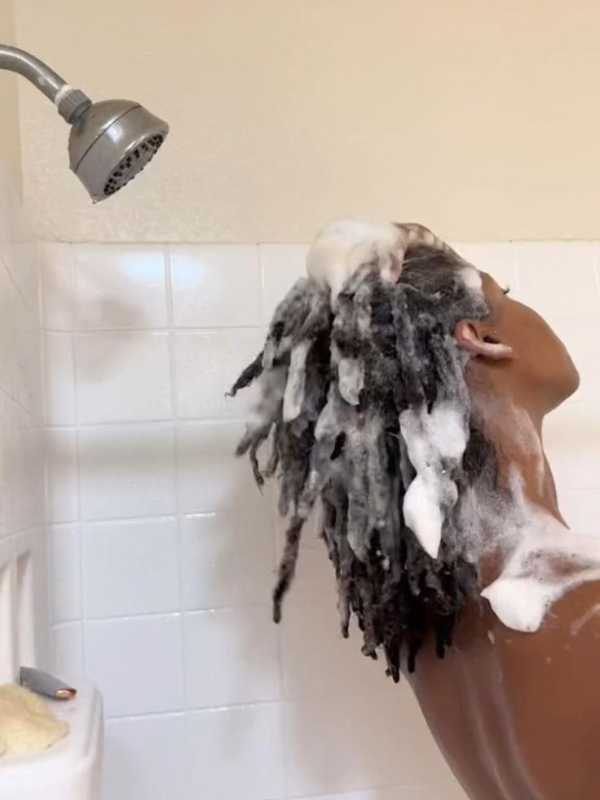
Some beginners are afraid to wash their starter locs because they think water will ruin everything.
I understand why this fear exists. When your locs are new, you want to protect them, especially if you have heard stories about unraveling.
However, avoiding shampoo completely is not a good solution.
Your scalp still produces oil, sheds dead skin cells, and collects sweat and other debris. Over time, these can build up if you do not clean your scalp.
A dirty or irritated scalp can make your loc journey uncomfortable.
Instead of avoiding washing, learn how to wash your hair carefully.
Choose a gentle shampoo that suits your scalp. Use a washing technique appropriate for your starter method, and avoid rough handling that could loosen your locs unnecessarily.
If your locs are very new, ask your loctician when and how to wash them.
You do not need to choose between clean hair and protecting your locs. With the right approach, you can work towards both.
9. Starter Loc Mistakes to Avoid When Washing Your Hair
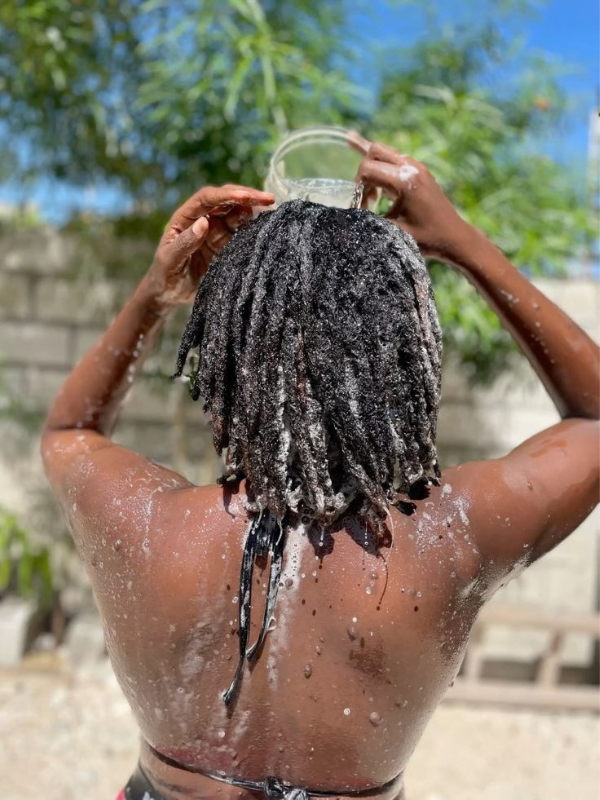
While avoiding shampoo is not a good idea, washing your starter locs roughly can also create problems.
Your scalp does not need to be scrubbed aggressively to become clean.
When washing, focus on gently cleansing your scalp. Avoid pulling, rubbing, or twisting your locs unnecessarily.
You should also pay attention to how you dry your hair. Rubbing your locs roughly with a towel can create friction and disturb loose sections.
If you have comb coils or another starter method that tends to unravel, ask your loctician to demonstrate a suitable washing technique.
You may need to handle your hair differently during the early stages, but that does not mean leaving your scalp dirty.
The goal is to find a balance. Keep your scalp clean while treating your new locs gently.
10. Starter Loc Mistakes That Lead to Product Buildup
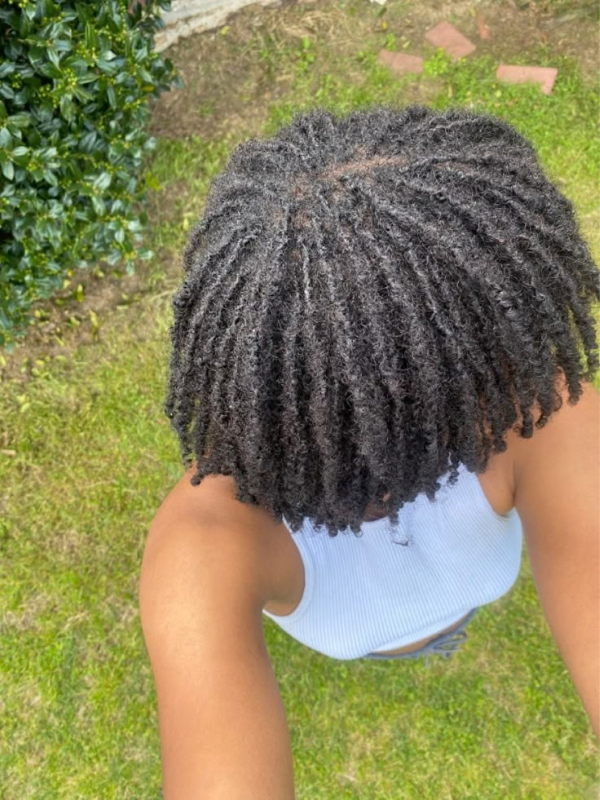
When you start locs, you may feel that you need several products to keep your hair healthy.
You might buy oils, creams, gels, butters, and different sprays because you want your locs to grow well.
However, more products do not automatically mean better hair care.
Heavy creams, waxes, and some styling products can leave residue inside your locs. With repeated use, this may contribute to buildup that becomes difficult to remove.
You do not need to apply several products every day.
Start with a simple routine. Use a suitable shampoo, keep your scalp clean, and use additional products only when they serve a purpose.
It is also worth remembering that oil does not automatically moisturise dry hair. Oil can help reduce moisture loss, but it does not replace water.
Pay attention to how your hair and scalp respond to the products you use. If something leaves a heavy coating, causes irritation, or creates persistent residue, reconsider using it.
One of the easiest starter loc mistakes to avoid is turning a simple hair routine into a complicated collection of products.
11. Going to Bed With Wet Locs
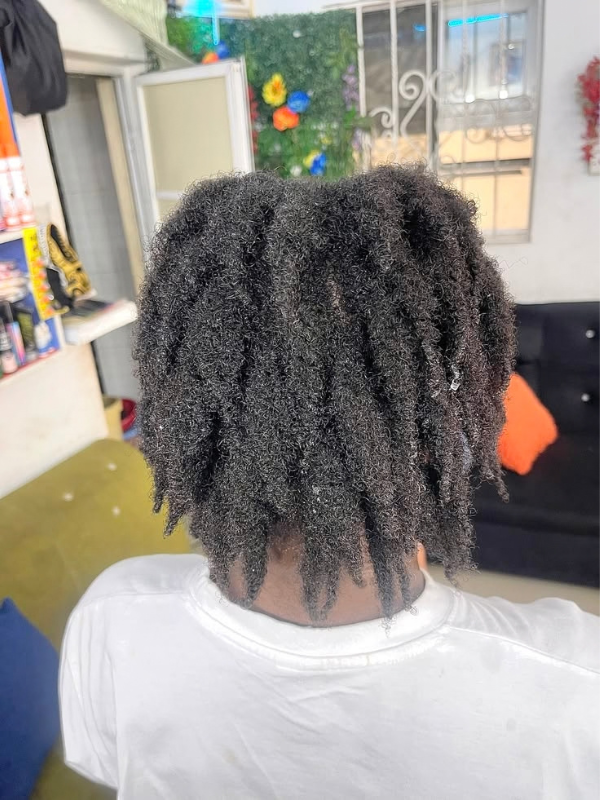
Washing your locs is important, but drying them properly matters too.
If you wash your hair late at night and go straight to bed while it is still wet, the roots and inner sections may remain damp for a long time.
Locs can hold moisture, especially as they become thicker and more mature. Prolonged dampness can encourage unpleasant odours and create conditions that are not ideal for scalp health.
After washing, gently squeeze out excess water with a clean towel. Allow your hair to dry in a well-ventilated space, or use a hair dryer on a suitable setting if needed.
Make sure your roots and the inner sections are dry before covering your hair for the night.
A bonnet is useful for protecting your locs, but it should not be used to trap soaking-wet hair against your scalp.
Give your hair enough time to dry properly. It is a small habit that can make your loc care routine easier.
12. Starter Loc Mistakes That Can Affect Your Locs at Night

You may spend time caring for your locs during the day, but what happens while you sleep?
Your hair rubs against your pillowcase throughout the night. This friction can disturb your locs and contribute to frizz or lint getting trapped in your hair.
A satin or silk bonnet, scarf, or pillowcase can help reduce friction.
You do not need to buy every hair accessory you see online. Choose an option that feels comfortable and fits your hair without pulling tightly around your edges.
Also, keep your bonnet and pillowcase clean. Small fibres can become trapped in locs, and removing them later may be difficult.
If you wear a bonnet, make sure the band is not too tight. Protecting your locs should not come at the expense of your hairline.
A simple nighttime habit can help you protect your hair without adding unnecessary steps to your routine.
13. Expecting Your Locs to Grow Faster Than They Naturally Do
Let’s be honest. Many people look forward to having long locs.
You may already be imagining how your hair will look after six months, one year, or even longer. You may find yourself checking your length every few weeks.
However, visible length does not always tell the full story.
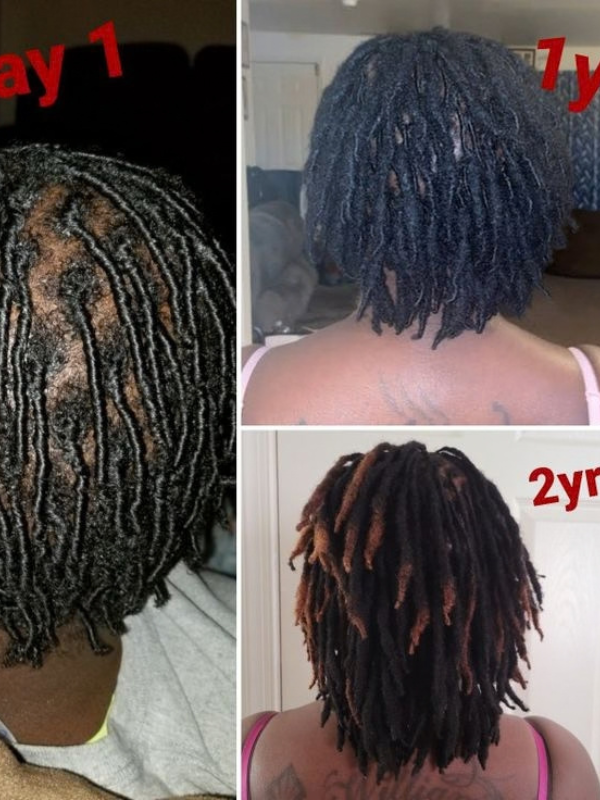
Your hair can grow while your locs appear shorter because of shrinkage, changes in texture, or the way your hair is forming. Your locs may also change in thickness and shape as they develop.
This can make it difficult to judge your progress by looking in the mirror every day.
Hair growth varies from person to person. Genetics, overall health, and hair care practices can influence your progress and ability to retain length.
Instead of checking your length constantly, take pictures every few months. Comparing pictures over time may help you notice changes that are difficult to see from day to day.
Do not rush your hair or assume it is not growing simply because you cannot see a dramatic difference.
Your loc journey is not a race. Give your hair time.
14. Starter Loc Mistakes That Come From Comparing Your Journey
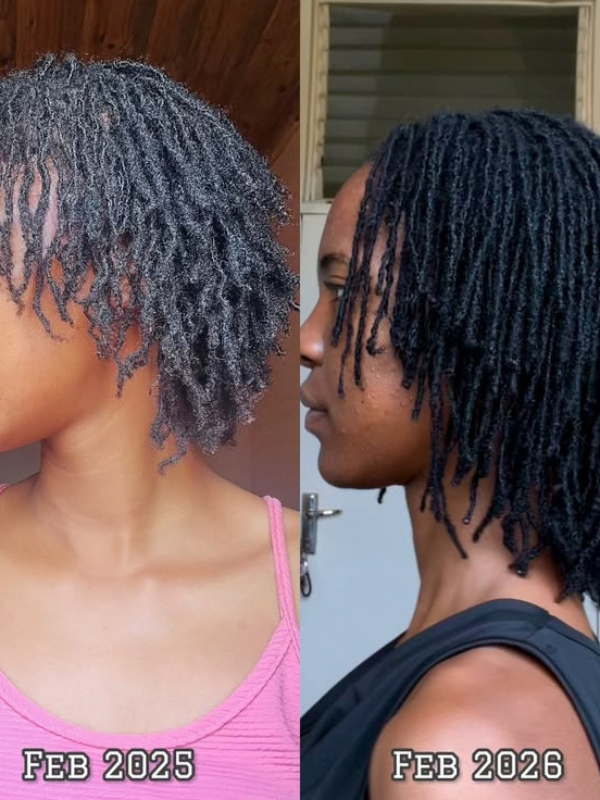
Social media can make it difficult to appreciate your own progress.
You may see someone who started locs around the same time as you. Their hair looks full, neat, and long, while yours looks shorter or fuzzier.
It is easy to wonder whether you are doing something wrong.
However, two people can start their loc journeys on the same day and have very different results.
Hair texture, density, starting length, loc size, installation method, and maintenance routines can all influence how locs develop.
For example, someone who starts with longer hair will naturally have a different starting appearance from someone who begins with very short hair.
Since my own loc journey started when my hair was just three months old, I know that the starting point is an important detail when discussing locs. It is not fair to expect every head of hair to look the same.
You can admire someone else’s locs without using their progress as a deadline for your own.
Focus on learning about your hair and finding a routine that works for you.
Your locs do not need to look like anyone else’s to be worth appreciating.
15. Expecting Instant Length and Mature Locs
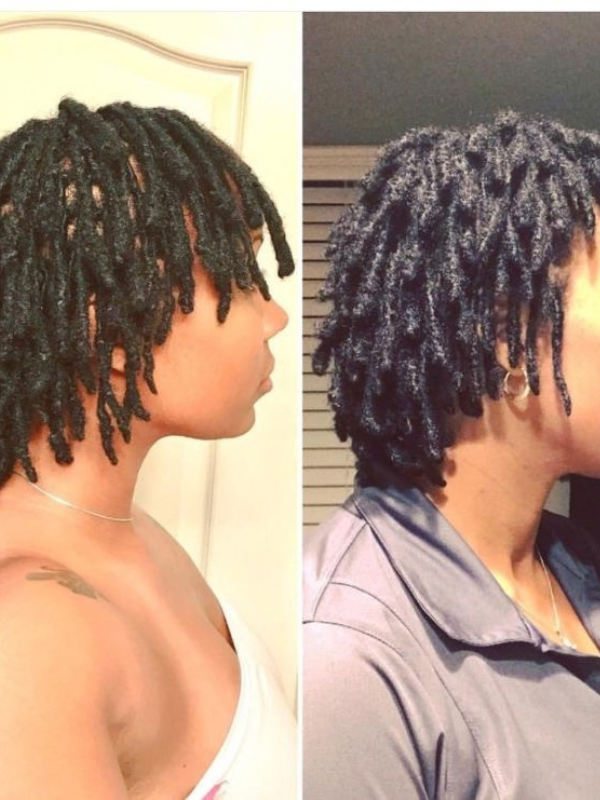
Starter locs need time to develop. They will not look like mature locs immediately after installation.
During the early stages, your hair may become fuzzy, change in texture, or develop small bumps as the strands begin to lock. This process is often called budding.
Some people also experience changes in loc thickness or temporary shrinkage.
These changes can be confusing if you expected your locs to remain neat and uniform from the beginning.
However, the time it takes for locs to mature varies. Your hair texture, starter method, loc size, and maintenance routine can all affect the process.
Instead of setting a strict deadline for when your locs should look mature, pay attention to how they change over time.
Take pictures, maintain your hair appropriately, and ask your loctician questions when something concerns you.
You do not need to force your locs to mature faster. Allow the process to happen naturally.
16. Ignoring Tightness, Pain, or Thinning
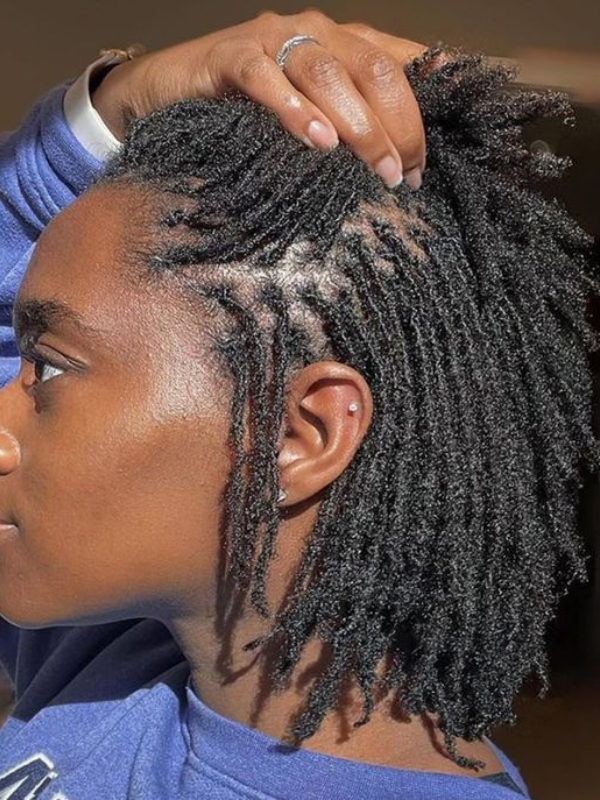
Your locs should not cause you constant pain.
Sometimes, people assume that tight roots mean the installation was done properly. However, painful tension is not something you should ignore.
Among the starter loc mistakes worth taking seriously, ignoring pain and thinning is one of the most important to avoid.
If your scalp hurts after installation or retwisting, or you notice bumps, persistent soreness, or thinning around your hairline, pay attention.
Repeated tension can damage your hair and contribute to traction-related hair loss. Tight hairstyles and aggressive retwisting can make the problem worse.
If a style feels too tight, ask for it to be loosened. If you notice ongoing scalp pain, irritation, or hair loss, consider seeing a qualified healthcare professional or dermatologist.
Do not wait until your hairline becomes noticeably thinner before taking the problem seriously.
Healthy roots matter more than perfectly defined parts. Your locs should be comfortable enough for you to go about your day without constantly feeling pain or pressure.
17. Neglecting Scalp Care During Your Starter Loc Journey
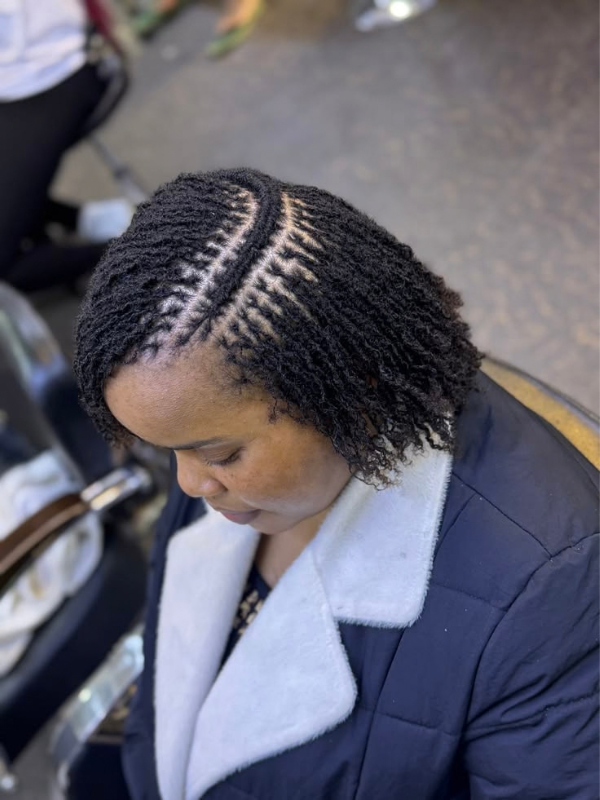
It is easy to focus so much on your locs that you forget about the scalp underneath them.
However, healthy hair care begins with paying attention to your scalp.
Keep your scalp clean, avoid products that irritate your skin, and notice changes such as persistent itching, redness, soreness, or unusual flaking.
You should also avoid scratching aggressively. Scratching may irritate your skin and make discomfort worse.
Another mistake is applying more oil whenever your scalp feels itchy. Itching does not always mean your scalp needs oil. It may be related to dryness, product sensitivity, irritation, or another scalp condition.
If symptoms persist, seek professional advice rather than repeatedly trying new products.
You do not need a complicated scalp routine. Start with gentle cleansing and pay attention to what your scalp is telling you.
18. Wearing Tight Hairstyles Too Early
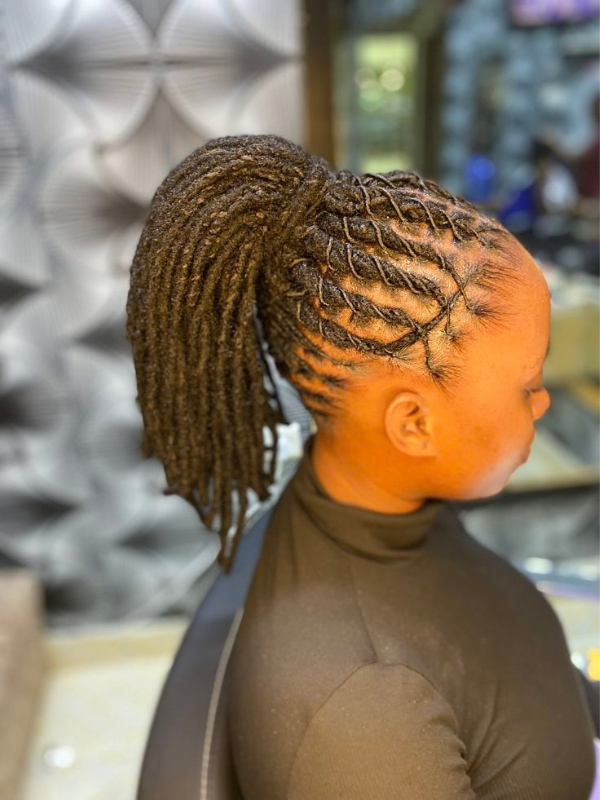
Once you start locs, you may want to experiment with different hairstyles.
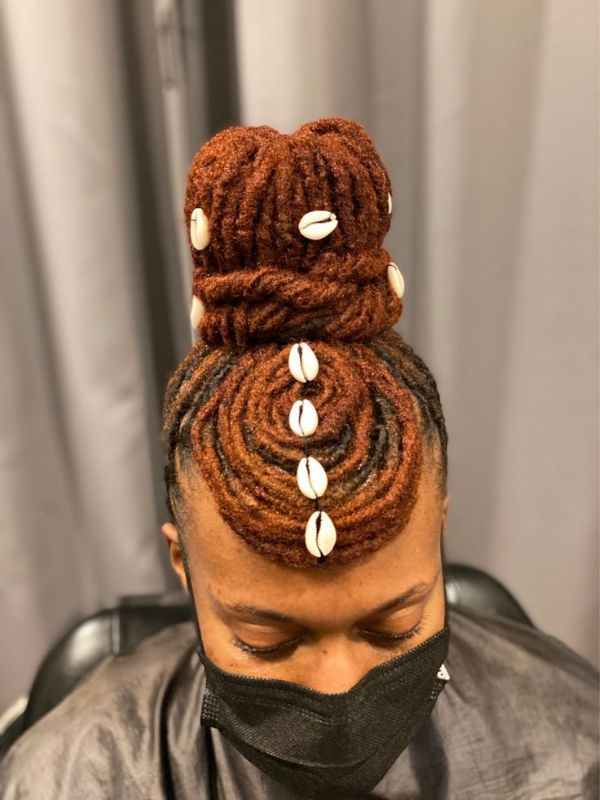
You might try ponytails, buns, pulled-back styles, or other looks you have seen online.
However, some hairstyles can place too much tension on newly formed locs and delicate roots.
This is especially important if your locs are short or your hairline is already fragile.
Avoid styles that pull tightly on your scalp. Be careful with heavy accessories, tight bands, and repeated styling that places pressure on the same areas.
Loose, comfortable styles are generally a better choice when you want to keep tension low.
Also, do not force your locs into a style they are not yet long enough to hold comfortably.
Your hair will grow, and you will have more styling options over time. For now, choose styles that protect your roots.
19. Trying to Fix Every Frizzy Starter Loc
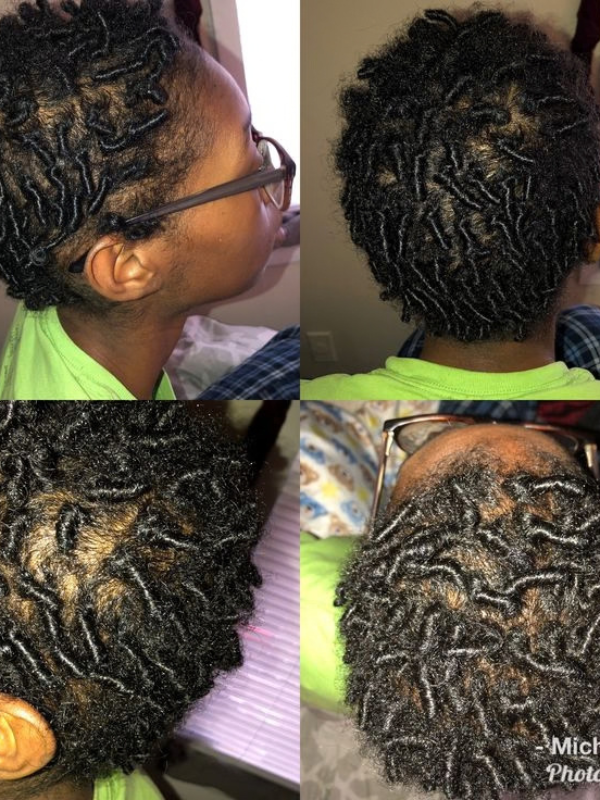
Frizz can make beginners feel as though their locs are not developing properly.
You may notice loose hairs sticking out and feel tempted to cut them off or push them back into every loc.
However, frizz is common during loc formation. Loose hairs do not automatically mean your locs are damaged or failing.
Constantly trying to make every loc look smooth can lead to unnecessary manipulation.
Avoid cutting stray hairs simply because they look out of place. Those hairs may be part of the loc, and cutting them can affect its appearance or reduce its thickness.
If you are concerned about how your locs are forming, ask an experienced loctician to examine them.
There is a difference between normal frizz and a section that needs maintenance.
Learning that difference can save you time and prevent you from doing things to your hair that it does not need.
Avoiding these starter loc mistakes starts with understanding that frizz is not always a problem that needs fixing.
20. Giving Up Too Early Is One of the Starter Loc Mistakes to Avoid
Starting locs requires patience, and some stages can be more challenging than others.
You may love your hair during the first few weeks, then feel disappointed when it becomes fuzzy or changes shape. You might even start thinking about combing everything out and starting again.
Before making that decision, give yourself time to understand what is happening.
Your locs may simply be going through a normal stage of development. They do not have to look perfect at every point in the journey.
At the same time, patience does not mean ignoring genuine problems. If your locs are repeatedly thinning, your scalp hurts, or you notice persistent irritation, seek advice from someone who understands locs.
The goal is to make informed decisions rather than reacting to every change.
Take pictures of your progress. Learn about your hair. Give yourself room to adjust to your new look.
Most importantly, remember why you wanted to start locs in the first place. Do not let the pressure to have perfect-looking hair take away all the joy of your journey.
What I Have Learned About Avoiding Starter Loc Mistakes
Starting locs does not mean you have to get everything right from the beginning.
You will learn as your hair changes. You may need to adjust your washing routine, reconsider a product, or ask your loctician questions you did not think to ask before installation.
That is part of learning to care for your hair.
When it comes to starter loc mistakes, the most important things to remember are to avoid excessive manipulation, protect your roots, keep your scalp clean, and give your hair enough time to develop.
You do not need a shelf full of products or a complicated routine to get started.
Also, do not mistake every change in your hair for a problem. Frizz, budding, shrinkage, and changes in appearance can be normal parts of the process.
However, persistent pain, noticeable thinning, or ongoing scalp irritation should not be ignored.
Your loc journey is personal. What works for someone else may not work exactly the same way for you.
Final Thoughts on Starter Loc Mistakes
Starting locs is a big decision, especially when you are unsure what to expect during the early stages. It is natural to have questions and worry about making mistakes.
I started my locs when my hair was just three months old, and that is an important part of my own journey. Every person’s experience will be different, but one thing remains important: learn your hair and give it time.
You do not have to panic over every loose hair, rush to retwist your roots, or compare your progress with someone else’s.
Take care of your scalp, be gentle with your locs, and ask for help when something does not seem right.
Most importantly, enjoy getting to know your hair. Your locs do not need to look perfect every day for you to be making progress.
This Post Showed You 20 Starter Loc Mistakes Beginners Should Avoid
You may also like:
How Long Should Your Hair Be Before Starting Locs
2 Comments