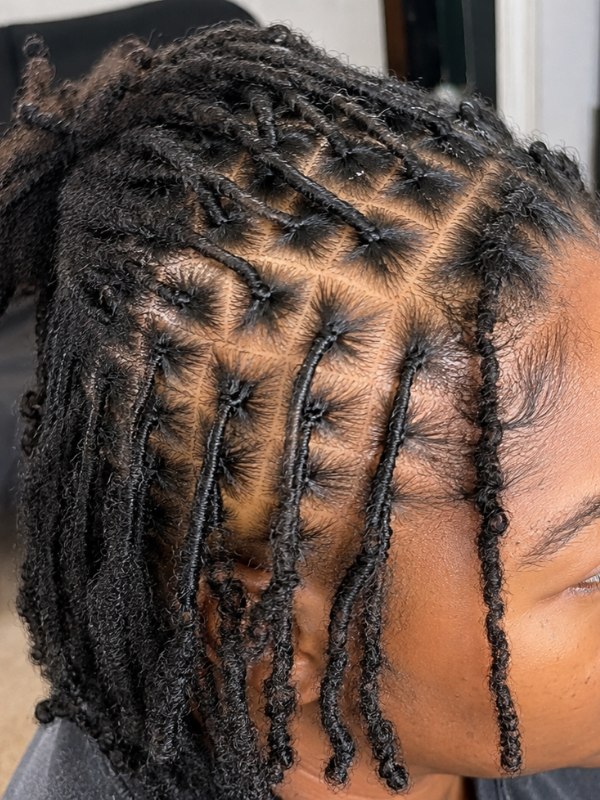
Starting your loc journey is exciting. One day, you have loose natural hair, and the next, you are looking in the mirror wondering when those neat little sections will finally turn into beautiful, mature locs.
But here is something every beginner should know. Starter locs are not supposed to look perfect.
They may unravel a little. They may become frizzy. Your parts may look different from someone else, and your hair may seem like it is taking forever to lock. None of this automatically means something is wrong.
Starter locs are the beginning of a process. Your hair needs time to mat, bud, tighten, and gradually develop into mature locs. The goal during this stage is not to force your hair to lock faster. Instead, it is to create the right conditions for your locs and scalp to remain healthy while your hair does what it naturally does.
If you are thinking about starting locs or you have already installed your first set, this starter locs guide will walk you through what to expect, how to care for your hair, common mistakes to avoid, and simple ways to keep your locs healthy and beautiful as they develop.
What Are Starter Locs
Starter locs are the initial stage of the loc journey. They are created by separating the hair into sections and using a method that allows those sections to gradually form into locs.
At this stage, the hair has not completely locked yet. Depending on your hair texture, starting method, and hair length, your locs may look like coils, twists, braids, or small sections of loose hair.
Some people notice their hair begins budding within a few weeks. Others may need several months before their locs feel noticeably more established. Your hair does not need to follow someone else’s timeline.
Frizz is also completely normal during this stage. In fact, some of the changes you may initially dislike are part of the locking process.
Your starter locs may become fuzzy, swell slightly, shrink, or appear less neat after washing. Try not to panic. Your hair is gradually changing structure, and that process takes time.
How to Start Locs
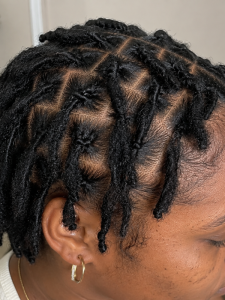
There are several ways to begin a loc journey. The best method depends on your hair texture, desired appearance, lifestyle, and how much maintenance you want.
Comb Coils
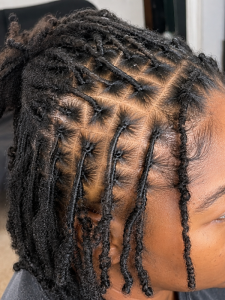
Comb coils are created by twisting small sections of hair around themselves with a comb.
They give starter locs a neat and defined appearance and are especially popular among people with tightly coiled natural hair.
One thing to remember is that comb coils can unravel during washing, particularly when they are new. Gentle washing and proper drying can help reduce unnecessary unraveling.
Two Strand Twists
Two strand twists are another popular way to start locs.
The hair is divided into sections and twisted together. As time passes, the twists gradually mat and develop into locs.
This method can give you a slightly fuller appearance during the early stages. It can also be a comfortable option if you already enjoy wearing your natural hair in twists.
Braids or Plaits
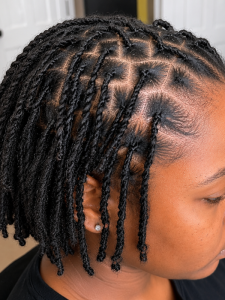
Braids can also be used to begin locs.
The braided sections gradually become more compact as the hair begins to lock. One benefit is that braids tend to have more stability during the early stage.
However, the original braid pattern may remain visible for some time before the hair fully develops into a loc.
Interlocking
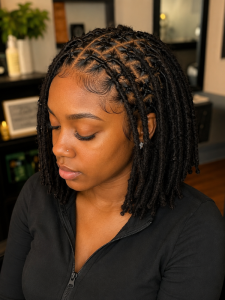
Interlocking involves pulling the end or section of hair through the base of the loc in a specific pattern.
It can provide more security between maintenance sessions and may be useful for certain hair textures or lifestyles.
Because improper interlocking can create unnecessary tension or weak areas, it is worth learning the technique properly or working with an experienced loctician.
Freeform Locs
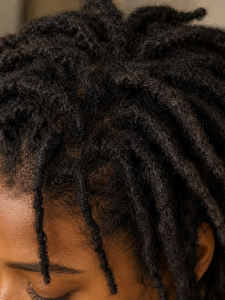
Freeform locs develop with minimal manipulation and less emphasis on maintaining perfectly uniform sections.
This approach gives the hair more freedom to develop naturally. The result can be beautifully unique because each person’s locs form differently.
How Long Do Starter Locs Take to Mature?
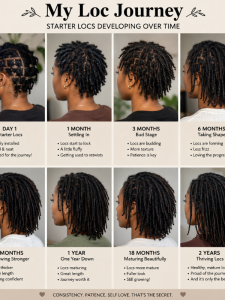
There is no universal starter loc timeline.
Your locs may begin to look more established after several months, but complete maturation can take considerably longer. Some loc journeys develop relatively quickly, while others take a year or more to reach a mature appearance.
Several factors can influence the process.
Your natural hair texture plays a role. Hair length and density can also affect how quickly sections begin to hold together. Your starting method, washing routine, maintenance habits, and everyday manipulation can make a difference too.
Instead of asking whether your locs are locking quickly enough, pay attention to gradual changes.
You may notice your locs becoming thicker, firmer, and less likely to unravel. You may also notice small areas of compacted hair forming inside the loc.
That process is known as budding.
The Different Starter Loc Stages
Understanding the stages can make the journey much less stressful.
Fresh Starter Locs
This is the beginning.
Your locs may look very neat immediately after installation, especially if they were freshly twisted or coiled. However, the appearance can change quickly.
You may notice loose hairs, frizz, unraveling, and changes in your parts.
Do not feel pressured to make them look freshly installed every day. Your hair needs time to develop.
Budding
Budding is an important part of the locking process.
You may feel small, firm areas developing along your locs. These areas are forming as the hair begins to compact and intertwine.
Budding does not always happen at exactly the same time throughout your head. One loc may begin budding while another still looks relatively loose.
That unevenness is normal.
Teenage Locs
The teenage stage is often where patience gets tested.
Your locs may look fuller, fuzzier, and less polished. They may also appear thicker than they did when you started.
This stage can be frustrating because your hair may seem less neat than before. However, the increased frizz and swelling can be part of the maturation process.
Mature Locs
Eventually, the locs become more established and compact.
They generally hold their shape better and require less frequent manipulation. However, mature locs still need proper cleansing, moisture, scalp care, and gentle maintenance.
Maturity does not mean you can stop caring for your hair.
How to Care for Starter Locs
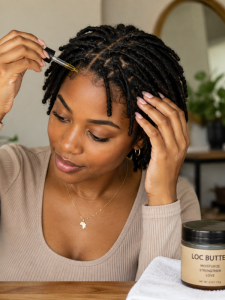
Healthy starter locs begin with a healthy scalp and a simple routine.
Keep Your Scalp Clean
One of the biggest mistakes beginners make is being afraid to wash their locs.
Clean hair can lock. Your scalp still needs regular cleansing, even when your locs are new.
Use a gentle shampoo and focus on cleansing the scalp without aggressively rubbing or pulling at the new locs.
A clean scalp is also more comfortable and can help prevent excessive product buildup.
Moisturize When Needed
Starter locs can become dry, particularly if your hair is exposed to heat, dry weather, or frequent washing without adequate moisture.
Water is an important part of moisturizing natural hair. You can lightly mist your hair when it feels dry and follow with a suitable lightweight product if necessary.
Avoid soaking your locs unnecessarily. They should be properly dried after washing or moisturizing.
Protect Your Locs While Sleeping
Your nighttime routine matters more than you might think.
Sleeping directly on cotton bedding can create friction and contribute to dryness and frizz.
A satin or silk bonnet can help protect your locs while you sleep. A satin pillowcase can provide another layer of protection if your bonnet comes off during the night.
Avoid Constant Handling
Your starter locs need time to develop.
Constantly twisting, pulling, separating, or touching them can interfere with the process and may contribute to unnecessary breakage.
It can be tempting to fix every loose strand you see. Resist that urge.
A little frizz is part of the journey.
How Often Should You Retwist Starter Locs
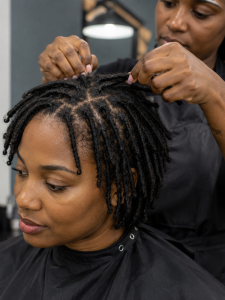
Retwisting is not about making your roots look perfectly neat every few days.
Retwisting too frequently can place unnecessary tension on the roots and may contribute to thinning around the hairline.
How often you need maintenance depends on your hair, starting method, preferred appearance, and how quickly your roots grow.
The important thing is to avoid treating every bit of new growth as something that needs immediate retwisting.
Healthy roots are more important than perfectly polished roots.
If your hairline begins feeling sore, tender, or unusually tight after maintenance, that is a sign to reassess your routine.
Can You Wash Starter Locs
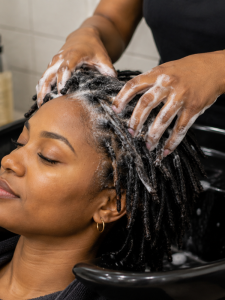
Yes, you can wash starter locs.
In fact, completely avoiding washing because you are afraid your locs will unravel can leave your scalp uncomfortable and allow buildup to accumulate.
The key is to wash gently.
Use a suitable shampoo and avoid aggressively scrubbing the locs. Rinse thoroughly so that shampoo does not remain trapped inside the sections.
After washing, allow your locs to dry completely.
Wet locs can stay damp inside for longer than loose hair, so proper drying is an important part of your routine.
Some unraveling during the early stages is normal. It does not necessarily mean your entire loc journey has been ruined.
Best Products for Starter Locs
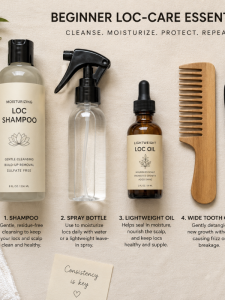
Starter locs generally do not need a cabinet full of products.
A simple routine is often better.
Look for a gentle shampoo that cleans the scalp without leaving excessive residue. A lightweight water-based moisturizer can help when your hair feels dry. A light oil may also be used according to your hair and scalp needs.
A satin or silk bonnet is another useful addition.
Products to Avoid
Be careful with heavy waxes, thick creams, excessive gels, and products that leave a sticky coating on the hair.
Using too much product can create buildup inside the locs. Once buildup becomes trapped, removing it can become much more difficult.
More product does not mean healthier locs.
Clean hair, a healthy scalp, proper moisture, and gentle maintenance will take you much further.
Common Starter Locs Mistakes to Avoid
Your early decisions can influence the health of your locs later, so avoid these common mistakes.
Retwisting Too Often
Frequent retwisting may make your hair look neat, but excessive tension can weaken the roots.
Washing Too Aggressively
Your starter locs are still developing. Rough handling can cause unnecessary unraveling and breakage.
Using Too Many Products
Layering oils, gels, creams, sprays, and waxes can lead to buildup.
Picking at Budding Locs
When you feel a budding area, leave it alone. Picking or pulling at it can interfere with the natural locking process.
Constantly Touching Your Locs
Playing with your locs throughout the day can create friction and unnecessary manipulation.
Comparing Your Locs to Someone Else’s
This one is easier said than done.
You may see someone whose locs matured quickly and wonder why yours look different.
Remember that hair texture, density, length, maintenance, and genetics vary. Your loc journey does not need to look like anyone else’s to be beautiful.
Starter Locs and Scalp Health
Your locs cannot be truly healthy if your scalp is constantly uncomfortable.
Pay attention to persistent itching, irritation, tenderness, excessive flaking, or soreness. Avoid hairstyles and maintenance techniques that put unnecessary pressure on your scalp.
If you notice ongoing scalp problems, consider speaking with a qualified healthcare professional or dermatologist rather than trying to cover the problem with more hair products.
Healthy locs should not require constant pain or tension.
A Simple Starter Locs Maintenance Routine
You do not need an unnecessarily complicated routine.
Daily
Protect your locs while sleeping and avoid unnecessary touching or pulling.
Weekly
Check your scalp and hair. If your hair feels dry, consider light moisture rather than layering heavy products.
Wash Days
Clean your scalp and locs gently. Rinse thoroughly and make sure your hair dries completely.
Maintenance Days
Assess your roots instead of automatically retwisting on a fixed schedule. If maintenance is needed, keep it gentle and avoid excessive tension.
Starter Locs Hairstyles for Beginners
Starter locs do not mean you have to wear your hair the same way every day.
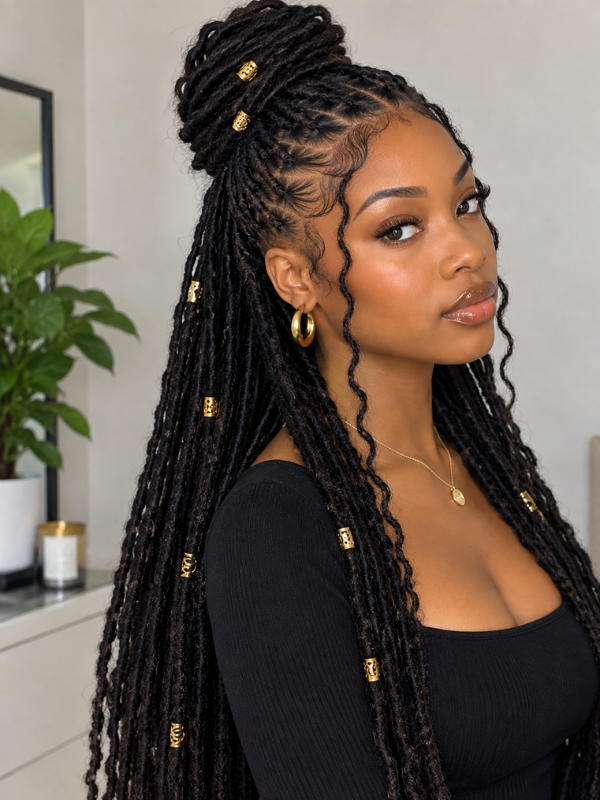
Depending on the length and strength of your locs, you can experiment with simple styles such as half-up hairstyles, loose ponytails, headband looks, or gentle updos.
However, avoid styles that pull tightly on the roots.
Your hairline is especially delicate, so give it extra attention. A beautiful hairstyle is not worth sacrificing the health of your edges.
As your locs become longer and stronger, you will have more styling options.
How to Sleep With Starter Locs
Nighttime protection is simple.
Wear a satin or silk bonnet before bed. You can also use a satin pillowcase for additional protection.
If your locs are long enough to become uncomfortable while sleeping, secure them loosely rather than tying them tightly.
The goal is to reduce friction without putting tension on the roots.
How to Deal With Frizz
Frizz is one of the most normal parts of having starter locs.
In the beginning, your hair is still figuring itself out. Loose strands and fuzzy sections are expected.
Do not assume that every frizzy hair needs to be twisted back immediately.
As your locs mature, many loose hairs will gradually become incorporated into the loc.
Learning to accept some frizz can make your loc journey much more enjoyable.
How to Deal With Dry Starter Locs
If your starter locs feel dry, first look at your routine.
Are you washing with a harsh cleanser? Are you using too much heat? Are you relying heavily on products instead of moisture?
Try keeping things simple.
Lightly mist your hair with water when appropriate and use a lightweight product if your hair needs additional moisture. Avoid repeatedly coating your locs with thick oils or creams.
If dryness continues despite your routine, consider whether your shampoo or other products could be contributing to the problem.
How to Know Your Starter Locs Are Healthy
Healthy starter locs do not have to look perfect.
Look for signs such as a comfortable scalp, gradual loc development, minimal breakage, and hair that feels reasonably moisturized rather than extremely dry or brittle.
Your locs may be frizzy and still be healthy.
They may unravel slightly and still be healthy.
They may not look like the inspiration photos you saved on Pinterest and still be progressing exactly as they should.
Focus on the condition of your hair and scalp rather than chasing a perfectly neat appearance.
Frequently Asked Questions
How long should you leave starter locs before retwisting?
There is no single schedule that works for everyone. Retwist based on your hair’s needs and avoid excessive tension or overly frequent maintenance.
Can you wash starter locs?
Yes. Gentle washing is an important part of keeping your scalp and locs clean. Some unraveling can happen during the early stage.
How often should you moisturize starter locs?
Moisturize when your hair actually feels dry rather than following an unnecessarily rigid schedule. Avoid leaving your locs excessively wet.
Why are my starter locs frizzy?
Frizz is normal because your hair is still forming and compacting into locs. It does not automatically indicate a problem.
Why are my starter locs unraveling?
New locs have not fully matured, so some unraveling can happen, particularly after washing. Your starting method and hair texture can also affect how much unraveling occurs.
How long does it take for starter locs to lock?
The timeline varies from person to person. Some hair begins to lock relatively quickly, while other loc journeys take considerably longer.
Can starter locs grow faster?
Hair growth is influenced by factors such as genetics, overall health, nutrition, and hair care. Rather than trying to force rapid growth, focus on keeping your scalp and hair healthy.
Should you separate budding locs?
If two locs are beginning to grow together, gentle separation may sometimes be necessary. However, avoid aggressively pulling apart sections because this can cause breakage or discomfort.
Starting locs is a commitment to patience.
The early stage may not always look the way you imagined. Some days your locs will look neat and defined. Other days they may be fuzzy, swollen, or slightly unraveled.
That is okay.
Your starter locs are not failing because they are not perfect.
Give your hair time to go through its natural stages. Keep your scalp clean, avoid excessive manipulation, use products sparingly, protect your locs at night, and pay attention to the health of your roots.
Most importantly, enjoy the journey.
One day, you will look back at those tiny starter locs and realize that the frizz, unraveling, budding, and awkward stages were all part of creating the beautiful locs you wanted.
You May Also Like to Read
15 Locs Hairstyles for Women You’ll Love

3 Comments