Why Your Locs Are Thinning: Common Causes and How to Fix Them
This post will teach you why Your locs Are thinning, common causes and how to fix them.
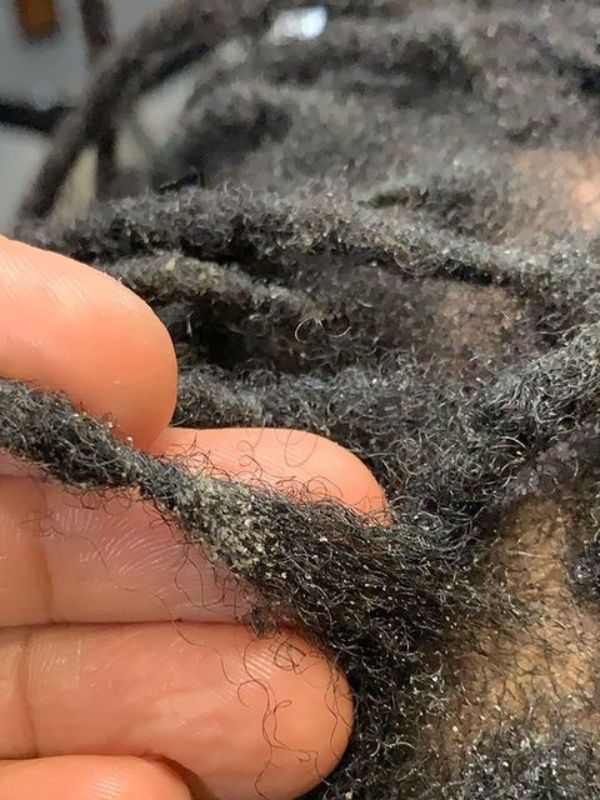
You can spend years growing your locs, getting regular maintenance, and taking care of your locs, only to notice that a few of them are not as thick as they used to be. Perhaps the roots look smaller, one loc has developed a thin section in the middle, or the ends seem to be getting weaker. At first, the difference might not be very noticeable, but over time, you may find yourself paying more attention to those particular locs whenever you wash or style your hair.
Locs thinning can be frustrating, especially when you have invested so much time in growing and maintaining your hair. You might start wondering if you are retwisting too often, using the wrong products, or doing something during your daily routine that is weakening your locs. Sometimes, the problem is your maintenance habits. In other cases, it may be hair breakage, repeated tension, or an underlying scalp or hair condition that needs attention.
The important thing is to understand what is happening before trying different treatments. A loc that is becoming thinner at the roots needs a different approach from one that has developed a weak section along its length. Applying more oil or changing your shampoo will not necessarily solve the problem if the actual cause is repeated tension or damage to the hair.
Understanding why your locs are thinning will help you make better decisions about your maintenance routine, protect locs, and know when to seek professional help.
Understanding What Locs Thinning Looks Like
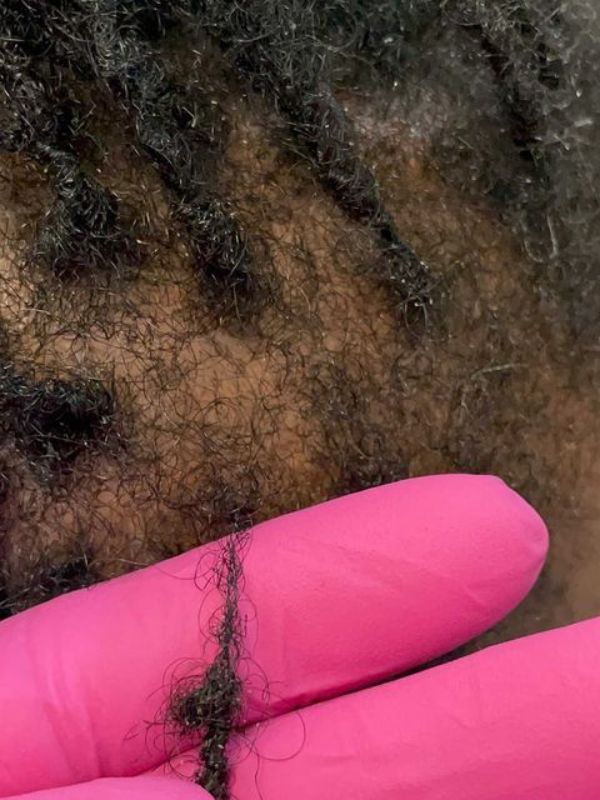
Before trying to fix thinning locs, you need to understand what is the problem. Locs do not always become thinner in the same way, and the area of the damage can provide useful clues about what might be causing it.
Some people notice changes around the roots, while others discover that a particular section of a loc has become noticeably smaller. You may also find that the ends are gradually becoming thinner even though the rest of the loc still looks full.
Here are the common ways locs thinning can appear.
Thinning at the roots
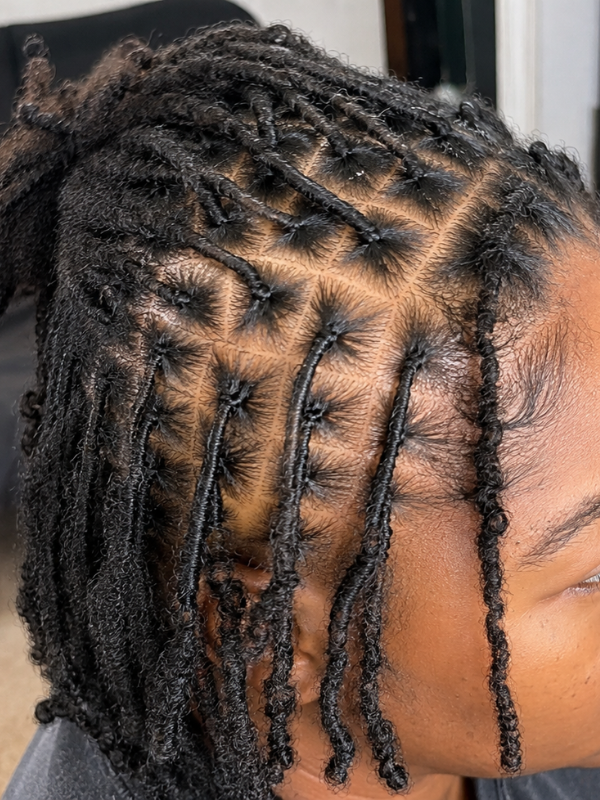
Thinning at the roots happens when the area where a loc attaches to your scalp becomes smaller or appears less dense than before. You may notice more scalp around the base of certain locs, or the hair supporting the loc may look much thinner than the surrounding roots.
This can happen when the roots experience repeated tension from tight retwisting, heavy hairstyles, or pulling the locs into the same position. If the hair around the root becomes weaker, the loc may no longer have enough healthy hair supporting its weight.
Pay particular attention to the hairline, temples, and nape if you regularly wear your locs in pulled-back hairstyles.
Thinning along the length of a loc
Sometimes, the roots look perfectly healthy, but a section somewhere along the length of a loc becomes noticeably narrower. You might run your fingers down the loc and feel a small area that is much thinner than the rest.
This can happen because of breakage, friction, chemical damage, or a section that was already weak. It can also develop when a loc has been repeatedly pulled or handled in a way that places pressure on the same area.
A thin section deserves attention because it may become a weak point. If the surrounding hair continues to experience stress, that section could eventually break.
Thinning at the ends
The ends of locs can naturally look different from the roots and middle sections. Some locs have rounded tips, while others have narrower or slightly uneven ends as they mature.
However, if the ends are gradually becoming thinner, unraveling, or breaking off, it is worth examining your maintenance habits.
Frequent friction against clothing, rough handling, chemical processing, and excessive manipulation can contribute to damage at the ends. You should also consider whether the loc was started with a smaller section of hair than the others.
Uneven thickness throughout your locs
Not every loc needs to have exactly the same thickness. The amount of hair in each original section, your natural hair density, and the way your locs were started can all influence their final size.
For example, two locs close to each other may have different thicknesses because one started with more hair. This does not automatically mean that the thinner one is unhealthy.
The important distinction is between locs that have always been different sizes and locs that are gradually becoming smaller. A noticeable change over time deserves closer attention.
Common Causes of Locs Thinning
Locs thinning can develop for several reasons, and sometimes more than one issue contributes to the problem. You might have weak roots from frequent retwisting while also putting additional pressure on them through tight hairstyles.
Understanding the common causes makes it easier to identify which habits need to change.
1. Retwisting Your Locs Too Frequently
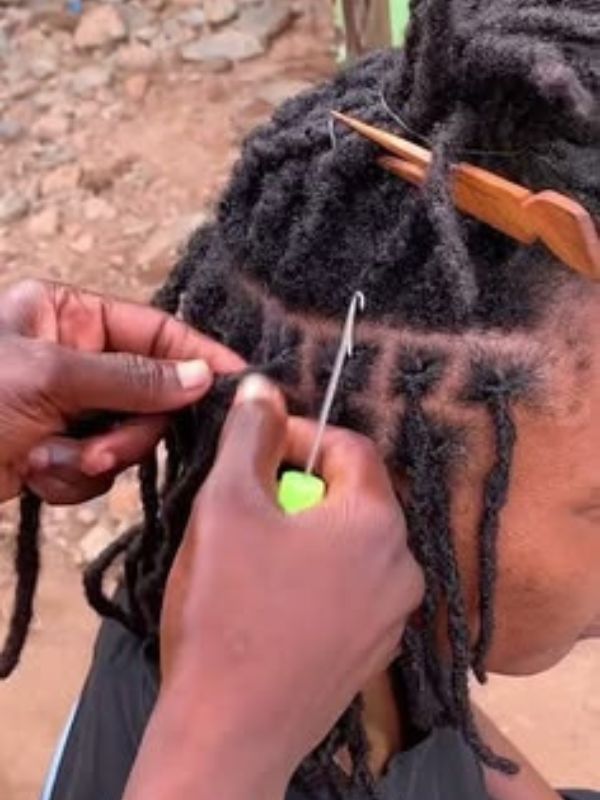
Retwisting helps maintain the appearance and structure of your locs, but doing it too frequently can put unnecessary stress on your roots.
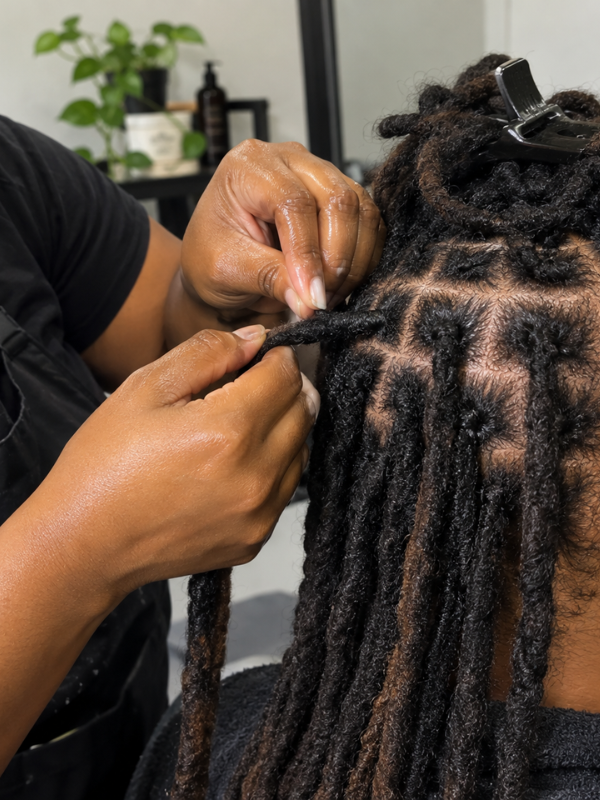
Every time your locs are retwisted, the new growth is gathered and twisted back into the existing loc. If this process involves pulling the hair tightly or repeatedly twisting the same sections, the roots can experience continuous tension.
Think about someone who prefers having perfectly neat roots at all times. As soon as new growth becomes visible, they book another retwist. A few weeks later, the same process happens again. Eventually, the hair around certain roots may become weaker from repeated pulling.
Having a consistent locs maintenance routine can help you keep track of your roots, notice changes in your hair, and avoid habits that put unnecessary stress on your locs.
The problem is not simply that the person gets maintenance. It is the combination of frequent manipulation and excessive tension.
Retwisting can also become problematic when a stylist focuses too much on making the roots look tight and uniform. A loc does not need to feel painfully tight to look neat. In fact, if you experience soreness, pulling, or tenderness after maintenance, the technique needs to be reconsidered.
What you can do:
Give your roots enough time between maintenance sessions. Your ideal retwisting schedule depends on your hair, loc maturity, growth pattern, and maintenance method. There is no single schedule that works for everyone.
Ask your stylist to avoid pulling the roots tightly and to pay attention to areas that already look weak. If certain locs are thinning, they may need a gentler maintenance approach rather than another tight retwist.
You can also learn to appreciate some new growth. Having a little space around your roots does not mean your locs are neglected. Protecting the hair supporting your locs is more important than keeping every root perfectly neat.
2. Wearing Tight Hairstyles That Pull on Your Roots
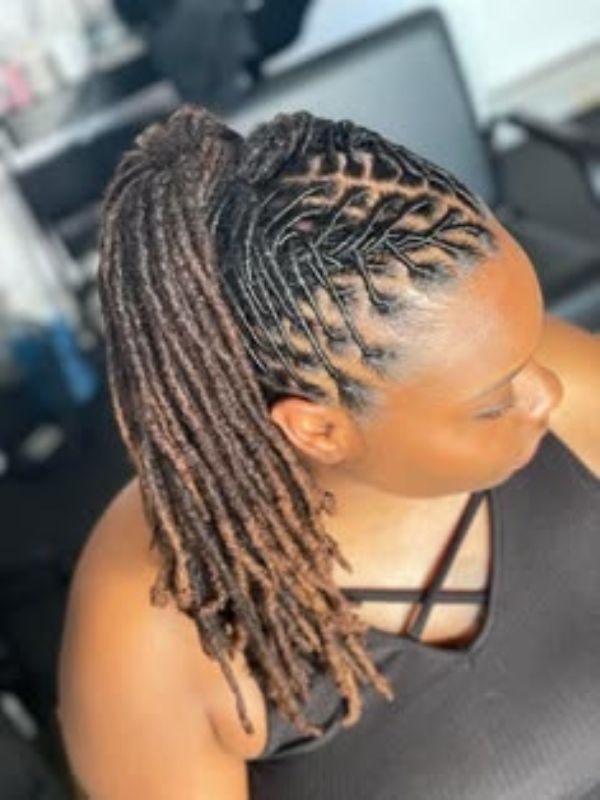
Some of the hairstyles you enjoy wearing may be contributing to your thinning locs without you realizing it.
A high bun, sleek ponytail, or tightly pulled-back style can look beautiful, but repeatedly wearing hairstyles that pull on the same areas can weaken the hair around the roots.
This is particularly important for loc wearers because the length and weight of mature locs can increase the pressure placed on the roots when the hair is pulled into a tight style.
For example, imagine gathering all your locs into a high ponytail and securing them tightly with an elastic band. The locs around your hairline may be pulled backward, while those around your temples experience additional pressure.
Wearing this hairstyle occasionally may not cause an immediate problem. However, keeping your locs under tension regularly gives the roots less opportunity to recover.
The same concern applies to tight buns, pulled-back updos, and hairstyles that require you to secure your locs firmly in one position.
Repeated tension can contribute to a condition called traction alopecia. This type of hair loss develops when hair is continually pulled, and it can become permanent if the tension continues long enough to damage the follicles.
What you can do:
Choose hairstyles that allow your locs to sit comfortably without pulling on your scalp. Wearing your locs down, choosing loose ponytails, or creating relaxed updos can help reduce unnecessary tension.
Pay attention to how your hairline feels after styling. Pain, stinging, tenderness, or small bumps are signs that a hairstyle may be too tight.
You should also avoid using the same tight hairstyle every day. Changing your styling habits can help prevent repeated pressure on the same areas.
3. Heavy Locs Putting Pressure on Weak Roots
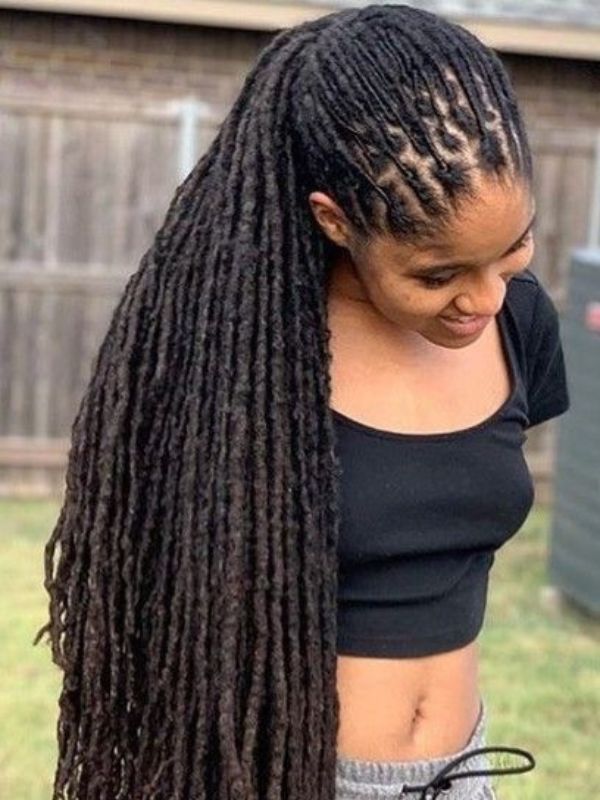
Long locs are beautiful, but their weight is something you should consider as they grow.
As your locs become longer, they carry more weight than they did when they were shorter. This does not mean long locs automatically cause thinning, but the additional weight can become a concern when the roots are already weak or when the locs are regularly styled in ways that pull on the scalp.
For example, someone with waist-length locs may notice that certain roots feel uncomfortable when all the hair is gathered into a high bun. The length creates additional pulling, particularly when the hairstyle is secured tightly.
The same issue can happen when loc extensions or decorative additions make individual locs heavier.
You should also consider the thickness of your original sections. If a loc contains relatively little hair but has become very long and heavy, the roots may need extra attention.
If you enjoy the appearance of longer loc styles, these faux locs hairstyles offer some inspiration for experimenting with a different look.
What you can do:
Avoid placing all the weight of your locs on a few weak sections. Choose loose hairstyles that distribute the weight more comfortably.
If your locs are particularly long, be mindful of how you sleep, exercise, and style them. You do not need to keep them pulled up throughout the day.
If a loc feels unusually heavy at its root or appears to be stretching the surrounding hair, ask an experienced stylist to assess it. The solution might involve changing the way you style it, removing added weight, or addressing an existing weakness.
4. Starting Your Locs With Uneven or Insufficient Hair Sections
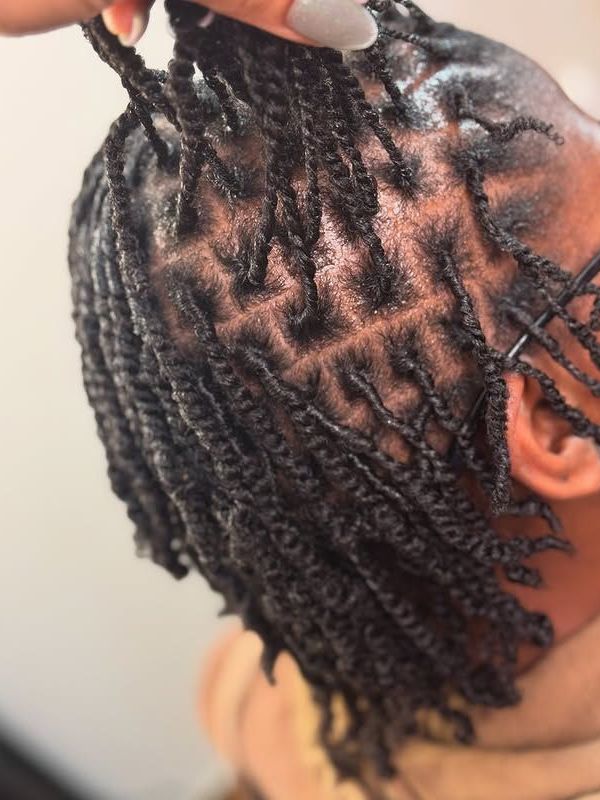
The way your locs were started can influence their thickness as they mature.
Each loc develops from the amount of hair gathered into its original section. If some sections contain considerably less hair than others, those locs may naturally remain thinner.
If you are still at the beginning of your loc journey, this starter locs guide can help you understand the different starting methods and what to consider when choosing the size of your sections.
This is not necessarily a problem. Small locs can be healthy, and people with fine or low-density hair can maintain beautiful locs when their sections are suitable for their hair.
The concern arises when a loc is too small for the amount of hair supporting it, or when the original sectioning does not take the person’s natural hair density into account.
For example, someone may start their loc journey with very small sections because they love the appearance of tiny locs. However, if their hair is fine and the sections are not suitable for the amount of hair available, some locs may become fragile over time.
Uneven parting can also create differences in thickness. One section may contain considerably more hair than the section beside it, making the resulting locs look different.
What you can do:
If you are starting your loc journey, discuss the size of your sections with an experienced stylist. Consider your natural hair density, texture, preferred loc size, and the maintenance you can comfortably manage.
If your locs are already mature, avoid assuming that every thin loc needs to be combined. First determine whether the loc has always been small or has become thinner over time.
An experienced stylist can examine the loc and help you decide if combining it with another section is appropriate.
5. Constant Manipulation and Excessive Styling
Locs are versatile, and one of the enjoyable parts of wearing them is being able to try different hairstyles. You can wear them down, create buns, make ponytails, or experiment with braided styles and decorative accessories.
However, constantly manipulating your locs can put unnecessary stress on the hair.
For example, you might frequently pull your locs into tight styles, separate them aggressively, or change their position several times throughout the week. If certain locs are repeatedly handled or pulled, the same areas may become weaker.
This can be particularly problematic when a loc already has a thin section or weak root.
Another habit to watch is constantly pulling apart locs that have started joining together. Separating locs at the roots is sometimes necessary, but forcing them apart can damage the hair supporting them.
What you can do:
Give your locs time to rest between elaborate hairstyles. You do not need to create a different style every day to keep your hair looking attractive.
When separating locs, work gently and avoid pulling them apart when the roots are tightly joined. If you cannot separate them without discomfort or excessive force, ask your stylist for help.
Choose accessories that do not snag your hair or create pressure around individual locs. Avoid using tight elastic bands that pull directly on the hair.
6. Breakage From Dryness and Poor Hair Care Practices
Dryness can make your hair feel rough and less flexible, which may contribute to breakage when combined with friction, manipulation, or other forms of damage.
Although locs are formed by hair strands that have become intertwined, the hair inside each loc still needs proper care.
If your locs frequently feel brittle, rough, or unusually fragile, take a closer look at your washing and moisturizing routine.
Some common habits that may contribute to damage include rough towel drying, excessive heat, aggressive handling, and neglecting the ends.
It is also possible to use too many products in an attempt to make your locs softer. Thick creams, heavy butters, and excessive styling products can leave residue inside locs, making them difficult to cleanse thoroughly.
Another mistake is applying oil whenever your locs feel dry without considering what they actually need. Oil can help reduce friction and support softness, but it does not replace water-based moisture or repair damaged hair.
What you can do:
Build a simple routine that keeps your scalp and locs clean without leaving excessive product behind.
Use a suitable shampoo, rinse thoroughly, and allow your locs to dry completely after washing. If your hair feels dry, consider a lightweight moisturizing product that works with your hair and does not leave heavy residue.
Be gentle when drying your locs. Instead of rubbing them aggressively with a towel, squeeze out excess water and allow them to dry properly.
Pay attention to how your hair responds to the products you use. You do not need a large collection of oils, creams, and sprays to maintain healthy locs.
7. Damage From Bleaching, Coloring, and Chemical Treatments
Coloring your locs can give them a completely different appearance, but chemical processing needs careful consideration, particularly when your hair is already weak.
Bleaching works by removing natural pigment from the hair. The process can also affect the structure of the hair shaft, making it more vulnerable to dryness and breakage.
Repeated coloring, overlapping bleach applications, and processing already damaged hair can increase the risk of weakening individual strands.
For example, someone may bleach their locs to achieve a lighter shade, then apply another chemical treatment a few months later because the color has faded. Repeating this process without assessing the condition of the hair can gradually weaken the locs.
Damage may appear as rough sections, increased breakage, or areas that feel weaker than the rest.
What you can do:
Avoid repeatedly bleaching or chemically processing locs that are already fragile. If you want to change your hair color, speak with a stylist who understands chemically processed locs and can assess their condition first.
Do not apply bleach over previously processed areas without considering the condition of the hair. Also, avoid combining multiple chemical treatments simply because you want a particular color or finish.
If a loc has become weak after coloring, stop further chemical processing until its condition has been assessed.
8. Hair and Scalp Conditions That Affect Loc Thickness
Not every case of locs thinning is caused by styling or maintenance. Sometimes, the problem starts with the scalp or hair follicles.
This is an important distinction because changing your shampoo or reducing retwisting will not necessarily address an underlying medical condition.
Some conditions that can affect hair density include:
Traction alopecia: This develops from repeated pulling on the hair. It can affect areas around the hairline, temples, and other parts of the scalp exposed to tension.
Alopecia areata: This is an autoimmune condition in which the immune system attacks hair follicles. It can cause sudden, patchy hair loss on the scalp or other parts of the body.
Seborrheic dermatitis: This scalp condition can cause itching, flaking, and inflammation. Persistent symptoms deserve proper assessment and treatment.
Hereditary hair loss: Genetic hair loss can gradually reduce hair density. Some people notice a widening part or general thinning rather than one isolated weak loc.
Nutritional deficiencies and other medical factors: Certain deficiencies, hormonal changes, illnesses, and medications can contribute to hair shedding or changes in hair growth.
For example, someone may notice that several locs are becoming thinner while also experiencing increased shedding across the scalp. In that situation, focusing only on the locs may cause them to overlook a broader hair loss problem.
What you can do:
Pay attention to changes in your scalp as well as the appearance of your locs. Persistent itching, redness, scaling, tenderness, bald patches, or unexplained shedding should not be ignored.
A dermatologist can examine your scalp and determine if a medical condition is contributing to the problem. Treatment depends on the underlying cause, so avoid relying on homemade remedies or supplements without knowing what you are treating.
How to Identify What Is Causing Your Locs to Thin
Once you understand the possible causes, the next step is to examine your locs and maintenance habits more closely.
You do not need to pull at your hair or repeatedly handle weak sections to investigate the problem. Start by looking at your locs in good lighting and paying attention to the areas that have changed.
Examine your roots
Look at the base of the locs that appear thinner. Do they have enough hair supporting them, or does the root look noticeably smaller than before?
If the thinning is concentrated around your temples or hairline, consider how often you wear tight ponytails, buns, and pulled-back hairstyles.
Also think about your retwisting routine. If the same areas are repeatedly twisted tightly, tension may be contributing to the problem.
Check the middle of your locs
Run your fingers gently along the length of the loc without pulling or squeezing it.
Look for sections that appear much narrower than the surrounding areas. A sudden change in thickness may indicate a weak point, breakage, or previous damage.
If you notice a section that looks close to breaking, avoid styling the loc in a way that places additional pressure on it.
Pay attention to the ends
Look at the tips of your locs. Are they simply naturally narrow, or do they appear to be breaking and becoming shorter?
If the ends are unraveling, check whether your maintenance technique or frequent handling is contributing to the problem.
Observe your scalp
Your scalp can provide important clues about what is happening.
Look for redness, persistent flakes, bumps, irritation, or areas where the hair appears to be disappearing.
If you notice bald patches, significant inflammation, or smooth areas where hair is no longer growing, arrange a medical assessment instead of trying different products.
Consider your recent maintenance habits
Think about what has changed over the past few months.
Have you started retwisting more frequently? Have you been wearing tighter hairstyles? Did you recently bleach your locs? Have you added extensions or started using heavier accessories?
These details can help you identify possible triggers.
You can also take clear photographs of your roots and the affected locs every few weeks. This gives you a better way to monitor changes than relying entirely on memory.
Remember that observing your hair can provide clues, but it cannot confirm a medical diagnosis. If the thinning is progressing or you cannot identify a likely cause, speak with a dermatologist.
How to Fix Locs Thinning and Protect Weak Locs
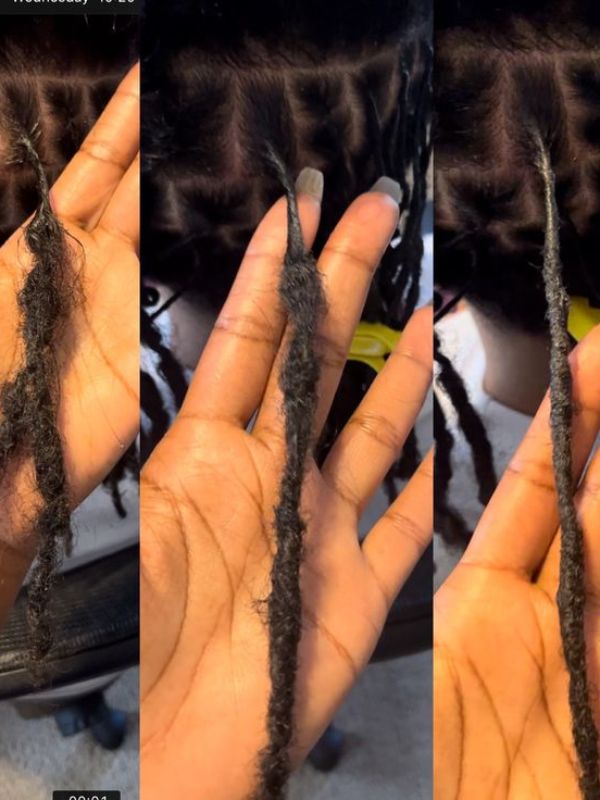
After identifying the possible cause, focus on reducing further damage. The best approach depends on whether the problem involves the roots, the length of the loc, breakage, or an underlying scalp condition.
Here are practical ways to protect your locs.
1. Give Your Roots a Break From Frequent Retwisting
If your roots are becoming thinner, reconsider how often you retwist and how much tension is used during maintenance.
You do not need to retwist every time new growth appears. Allowing some space between maintenance sessions can reduce repeated manipulation.
This is particularly important for locs that already have weak roots. Retwisting them tightly in an attempt to make them look fuller can make the problem worse.
When visiting your stylist, explain which locs are thinning and ask for those areas to be handled gently.
You may also need a different maintenance approach. For example, a person whose roots are fragile may benefit from less frequent manipulation and a technique that does not require tightly pulling every new growth section.
The goal is to maintain your locs without repeatedly stressing the hair that supports them.
2. Choose Loc Styles That Do Not Pull on Your Hair
One of the simplest changes you can make is to pay attention to how your hairstyles feel.
A beautiful style should not leave your scalp sore or uncomfortable. If you need to pull your locs tightly to achieve a particular look, consider a looser alternative.
Instead of a tight high bun, try a relaxed low bun. Instead of pulling every loc backward into a sleek ponytail, leave some sections loose or choose a style that distributes the weight more comfortably.
You can also wear your locs down more often, particularly when your roots need a break from tension.
If your hairline is already thinning, avoid hairstyles that pull the front sections backward. These areas need particular attention because repeated tension can damage the follicles over time.
Do not ignore discomfort simply because a hairstyle looks neat. Pain, stinging, bumps, and tenderness are reasons to loosen or remove the style.
3. Have Weak Locs Assessed by an Experienced Stylist
If a loc has become noticeably thinner, a stylist who understands loc repair can help you determine the best way to protect it.
The appropriate approach depends on where the weakness is located.
For example, a loc that has become thin along its length may need a different repair method from one that is thinning at the roots.
Possible approaches include:
Combining two neighbouring locs: This may be appropriate when a loc has always been very small or when two locs are too fragile to maintain separately. Combining them can increase the amount of hair supporting the resulting loc.
However, combining is not automatically the right answer. The stylist needs to assess the roots and the amount of hair available before recommending it.
Repairing a weak section: Some locs develop narrow areas along their length. A skilled stylist may be able to reinforce the section using an appropriate repair technique. The method should not create additional tension or damage the surrounding hair.
Removing unnecessary weight: If extensions or added hair are placing too much pressure on a fragile loc, reducing that weight may help protect the existing hair.
Changing the maintenance technique: Sometimes the best repair is to stop manipulating the affected area and allow it to recover from repeated tension.
Avoid attempting complicated repairs on fragile locs simply because you have watched a tutorial. Pulling loose hair into a weak section incorrectly can create more damage.
4. Keep Your Locs Clean and Remove Product Buildup
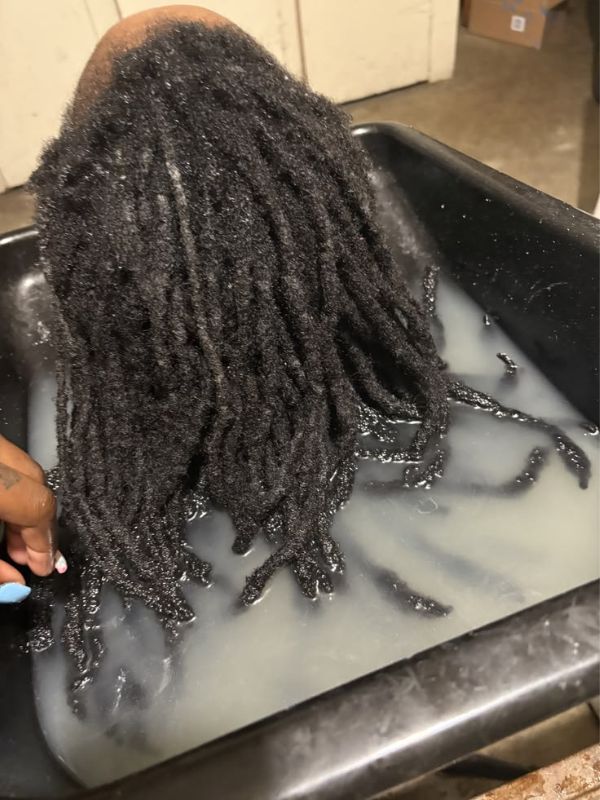
A clean scalp is an important part of maintaining healthy locs.
If you regularly use oils, creams, gels, or styling products, residue can accumulate over time. Locs can be particularly challenging to rinse thoroughly because of their structure.
Product buildup does not automatically cause hair follicles to stop growing hair, but excessive residue can make maintenance difficult and may contribute to scalp irritation in some people.
Start with a shampoo that cleanses your scalp and locs without leaving excessive residue.
When washing, pay attention to the roots, where sweat, oil, and styling products can accumulate. Rinse thoroughly so shampoo and loosened residue do not remain trapped inside the locs.
Avoid applying several heavy products immediately after washing. You do not need to coat your locs with thick creams or butters to keep them healthy.
Another important step is drying your locs completely. Locs can hold water for longer than loose hair, particularly when they are thick or densely packed. Allow enough time for them to dry rather than repeatedly tying them up while damp.
5. Maintain a Consistent Moisture Routine
If your locs feel dry and brittle, review your moisturizing routine instead of immediately purchasing more products.
Start by considering how often you wash your hair, how your locs feel between washes, and whether your current products leave residue.
A lightweight water-based moisturizing spray may be useful for some people. Apply it according to the product instructions and pay attention to how your hair responds.
You can use a small amount of suitable oil to help reduce friction and support softness, but remember that oil is not a substitute for water-based moisture.
Avoid soaking your locs with products or repeatedly applying oil whenever they feel dry. Excessive product use can make it harder to keep your locs clean.
Also, remember that moisturizing cannot repair a loc that has already broken or restore follicles damaged by prolonged traction. It is one part of good hair care, not a complete treatment for hair loss.
6. Be Gentle When Washing, Drying, and Separating Your Locs
Some of the habits that contribute to weak locs happen during ordinary maintenance.
When washing your hair, concentrate on cleansing your scalp and allow the shampoo to pass through your locs. You do not need to scrub or twist every loc aggressively.
After washing, gently squeeze out excess water with a clean towel. Avoid rubbing your locs together or pulling them roughly.
If your locs begin joining at the roots, separate them carefully before the connections become difficult to manage. Do not force them apart when the roots are tightly joined.
Pay attention to friction during everyday activities too. Rough fabrics, tight hair accessories, and repeated rubbing against the same areas can contribute to hair damage.
At night, use a clean satin or silk scarf, bonnet, or pillowcase if it helps reduce friction. Make sure your covering is comfortable and does not pull on your hairline.
7. Address Chemical Damage Before It Gets Worse
If your locs have become weak after bleaching or coloring, avoid immediately applying another chemical treatment to correct their appearance.
Give the affected hair a break from further processing and have the condition of the locs assessed.
If only certain sections are damaged, a stylist can help you decide how to manage them without unnecessarily cutting healthy hair.
Remember that conditioners and moisturizing products may improve how damaged hair feels, but they cannot reverse structural damage that has already occurred.
If a loc is severely weakened, it may need professional repair or trimming. The important thing is to avoid putting additional stress on it.
8. Get Medical Help When the Problem Is Coming From Your Scalp
If your locs are thinning because of traction alopecia, alopecia areata, a scalp condition, or another medical issue, changing your maintenance routine may not be enough.
A dermatologist can examine the scalp, identify the likely cause, and recommend appropriate treatment.
For example, early traction-related hair loss may improve after the pulling stops, but long-standing traction can cause permanent damage to the hair follicles.
If you suspect that your thinning is connected to a nutritional deficiency, hormonal changes, or medication, a healthcare professional can help investigate the cause.
Avoid taking supplements simply because someone recommends them for hair growth. Supplements are most useful when there is a genuine need, and unnecessary use can cause problems.
How to Prevent Your Locs From Thinning Again

Once you have addressed the possible cause, the next step is to develop habits that protect your locs over time.
Healthy loc maintenance does not need to be complicated. A consistent routine and a little attention to changes in your hair can make a meaningful difference.
Avoid retwisting more often than necessary
Your locs do not need to have freshly retwisted roots all the time. Give your hair enough time between maintenance sessions, and avoid techniques that pull tightly on the roots.
If certain areas are weaker, let your stylist know before maintenance begins.
Choose comfortable hairstyles
Pay attention to the amount of tension your hairstyles create. Loose buns, relaxed ponytails, and wearing your locs down are useful alternatives to tightly pulled styles.
Change your hairstyles regularly so the same areas are not always under pressure.
Be careful with heavy accessories
Decorative cuffs, beads, and other accessories can make your locs look beautiful, but avoid adding unnecessary weight to already weak locs.
Also, check that accessories are not too tight or rubbing against the hair.
Keep your scalp clean
Wash your locs according to your scalp’s needs and use products that are suitable for your hair.
Do not avoid washing simply because you are worried about unraveling. Proper cleansing is part of maintaining your scalp and locs.
Avoid excessive product use
Using too many oils, gels, creams, and butters can make it difficult to keep locs clean.
Choose a simple routine and pay attention to how your hair responds.
Dry your locs thoroughly
After washing, make sure your locs have enough time to dry. Avoid leaving thick or mature locs damp for extended periods.
Check your locs regularly
During washing and maintenance, pay attention to changes in root thickness, weak sections, and unusual breakage.
You do not need to examine every loc obsessively. Simply become familiar with how your hair normally looks so you can notice significant changes.
Work with a knowledgeable stylist
A good stylist should be able to recognize when a loc needs a gentler approach.
If your current maintenance routine consistently leaves your roots sore or your locs looking weaker, discuss changing the technique.
Your loc care routine should support the long-term health of your hair, not simply focus on how neat it looks immediately after an appointment.
Can Thinning Locs Grow Back?
One of the biggest concerns when you notice thinning is whether your locs can ever look full again.
The answer depends on what caused the thinning and how much damage has occurred.
If the problem involves breakage along the length of a loc, the damaged section will not simply become thicker again. However, new hair can continue growing from healthy follicles, and a stylist may be able to help manage or repair the affected loc.
If the thinning is caused by early traction alopecia, stopping the pulling can give the affected follicles an opportunity to recover. Some people experience regrowth after the tension is removed.
However, prolonged traction can damage the follicles permanently. This means that simply changing your hairstyle may not restore hair that has already been lost.
If the thinning is connected to an underlying medical condition, regrowth depends on the condition and the treatment available.
It is also important to understand that a loc that has become physically thinner may not return to its original thickness simply because you start using better moisturizing products.
For example, if a loc has lost a significant amount of hair from its middle section, applying oil will not replace those missing strands. It may help with softness, but the structural damage needs a different approach.
Give your hair time, protect the roots, and seek professional advice when necessary. Avoid expecting visible changes within a few weeks.
When to See a Dermatologist About Your Thinning Locs
Although some thinning problems can be connected to everyday maintenance, others need medical attention.
It is important to know when to stop experimenting with hair products and have your scalp examined.
Consider seeing a dermatologist if you notice:
- Rapid or unexplained thinning across your scalp.
- Bald patches that appear suddenly.
- Persistent thinning around your temples or hairline.
- Scalp pain, swelling, redness, or bumps.
- Persistent itching or scaling that does not improve.
- Smooth or shiny patches where hair no longer appears to grow.
- Increased shedding that continues despite changes to your hair care routine.
- Thinning accompanied by other unexplained changes in your health.
A dermatologist can examine the scalp and investigate possible causes. Depending on your symptoms, this may involve a physical examination, blood tests, or other investigations.
This is particularly important if you suspect traction alopecia. Early attention matters because prolonged tension can result in permanent follicle damage.
Your stylist can help you maintain and repair your locs, but medical scalp conditions need an appropriate healthcare professional.
Frequently Asked Questions About Locs Thinning
Why are my locs thinning at the roots?
Locs can become thinner at the roots because of frequent retwisting, tight hairstyles, repeated tension, or the weight of long locs. Some scalp and hair conditions can also cause root thinning.
If you notice that the roots are becoming progressively smaller, examine your maintenance habits and reduce unnecessary tension. If the thinning continues or is accompanied by scalp symptoms, consult a dermatologist.
Can retwisting too often make locs thin?
Yes. Frequent retwisting, particularly when performed tightly, can repeatedly pull on the hair around the roots.
Over time, this tension may weaken the hair and contribute to traction-related hair loss. Allow enough time between maintenance sessions and avoid retwisting locs that are already fragile without first assessing their condition.
How do I make my thinning locs thicker again?
The first step is identifying why the locs are becoming thinner.
If the problem is related to tension, change your styling and maintenance habits. If there is a weak section along the length, ask an experienced stylist to assess if it can be repaired. If the thinning comes from a medical condition, appropriate treatment may be necessary.
Remember that a physically weakened loc does not automatically regain its original thickness. Protecting new growth and preventing further damage are important parts of the process.
Can long locs cause thinning?
Long locs do not automatically cause thinning, but their weight can increase the pressure on roots, particularly when the hair is pulled into tight hairstyles.
If you have long locs and notice thinning around the hairline or certain roots, consider changing your styling habits and reducing unnecessary weight on fragile sections.
Should I cut off a thinning loc?
Not necessarily. A thin loc does not always need to be cut off.
The right decision depends on how much of the loc is affected, whether the roots are healthy, and whether the weakened section can be maintained or repaired.
Have an experienced stylist assess the loc before cutting it. Removing a loc without understanding the cause may not solve the underlying problem.
Can I combine two thinning locs?
Combining two locs may be appropriate when they are consistently too small to maintain separately or when a stylist determines that joining them would provide a more suitable structure.
However, it is not a universal solution for thinning. If the problem involves a damaged root, combining locs without addressing the underlying tension could create additional stress.
Ask your stylist to examine both locs and their roots before making a decision.
Does oil help thinning locs?
Oil can help reduce friction and support softness, depending on the product and how it is used. However, it does not automatically make thinning locs thicker or repair damaged hair follicles.
If your locs are thinning because of repeated tension, breakage, or a medical condition, oil will not address the underlying cause.
Focus on identifying the problem first, then choose products that support your overall hair care routine.
How long does it take to repair thinning locs?
There is no single recovery timeline because different causes require different approaches.
A loc affected by breakage may need time for new hair to grow and for the damaged section to be managed. Early traction-related hair loss may improve after tension is removed, but prolonged damage can be permanent.
If a medical condition is involved, recovery depends on the diagnosis and treatment.
The most important thing is to stop the habits contributing to the damage and seek professional advice when necessary.
Summary
Noticing that your locs are becoming thinner can be discouraging, particularly when you have spent years growing and maintaining them. However, the first step is not to rush into buying new products or trying every repair method you come across.
Take time to understand where the thinning is happening and what might be contributing to it. Frequent retwisting, tight hairstyles, excessive manipulation, breakage, and scalp conditions all require different approaches.
Be gentle with your roots, choose comfortable hairstyles, keep your locs clean, and pay attention to changes in their thickness. If a loc has become unusually weak, allow an experienced stylist to assess it before attempting repairs.
Most importantly, do not ignore persistent thinning or scalp problems. Getting the right help early can make a difference in protecting your hair and maintain healthier locs as they continue to grow.
This Post Showed You Why Your Locs Are Thinning: Common Causes and How to Fix Them.