Comb Coils vs. Two-Strand Twists for Starter Locs: Which Method Is Better?
This post will show you Comb Coils vs. Two-Strand Twists for Starter Locs: Which Method Is Better?
Starting your loc journey is exciting until you have to decide the method of locs you want. You might have saved dozens of pictures of beautiful locs, watched people share their starter loc transformations, and already imagined how your hair will look a year from now. But when it comes to choosing your starting method, things can get a little confusing.
You see someone with neat, tiny comb coils, and you love how organised and defined they look. Then you come across someone with two-strand twist starter locs, and suddenly you are wondering whether that might be a better option. Both styles look beautiful, both can develop into mature locs, and both have their own advantages. So, how do you decide?
The comb coils vs two-strand twists debate usually comes down to more than appearance. You also need to think about your hair texture, length, desired loc size, maintenance routine, and how much patience you have for the early stages. A method that works wonderfully for someone with short, tightly coiled hair might not be the most practical choice for someone with longer hair or a looser curl pattern.
There is also something beginners do not always consider: your starter locs will not look the same throughout the journey. The neat hairstyle you leave the salon with will eventually become frizzier, fuller, and more textured as your hair begins to lock. Some people love watching this transformation, while others become worried when their hair stops looking as tidy as it did on installation day.
Neither comb coils nor two-strand twists is automatically the better method. Each can give you beautiful locs when it suits your hair and is installed correctly. However, understanding how they differ will help you avoid choosing a method simply because you saw someone else wearing it.
Let’s look at how both methods work, what to expect during the first year, ten hairstyle ideas for each method, and which one might be the better starting point for your loc journey.
Beautiful Comb Coil Starter Loc Styles to Try
Comb coil starter locs already have a beautiful appearance because of their small, defined, spring-like sections. However, you do not have to wear them the same way every day. Once your hair has enough length and your locs are secure enough to handle gentle styling, you can experiment with different parts, accessories, and updos.
The best comb coil hairstyles allow you to show off your individual locs without putting unnecessary tension on your roots. Here are ten lovely styles to consider during your loc journey.
1. Natural Comb Coils With a Middle Part
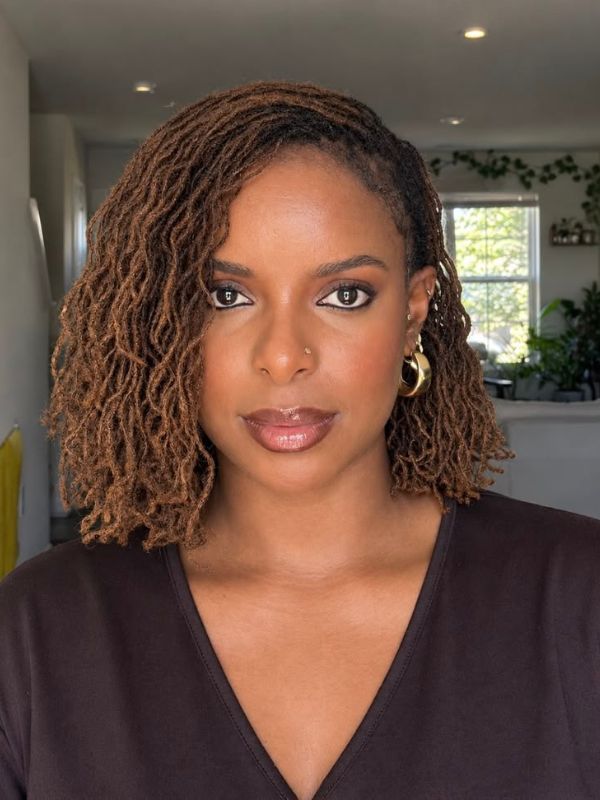
If you love simple hairstyles that still look neat and intentional, natural comb coils with a middle part are a lovely choice. The hair is divided evenly down the centre, allowing the coils to fall naturally on both sides of your face.
What makes this style attractive is how clearly it shows the individual sections. You can see the definition of each coil, the neatness of the parting, and the natural texture of your hair. It is particularly beautiful on freshly installed comb coils, although it can also look lovely as your locs become fuller and more mature.
This style does not require complicated styling or accessories. You can simply allow your coils to fall into place and use a lightweight satin scarf at night to reduce friction.
Best for: Anyone who prefers a clean, symmetrical look and wants to show off the natural shape of their comb coil starter locs.
2. Side-Parted Comb Coil Starter Locs
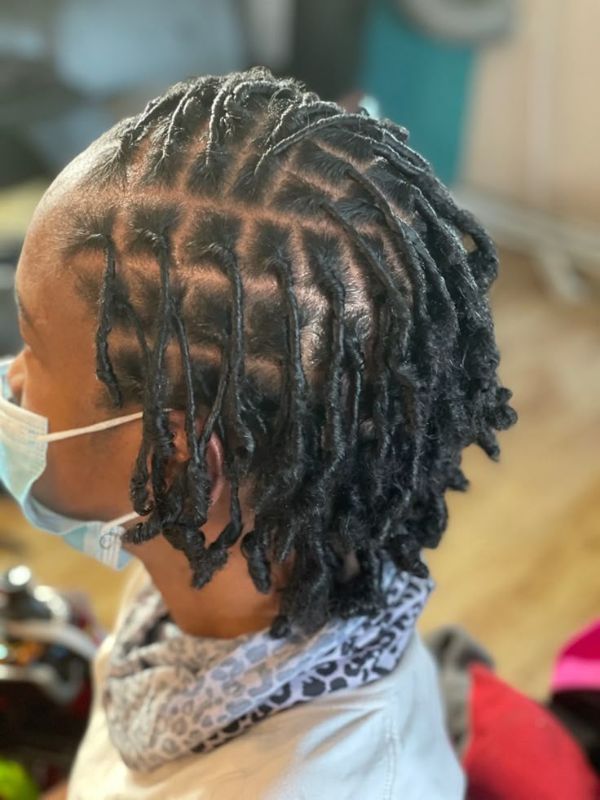
A side part is a beautiful alternative if you do not enjoy wearing your hair straight down the middle. Instead of dividing the hair evenly, the part is positioned towards one side, allowing more coils to fall across the opposite side of your forehead.
This creates a soft, slightly fuller appearance and gives your starter locs a little more movement. It is also a simple way to change your everyday look without needing to manipulate the individual coils.
For the best result, decide on your preferred parting before installation so your loctician can create a suitable sectioning pattern. You can also discuss whether a deeper side part would suit your hair density and face-framing preferences.
Best for: Anyone who enjoys side-parted hairstyles and wants a simple way to give their starter locs more shape.
3. Comb Coils With a Half-Up, Half-Down Style
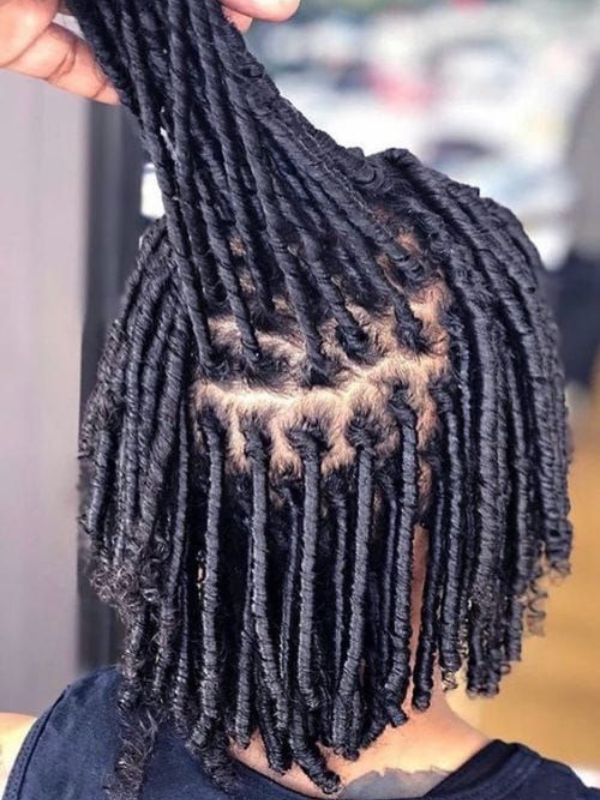
The half-up, half-down hairstyle is a lovely option once your comb coils have enough length to be gathered comfortably. The upper sections are brought together into a small ponytail or loose bun, while the remaining coils are left hanging naturally.
It is a great balance between a relaxed hairstyle and something a little more put together. You can wear it for casual outings, weekend activities, or even a simple dinner without needing an elaborate styling routine.
For a softer appearance, leave a few coils around the front of your face. You can also position the gathered section towards the crown for a slightly more playful look.
Be careful not to pull the coils too tightly when securing them. If your starter locs are still very short or delicate, wait until they can be gathered without putting pressure on the roots.
Best for: People with enough loc length who want a hairstyle that keeps some hair away from the face while showing off the rest.
4. Comb Coil Starter Locs With Wooden Beads
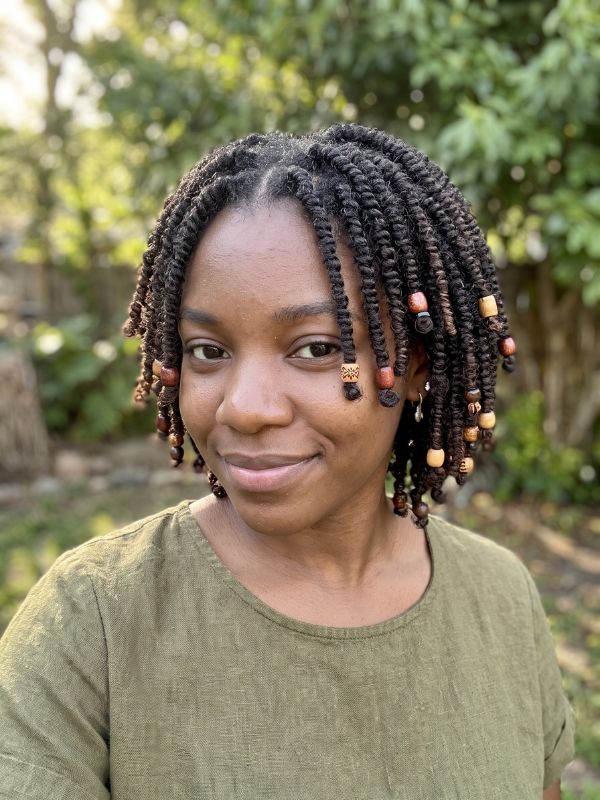
If you enjoy hairstyles with a little personality, wooden beads can make simple comb coils look more interesting. You do not need to decorate every loc. Adding a few beads to selected sections can create a beautiful accent without making the hairstyle look too busy.
Natural wooden beads work particularly well if you prefer an earthy, understated appearance. You can also experiment with different wood shades to complement your hair colour.
Place the beads on suitable sections once your locs are secure enough to handle them. Make sure the openings are wide enough to slide over the locs comfortably. Never force an accessory onto a section that is too small, and avoid heavy beads that pull down on your roots.
This style is especially attractive when the beads are placed towards the ends of longer locs.
Best for: Anyone who wants to personalise their comb coils with natural-looking accessories while keeping the hairstyle simple.
5. Comb Coils With a Satin Headwrap
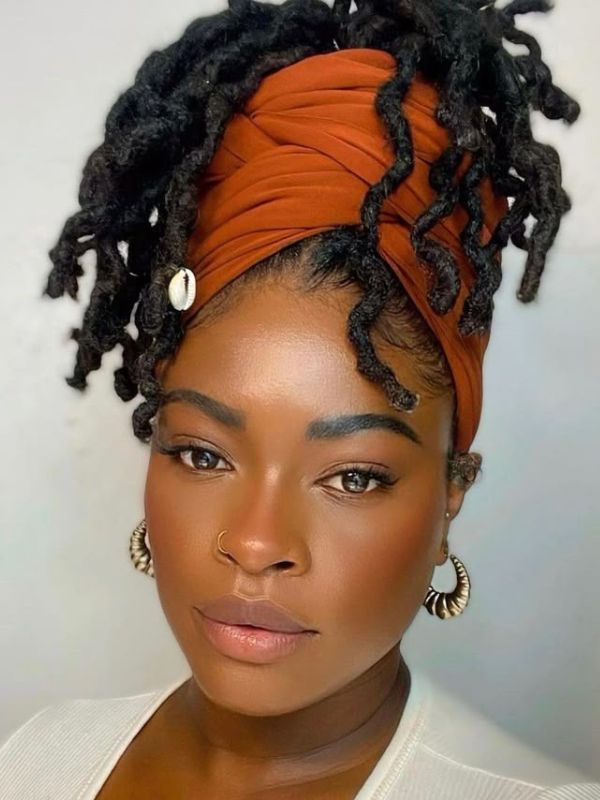
A satin headwrap is one of the easiest ways to change the appearance of your comb coil starter locs. It can add colour, texture, and a polished finish without requiring you to twist, pin, or gather your individual sections.
You can wrap the fabric around your head like a wide headband, create a knot towards the front, or tie it at the back for a more understated look. Leaving the coils visible underneath creates a lovely contrast between the smooth fabric and the textured hair.
This style is also useful on days when you want to keep your hair away from your face or protect it from unnecessary friction.
Choose a soft fabric and make sure the wrap is not too tight around your hairline. A headwrap should feel comfortable, not pull at your edges.
Best for: Anyone who wants an easy, stylish option for everyday wear, casual outings, or days when they do not feel like manipulating their locs.
6. Short Comb Coils With a Tapered Shape
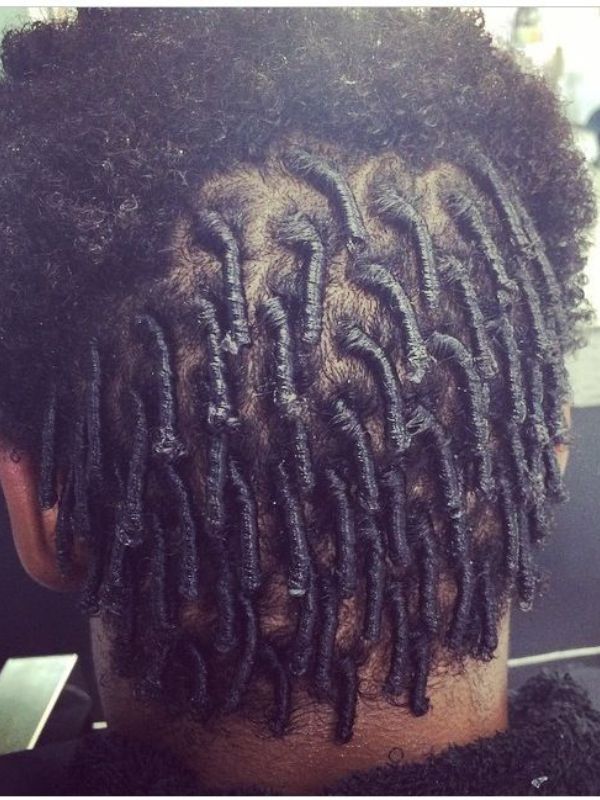
If you are starting your loc journey with short hair, you do not need long locs to enjoy a beautiful hairstyle. Short comb coils can look particularly attractive when the hair is shaped to create a neat, balanced silhouette.
A tapered shape usually involves keeping the sides and back shorter while leaving more length towards the top. The comb coils on top become the main feature, creating a little height and texture.
This is a particularly attractive option for people who prefer a low-maintenance appearance. It can also work well for anyone who wants their starter locs to look neat without having to gather them into ponytails or buns.
If you are interested in this look, discuss the shape with your stylist before installation. The haircut and parting pattern should complement the loc sections rather than leave them uneven.
Best for: People with short hair who want a modern, structured hairstyle that highlights their comb coil starter locs.
7. Comb Coils With Two Front Locs Left Out
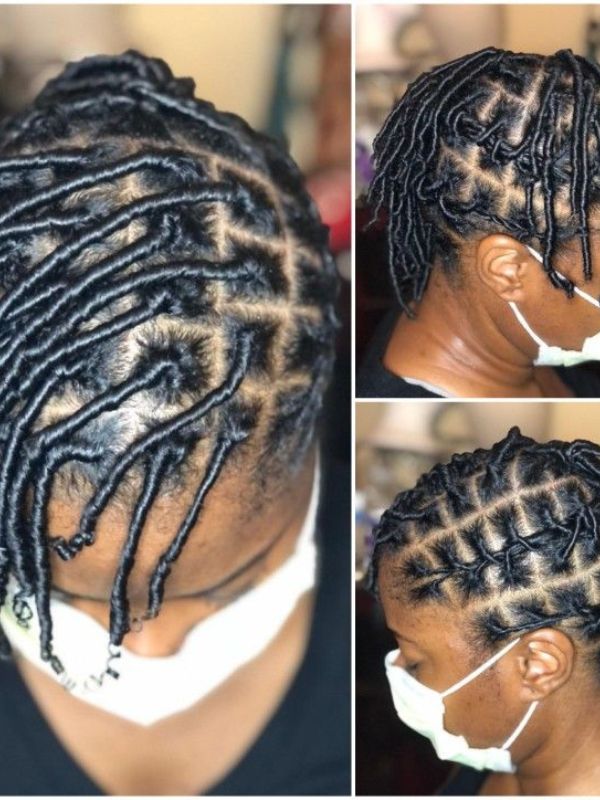
This style creates a soft, face-framing appearance by gathering most of the hair towards the back while allowing two sections at the front to remain loose.
The two front coils add a little detail around the face, while the rest of the hair stays neatly arranged. You can secure the back with a loose hair tie or a gentle clip, depending on your loc length.
It is a simple hairstyle, but it looks more styled than wearing all your coils down. It also gives you a way to experiment with your appearance without needing to create tight braids or complicated updos.
For a more natural finish, avoid making the front sections perfectly identical. Allow them to fall comfortably around your face.
Best for: People with medium-length comb coils who want a simple, feminine-looking hairstyle that keeps most of their hair away from their face.
8. High Comb Coil Ponytail
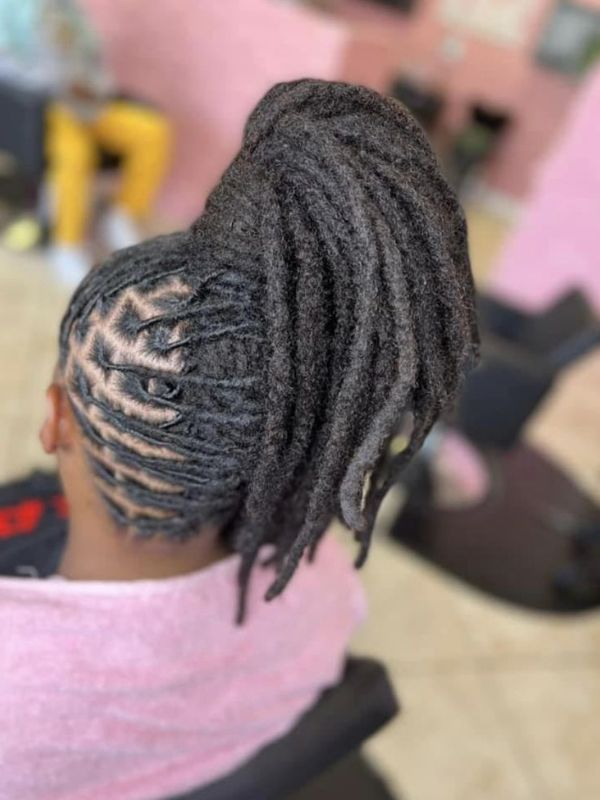
A high ponytail is a lovely way to show off longer comb coil starter locs. The hair is gathered towards the crown of the head and secured loosely, allowing the coils to fall around the top and back.
The result is a youthful, relaxed hairstyle that works well for everyday activities. You can leave the ponytail loose for a fuller appearance or arrange the coils gently so they fall in one direction.
This style is best attempted when your locs have enough length and strength to be gathered without pulling at the roots. Use a soft hair tie rather than a tight elastic, and avoid wearing the ponytail in the same position every day.
If your hair is still in the early starter stage, give it time before attempting this look. Keeping your roots comfortable is more important than achieving a particular hairstyle.
Best for: People with longer comb coil locs who want a practical hairstyle that keeps their hair lifted and away from their face.
9. Comb Coil Locs Styled With a Side-Swept Look
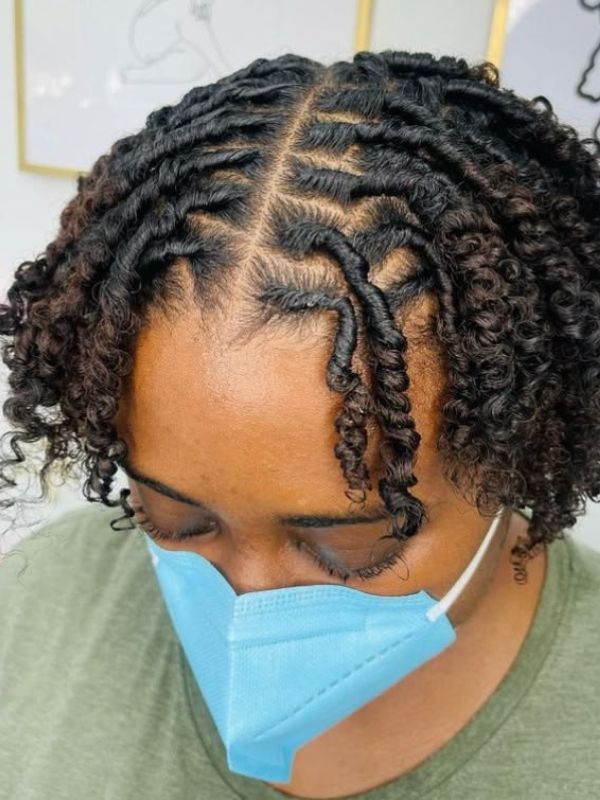
A side-swept hairstyle gives comb coils a slightly more dramatic appearance without requiring an elaborate updo. The coils are gently arranged towards one side, allowing the hair to fall across part of the forehead or cheek.
This look works particularly well when your locs have gained some length. It can create a fuller appearance on one side and add movement to an otherwise simple hairstyle.
You can use a loose side part to achieve the look, or ask your loctician whether your existing sections can comfortably be arranged this way.
Avoid forcing your coils into a new direction if doing so pulls at the roots. The style should fall naturally rather than require constant tension to stay in place.
Best for: Anyone who enjoys side-swept hairstyles and wants a slightly more styled look without adding accessories.
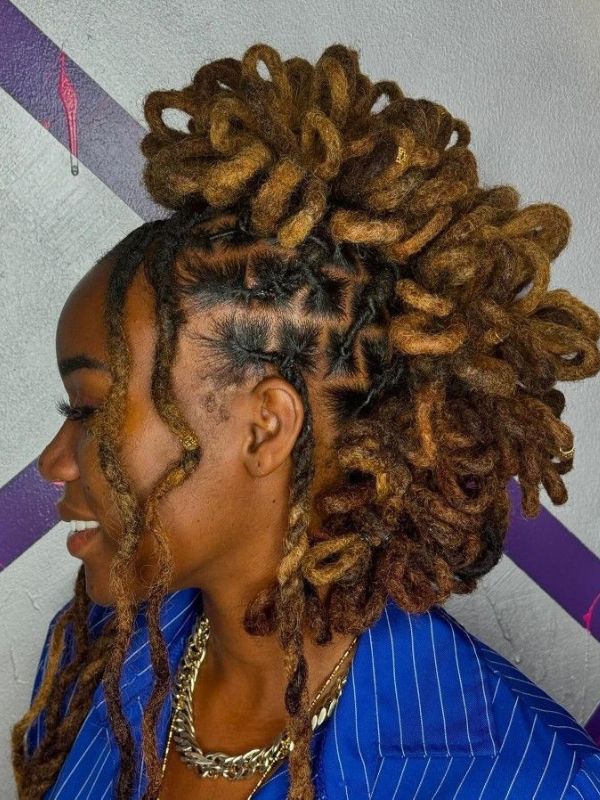
10. Loose Comb Coil Loc Updo
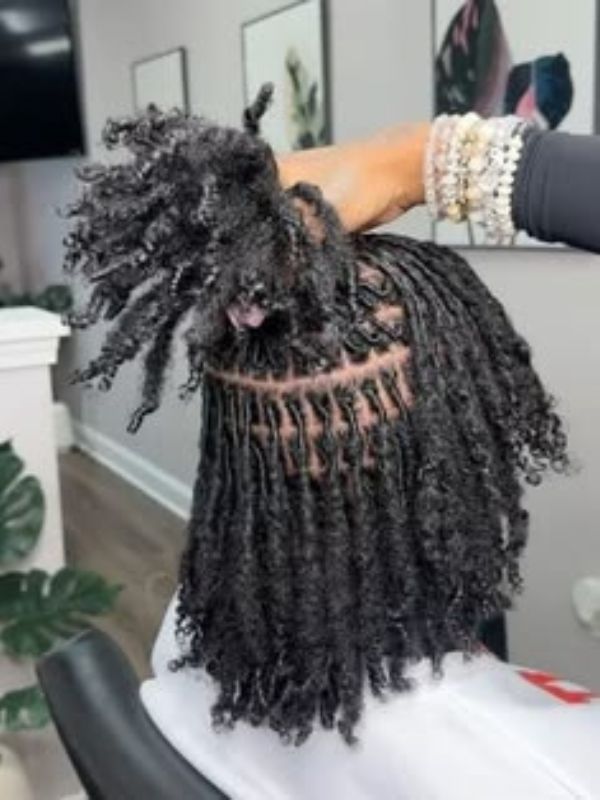
A loose updo is a beautiful option once your comb coil locs have matured enough to be gathered and pinned comfortably. Instead of pulling all the hair into a tight bun, the locs are arranged loosely and secured into a soft, textured shape.
You can position the updo towards the crown, at the back of your head, or slightly lower near the nape. Allowing a few locs to fall naturally around the front can make the hairstyle look more relaxed.
This is one of the more elegant options on the list, making it suitable for special occasions, celebrations, and formal events. You can also add a small decorative hair accessory if it does not pull on your locs.
Avoid tight pins and heavy clips, particularly if your locs are still developing. A loose, comfortable arrangement will look just as attractive without putting unnecessary pressure on your scalp.
Best for: People with longer or more mature comb coil locs who want an elegant hairstyle for special occasions.
Beautiful Two-Strand Twist Starter Loc Styles to Try
Two-strand twist starter locs have a naturally textured, rope-like appearance that makes them beautiful even before they mature. Their shape also gives you several styling possibilities, especially when your hair has enough length to be gathered or arranged.
Even if you prefer a simple everyday hairstyle or something more detailed, two-strand twists can be styled in ways that show off their texture without requiring excessive manipulation.
Here are ten styles worth considering.
1. Classic Two-Strand Twist Starter Locs
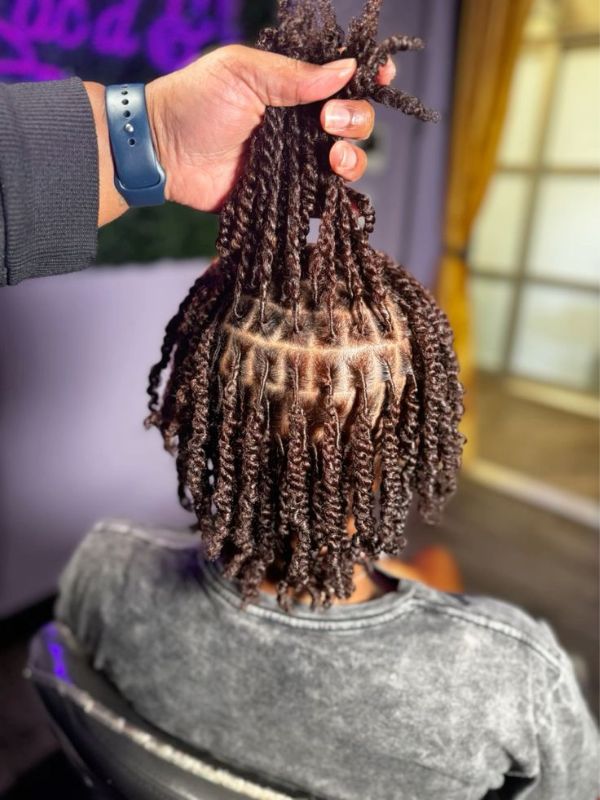
Sometimes the simplest hairstyle is the most beautiful. Classic two-strand twists allow you to enjoy the natural appearance of your starter locs without adding accessories or complicated styling.
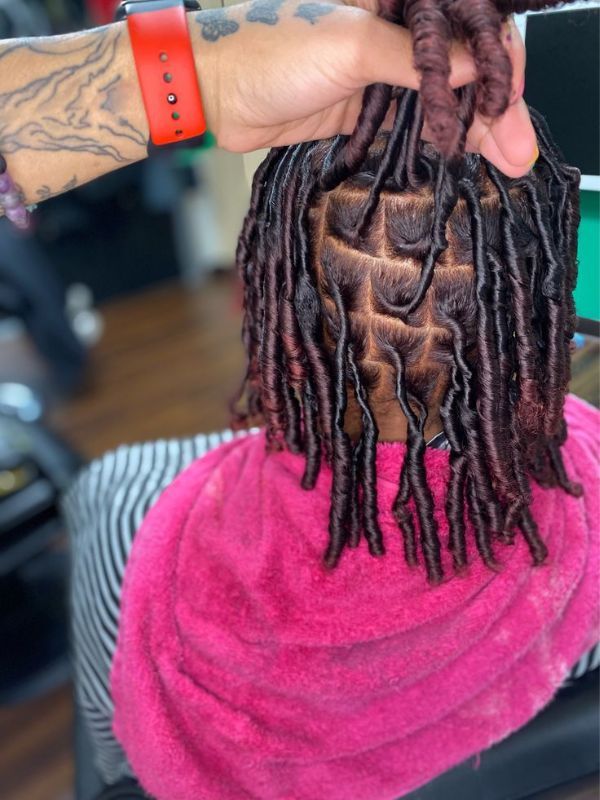
Each section is divided into two strands and twisted from the roots towards the ends. The result is a collection of rope-like sections that fall naturally around your head.
This style is particularly lovely immediately after installation because you can see the original twist pattern clearly. As your locs develop, the twists may become fuller and less defined, creating a different but equally attractive appearance.
You can wear them with a middle part, side part, or no obvious parting preference. The important thing is to keep your routine simple and give your hair time to settle.
Best for: Anyone who appreciates a natural, understated hairstyle and wants to enjoy the original appearance of two-strand twist starter locs.
2. Two-Strand Twists With a Middle Part
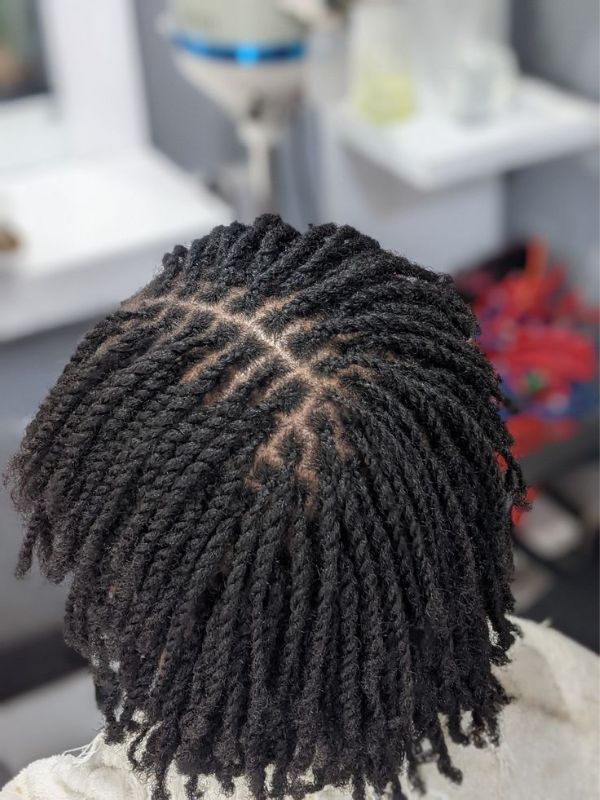
A middle part gives two-strand twist starter locs a balanced and organised appearance. The hair is divided down the centre, allowing the twists to fall evenly on both sides.
This is a particularly good option if you enjoy symmetrical hairstyles. It also makes the original sectioning pattern more noticeable, which can look beautiful when your twists are freshly installed.
You can wear the twists loose around your face or gently tuck some sections behind your ears. If your hair is longer, you may also be able to gather the back sections into a loose style while keeping the front part visible.
If you want a middle part, mention it during your installation appointment. Your loctician can create a parting pattern that works with the direction you prefer to wear your hair.
Best for: People who like balanced hairstyles and want their two-strand twists to frame their face naturally.
3. Side-Parted Two-Strand Twist Starter Locs
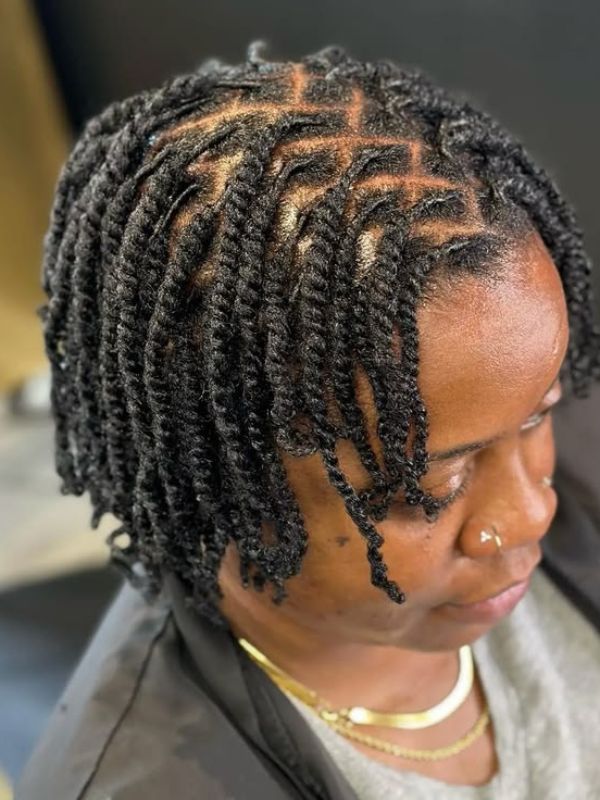
A side part can make two-strand twist starter locs look fuller on one side and give the hairstyle more movement. Instead of dividing the hair evenly, the part is placed towards one side, allowing the twists to fall in a slightly angled direction.
It is a lovely choice if you want something different from a traditional middle part. The style also works well with medium-length twists because the extra length makes it easier for the sections to fall naturally.
You can wear the twists loose or gently arrange them towards one shoulder for a more noticeable side-swept effect.
Avoid forcing your roots into a direction that feels uncomfortable. The parting and styling should work with your natural sections.
Best for: Anyone who wants a relaxed, slightly fuller hairstyle that gives their starter twists more shape.
4. Half-Up, Half-Down Two-Strand Twist Locs
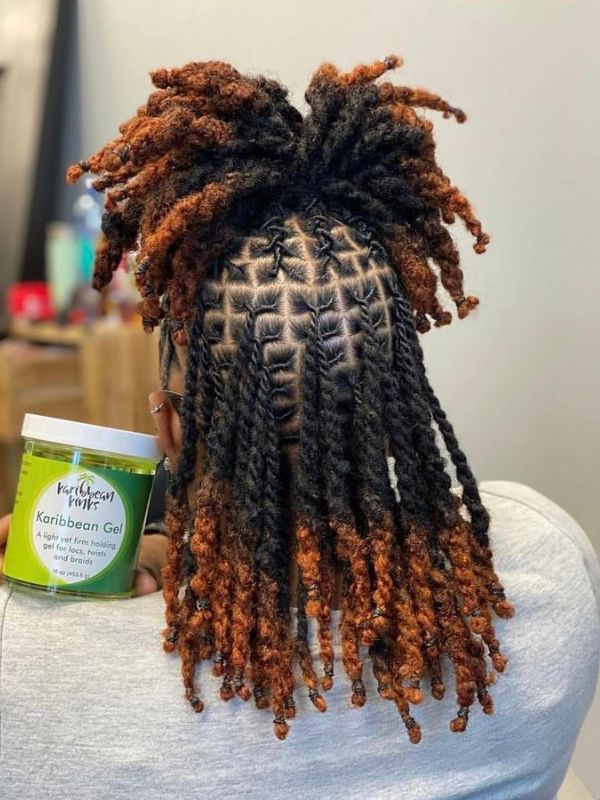
The half-up, half-down style is one of the most versatile options for longer two-strand twist starter locs.
To create it, gather the upper sections of your hair into a loose ponytail or small bun, leaving the remaining twists hanging freely. This creates a beautiful contrast between the gathered hair and the loose twists around your shoulders.
You can position the gathered section high towards the crown for a playful appearance or slightly lower for a more relaxed finish.
The style is also easy to personalise. Leave a few twists around the front, use a soft hair tie, or add a lightweight accessory once your locs are secure enough.
Best for: People with medium-length or long two-strand twists who want a versatile hairstyle for casual outings and everyday wear.
5. High Ponytail With Two-Strand Twist Starter Locs
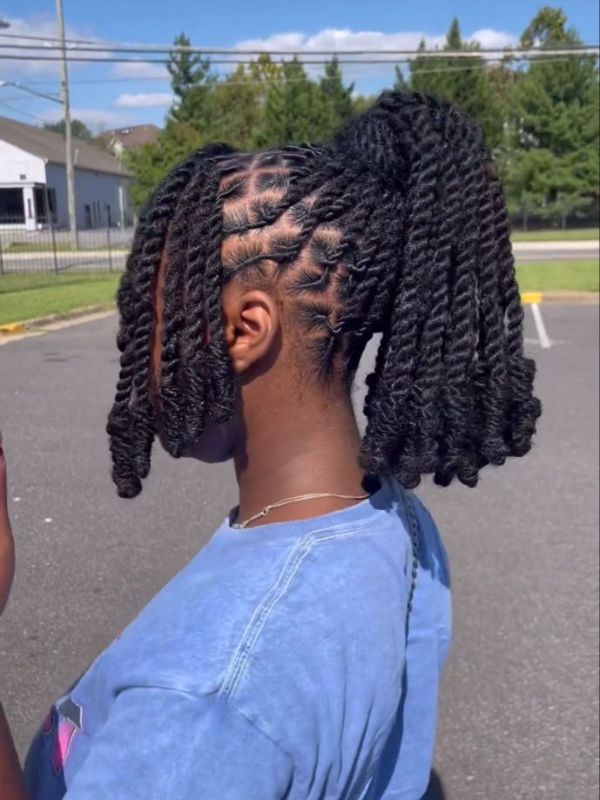
A high ponytail gives longer two-strand twists a lively, lifted appearance. The twists are gathered towards the crown of the head and secured so they fall naturally around the back.
This hairstyle is especially attractive because it allows the rope-like texture of the twists to remain visible. It also keeps the hair away from your face, making it practical for busy days.
For a fuller look, allow the twists to spread naturally rather than pulling them into a very tight bundle. You can also leave a few sections loose around the front if you prefer a softer finish.
Make sure your locs are long and secure enough before trying this style. Use a soft hair tie and avoid pulling tightly at the roots.
Best for: People with longer two-strand twist locs who want a practical, youthful hairstyle with plenty of movement.
6. Low Bun With Two-Strand Twist Starter Locs
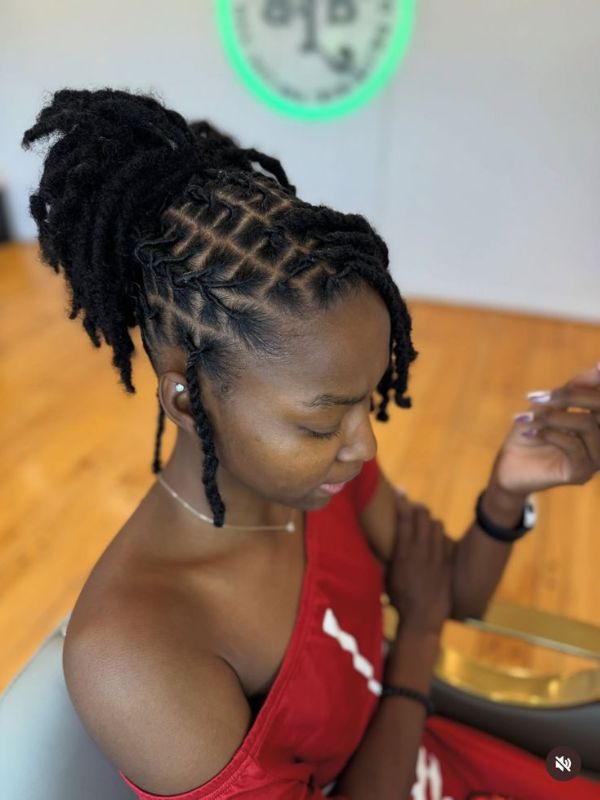
If you prefer something more understated, a low bun is a beautiful alternative to a high ponytail.
The twists are gathered towards the nape of the neck and arranged into a loose bun. This creates a neat appearance without taking away from the natural texture of the hair.
You can keep the bun simple or allow a few twists to fall loosely around the sides. The result is an elegant style that works well for everyday wear, work settings, and more formal occasions.
This hairstyle is best for locs with enough length to gather comfortably. Avoid wrapping the twists too tightly or using accessories that pull on the hair.
Best for: Anyone who enjoys elegant, low-effort hairstyles and has enough loc length to create a comfortable bun.
7. Two-Strand Twist Locs With Wooden Beads
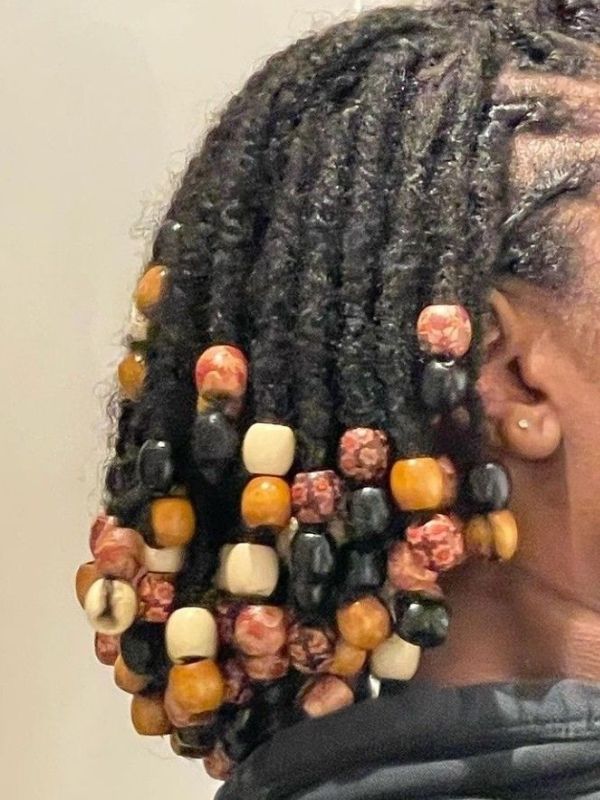
Wooden beads are a beautiful way to add detail to two-strand twist starter locs. Their natural colour and texture complement the rope-like appearance of the twists, creating a relaxed, earthy look.
You can add beads to a few selected twists, place them towards the ends, or use different sizes for a more personalised appearance.
This style works particularly well when your twists have enough length to hold the accessories comfortably. It is also a nice option if you want to make your hairstyle feel more individual without changing the original twist pattern.
Choose lightweight beads with smooth edges. Avoid accessories that are too tight, too heavy, or difficult to remove.
Best for: People who love natural-looking hair accessories and want to add a little personality to their two-strand twist locs.
8. Two-Strand Twist Locs With a Scarf
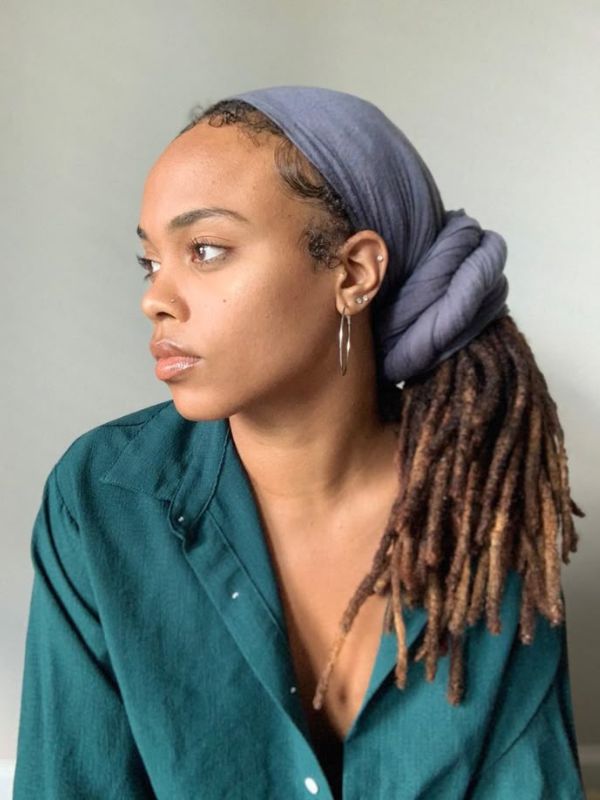
A scarf is an easy way to give your two-strand twist starter locs a fresh appearance without manipulating the individual sections.
You can tie it around your head like a headband, wrap it across the crown, or use it to create a fuller headwrap style. Leaving the twists visible at the back or sides adds texture and makes the hairstyle more interesting.
Choose a scarf in a colour that complements your outfit. Neutral shades create a subtle finish, while brighter colours can make the hairstyle stand out.
A smooth satin or silk scarf is a comfortable choice. Make sure it is tied loosely enough to avoid tension around your hairline.
Best for: Anyone who wants a quick hairstyle that works for everyday activities, casual outings, or days when they want to accessorise their twists.
9. Two-Strand Twist Locs With Front Twists Left Out
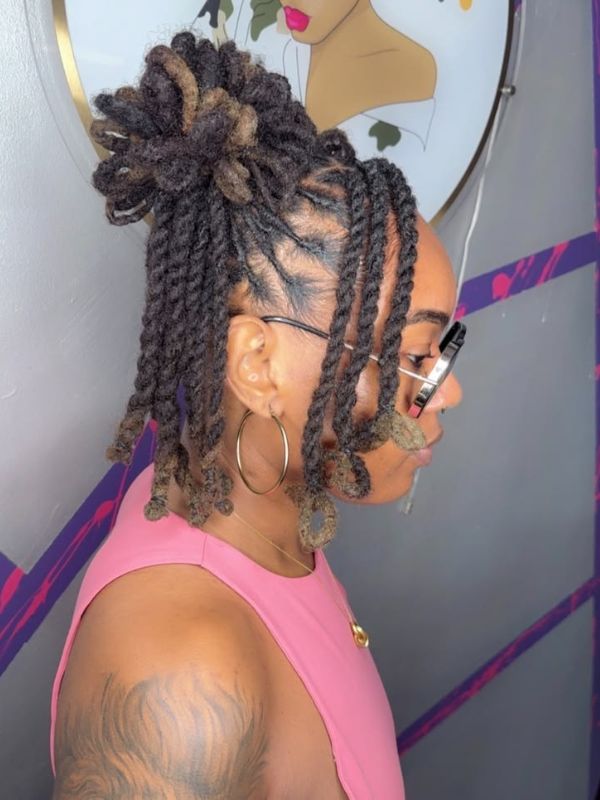
This hairstyle creates a soft, face-framing appearance by gathering most of your twists towards the back while leaving a few sections at the front.
The loose front twists add movement and detail, while the remaining hair stays arranged away from your face. You can secure the back into a small ponytail, a loose bun, or a simple half-up style.
It is a lovely choice for people who want something more detailed than wearing all their twists down but do not want a complicated hairstyle.
You can leave two front twists out for a minimal look or a few more sections if your hair is longer and fuller.
Best for: People with medium-length or longer twists who want a soft, face-framing hairstyle that is easy to create.
10. Two-Strand Twist Locs Styled Into a Crown Updo
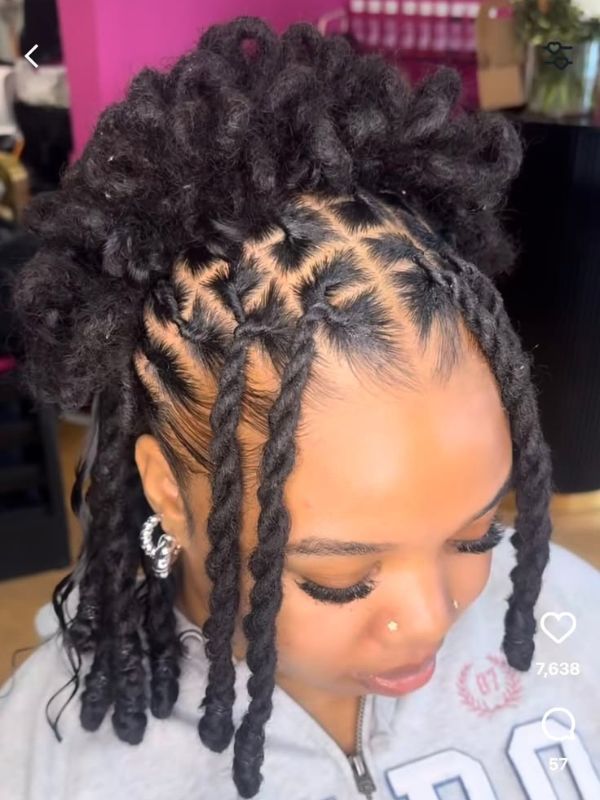
A crown updo is one of the most elegant ways to style longer two-strand twist locs. The twists are gently arranged around the head to create a raised, crown-like shape.
Depending on your loc length, you can pin sections around the crown or gather them into a loose updo that creates a similar effect. A few twists can be left around the front for a softer appearance.
This style is particularly attractive for celebrations, weddings, dinners, and special events. It also gives longer locs a completely different look without needing to alter their natural texture.
Because the style involves arranging and securing several sections, it is better suited to locs that are established enough to handle gentle styling. Use smooth, loc-friendly accessories and avoid tight pins or excessive pulling.
Best for: People with longer or more mature two-strand twist locs who want an elegant hairstyle for special occasions.
Choosing the Best Hairstyle for Your Starter Locs
You do not have to try every hairstyle immediately after installing your starter locs. Some options, such as middle parts, side parts, headwraps, and simple accessories, can be easier to enjoy early on. Ponytails, buns, and more elaborate updos generally require additional length and a stronger, more established loc structure.
If you are still in the early stages, prioritise comfort and gentle styling. Avoid tight ponytails, heavy beads, repeated pinning, and hairstyles that pull on your roots.
As your locs grow and become more established, you will have more freedom to experiment. The best hairstyle is one that makes you feel confident while allowing your locs to develop in a healthy way.
Understanding Comb Coils vs Two-Strand Twists for Starter Locs
Before choosing between the two methods, it helps to understand what actually happens during installation. Although comb coils and two-strand twists can both be used to start traditional locs, they create different starting patterns.
If you are new to the loc journey and want to understand the different stages, installation methods, and what to expect as your hair matures, read our complete starter locs guide.
When comparing comb coils vs two-strand twists, remember that the method used to install your starter locs is only the beginning. Your hair will continue to change as it grows, tangles, and gradually forms a more established loc structure.
What Are Comb Coils?
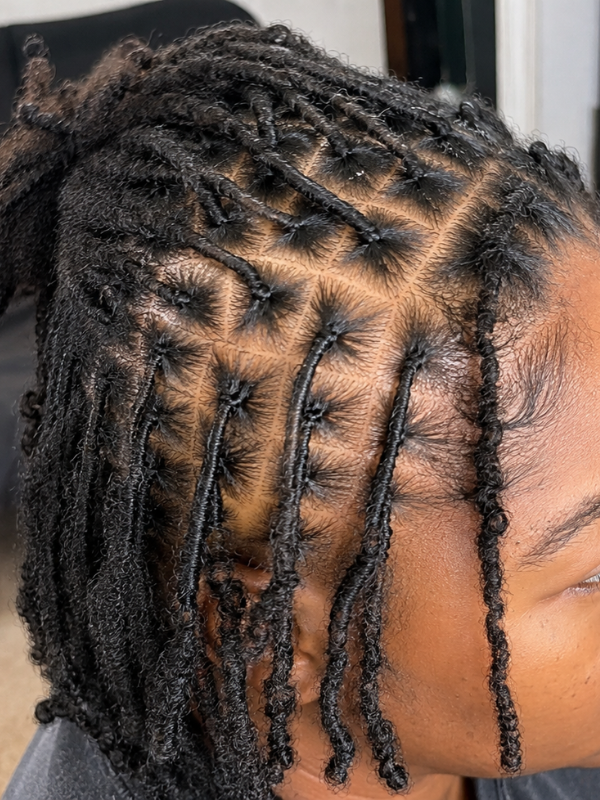
Comb coils are created by taking a small section of hair and using a comb to rotate it in one direction until it forms a tight, uniform coil. The stylist repeats this process throughout the head, creating individual cylindrical sections.
The result is a head full of small, defined coils that resemble tiny springs. Depending on the length and texture of your hair, the coils may sit close to your scalp or hang down slightly.
Comb coils are especially popular among people with naturally coily hair because the hair’s natural texture can help the coils hold their shape. They are also a common choice for people starting locs with shorter hair.
One thing to understand is that comb coils are not mature locs immediately after installation. They are starter sections that need time to develop. You may notice frizz, swelling, and changes in the shape of the coils as your hair begins to lock.
If you are considering comb coil starter locs, think about whether you like the appearance of individual coils and whether you are comfortable allowing them to mature without constantly trying to make them look freshly installed.
Understanding the differences between comb coils vs two-strand twists can help you decide whether individual coils are the right starting point for your natural hair.
What Are Two-Strand Twist Starter Locs?
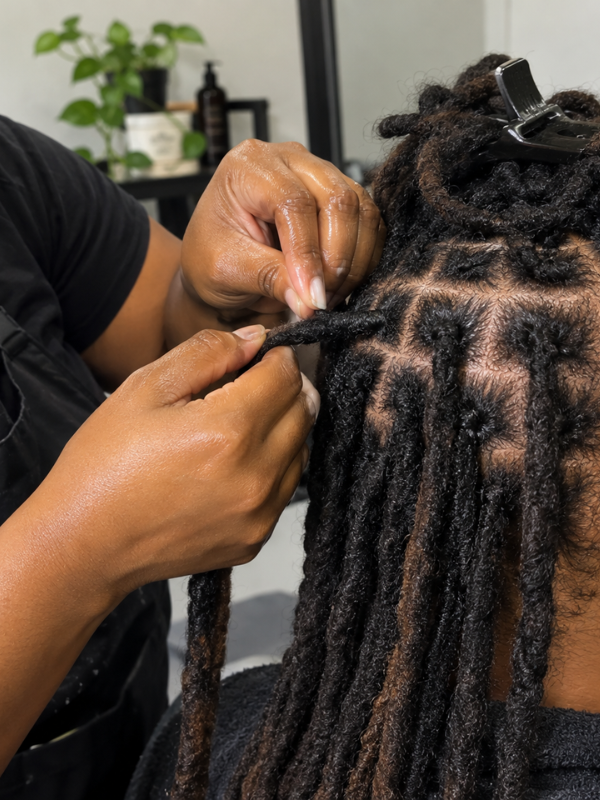
Two-strand twists are created by dividing each section of hair into two smaller strands and wrapping them around each other from the roots towards the ends.
Instead of creating one individual coil, the stylist forms a rope-like twist. The finished style usually has a visible spiral pattern, and each section looks slightly thicker than a comparable individual coil.
Two-strand twists are a popular starter loc method for people with medium-length or longer natural hair. They can also work on shorter hair if there is enough length to create secure twists.
As the hair begins to lock, the two strands gradually become more integrated. The original twist pattern may remain visible for some time, especially during the early stages. Eventually, the hair can develop into a more solid loc.
One of the biggest reasons people compare comb coils vs two-strand twists is that both methods create different starting appearances and maintenance experiences.
Two-strand twists are also versatile. You can wear them as they are, style them into simple updos, or accessorise them while waiting for your locs to mature.
Comb Coils vs Two-Strand Twists: What Is the Difference?
At first glance, both methods may look similar because they create individual sections throughout the head. However, the way the hair is arranged, the initial appearance, and some maintenance considerations are different.
| Feature | Comb Coils | Two-Strand Twists |
|---|---|---|
| Installation | Hair is rotated with a comb | Two strands are wrapped around each other |
| Starting appearance | Small, defined individual coils | Rope-like twists |
| Best suited to | Often practical for short, naturally coily hair | Often practical for medium or longer hair |
| Initial texture | Spring-like and rounded | Twisted and rope-like |
| Unravelling | Can unravel, particularly when disturbed early | Can loosen or unravel, especially at the ends |
| Styling | Can be worn individually or accessorised | Offers more options for twist-based styling |
| Locking process | Coils gradually swell, tangle, and mature | The two strands gradually become more integrated |
| Maintenance | Needs gentle handling and careful washing | Needs gentle handling and attention to the twist pattern |
| Final loc appearance | Depends on section size and hair characteristics | Depends on section size and hair characteristics |
The table gives you a general idea, but your hair’s density, length, texture, and section size will influence the final result.
For example, someone with thick hair may end up with fuller locs regardless of whether they choose coils or twists. Someone with finer hair may have smaller-looking locs even when the sections are similar.
The installation method matters, but it is not the only thing that determines how your locs will look.
Comb Coils vs Two-Strand Twists: Which Is Better for Starter Locs?
If you want a direct answer, neither method is better for everyone. The best choice depends on your hair and the kind of loc journey you want.
Comb coils may be a good option if you have short, tightly coiled hair and want individual, neatly defined starter sections. They can create a uniform starting appearance and are often a practical choice when your hair is not long enough for comfortable two-strand twists.
Two-strand twists may be a better option if your hair has enough length to form secure twists, or if you prefer the rope-like appearance of twisted starter locs. They also offer styling versatility during the early stages.
However, do not choose a method based only on how it looks on someone else. Two people can use the same installation method and have very different results.
Consider these questions before deciding:
- Is your hair long enough to hold two-strand twists securely?
- Do you prefer the appearance of individual coils or rope-like twists?
- How large or small do you want your future locs to be?
- Are you comfortable with frizz and changes in appearance during the locking process?
- Can you follow the maintenance instructions recommended by your loctician?
- Does your hair tend to unravel easily?
Your answers can help you narrow down the right option.
Are Comb Coils Good for Starter Locs?
Yes. Comb coils are a well-established method for starting traditional locs, especially on naturally coily hair. They create individual sections that can gradually develop into mature locs.
One reason people like comb coils is their neat, defined appearance immediately after installation. They also allow the stylist to create a consistent parting pattern, which is important if you want your locs to have a particular size or arrangement.
However, comb coils are not completely maintenance-free. They can unravel if they are handled too frequently, washed incorrectly, or disturbed before they have had time to settle.
You may also notice that the coils become frizzy as your hair grows. This does not automatically mean something has gone wrong. Frizz is a normal part of the process, although excessive frizz, thinning, or breakage should be assessed by a knowledgeable loctician.
If you choose comb coils, avoid constantly twisting them back into place just because they no longer look as smooth as they did on installation day. Your goal is to give the hair time to develop, not to keep every coil looking freshly done.
What Happens During the Comb Coils vs Two-Strand Twists Locking Process?
The locking process is one of the biggest considerations when choosing your starter loc method. Both comb coils and two-strand twists need time to mature, and neither method produces fully mature locs overnight.
When considering comb coils vs two-strand twists, remember that the locking timeline depends on your hair characteristics, section size, installation, and maintenance habits rather than the installation method alone.
What Happens to Comb Coils as They Mature?
When comb coils are first installed, they usually look smooth, defined, and tightly organised. Each section has a visible coil pattern.
As your hair grows, the roots begin to show new growth. The original coils may also become less defined, and some sections may look fluffy or frizzy.
You may notice the following changes:
More frizz: New growth and loose strands can make the coils look less smooth. This is expected during the early stages.
Swelling: The sections may become fuller as the hair starts to tangle and develop a more compact structure.
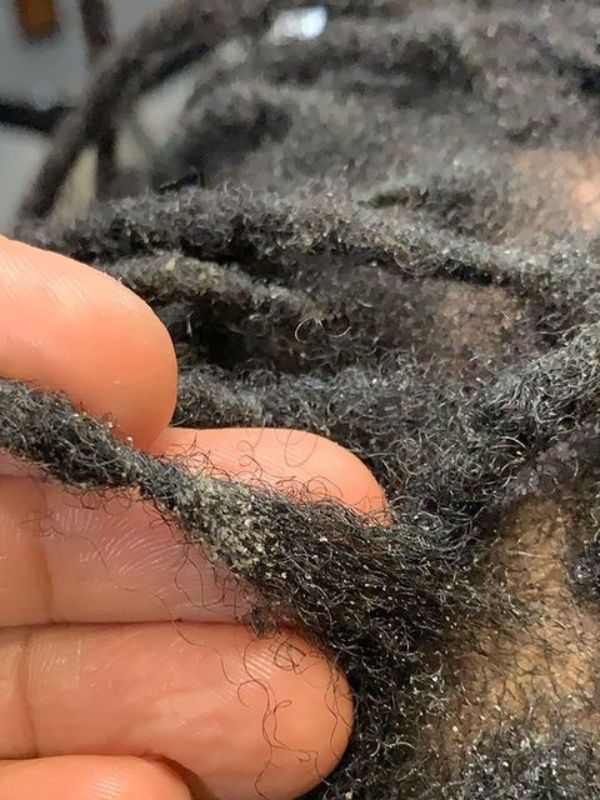
Budding: Some areas may develop small, firmer bumps or thicker sections as the hair begins to form knots. Budding is one part of the locking process, although not every bump or knot should automatically be assumed to be healthy budding.
Changes in length: Your hair may appear shorter or less elongated during certain stages because of shrinkage and changes in the way the sections hold together.
Eventually, the coils can develop into mature locs. How long this takes varies considerably from one person to another.
What Happens to Two-Strand Twists as They Mature?
Two-strand twists also change as your hair begins to lock. Immediately after installation, you can usually see the two-strand pattern clearly.
During the early stages, the twists may become fuzzy, especially around the roots and ends. Some people notice that the original twist pattern remains visible for quite a while.
As the hair matures, the strands gradually become more integrated. The twist pattern may become less obvious as the hair develops a more compact structure.
You may experience:
- Frizz around the roots and along the twists.
- Loose hairs that have not yet become incorporated into the loc.
- Swelling as the hair begins to tangle.
- Budding in some sections.
- Changes in the length and shape of the twists.
It is important not to panic when your starter twists stop looking as tidy as they did on installation day. The early stages are not always the most polished part of the journey.
Will Comb Coil Locs and Two-Strand Twist Locs Look Different When Mature?
They can, but the installation method does not guarantee a particular mature appearance.
Some people find that their mature comb coil locs have a more rounded or cylindrical appearance. Others may have locs with a lot of texture and irregularity.
Two-strand twist locs may retain some characteristics of their original twist pattern, depending on the hair and how the locs mature. However, the original pattern can become less noticeable over time.
Your final loc appearance will be influenced by:
- Your natural hair texture.
- Hair density and strand thickness.
- The size of your original sections.
- How consistently your locs are maintained.
- Whether the sections remain separate as they mature.
- Your loctician’s installation technique.
If you have a specific mature loc appearance in mind, show your loctician examples and discuss whether your hair can realistically achieve a similar result.
Comb Coils vs Two-Strand Twists for Different Hair Types
Your natural hair texture can influence how well each starter loc method holds. However, hair typing is not an exact science, and two people with the same curl-pattern label can have different hair density, strand thickness, shrinkage, and styling needs.
The best choice in the comb coils vs two-strand twists comparison will depend on your curl pattern, hair density, length, and ability to hold the starting style.
Comb Coils vs Two-Strand Twists for 4C Hair
People with 4C hair often consider comb coils because the tightly coiled texture can help individual sections hold their shape.
Comb coils can be a practical choice if your hair is short and naturally forms tight coils. They also create clearly defined sections that can be maintained as the locs mature.
Two-strand twists can work beautifully on 4C hair too, especially when the hair has enough length to form secure twists. The texture may help the twists stay together, although the result still depends on installation and maintenance.
If you have 4C hair, do not assume you must choose comb coils. Both methods are worth discussing with a loctician who understands your hair.
Comb Coils vs Two-Strand Twists for 4A and 4B Hair
People with 4A and 4B hair may be able to use either method, depending on the length and characteristics of their hair.
Comb coils can give you a defined starting pattern, while two-strand twists can create a fuller, rope-like appearance.
Some people with these textures find that their coils or twists loosen more easily than expected. This is why proper installation and gentle handling are important.
Your stylist should consider how your hair behaves when dry and how much it shrinks before recommending a method.
Comb Coils vs Two-Strand Twists for 3C Hair
People with 3C hair can also start locs with comb coils or two-strand twists. However, the looser curl pattern may affect how well the sections hold, depending on the individual’s hair.
Two-strand twists may be a comfortable starting option if your hair has enough length and holds twists well. Comb coils may also work, but your loctician should assess whether the coils are likely to remain secure.
Neither method should be chosen simply because someone with a similar curl-pattern label used it successfully.
What If Your Hair Is Fine or Thin?
If your hair is fine or naturally low in density, section size and installation technique deserve extra attention.
Very small sections may not be suitable for every head of hair. On the other hand, sections that are too large may create locs that are heavier or thicker than you want.
A loctician should assess your density and scalp before deciding on a parting pattern. Avoid choosing an extremely small loc size just because you like how it looks in a photograph.
Comb Coils vs Two-Strand Twists for Short Hair
If your hair is short, comb coils may be the more practical option because they can be installed on relatively short sections of natural hair.
The stylist uses a comb to form individual coils, so the hair does not need to be long enough to create a traditional two-strand twist.
However, two-strand twists are not completely out of the question. If your hair has enough length, a stylist may be able to create secure twists that can develop into locs.
The important thing is not to force a method that your hair length cannot comfortably support.
If your hair is very short, ask your loctician:
- Is there enough length to create secure sections?
- Will the twists or coils stay in place?
- What loc size would suit my hair density?
- Would waiting for more length give me a better result?
It is better to choose a method that works with your current hair than to struggle with a style that keeps coming undone.
Comb Coils vs Two-Strand Twists: Which Creates Thicker Locs?
This is a common question, especially among beginners who already have a particular loc size in mind.
Two-strand twists are sometimes assumed to create thicker locs because they look fuller immediately after installation. However, the method alone does not determine how thick your mature locs will become.
The size of your original sections is one of the biggest factors. Larger sections generally create larger locs, while smaller sections generally create smaller locs.
Your hair density and strand thickness also matter. Someone with dense hair may end up with fuller locs than someone with lower-density hair, even if both people start with similar section sizes.
If you want thick locs, discuss your preferred size with your loctician before installation. If you want smaller locs, make sure your hair can support the number of sections you have in mind.
Do not assume that choosing two-strand twists will automatically give you thick locs or that comb coils will always produce thin ones.
Comb Coils vs Two-Strand Twists: Maintenance and Care
Another important part of the comb coils vs two-strand twists decision is understanding how much care each method requires during the first few months.
Keeping your starter locs healthy also means developing a consistent care routine, so take a look at our guide on how to maintain locs for more tips on washing, moisturizing, scalp care, and retwisting.
Both methods need gentle handling. Your starter locs are still developing, so excessive manipulation can interfere with the process.
How to Maintain Comb Coil Starter Locs
1. Avoid constantly touching the coils.
It can be tempting to play with your coils throughout the day, especially when you are still getting used to your new hairstyle. However, repeatedly twisting or pulling them can cause unnecessary disturbance.
Allow the coils to settle and follow your loctician’s instructions.
2. Be careful when washing.
A clean scalp is important throughout your loc journey. You do not need to neglect your scalp to protect your starter locs.
However, newly installed coils may be more likely to unravel if they are handled roughly. Ask your loctician when and how to wash your hair based on your installation and hair characteristics.
When washing, use gentle movements and avoid scrubbing the coils aggressively.
3. Keep your scalp comfortable and clean.
Avoid applying heavy products that leave a lot of residue. Excessive oils, thick creams, and styling products can build up in your hair.
Use products that suit your scalp and follow professional guidance.
4. Protect your hair while sleeping.
A satin or silk bonnet, scarf, or pillowcase can reduce friction while you sleep.
This does not mean your coils will never become frizzy, but reducing unnecessary friction can help protect your hair.
5. Avoid excessive retwisting.
Retwisting too frequently can create tension around the roots. Over time, repeated tight styling may contribute to thinning and breakage.
Your maintenance schedule should be based on your hair’s needs rather than pressure to keep every coil looking freshly installed.
How to Maintain Two-Strand Twist Starter Locs
1. Avoid pulling the twists apart.
The two-strand pattern is part of the initial structure of your starter locs. Pulling the twists apart or constantly manipulating them can cause them to loosen.
Give the sections time to settle.
2. Pay attention to the ends.
The ends of two-strand twists can loosen, especially during the early stages. This does not mean every loose end needs to be immediately retwisted.
Ask your loctician how to handle loose ends without disturbing the rest of the section.
3. Wash gently.
Just like comb coils, two-strand twists need a clean scalp. Follow your loctician’s washing recommendations and use gentle techniques that minimise unnecessary unravelling.
4. Avoid heavy products.
Thick creams and excessive oils can contribute to buildup. Keep your routine simple and use products that are appropriate for locs.
5. Protect your twists at night.
Use a satin or silk bonnet or scarf to reduce friction. This is especially helpful if you move around a lot while sleeping.
Do Comb Coils or Two-Strand Twists Need More Retwisting?
Neither method should be retwisted constantly.
Your retwisting schedule depends on your hair growth, scalp condition, desired appearance, and loctician’s advice. Some people prefer a more defined root appearance, while others are comfortable allowing more new growth to develop between maintenance appointments.
The most important thing is to avoid tight retwisting. Your locs should not feel painfully tight, and your scalp should not be under constant tension.
Comb Coils vs Two-Strand Twists: What to Expect During the First Year
Your first year with starter locs can involve several changes. Some months may feel exciting, while others may test your patience.
The exact timeline varies, so think of the following as a general guide rather than a strict schedule.
The First Three Months
During the first few months, your starter locs are still adjusting.
Comb coils may begin to look frizzy or lose some of their original definition. Two-strand twists may also become fuzzy, particularly around the roots and ends.
You may notice new growth, slight swelling, or sections that do not look as uniform as they did on installation day.
This is a good time to focus on gentle care rather than trying to make your hair look perfectly neat every day.
Around Six Months
By this stage, you may notice more changes in the structure of your starter locs.
Some sections may begin to feel firmer, while others may still be soft or loose. Budding may become noticeable in certain areas.
Your hair may also look fuller, and the original coil or twist pattern may become less obvious in some sections.
Remember that not every loc develops at the same speed. It is normal for different sections to mature at different rates.
Around Twelve Months
Some people notice significant progress by the end of their first year, while others still consider their locs to be in the starter or developing stage.
Your locs may have become more compact, but the process is not necessarily complete.
Do not compare your progress too closely with someone else’s twelve-month photographs. Hair texture, density, section size, and maintenance can all influence how quickly locs mature.
The goal is healthy development, not reaching a particular stage by a specific date.
Can You Get Instant Locs Instead of Comb Coils or Two-Strand Twists?
Yes. Instant locs are another way to begin a loc journey, but they are different from traditional comb coils and two-strand twists.
With instant locs, a trained loctician uses a crochet technique to manually pull and interlock the hair into a loc-like structure. This creates a more immediately compact appearance compared with traditional starter methods.
The main difference is that comb coils and two-strand twists rely on the hair gradually developing and locking over time. Instant locs use a technique to create a loc structure during installation.
Instant locs may appeal to people who do not want to wait through the traditional starter stages. However, the technique requires skill. Poor crochet work or excessive manipulation can cause damage.
If you are considering instant locs, consult an experienced professional and ask to see examples of their work.
Pros and Cons of Comb Coils vs Two-Strand Twists for Starter Locs
Both methods have advantages and disadvantages. Looking at them side by side can help you decide which one fits your preferences.
Advantages of Comb Coils
- They can work well on shorter natural hair.
- They create individual, clearly defined sections.
- They offer a neat starting appearance.
- They can be suitable for tightly coiled hair.
- They allow your loctician to create a consistent parting pattern.
Disadvantages of Comb Coils
- They can unravel if handled roughly.
- They may become frizzy as the hair grows.
- They need gentle handling during the early stages.
- They may not be the most practical choice for every hair texture or length.
- Some people may find the early appearance less predictable than expected.
Advantages of Two-Strand Twists
- They can work well on medium-length and longer hair.
- They create a rope-like starting appearance.
- They offer several styling options.
- They can be a comfortable choice for people who already enjoy wearing twists.
- They can develop into mature locs with time and appropriate maintenance.
Disadvantages of Two-Strand Twists
- They need enough hair length to form secure twists.
- The twist pattern may remain visible during the early stages.
- The ends can loosen or unravel.
- They can become frizzy as the hair develops.
- They still require gentle handling and proper maintenance.
Common Mistakes to Avoid When Starting Locs
Choosing a suitable method is important, but your habits after installation also matter.
Here are some mistakes that can make the early stages more difficult.
Choosing a Method Only Because It Looks Good on Someone Else
It is easy to fall in love with someone’s starter loc photographs and want the exact same result.
However, their hair may have a different texture, density, length, or section size. A method that works well for them may not be the most suitable option for you.
Use inspiration photographs to explain what you like, but allow your loctician to assess your hair before making the final decision.
Making Your Sections Too Small or Too Large
The parting pattern has a major influence on your future locs.
Very small sections may not be appropriate for every hair density, while large sections may create locs that are thicker than you intended.
Think about your preferred loc size and discuss it with your stylist before installation.
Retwisting Too Frequently
Wanting neat roots is understandable, especially when you are new to locs. However, retwisting too frequently or too tightly can put unnecessary tension on your hair.
Your scalp should not feel painful after maintenance. If your locs feel excessively tight, speak to your loctician.
Washing Too Roughly
Keeping your scalp clean is important, but aggressive scrubbing can disturb new coils and twists.
Ask your loctician for washing instructions that suit your installation. Do not assume you must avoid washing indefinitely to protect your starter locs.
Using Too Many Products
Applying several creams, oils, gels, and styling products does not automatically make your locs healthier.
Too much product can leave residue and buildup. A simple routine is often easier to manage.
Comparing Your Progress With Other People
Your loc journey is your own. Someone else’s locs may look mature after a particular number of months, but that does not mean yours should follow the same timeline.
Pay attention to the health and development of your own hair.
Can You Switch From Comb Coils to Two-Strand Twists or Vice Versa?
It is possible to change your starter loc method, but it is not always necessary or straightforward.
If your comb coils are not turning out the way you expected, speak to your loctician before trying to convert them into two-strand twists. Depending on how much your hair has grown and how the coils have developed, changing the method may require taking down or restructuring the sections.
The same applies if you start with two-strand twists and decide you prefer comb coils.
Before making a change, consider why you are unhappy with your current method. Is it the appearance? The maintenance? The size of the sections? Or are you simply experiencing the normal frizz and changes that happen during the early stages?
Sometimes the issue is not the starter method but an expectation that the hair should remain as neat as it looked on installation day.
A professional loctician can help you understand whether a change is necessary or whether your hair simply needs more time.
How to Choose the Right Loctician for Your Starter Locs
Your starter loc method is important, but the person installing it also plays a major role in the result.
A skilled loctician should understand how different hair textures behave and how to create sections that suit your preferred loc size.
Before booking an appointment, look for someone who:
- Has experience installing both comb coils and two-strand twist starter locs.
- Can show examples of their work on different hair lengths and textures.
- Understands how to create a consistent parting pattern.
- Explains the advantages and limitations of each method.
- Does not promise that your locs will mature within an exact number of months.
- Gives you realistic maintenance advice.
- Takes your scalp comfort and hair health seriously.
You should also feel comfortable asking questions. A good consultation should help you understand what will happen during installation and what you can expect afterwards.
If possible, ask to see examples of the stylist’s clients at different stages of their loc journeys, not just immediately after installation.
So, Which Is Better: Comb Coils or Two-Strand Twists?
After looking at the appearance, locking process, hair types, styling options, and maintenance requirements, the comb coils vs two-strand twists decision should become much easier.
If you have short, tightly coiled hair and prefer individual, clearly defined starter sections, comb coils may be a practical choice. They can give you a neat starting appearance and do not require as much length as traditional two-strand twists.
If your hair is longer and you enjoy the look of rope-like sections, two-strand twists may be a better fit. They also offer plenty of styling possibilities while your locs are developing.
However, neither method guarantees a particular mature loc size, texture, or locking timeline. Your hair characteristics, sectioning, and maintenance habits all play a role.
Ultimately, comb coils vs two-strand twists is not about choosing the most popular starter loc method. It is about finding the option that works with your hair and your long-term loc goals.
Take your time, discuss your preferences with an experienced loctician, and choose a method you feel comfortable wearing through the different stages of your journey.
Frequently Asked Questions About Comb Coils vs Two-Strand Twists
Which is better, comb coils or two-strand twists?
Neither method is better for everyone. Comb coils are often practical for shorter, tightly coiled hair, while two-strand twists can be a good option for medium-length or longer hair. The best choice depends on your hair texture, length, density, desired loc size, and personal preference.
What happens if your starter locs are coils instead of two-strand twists?
Comb coils gradually become frizzier, swell, and begin to form a more compact structure as the hair develops. The original coil pattern may become less defined over time. This is a normal part of the locking process, although the timeline varies from person to person.
What happens if your starter locs are two-strand twists?
Two-strand twists may become fuzzy as new growth appears and the hair begins to lock. You may also notice swelling, loose hairs, and budding in some sections. The original twist pattern can remain visible for a while before the hair becomes more integrated.
Are comb coils good for starter locs?
Yes. Comb coils are a popular starter loc method, particularly for people with naturally coily hair and shorter hair lengths. They create individual sections that can gradually mature into locs. They do need gentle handling because they can unravel if disturbed too much during the early stages.
Do two-strand twists lock faster than comb coils?
Not necessarily. The locking process depends on your hair texture, density, section size, and maintenance habits. One method is not guaranteed to lock faster for everyone.
Are two-strand twist starter locs thicker than comb coil starter locs?
Not automatically. The size of your sections, hair density, and strand thickness have a greater influence on the final loc size. Two-strand twists may look fuller at first, but that does not guarantee thicker mature locs.
Can you start locs with two-strand twists on short hair?
Yes, provided your hair is long enough to form secure twists. If your hair is very short, comb coils may be easier to install. A loctician can assess your length and recommend a suitable method.
Can men start locs with two-strand twists?
Absolutely. Two-strand twists are suitable for men who want to start a loc journey, provided their hair has enough length for secure installation. Men can also choose comb coils, depending on their hair texture, length, and preferred appearance.
Can I style my starter locs after installation?
You can style starter locs gently, but not every hairstyle is suitable immediately after installation. Simple accessories, loose headwraps, and gentle arrangements may be appropriate, depending on your hair. More elaborate styles that pull on the roots should wait until your locs are more established.
Should I wash comb coil or two-strand twist starter locs?
Yes, your scalp still needs to be cleaned during the starter loc stage. However, the washing technique and timing should account for how new your locs are and how easily they may unravel. Follow your loctician’s instructions and avoid aggressive scrubbing.
Can I add beads to comb coils and two-strand twists?
Yes, you can accessorise both styles with beads, but choose lightweight options that fit comfortably. Avoid forcing beads onto small sections or using accessories that pull on your hair.
How long does it take for comb coils and two-strand twists to mature into locs?
There is no exact timeline. Some people’s locs develop more quickly than others, depending on hair texture, density, section size, and maintenance. Both methods can take many months or longer to mature fully.
Conclusion: Comb Coils vs Two-Strand Twists for Starter Locs
Starting your loc journey is a personal decision, and choosing between comb coils and two-strand twists is one of the first steps. Both methods can develop into beautiful, mature locs, so you don’t have to worry about choosing a method that is automatically better than the other.
If you have shorter, tightly coiled hair and love the look of individual, spring-like sections, comb coils may be the right starting point. If you have more length and prefer the fuller, rope-like appearance of twists, two-strand twists are worth considering.
And if you are still unsure, look through the 20 hairstyle ideas again. Think about which styles you would enjoy wearing during the early stages and which ones you would love as your locs become longer and more established.
Most importantly, don’t choose your method based only on how someone else’s locs look. Your hair texture, density, length, and maintenance routine all play a role in the final result. Speak with an experienced loctician, discuss your expectations, and choose a method that works with your hair.
Remember, your starter locs will change as they mature. There will be days when they look neat and defined and other days when they appear frizzy or uneven. Give your hair time, take care of your scalp, and enjoy the process rather than rushing to reach the mature loc stage.
Whether you choose comb coils or two-strand twists, the most important thing is starting your journey with a method you feel comfortable maintaining and excited to grow with.