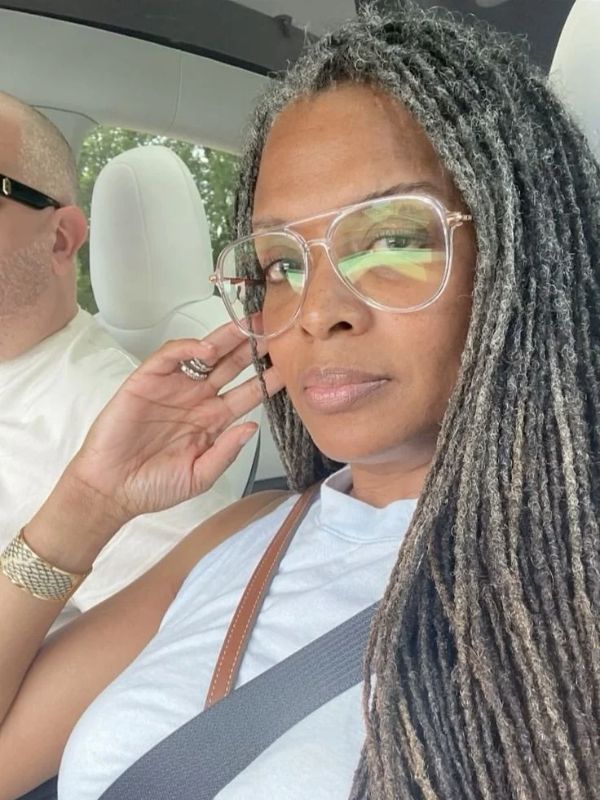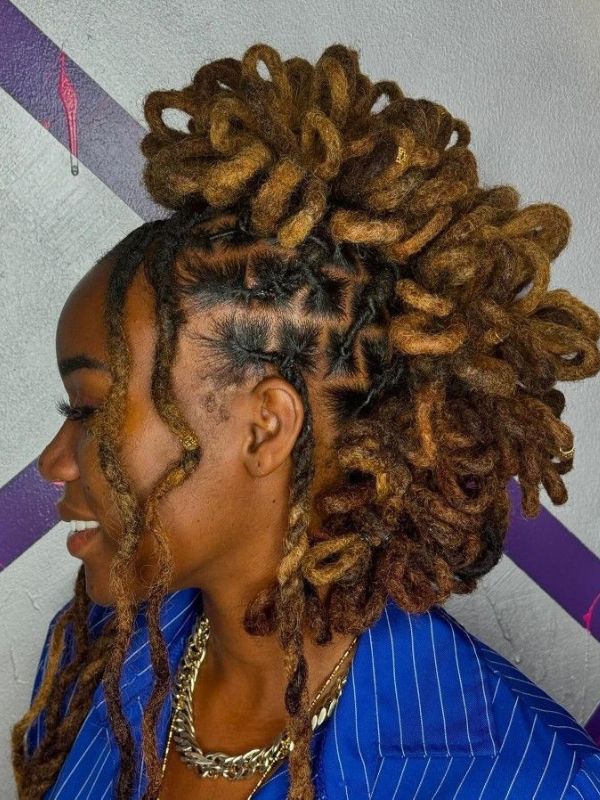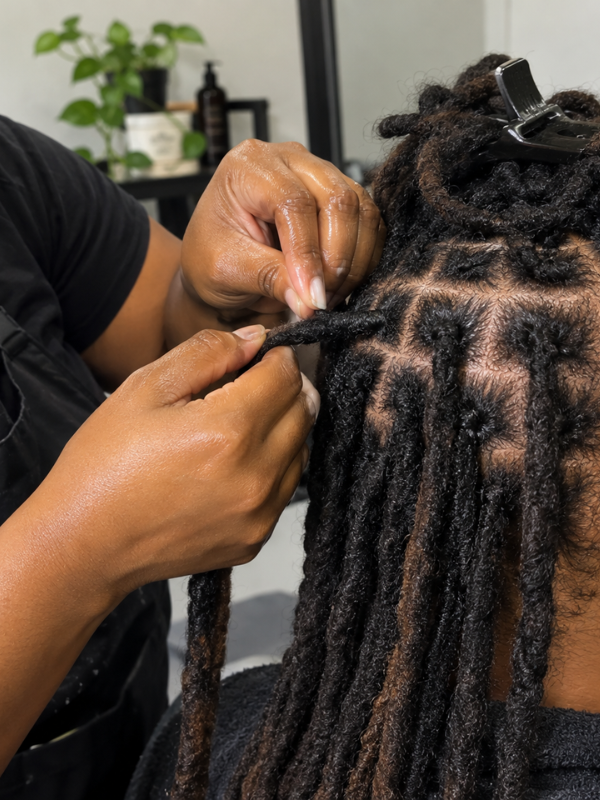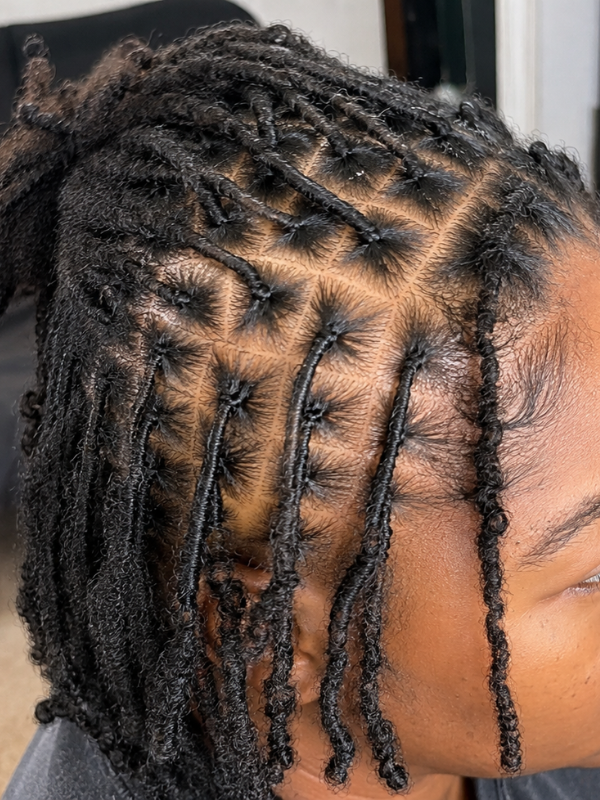
Habits That Can Help Your Locs Grow Longer and Stronger
When I started paying closer attention to my locs, I realized that growing them longer was not just about waiting for more length or finding a product that promised faster hair growth. Some of the biggest differences came from the little things I did regularly. How I washed my hair, how I handled it when it was wet, how often I retwisted it, and even what I did before going to bed all became part of my loc journey.
I used to think that having longer locs meant I needed to keep adding products to my routine. If I saw someone recommending a particular oil, cream, or hair-growth spray, I would naturally become curious. I wanted to know whether it could help my locs become longer and stronger. But with time, I learned that buying more products was not necessarily what my hair needed. What mattered more was understanding my locs and being consistent with the habits that kept them healthy.
One thing I want you to understand is that locs do not grow overnight. Your hair continues growing from the roots, just like it does with other hairstyles. However, the length you see depends on more than how quickly your hair grows. If your locs keep breaking, thinning, or becoming damaged, you may not notice much length even when your hair is growing.
That is why I pay attention to length retention as much as growth. I want my locs to grow, but I also want to keep the length they have gained.
If you have been wondering how to make your locs longer, or you feel like your hair has been stuck at the same length for months, there are some everyday habits worth paying attention to. These are the locs growth tips I would encourage you to start with, especially if you want healthier, stronger locs without making your hair-care routine unnecessarily complicated.
As someone who wears locs and also styles them, I have learned that good loc maintenance is not always about doing more to your hair. Sometimes, it is about understanding what your locs need, knowing what to avoid, and being consistent with the things that actually make a difference.
Here are 15 habits that have helped me take better care of my locs and that you can incorporate into your own journey.
1. Keep Your Scalp Clean and Healthy: One of the Most Important Locs Growth Tips

One of the habits I never want to overlook when caring for my locs is keeping my scalp clean. Sometimes, people become so focused on the length of their locs that they forget where healthy hair growth begins. Your scalp deserves just as much attention as the rest of your hair.
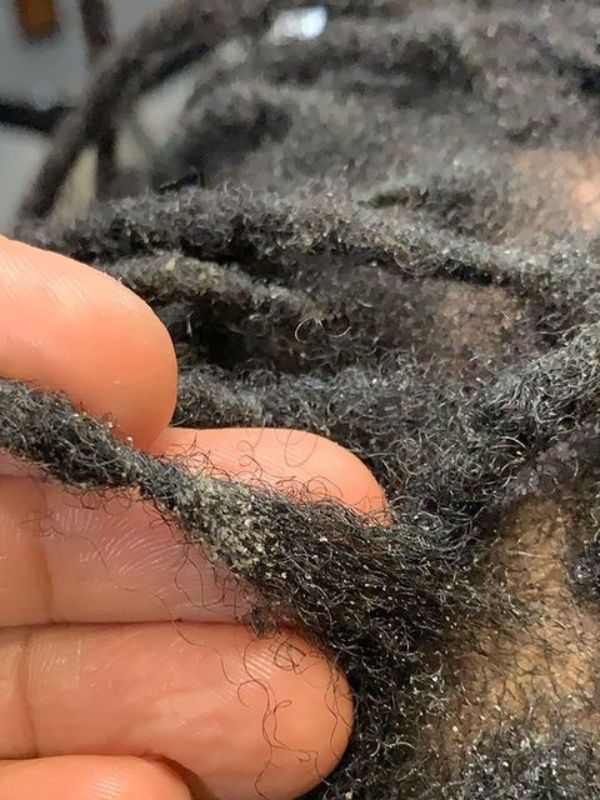
Think about it. Your locs grow from your scalp, so it makes sense to pay attention to the condition of the skin underneath them. Sweat, dead skin cells, excess oil, dirt, and product residue can accumulate over time, especially if you go long periods without washing your hair. When this happens, your scalp may start feeling itchy, uncomfortable, or irritated.
I know that washing locs can sometimes feel like extra work. Depending on their length and thickness, wash day can take longer than expected. You may also worry about disturbing your roots or causing your locs to unravel, particularly if they are still relatively new. However, avoiding washing altogether is not a good way to protect your locs.
A clean scalp helps create a healthy environment for your hair. You do not need to leave your scalp covered in oil or product residue to encourage growth. In fact, excessive buildup can make your locs feel heavy and difficult to maintain.
When washing your locs, pay attention to your scalp rather than simply concentrating on the visible length. Gently work a suitable shampoo through your roots, using your fingertips to loosen dirt and buildup. Avoid scratching aggressively with your fingernails because this can irritate your scalp.
I also recommend choosing a shampoo that rinses out easily and does not leave a lot of residue behind. Since locs are formed by intertwined hair strands, removing product buildup can sometimes be more challenging than it is with loose hair. This is why using products that are suitable for locs makes a difference.
Another thing I consider important is not waiting until my scalp becomes unbearably itchy before washing. Your wash schedule should depend on your scalp, lifestyle, activity level, and the maturity of your locs. Some people may need to wash weekly, while others may find a different schedule more comfortable.
When shampooing, divide your locs into manageable sections if they are long or thick. This makes it easier to reach your scalp instead of concentrating all your attention on the outer part of your hair. Rinse thoroughly, particularly around the roots and the areas where locs sit close together.
If you experience persistent dandruff, itching, or scalp irritation, do not assume that applying more oil will solve the problem. Sometimes, what looks like ordinary dryness may require a different approach or professional attention.
My advice: Do not make having neat-looking locs your only hair-care goal. Pay attention to your scalp, too. Clean roots and a comfortable scalp are important parts of maintaining healthy locs.
2. Make Moisturizing Your Locs a Regular Habit
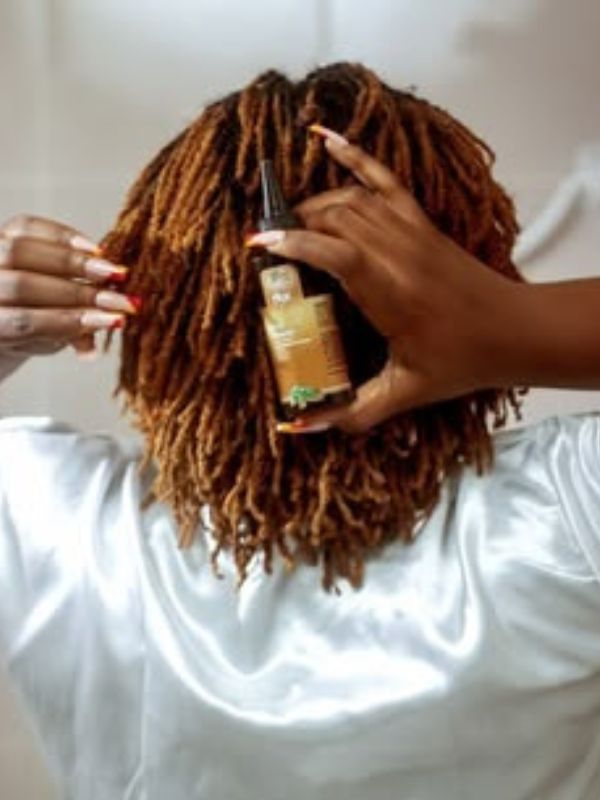
If there is one thing I would encourage every loc wearer to pay attention to, it is moisture. You can have beautiful, long locs, but if they constantly feel dry and brittle, you may struggle with breakage and maintaining their length. This is one of the locs growth tips I consider particularly important for length retention.
I have learned that moisturizing is not the same thing as pouring oil over your hair. This is something worth understanding because many people associate healthy locs with using different oils. Oils can have a place in a hair-care routine, but they do not replace water or a suitable water-based moisturizer.
Your locs can become dry for different reasons. Weather, frequent washing, product choices, and your general hair-care habits can all influence how your hair feels. When your locs become excessively dry and brittle, they may be more vulnerable to breakage from friction and rough handling.
This is why I pay attention to how my locs feel instead of automatically applying products every day.
A lightweight moisturizing spray can be useful for refreshing locs when they feel dry. Some people prefer plain water, while others use a water-based leave-in product formulated for locs. The important thing is choosing something that works with your hair without leaving a sticky residue.
You can also use a small amount of suitable lightweight oil if you find that it helps your hair. However, remember that oil is not a substitute for moisturizing. It can help reduce moisture loss, but applying more and more oil will not necessarily make your locs healthier.
I would also encourage you to pay attention to your ends. It is easy to concentrate on your roots because that is where new growth appears, but your older hair deserves attention, too. The ends of your locs have been exposed to everyday handling, friction, and environmental conditions for longer. They may need extra care.
One mistake I would avoid is using too much product because you want to see results quickly. Heavy creams and thick butters can accumulate inside locs, especially when they are not thoroughly washed out.
Instead, keep your moisturizing routine simple. Use an appropriate amount of product, avoid leaving your locs constantly wet, and give them enough time to dry.
How do you know when your locs need moisture? Pay attention to how they feel. If they feel unusually dry, rough, or brittle, you may need to refresh them. However, do not assume that every change in texture means your hair needs another product. Sometimes, your locs simply have their natural texture, and that is perfectly fine.
Also, remember that moisture does not mean soaking your hair every day. Constantly keeping locs wet without allowing them to dry properly is not a good habit. The goal is to maintain a comfortable moisture balance while keeping your locs clean and properly dried.
My advice: Learn what moisturized locs feel like. You do not need to keep applying products simply because you want longer hair. Sometimes, using the right product in the right amount is all your routine needs.
3. Stop Retwisting Your Locs Too Frequently: A Key Locs Growth Tip
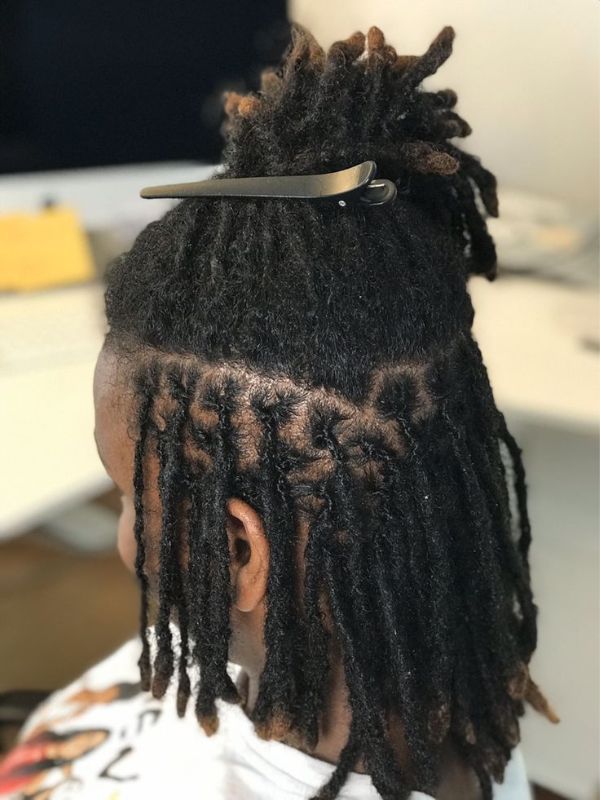
I understand the desire to have fresh, neatly retwisted locs all the time. There is something satisfying about looking in the mirror and seeing your roots looking neat and your locs sitting beautifully. However, one habit I would encourage you to reconsider is retwisting too frequently.
Your roots naturally produce new growth. As your hair grows, you will notice new hair appearing between your scalp and the established part of your locs. This is completely normal. It does not mean your locs are becoming unhealthy or that you need to rush to your loctician.
Some people become uncomfortable with the appearance of new growth and feel the need to retwist as soon as their roots start looking fuzzy. The problem is that constantly twisting the same area can put unnecessary tension on your roots.
When you repeatedly pull and twist your hair tightly, you may weaken the roots over time. This can contribute to thinning, breakage, and traction-related hair loss, particularly around delicate areas such as your hairline.
I would rather have healthy roots with a little new growth showing than perfectly neat roots that are constantly under tension.
Your retwisting schedule should depend on your hair and how your locs are progressing. Some people are comfortable with maintenance every four to eight weeks, while others benefit from waiting longer. There is no single schedule that works for everybody.
If you are still at the beginning of your loc journey, my starter locs guide explains the different stages of loc development and what to expect as your hair begins to mature.
You should also consider the stage of your loc journey. Starter locs, budding locs, and mature locs may require different maintenance approaches. If you are still in the early stages, your loctician can help you understand how often your hair needs maintenance without disturbing the locking process.
Another thing to remember is that retwisting is not what makes your hair grow from the scalp. Your hair grows naturally. Retwisting simply helps organize new growth and maintain the appearance and structure of your locs.
As a loc stylist, I would also encourage you to pay attention to the condition of the roots before deciding that it is time for another retwist. Are the roots strong? Are there areas that look unusually thin? Does the scalp feel tender? These details matter more than whether your parts still look freshly maintained.
If you have very fine locs or naturally delicate roots, excessive retwisting may be particularly problematic. A maintenance routine should preserve the strength of your hair, not just its appearance.
If you are someone who loves neat roots, you may need to get comfortable with seeing some new growth between maintenance sessions. It is part of wearing locs.
My advice: Do not sacrifice the health of your roots just to keep your locs looking freshly retwisted. Give your hair enough time between maintenance sessions, and avoid hairstyles or techniques that pull too tightly on your roots.
4. Protect Your Locs While You Sleep

Something as simple as covering your hair before going to bed can make a difference in how well you maintain your locs. You may spend time washing, moisturizing, and styling your hair during the day, but what happens when you go to sleep?
If you are not protecting your locs at night, you may be exposing them to unnecessary friction every single day. Nighttime protection is one of those locs growth tips that does not require buying an expensive collection of products.
Think about how much you move around while sleeping. Your head constantly rubs against your pillowcase, and if you use a regular cotton pillowcase, your hair may experience more friction. Over time, this can contribute to frizz, dryness, and unnecessary wear on your locs.
This is why I consider nighttime protection an important part of maintaining longer locs.
A satin or silk bonnet is one of the easiest things you can add to your routine. It creates a smoother surface between your hair and the pillow, helping to reduce friction while you sleep. You can also use a satin pillowcase if you find bonnets uncomfortable or if you sometimes forget to put one on before going to bed.
If your locs are long, make sure your bonnet is spacious enough to accommodate them without squeezing or pulling at your roots. You do not want to protect your locs from friction only to create another problem by tying them too tightly.
I would also suggest being mindful of how you arrange your locs before sleeping. Avoid forcing long locs into a small bonnet or tying them into a tight bun just to make them fit. You can loosely gather them or arrange them in a comfortable position.
Another thing worth mentioning is consistency. Wearing a bonnet once in a while is not the same as making nighttime protection part of your regular routine. It is one of those small habits that becomes easier when you do it every night.
If you have shorter locs, you may find a regular satin bonnet comfortable. If your locs are longer or thicker, consider a larger bonnet designed to accommodate more hair. A bonnet that constantly slips off while you sleep will not be very useful.
You may not notice an immediate difference after wearing a satin bonnet for one night, but reducing unnecessary friction over time can help you maintain your locs.
My advice: Keep a satin bonnet beside your bed or somewhere you can easily reach it. Make covering your locs the last thing you do before sleeping. It is a simple habit that can help protect the length you have worked so hard to achieve.
5. Be Gentle When Handling Your Locs: Another Important Locs Growth Tip
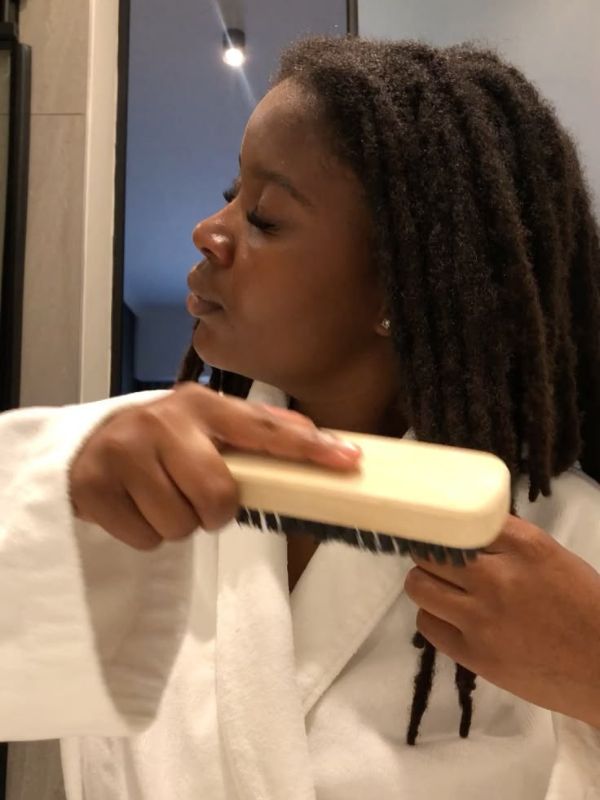
One thing I have come to appreciate about caring for locs is that you do not always need to do something to your hair. Sometimes, leaving it alone is one of the best things you can do.
It is easy to develop little habits without realizing how frequently you repeat them. You may find yourself pulling at your locs while watching television, twisting them whenever you are bored, or constantly running your fingers through them. These actions may not seem harmful, but repeated unnecessary manipulation can put stress on your hair.
Your locs are not indestructible just because they are locked. They can still become weak, thin, or damaged when handled roughly.
For example, pulling at a loc to make it look neater can weaken areas that are already fragile. Similarly, constantly twisting the same section can cause unnecessary tension. If you have a habit of playing with your hair throughout the day, try becoming more conscious of how often you do it.
Another area where I recommend being gentle is wash day. Wet locs can be heavier than dry locs, and rough handling is not something you want to introduce when your hair is already holding water.
When drying your hair, avoid aggressively rubbing your locs with a towel. Instead, gently squeeze out excess water using a clean microfiber towel or another soft, absorbent towel.
You should also be careful when separating locs that are joining together at the roots. If you want to maintain individual locs, separate them gently and regularly rather than waiting until several locs have become tightly intertwined. Do not pull forcefully if the hair is tangled or difficult to separate.
This is particularly important if you have smaller locs. Smaller locs can be more vulnerable to damage when they are repeatedly pulled or manipulated, especially if they are already thin in certain areas.
Another thing I want to mention is lint. Locs can collect lint from towels, clothing, bedding, and other fabrics. If you notice lint on your locs, avoid picking aggressively at the strands because you could damage the hair. Prevention is easier than trying to remove deeply embedded lint later.
I think one of the biggest mistakes people make is assuming that more manipulation means better maintenance. You do not have to constantly touch your locs to keep them healthy.
Give them room to grow, mature, and develop naturally.
My advice: Be intentional about how you handle your hair. Avoid pulling, excessive twisting, and rough drying. The less unnecessary stress you put on your locs, the easier it becomes to maintain their strength and length.
6. Avoid Hairstyles That Put Too Much Tension on Your Roots
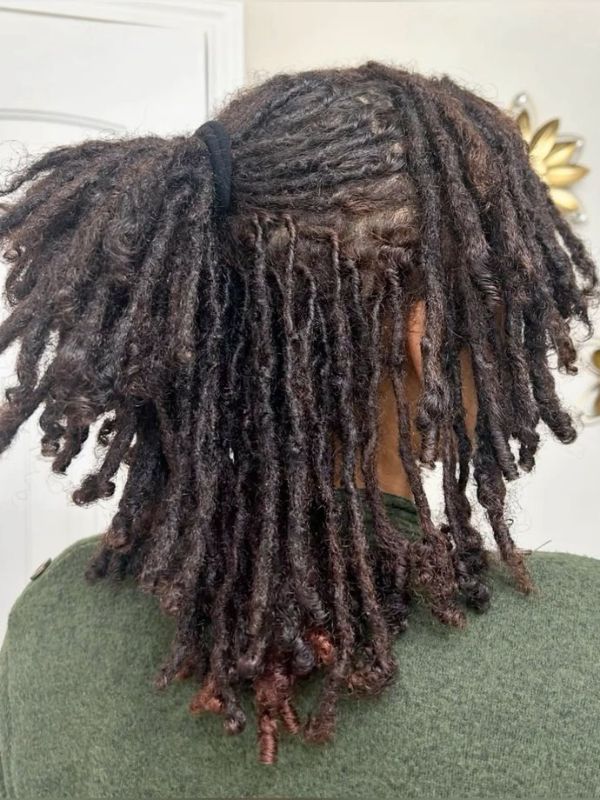
I love seeing the different ways people style their locs. From high ponytails and elegant buns to braided locs and beautiful updos, there are so many ways to enjoy your hair as it gets longer.
However, something I always want to keep in mind is that a hairstyle should not come at the expense of my roots. When discussing locs growth tips, I would never leave out the importance of choosing hairstyles that do not put unnecessary pressure on your scalp.
Some hairstyles look beautiful but require pulling the locs tightly in different directions. When you wear these styles repeatedly, the constant tension can weaken your roots and contribute to thinning.
High ponytails are a good example. If you pull all your locs upward and secure them tightly, you may place a lot of pressure on the hairline and scalp. The same thing can happen with tight buns, tightly braided locs, and styles that use heavy accessories.
This does not mean you should stop styling your locs. It simply means you should be selective about the styles you wear and how tightly they are installed.
When I want to style my locs, I would rather choose something comfortable that does not pull at my scalp. Loose ponytails, relaxed buns, and half-up, half-down styles can give you a beautiful look without requiring excessive tension.
If you enjoy switching up your look without spending too much time styling your hair, explore these low-maintenance hairstyle ideas for more inspiration.
You should also pay attention to how your scalp feels after styling. If your head hurts, your roots feel unusually tight, or you notice small bumps around your hairline, the style may be putting too much pressure on your hair.
Do not ignore these signs just because the hairstyle looks good.
Another thing to consider is the weight of your locs. As they become longer, they naturally become heavier. Adding heavy accessories or extensions can increase the load on your roots. If you already have fragile areas, it is particularly important to avoid styles that add unnecessary weight.
I also advise being careful with loc extensions and added hair. While extensions can create beautiful styles, extra weight and tension may place stress on your natural locs. If you choose to wear them, make sure they are installed by someone who understands how to protect your roots.
Give your scalp a break between styles, too. You do not have to move directly from one tight hairstyle into another. Wearing your locs down or choosing a relaxed style for a while can help reduce repeated tension.
Remember that your hairline is delicate. You do not want to spend years growing your locs only to experience preventable thinning because you keep wearing tight hairstyles.
My advice: Enjoy styling your locs, but always choose comfort over tightness. A beautiful hairstyle should allow you to move your head comfortably without feeling pain or pulling at your roots.
7. Eat a Balanced Diet That Supports Healthy Hair Growth

When people talk about growing longer locs, the conversation usually focuses on products. You hear about oils, sprays, shampoos, and different treatments that promise to improve hair growth. But how often do we talk about what we eat?
Your hair is part of your body, and its growth depends partly on your overall health and nutritional status. This means that taking care of your locs should not stop with the products you apply externally. A balanced diet is one of the locs growth tips that deserves attention, even though no single food can guarantee longer hair.
A balanced diet provides nutrients your body needs to support normal hair growth and maintain healthy hair.
Protein is particularly important because hair is primarily made of a protein called keratin. If your diet does not provide enough protein, it can affect your hair health. This is one reason I encourage paying attention to everyday meals rather than relying entirely on external hair products.
You do not need an expensive meal plan to eat better. There are plenty of everyday foods you can include in your diet.
For example, eggs, fish, chicken, beans, and other protein-rich foods can help you meet your protein needs. Leafy vegetables, nuts, seeds, and fruits provide other important nutrients.
Iron is another nutrient worth paying attention to. Low iron levels can contribute to hair shedding in some people. Foods such as beans, leafy vegetables, meat, and fish can contribute iron to your diet.
Zinc and other vitamins and minerals also play roles in normal hair health. The goal is to eat a varied diet rather than focusing on one particular food and expecting it to transform your hair.
If you live in Nigeria, you do not have to look for expensive or unfamiliar foods to build a balanced diet. Foods such as beans, eggs, fish, vegetables, groundnuts, and other locally available ingredients can contribute to a nutritious eating pattern.
For example, you can include beans with vegetables, eggs with a balanced breakfast, or fish alongside a meal containing vegetables and a carbohydrate source. The idea is to eat a variety of foods rather than depending on one ingredient.
I would also be careful about taking hair-growth supplements simply because someone online recommends them. More vitamins do not automatically mean faster hair growth. Some supplements are unnecessary when you already get enough nutrients from your diet, and excessive intake of certain vitamins or minerals can cause problems.
If you suspect that a nutritional deficiency is affecting your hair, speak with a healthcare professional before starting supplements.
My advice: Pay attention to what you eat. You can have a lovely collection of loc products, but your overall health matters, too. Make balanced meals part of your routine and remember that healthy hair care begins with taking care of yourself.
8. Drink Enough Water and Pay Attention to Your Overall Health
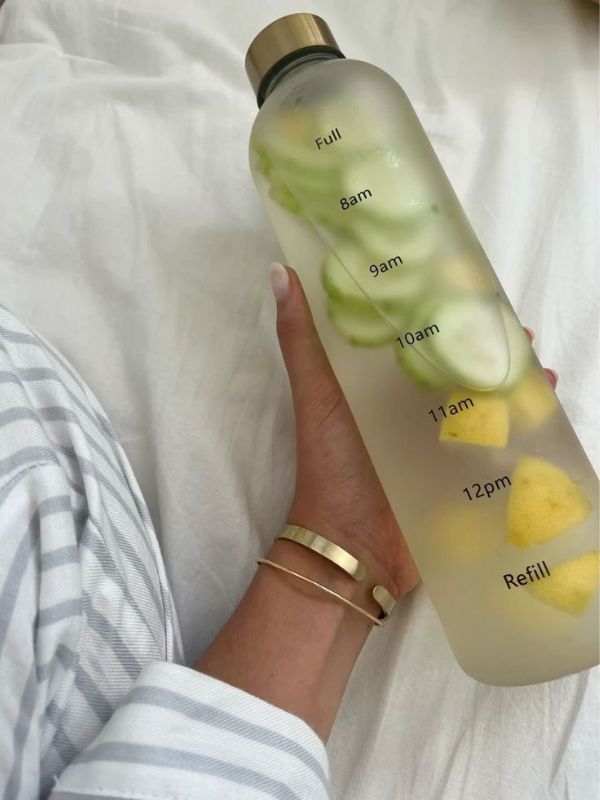
Another habit I encourage is staying hydrated. It may seem like a small thing, but drinking enough water is part of maintaining your overall health.
Sometimes, we become so focused on external hair care that we forget the importance of everyday lifestyle habits. You may remember to moisturize your locs, wash them regularly, and protect them at night, but are you also paying attention to your body’s needs?
Water supports several important functions in the body, including regulating temperature and transporting nutrients. Staying hydrated is beneficial for your general health, although drinking extra water has not been proven to make locs grow faster.
I would not want you to confuse drinking more water with applying moisture to your hair, either. They are two different things. Your body needs adequate hydration, while your locs may need a suitable external moisturizing routine.
Beyond drinking water, your sleep habits and stress levels are worth considering.
Your body goes through different processes while you sleep, and consistently getting enough rest is important for overall health. Stress can also affect the hair growth cycle in some people. Significant or prolonged stress may contribute to increased shedding, which can make it seem as though your hair is not retaining length.
I know that life can become busy. Between work, family responsibilities, and other everyday activities, it is easy to forget about yourself. But taking care of your body should be part of your hair-care journey.
You do not need to change your entire lifestyle overnight. Start with simple things such as carrying a water bottle, eating regular balanced meals, and creating a bedtime routine that allows you to get enough rest.
If you notice sudden or unusual hair shedding, do not automatically assume that you are not drinking enough water. Hair shedding can have several causes, including nutritional deficiencies, stress, hormonal changes, and certain medical conditions. A healthcare professional can help you understand what is happening.
My advice: Do not look at loc care as something that happens only in front of a mirror. Your everyday lifestyle matters. Pay attention to your health, stay hydrated, and give your body the care it needs.
9. Trim Damaged Loc Ends When Necessary
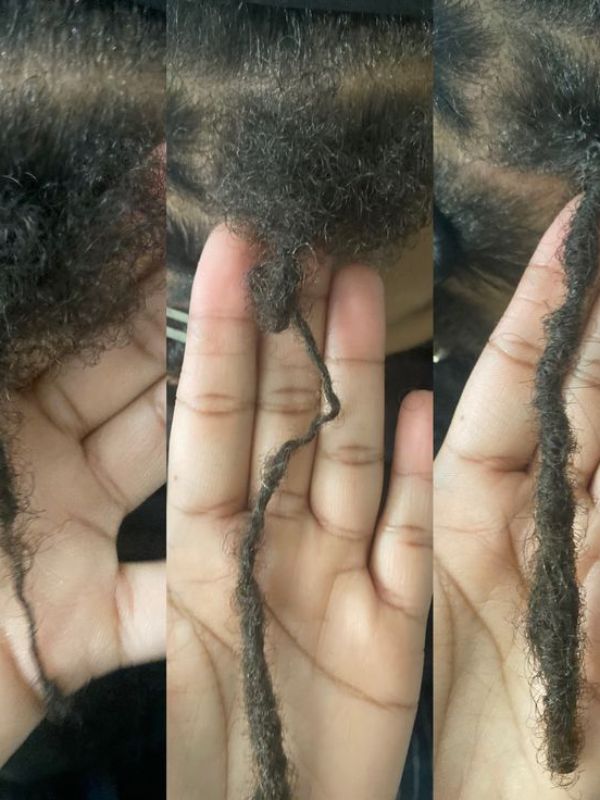
I know that trimming is probably not the first thing you think about when your goal is growing longer locs. After all, you want to keep every bit of length you have gained. The idea of cutting any part of your hair may feel like moving backwards. However, knowing when to address damaged ends is another useful part of these locs growth tips.
As your locs get longer, the ends have been exposed to years of handling, friction, styling, and environmental conditions. Depending on how you care for them, some ends may become weak, thin, or damaged.
You may notice that a particular loc has an unusually thin section near the bottom or that the end keeps unraveling. Sometimes, people keep pulling at these areas because they want the loc to look neat. Unfortunately, this can make an already weak section worse.
This is where understanding the condition of your locs becomes important.
Not every uneven or frizzy end needs to be trimmed. Locs naturally have different shapes and textures, and some may have loose hairs or irregular ends as they mature. You should not feel pressured to cut your locs simply because they do not all look identical.
However, if a section is genuinely damaged and cannot be maintained, a professional loctician can help you decide whether trimming or another repair approach is appropriate.
It is also worth distinguishing between normal loc texture and actual damage. Some locs have naturally wispy ends, while others have rounded or compacted ends. Neither appearance automatically means that something is wrong.
I would also advise against trimming your locs simply because you think it will make them grow faster. Cutting the ends does not increase the rate at which hair grows from your scalp. The purpose of removing damaged ends is to address the damage, not stimulate new growth.
Think about it this way: if your goal is to retain length, you want to avoid unnecessary cutting, but you also do not want to ignore serious damage.
My advice: Inspect your locs occasionally, especially the ends. Keep healthy ends intact, and seek professional help when you notice significant thinning or damage. The goal is to maintain strong locs rather than chase a particular appearance.
10. Avoid Product Buildup and Heavy Hair Products
One mistake that is easy to make when growing locs is thinking that your hair needs as many products as possible.
You see someone recommending a new cream, then another person talks about a particular oil, and before you know it, you have several products sitting on your bathroom shelf. You start applying different things because you believe they will make your locs grow longer and become stronger. One of the locs growth tips I would emphasize here is learning when to stop adding products.
But have you ever stopped to ask whether your locs actually need all those products?
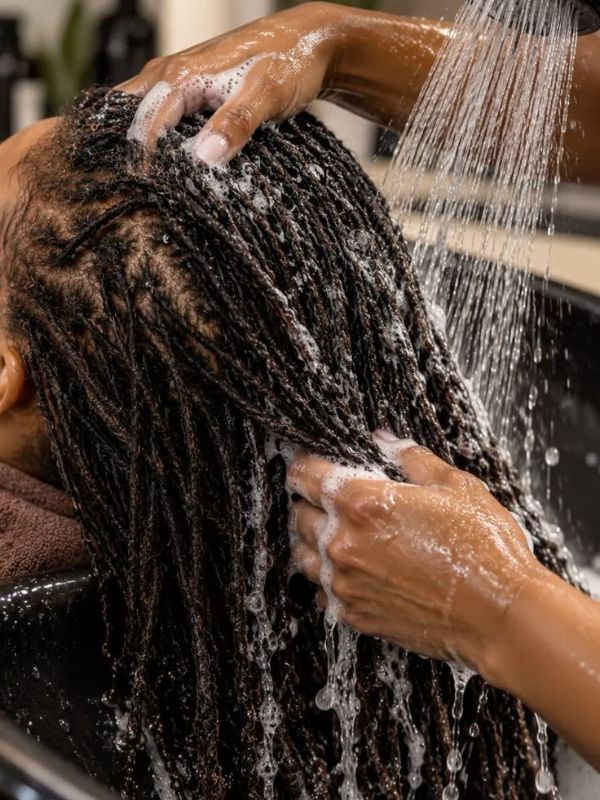
Locs can hold onto residue, especially when you repeatedly use thick creams, heavy butters, waxes, and styling products that are difficult to rinse out.
Over time, this buildup can make your locs feel heavy, sticky, or coated. You may also notice visible residue or changes in how your locs look and feel.
This is why I prefer keeping my hair-care routine practical rather than using products simply because they are popular.
Before adding something new to your routine, consider what it is supposed to do. Do you need a moisturizer? Are you looking for a shampoo that cleans your scalp? Do you need something to help with styling? Understanding the purpose of each product can help you avoid unnecessary layering.
I would also recommend paying attention to how your locs respond. A product that works beautifully for someone else may not work as well for you. Your loc thickness, hair texture, scalp condition, and maintenance routine can all influence what products are suitable.
If you notice buildup, do not simply keep adding more oil or cream to cover it. Review your routine, wash appropriately, and use a suitable clarifying product when needed.
Another thing worth mentioning is that natural does not automatically mean suitable for locs. Some homemade mixtures and thick natural butters can still leave residue. Always consider how easily a product can be removed from your hair.
As a stylist, I would also encourage you to look closely at the ingredients and consistency of products before using them. Products that are extremely thick or contain ingredients that are difficult to rinse out may not be the best choice for someone who wants to keep their locs free from residue.
You do not need to buy every product marketed for loc growth. A good shampoo, a suitable moisturizer, and a lightweight oil if needed may be enough for a simple routine.
My advice: You do not need ten different products to maintain healthy locs. Find a few suitable products that serve clear purposes, and avoid unnecessary buildup. Sometimes, simplifying your routine is one of the best changes you can make.
11. Make Sure Your Locs Dry Completely After Washing
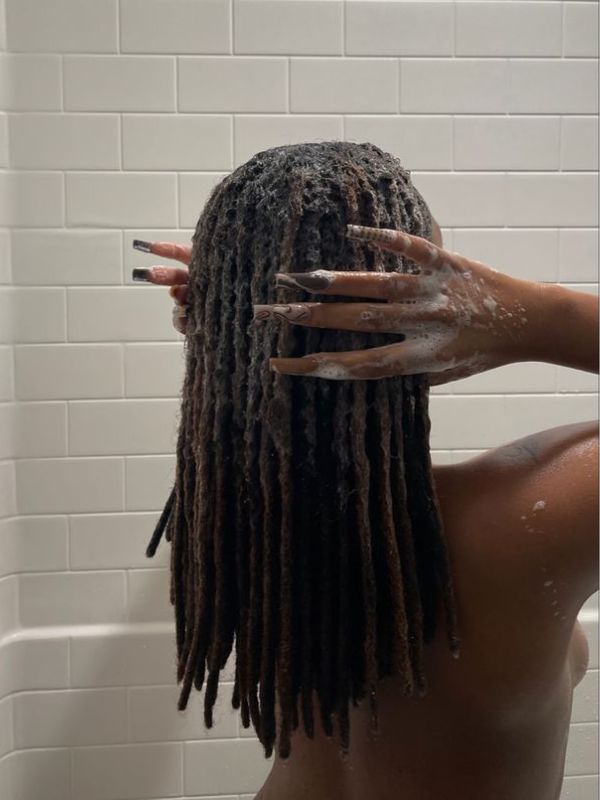
Wash day does not end when you finish rinsing your shampoo. What you do afterward is just as important. In fact, proper drying is one of the locs growth tips I would not want you to overlook when building a healthy maintenance routine.
One thing I always want to emphasize is making sure locs dry completely after washing. This becomes particularly important as your locs get longer and thicker.
Unlike loose hair, locs are compacted strands of hair. Depending on their size and density, they can hold water for quite a while. You may touch the outside and assume they are dry, only to discover that the inside is still damp.
If you regularly cover your locs while they are wet or go to bed before they have dried properly, you may create an environment where unpleasant odors and scalp problems can develop.
This is why I would encourage you to plan your wash days properly.
If you know your locs take several hours to dry, avoid washing them at a time when you have to rush out immediately or go to bed shortly afterward.
After rinsing, gently squeeze excess water from your locs. You can use a clean microfiber towel to absorb moisture without aggressively rubbing the hair.
Then allow your locs to air-dry in a well-ventilated space. If you use a blow dryer, choose an appropriate heat setting and avoid excessive heat exposure.
Pay particular attention to the roots and thicker sections because these areas may take longer to dry. Do not assume that your hair is completely dry just because the surface feels warm or no longer looks wet.
Another thing I would avoid is immediately putting on a tight bonnet or tying your locs into a bun while they are still damp. Give them enough time to dry first.
If you have thick or mature locs, you may need to divide them into sections while drying so that air can reach different parts of your hair. You can also gently move your locs around to avoid leaving one section pressed against your scalp for hours.
Do not use excessive heat simply because you are impatient. High temperatures can damage hair, so use a moderate setting and keep the dryer moving if you choose to use one.
My advice: Make drying part of your wash-day routine, not an afterthought. Clean locs are important, but keeping them properly dried afterward is equally important.
12. Follow a Consistent Loc Maintenance Routine
If I were to choose one habit that brings everything together, it would be consistency. You can know plenty of locs growth tips, but they will not help much if you only practise them occasionally.
You can read every loc care article, purchase suitable products, and learn all the right techniques. But if you only follow your routine occasionally, you may struggle to maintain the results you want.
I believe that having a simple routine makes caring for locs much easier. You do not have to spend hours every day working on your hair. What matters is knowing what your locs need and making time for those things.
If you are still trying to figure out how to organize your wash days, moisturizing, and retwisting sessions, you can follow my locs maintenance routine for beginners for more practical guidance.
For example, I would rather follow a manageable routine that I can maintain for months than create a complicated one that I abandon after a few weeks.
Start by deciding how often your scalp needs washing. Then consider how frequently your locs need moisture, when you usually check your roots, and how you protect your hair before bed.
Your routine should also include paying attention to changes in your locs. Are they becoming thinner in certain areas? Do the ends look weaker than usual? Is your scalp constantly uncomfortable? These are things worth noticing instead of waiting until the problem becomes more serious.
One thing I find helpful is taking pictures of my locs occasionally. Sometimes, you look at your hair every day and do not notice the gradual changes. But when you compare pictures taken several months apart, you may see progress that was difficult to recognize in the mirror.
You can take pictures from the front, back, and sides to monitor your length. You can also keep notes about products you have tried and how your hair responded.
For example, if you introduce a new moisturizing spray, pay attention to whether your locs feel better after using it. If a particular product leaves residue, you will know to reconsider using it. This is much more helpful than changing your entire routine every time you see a new recommendation.
I would also encourage you to schedule maintenance based on the condition of your locs rather than following a rigid calendar. Some people need more frequent professional attention, while others can go longer between retwists.
Do not feel that you have to copy someone else’s entire routine. Your locs have their own needs, and your schedule may be different from theirs.
My advice: Keep your routine simple enough to follow consistently. Washing, moisturizing when needed, protecting your hair, and maintaining your roots appropriately can make a meaningful difference to your long-term loc care.
13. Be Patient and Stop Comparing Your Loc Journey to Others
I think patience is one of the most important things you need when growing locs. If you are looking for locs growth tips, remember that consistency and patience go together. You cannot expect a routine you started last week to produce several inches of visible length immediately.
It is easy to become discouraged when you see someone with beautiful, waist-length locs while yours are still around your shoulders. This becomes even more difficult when you started your loc journey around the same time.
You begin asking questions. Why are their locs growing faster? Are they using a special product? Is there something you are doing wrong? Should you change your entire routine?
I understand why these comparisons happen, especially when social media makes it so easy to see other people’s hair journeys.
However, you need to remember that everyone’s hair is different.
Two people can start their loc journeys on the same day and still experience completely different results. Genetics, individual hair characteristics, health, hair growth patterns, and maintenance habits can all influence how their locs look over time.
Some people naturally have faster-growing hair, while others may have hair that grows at a different rate. Loc thickness and shrinkage can also affect how long your hair appears.
This is why comparing your locs to someone else’s is not always helpful.
Instead of constantly checking whether your locs are as long as another person’s, pay attention to your own progress.
Take pictures every month or every few months. Look at how your roots are developing, whether your locs are becoming fuller, and whether you are retaining length.
You may discover that your hair has actually grown more than you thought. Sometimes, the progress is gradual, so you do not notice it when you see your locs every day.
Another thing I would encourage you to do is stop changing your products every time you see someone recommending something new. Give your routine enough time to work, provided the products are suitable and your hair is responding well.
You should also remember that locs can appear shorter at certain stages because of shrinkage. This is particularly noticeable during the early stages of the locking process, when the hair is changing shape and becoming more compact.
As your locs mature, their appearance and length may change. This does not automatically mean your hair has stopped growing.
My advice: Enjoy the stage your locs are in right now. Do not allow someone else’s length to make you feel that your own progress is not good enough. Focus on maintaining healthy locs, and give your hair time.
14. Pay Attention to Changes in Your Locs and Get Professional Help When Necessary
Another habit that has helped me think more carefully about loc care is paying attention to changes in my hair. Good locs growth tips should not only tell you what to do; they should also help you recognize when something is not right.
Sometimes, people become so used to their locs that they overlook small changes. You may notice a particular loc becoming thinner or your roots looking different, but you ignore it because you assume it will eventually correct itself.
I would encourage you not to ignore persistent changes.
Your locs should not constantly be breaking, and your scalp should not always feel irritated or uncomfortable. If you notice something unusual, it is worth finding out what is happening rather than immediately purchasing another hair product.
For example, if you notice thinning around your hairline, think about the hairstyles you have been wearing. Are you constantly pulling your locs into tight ponytails? Do you frequently wear heavy styles? Have you been retwisting your roots too tightly?
These habits can contribute to tension-related problems.
There are several signs worth paying attention to:
- Thinning roots: If a loc begins looking noticeably thinner near the scalp, it may be experiencing too much tension or may have another underlying problem.
- Weak spots: A loc that repeatedly breaks or feels unusually fragile may need professional assessment.
- Excessive shedding: Losing more hair than usual can have several causes and should not automatically be blamed on your shampoo or moisturizer.
- Persistent scalp irritation: Ongoing itching, soreness, flaking, or inflammation deserves attention.
- Changes around the hairline: Repeated tight hairstyles and excessive tension can affect the delicate hairs around your edges.
As a loc wearer and stylist, I believe it is important to understand when a problem needs more than ordinary maintenance. A loctician can help assess weak locs, maintenance issues, and styling tension. A dermatologist can assess persistent scalp conditions, unusual shedding, and hair loss.
I would not recommend trying to fix every problem yourself. Sometimes, experimenting with different oils and homemade treatments can delay getting the help you actually need.
You should also remember that not every loc problem is a growth problem. Your hair may be growing normally, but breakage, tension, or another issue could be affecting how much length you retain.
My advice: Get into the habit of checking your locs regularly. Notice changes early, avoid ignoring persistent problems, and seek professional guidance when necessary. Taking action early can help you protect the health of your hair.
15. Give Your Locs Time to Grow Without Constantly Interfering
Finally, one habit I would encourage you to develop is learning when to leave your locs alone. Of all the locs growth tips discussed in this article, this is a reminder I think every loc wearer can benefit from.
When you really want longer hair, it is tempting to keep looking for things that promise quicker results. You may start experimenting with different oils, trying new growth treatments, or changing your routine every few weeks because you want to see a difference.
But sometimes, the best thing you can do is stick with healthy habits and give your hair time.
Your hair grows in cycles. It does not suddenly become longer because you applied a particular oil or used a certain product for one week. Although some products can help with specific hair or scalp concerns, no oil can guarantee faster hair growth.
This is something I think every loc wearer should understand.
You can encourage healthier hair care by maintaining a clean scalp, avoiding excessive tension, moisturizing appropriately, eating a balanced diet, and protecting your locs from unnecessary damage. But you cannot force your hair to grow beyond its natural rate simply by adding more products.
Another thing worth understanding is that locs go through different stages. If you have starter locs, you may notice changes in their appearance as they mature. They may shrink, swell, bud, or develop different textures along the way. These changes are part of the process and do not necessarily mean something is wrong.
Even mature locs need attention, but they do not need to be constantly manipulated.
I would rather maintain a routine that supports my hair and allow my locs to develop naturally than spend every week trying something new.
If you are serious about growing your locs longer, give yourself enough time to understand what works for your hair. You may find that the routine you already have is perfectly suitable and only needs a few adjustments.
Remember that the goal is not to make your locs grow overnight. It is to create habits that help you maintain healthy hair and keep the length you gain.
My advice: Be patient with your locs. Keep doing the things that support their health, avoid unnecessary manipulation, and give yourself time to enjoy the journey instead of constantly worrying about the next inch.
A Simple Weekly Routine Using These Locs Growth Tips
Now that we have discussed the habits that can help you maintain healthy locs, I want to make things easier by putting them into a routine. These locs growth tips are much easier to follow when you turn them into small habits that fit into your everyday life.
I know that not everyone has the time to spend hours caring for their hair. You may have work, school, family responsibilities, or other things competing for your attention. This is why I prefer a routine that is simple enough to follow without making hair care feel like another full-time responsibility.
Here is an example of how you can organize your loc care throughout the week.
| Frequency | What to do |
|---|---|
| Every morning | Check your locs and scalp. Refresh dry locs with a suitable moisturizer when needed. |
| Throughout the week | Avoid unnecessary pulling, twisting, and rough handling. |
| Wash day | Cleanse your scalp and locs using a suitable shampoo. |
| After washing | Gently remove excess water and allow your locs to dry completely. |
| Every night | Cover your locs with a satin or silk bonnet. |
| Weekly | Check for buildup, dryness, thinning, and weak areas. |
| Monthly | Take pictures to monitor your loc length and overall condition. |
| As needed | Schedule professional maintenance and address any damaged areas. |
You do not have to follow this schedule word for word. Adjust it according to your hair, scalp, lifestyle, and the stage of your loc journey.
For example, if your scalp becomes oily quickly or you exercise frequently, you may need to wash more often. If your locs are still developing, you may need a different maintenance routine from someone with mature locs.
The most important thing is to understand what your hair needs rather than following a routine simply because someone else does it.
How to Tell Whether Your Loc Care Routine Is Working
Sometimes, people expect to see longer locs within a few weeks of changing their routine. When they do not notice an immediate difference, they assume that whatever they are doing is not working.
I would encourage you to look at more than length when assessing your progress. Some of the best locs growth tips focus on maintaining the condition of your hair, not just watching the inches.
There are other signs that can tell you whether your loc care habits are helping:
- Your scalp feels comfortable and is not constantly irritated.
- Your locs are not becoming excessively dry or brittle.
- You are experiencing fewer problems with avoidable breakage.
- Your roots are maintaining their strength.
- Your locs are free from excessive product residue.
- Your ends are not repeatedly splitting or becoming weak.
- Your hair is easier to maintain between wash days.
- Your locs are gradually retaining more length.
These changes may not all happen at once. However, they can help you understand whether your maintenance habits are supporting healthier locs.
I also recommend taking progress pictures under similar conditions. Try to use the same hairstyle, camera angle, and lighting each time. This makes it easier to compare your loc length over several months.
You do not need to measure your locs every week. Hair growth is gradual, and constantly checking for changes can become frustrating. Give yourself a reasonable amount of time before judging your progress.
Frequent Asked Questions About Locs Growth Tips
What are the best locs growth tips for beginners?
If you are just starting your loc journey, focus on building good habits from the beginning. Keep your scalp clean, moisturize appropriately, protect your hair at night, avoid excessive retwisting, and handle your locs gently. You should also give your hair enough time to mature instead of constantly manipulating it. These habits can help you maintain healthier locs as they grow.
How long does it take for locs to grow long?
There is no specific timeline because everyone’s hair grows differently. Your genetics, hair growth rate, health, and ability to retain length can influence how quickly your locs become longer. Some people notice significant length within a few years, while others take longer. Focus on maintaining healthy locs instead of comparing your progress with someone else’s.
Does oil make locs grow faster?
No oil can guarantee faster hair growth. Some oils can help condition the hair, reduce friction, or support your moisturizing routine, but they do not directly force your hair to grow faster. It is more important to maintain a healthy scalp, avoid excessive tension, and prevent breakage.
How often should I moisturize my locs?
This depends on how your locs respond to moisture, the products you use, and your environment. Some people need to refresh their hair several times a week, while others need less frequent moisturizing. Pay attention to dryness rather than applying products simply because you think you should.
Does retwisting make locs grow longer?
Retwisting does not increase the rate at which hair grows from your scalp. It helps organize new growth and maintain the structure of your locs. Retwisting too frequently or too tightly can put unnecessary tension on your roots, potentially contributing to thinning and breakage.
Why are my locs not getting longer?
Your hair may be growing, but you might not be retaining enough length because of breakage, excessive tension, dryness, or damage. Your hair may also be growing at a naturally slower rate. Look at your maintenance habits, check for weak areas, and consider professional advice if you notice persistent thinning or excessive shedding.
Can I wash my locs every week?
Yes, many people with locs can wash their hair weekly, provided they use suitable products and dry their locs properly. However, the right washing frequency depends on your scalp, activity level, and loc maturity. You do not need to avoid washing simply because you have locs.
What causes locs to break?
Loc breakage can happen for several reasons, including excessive tension, rough handling, dryness, weak sections, and damage from repeated styling. Heavy accessories and constantly wearing tight hairstyles can also put stress on your locs. If you notice repeated breakage in the same area, have a professional examine it rather than simply covering it with styling products.
Should I oil my scalp to help my locs grow?
Oiling your scalp is not a requirement for hair growth. Some people enjoy using lightweight oils as part of their routine, but applying oil does not automatically make hair grow faster. If your scalp is comfortable without oil, you do not need to add it. If you use oil, avoid applying excessive amounts that may contribute to buildup.
How can I retain length with locs?
Length retention involves protecting the hair you already have. Avoid excessive retwisting, reduce tension from tight hairstyles, moisturize appropriately, protect your locs while sleeping, and handle them gently. Regularly checking for weak areas and maintaining a clean scalp can also help you identify problems before they become worse.
Conclusion: Put These Locs Growth Tips Into Practice
Looking after your locs is not always about doing more. Sometimes, it is about paying attention to the little habits you repeat every day and understanding how they affect your hair over time.
I have learned that maintaining longer locs requires more than buying products or waiting for new growth to appear. It means keeping your scalp clean, moisturizing when necessary, protecting your hair while sleeping, avoiding excessive retwisting, and being gentle whenever you handle your locs.
You also have to remember that length retention matters. Your hair can continue growing from the roots, but if your locs keep breaking or becoming damaged, you may struggle to notice the length you are gaining.
As someone who wears locs and styles them, I would rather encourage you to understand your hair than spend money chasing every product that promises longer locs. The habits you build around your hair care matter. A simple routine that you can maintain consistently is often more useful than an expensive routine filled with products you do not actually need.
Do not feel pressured to follow every hair-care trend you see online. You do not need an expensive collection of products or a complicated routine to care for your locs. Start with the habits that make sense for your hair, pay attention to how your locs respond, and remain consistent.
And please, do not spend your entire loc journey comparing your length to someone else’s. Your hair has its own growth pattern, and there is nothing wrong with taking your time.
The locs growth tips I have shared are the habits I would encourage you to build if you want to maintain healthier, longer, and stronger locs. Give them time, be patient with your hair, and remember that healthy locs are worth more than rushing to achieve a particular length.
Which of these habits has made the biggest difference in your loc journey? I would love to hear about your experience in the comments!