Gorgeous Faux Locs Hairstyles That Give You a Natural, Bohemian Look
You can spend time admiring faux loc hairstyles without necessarily being ready to start your own permanent loc journey. You love the way long locs frame the face, how beautifully they move when styled, or how a few loose curls and wooden accessories can give a simple hairstyle so much personality. But committing to permanent locs is a different decision altogether.
This is where faux locs become an interesting option. They give you the opportunity to enjoy the appearance of locs while keeping your natural hair underneath. You can experiment with different lengths, colours, textures and styles, then take the extensions down when you’re ready for something new.
What makes bohemian faux locs particularly attractive is their relaxed finish. Instead of every strand looking perfectly uniform, you get a combination of textured locs, loose curls, softly distressed details and sometimes a few decorative accessories. The result can look romantic, effortless and full of character without requiring an elaborate hairstyle every morning.
There are so many ways to wear them, too. You can choose shoulder-length locs for a shorter, easygoing appearance, go for waist-length extensions when you want something more dramatic, or add loose curls throughout the style for extra movement. Even small details, such as a side part, a few wooden beads or a warm brown colour, can change the overall look.
If you’re considering a new protective hairstyle or simply want inspiration before your next salon appointment, these gorgeous faux locs hairstyles will give you plenty of ideas. We’ll also look at how to choose the right length and colour, make your installation look natural, and care for your natural hair while wearing extensions.
What Are Faux Locs and Why Are They So Popular?
Faux locs are temporary loc extensions designed to give your hair the appearance of traditional locs without permanently locking your natural strands. They are usually created by braiding or twisting sections of natural hair and wrapping extension hair around them. Depending on the installation method, a stylist may also use pre-made loc extensions that are crocheted onto a braided base.
The finished hairstyle can look quite different depending on the type of extension hair, wrapping technique, loc size and desired texture. Some faux locs have a smooth, neatly wrapped appearance, while others are deliberately distressed, soft or decorated with loose curls.
One reason women enjoy faux locs is the freedom to experiment. If you’ve admired the appearance of locs but aren’t ready to commit to a permanent hairstyle, extensions allow you to try different looks. You can see how a particular length feels, experiment with a new colour or find out if you prefer thinner or fuller locs.
They also offer considerable styling flexibility. Depending on their length and weight, you can wear them down, pull them into a bun, create a half-up hairstyle or sweep them over one shoulder. You don’t have to settle for one appearance throughout the entire time you wear them.
Another reason they remain popular is their ability to complement different personal styles. Traditional wrapped faux locs can look neat and understated, while goddess and bohemian versions have a softer, more romantic finish. Adding a few accessories can make the hairstyle feel more individual without changing the entire installation.
If you’re still deciding whether temporary loc extensions or a permanent loc journey is right for you, this guide to starting locs and caring for starter locs will help you understand what to expect during the early stages.
However, it’s worth understanding that faux locs are extensions, not permanent locs. Your natural hair remains underneath the installation and needs attention while the style is in place. They can reduce everyday manipulation, but they are not automatically damage-free. The weight of the extensions, the tension at the roots and the way you maintain and remove them all matter.
Different Types of Faux Locs to Know Before Choosing a Hairstyle
Before choosing a particular look, it helps to understand the different faux loc styles you might come across. Some names are used interchangeably by hairstylists, but the finished textures can be quite different.
Traditional Wrapped Faux Locs
Traditional faux locs usually have a more uniform appearance. The stylist creates a braided or twisted base and wraps extension hair around it, covering the natural hair underneath. The wrapping creates the familiar rope-like appearance associated with locs.
This option works well if you prefer a more polished finish without many loose curls or distressed details. You can choose small, medium or chunky locs depending on how full you want the hairstyle to look.
Soft Locs
Soft locs are designed to have a flexible, less rigid feel. The extension hair and wrapping method create locs that can bend and move more naturally than some traditional wrapped versions.
They are often chosen by women who prefer a softer appearance and want their locs to have more movement. The finished texture depends on the hair used and the stylist’s technique.
Butterfly Locs
Butterfly locs have a deliberately distressed appearance, with small loops and loose sections along the length of each loc. These details create a textured finish that looks less uniform than traditional faux locs.
Their slightly undone appearance makes them a popular choice for women who enjoy relaxed, bohemian hairstyles. The loops are part of the design, rather than a sign that every section has been poorly wrapped.
Goddess Locs
Goddess locs combine the appearance of wrapped locs with loose curly or wavy pieces. These curls may be left at the ends or incorporated throughout the hairstyle.
The contrast between the wrapped sections and flowing curls creates a romantic finish. This is a lovely option if you want your faux locs to have movement and a softer appearance.
Bohemian Faux Locs
Bohemian faux locs generally have a relaxed, textured appearance, often featuring loose curls throughout the hairstyle. They may combine characteristics of goddess locs, soft locs and other textured extension styles.
The main attraction is the mixture of textures. Instead of having every loc look exactly alike, the loose pieces create a more casual and flowing finish.
The names can overlap, so it’s always worth looking at photographs of the exact finish you want rather than relying on the style name alone.
20 Gorgeous Faux Locs Hairstyles to Give You a Natural, Bohemian Look
Choosing a hairstyle becomes easier when you can compare different lengths, textures and finishes. Some women prefer neat locs with minimal accessories, while others enjoy the fullness of loose curls and the character of distressed textures.
The following faux locs hairstyles offer a variety of ways to wear the look, if you prefer something simple for everyday activities or a more elaborate style for special occasions.
1. Long Bohemian Faux Locs With Loose Curly Ends
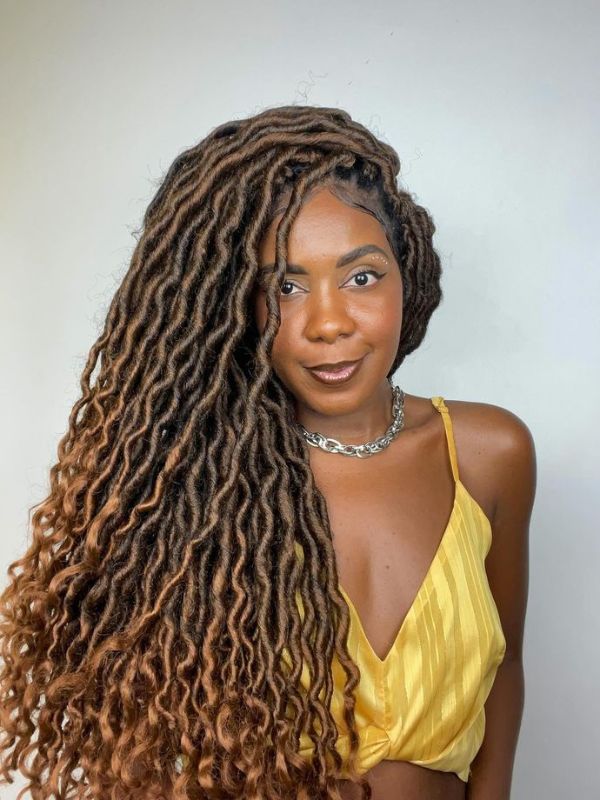
Long bohemian faux locs with loose curly ends are a beautiful choice if you enjoy hairstyles with plenty of movement. The locs create a flowing foundation, while the curls at the ends prevent the hairstyle from looking too uniform.
What makes this style especially attractive is the contrast between the structured locs and the softer curls. You get the familiar appearance of locs without losing the light, romantic quality that loose hair brings to a hairstyle.
Mid-back and waist-length versions are particularly striking, although you should consider the additional weight before choosing very long extensions. If you want to wear them down most of the time, ask your stylist to keep the installation comfortable and avoid adding unnecessary extension hair.
You can also wear the locs in a loose side-swept arrangement when you want to show off the length without leaving all the hair around your face.
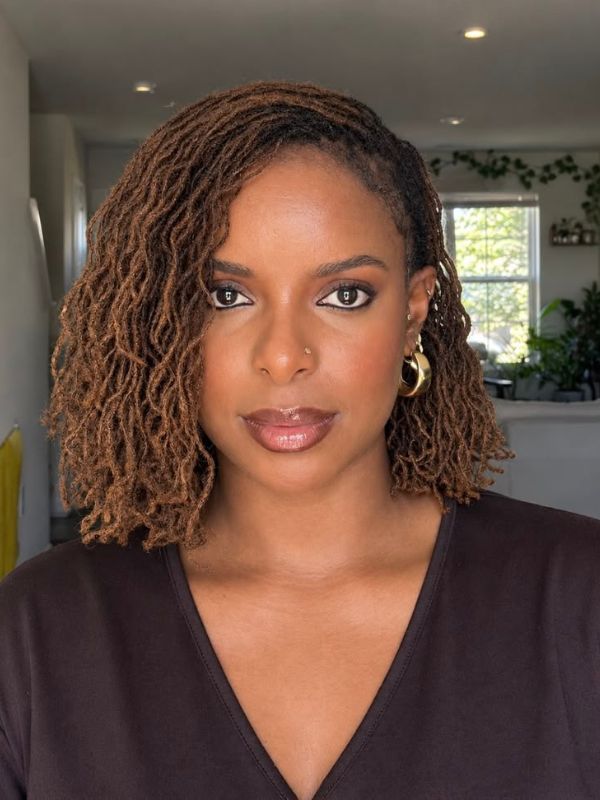
2. Shoulder-Length Faux Locs With Natural Texture
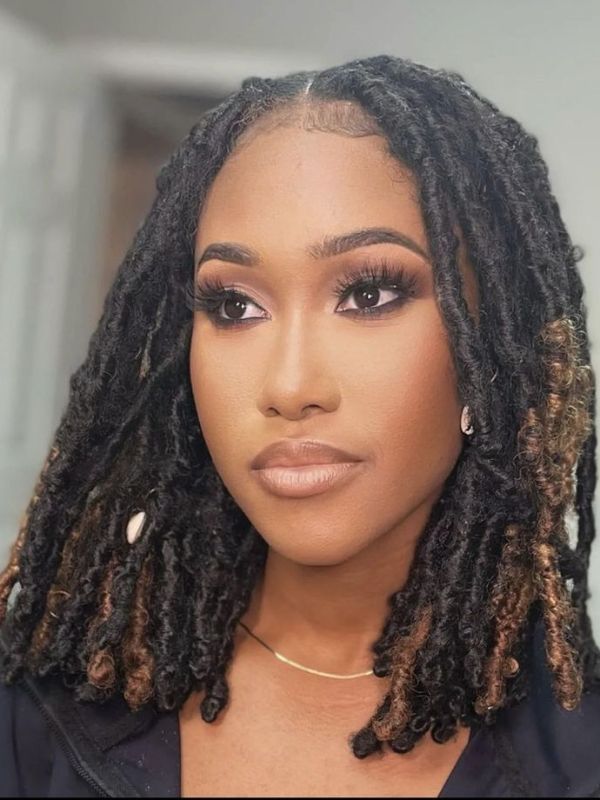
Not everyone wants extensions that reach the waist. Shoulder-length faux locs offer a lovely alternative if you prefer something that feels lighter and doesn’t require as much styling.
The shorter length allows the texture of each loc to stand out, especially when you choose a slightly distressed or soft finish. It also gives the hairstyle a balanced shape without overwhelming your overall appearance.
You can wear the locs with a centre part for a simple, symmetrical look or choose a side part when you want more volume around one side of your face. A few loose curls can also soften the hairstyle.
Another advantage is that shoulder-length styles are generally easier to arrange into everyday looks. You can tuck one side behind your ear, pull the front sections back or leave everything loose.
If you’re trying faux locs for the first time, this is a sensible length to discuss with your stylist because it allows you to enjoy the appearance without immediately choosing an extremely long installation.
3. Goddess Faux Locs With Curly Strands
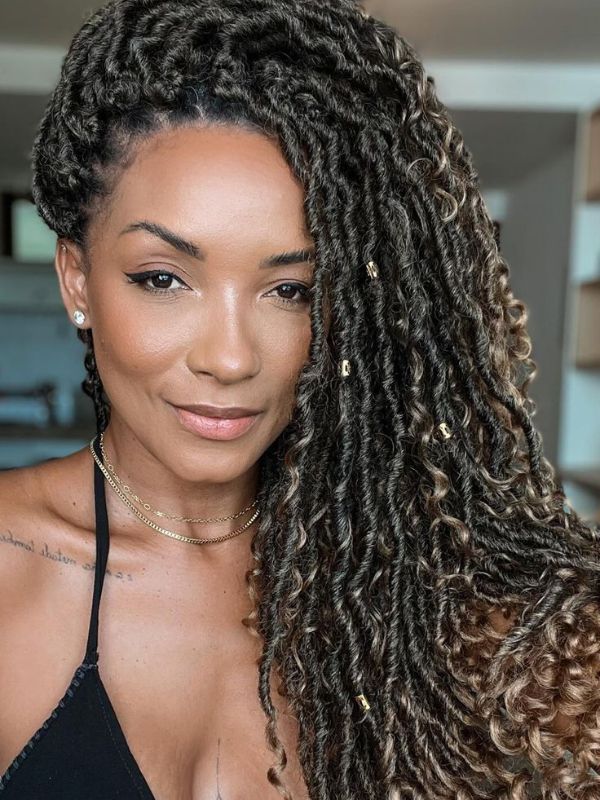
Goddess faux locs are perfect when you want the beauty of locs with the softness of loose curls. The hairstyle combines wrapped sections with curly strands that remain visible throughout the length or around the ends.
The curls add dimension and prevent the finished look from appearing too structured. They also create movement when you turn your head or gather the locs over one shoulder.
This hairstyle works particularly well in natural black, dark brown and honey-blonde shades. Darker colours create a more understated finish, while lighter tones make the loose curls easier to notice.
When recreating the look, think about how much curly hair you want incorporated. Too many loose strands can make maintenance more demanding, while a smaller number of strategically placed curls creates a softer finish without overwhelming the locs.
You should also consider the texture of the curly extension hair. Choose a texture that complements the locs rather than one that looks noticeably different from the rest of the installation.
4. Distressed Faux Locs With a Relaxed Bohemian Finish
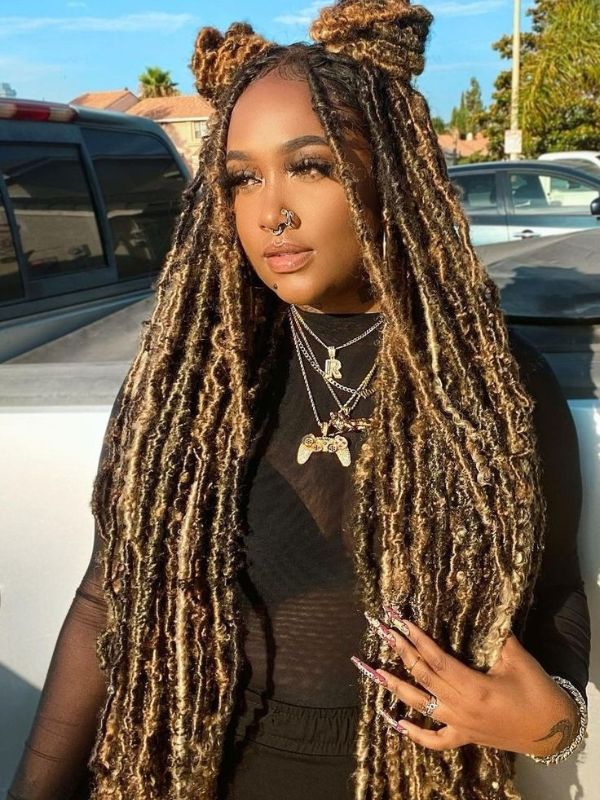
If perfectly smooth hairstyles aren’t really your preference, distressed faux locs are worth considering. Their irregular texture gives them a relaxed appearance, making them a natural choice for someone who enjoys bohemian-inspired hairstyles.
Unlike traditional wrapped locs, which generally have a more consistent surface, distressed versions feature variations along the length. This creates visual interest without needing several colours or decorative accessories.
You can choose medium or chunky sections depending on how prominent you want the texture to appear. Medium-sized locs offer a balanced finish, while thicker ones create a bolder silhouette.
The important thing is to distinguish intentional texture from excessive frizz. A well-installed distressed hairstyle should still have a secure base and a finished appearance. It shouldn’t feel as though the locs are coming apart.
Pair this style with simple outfits and understated jewellery if you want the texture of the hair to remain the main attraction.
5. Medium-Length Soft Faux Locs
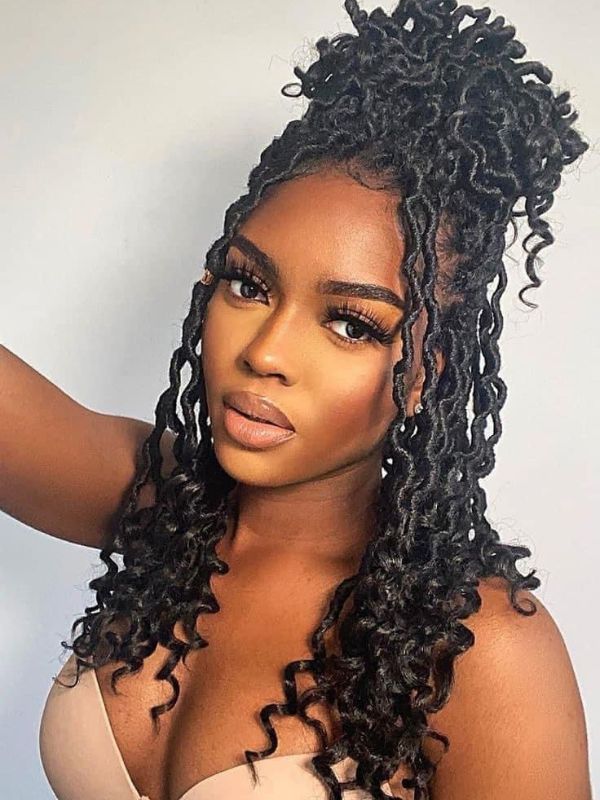
Medium-length soft faux locs are a lovely middle ground between short and long extensions. They offer enough length to create different hairstyles without requiring the commitment of very long locs.
The flexible appearance makes them especially attractive for women who enjoy movement rather than stiff, tightly wrapped extensions. You can wear them loose, create a half-up hairstyle or gather the front sections away from your face.
A dark natural shade gives the style a classic appearance, while brown or subtle highlights can introduce a little dimension.
When discussing this hairstyle with your stylist, ask about the extension material and installation technique. The term soft locs can describe different methods, and the final weight depends on the amount of hair used, the length and the size of each loc.
Avoid choosing a very full installation simply because you like the appearance in a photograph. A comfortable, balanced result is much more important than adding as much hair as possible.
6. Black Faux Locs With Wooden Beads
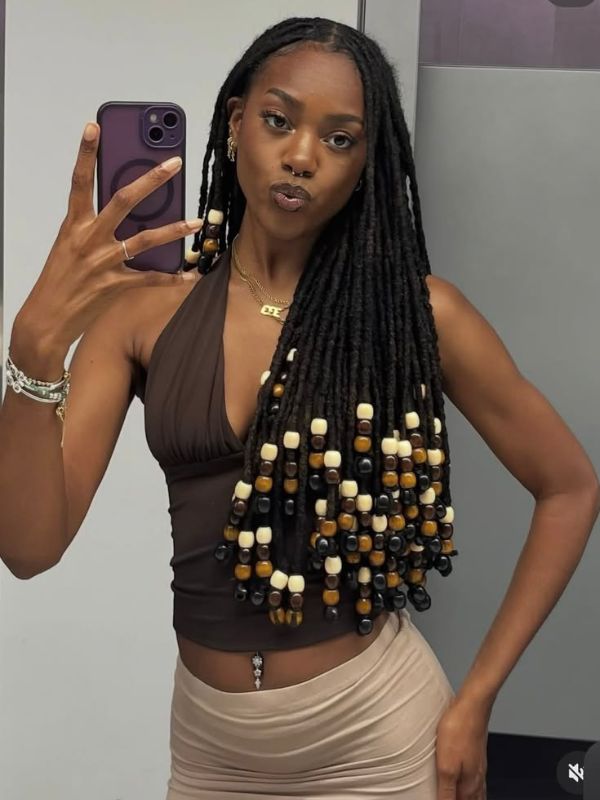
Natural black faux locs are beautiful on their own, but wooden beads can give them an earthy, bohemian finish. The combination is particularly attractive if you prefer accessories that look understated rather than overly decorative.
You don’t need to place beads on every loc. In fact, using them selectively can make the hairstyle look more balanced. Try placing a few wooden beads near the ends or adding them to several locs around the sides and back.
The natural colour of wooden accessories complements dark extensions without competing with them. You can also experiment with different bead shapes, sizes and finishes to create a style that reflects your personality.
One practical consideration is weight. Decorative accessories add extra weight to the hairstyle, particularly when several are attached to the same section. Choose lightweight pieces and make sure they are secured without pulling on individual locs.
This is a good option if you want to personalise a simple black faux loc installation without changing its overall colour or texture.
7. Bohemian Faux Locs With Face-Framing Curls
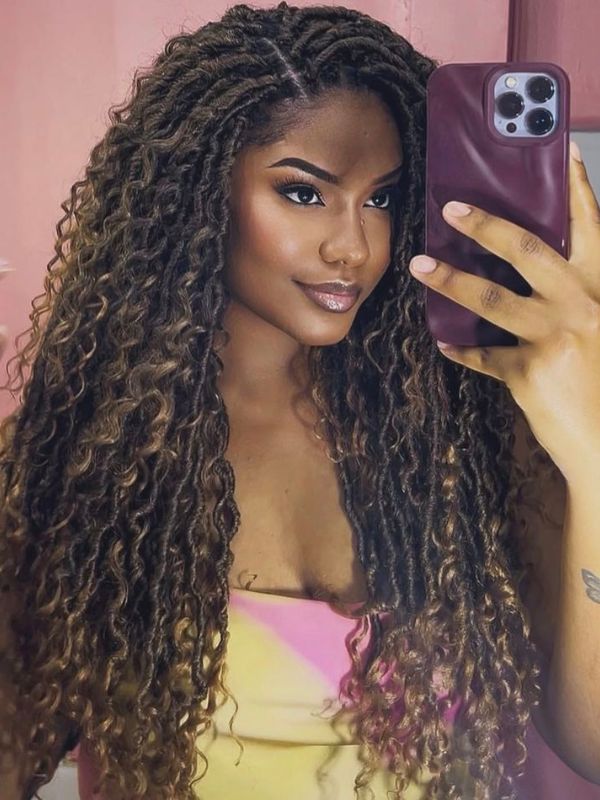
Face-framing curls can make a noticeable difference to the overall appearance of faux locs. Instead of having every curly strand fall behind your shoulders, this style leaves a few loose pieces around the front of the face.
The result is softer and more relaxed, particularly when paired with a centre part or slightly off-centre parting. The curls create movement around the face while the locs provide fullness and structure.
You can choose longer curls that blend into the rest of the hairstyle or shorter pieces that create a more noticeable frame. Both options can work beautifully, depending on how much texture you prefer.
If you’re planning to recreate this look, discuss the placement of the curls before installation. You want them positioned where they complement the locs rather than constantly falling into your eyes.
It’s also worth remembering that loose curls can tangle more easily than wrapped sections. Separate them gently with your fingers and avoid repeatedly pulling them apart.
8. Burgundy Faux Locs With Curly Ends
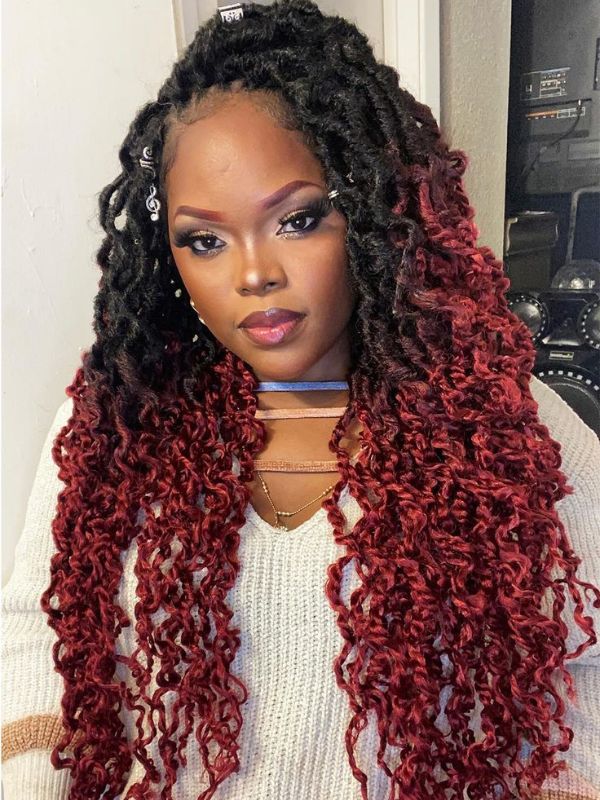
Burgundy faux locs are a beautiful option if you want something more noticeable than natural black or brown extensions. The colour adds richness to the hairstyle, while curly ends create a softer finish.
There are several ways to approach burgundy. A deep wine shade creates a subtle, sophisticated appearance, while brighter burgundy tones make the colour more prominent. You can also choose extensions with darker roots and burgundy lengths for a gradual transition.
This combination works especially well with goddess-inspired faux locs because the curls add movement and help showcase the colour.
If you’re unsure about choosing an all-over burgundy installation, consider mixing it with dark brown or black extensions. The combination can create dimension without making the hairstyle feel too bright.
Remember that the extension colour doesn’t need to match your natural hair exactly. What matters is choosing a shade you enjoy wearing and one that works with the overall finish you’re trying to achieve.
9. Half-Up, Half-Down Faux Locs
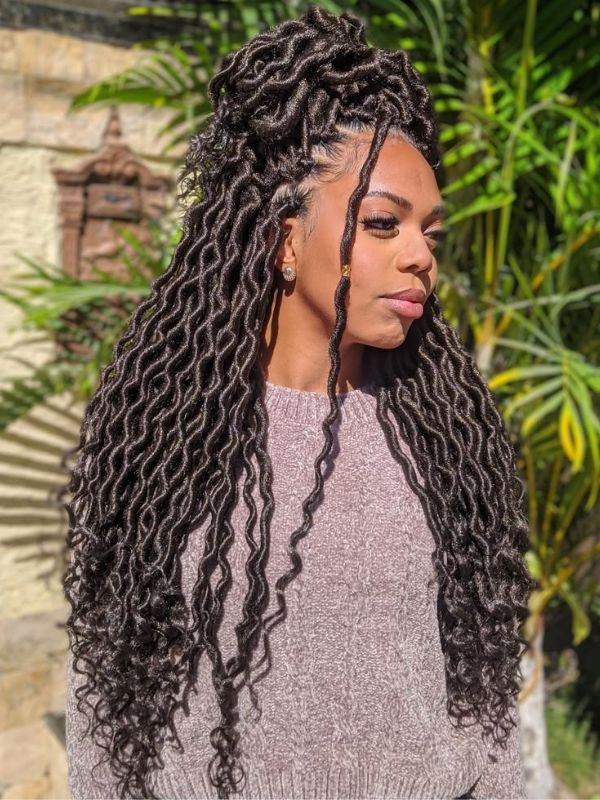
The half-up, half-down hairstyle is a practical way to change the appearance of your faux locs without creating a complicated updo.
The upper section is gathered and secured, while the remaining locs fall freely around your shoulders. This gives you the neatness of having some hair away from your face while still showing off the length and texture of the extensions.
You can create a small half-up bun for a relaxed appearance or gather the upper section into a ponytail. Another option is to leave a few curly strands loose around the front for a softer finish.
This style works particularly well with medium and long faux locs because there is enough length to create a noticeable contrast between the gathered and loose sections.
Be careful not to pull the locs too tightly when securing them. Use a soft hair tie and avoid repeatedly placing tension on the same sections around your hairline.
10. High Bun With Long Faux Locs
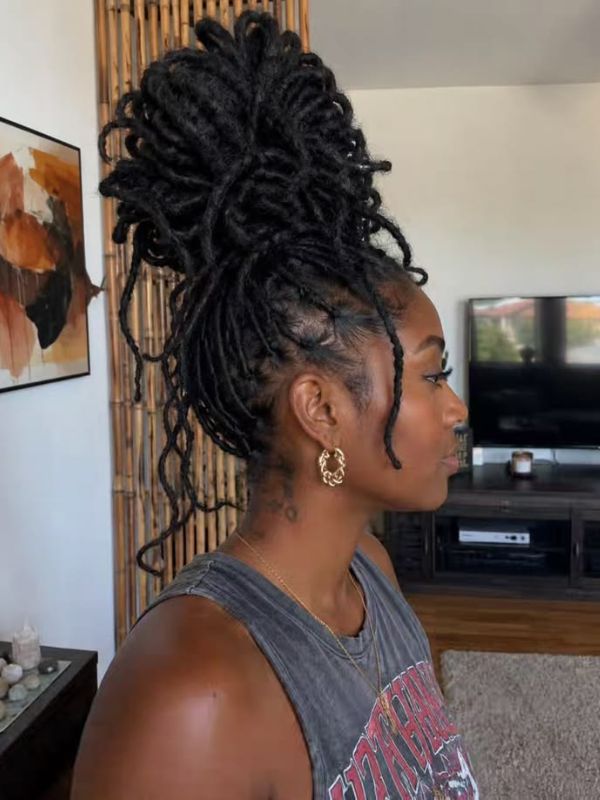
A high bun is a lovely way to wear long faux locs when you want your hair gathered away from your neck and shoulders. It also creates a completely different silhouette from wearing the extensions loose.
The locs can be wrapped into a rounded bun at the crown, allowing the texture and fullness of the extensions to create the shape. You can keep the bun neat or leave a few soft strands around the front for a more relaxed finish.
If you prefer hairstyles that are easy to arrange on busy mornings, you can also find inspiration in these low-maintenance hairstyles for busy weeks.
This style works especially well for dinners, celebrations and occasions when you want your hairstyle to feel more polished.
However, a high bun can place additional tension on the roots, particularly when the extensions are long or heavy. Instead of pulling everything tightly into position, gather the locs gently and secure them with a comfortable, suitable hair accessory.
If the hairstyle feels heavy or pulls at your hairline, choose a lower, looser arrangement instead.
11. Honey Blonde Faux Locs
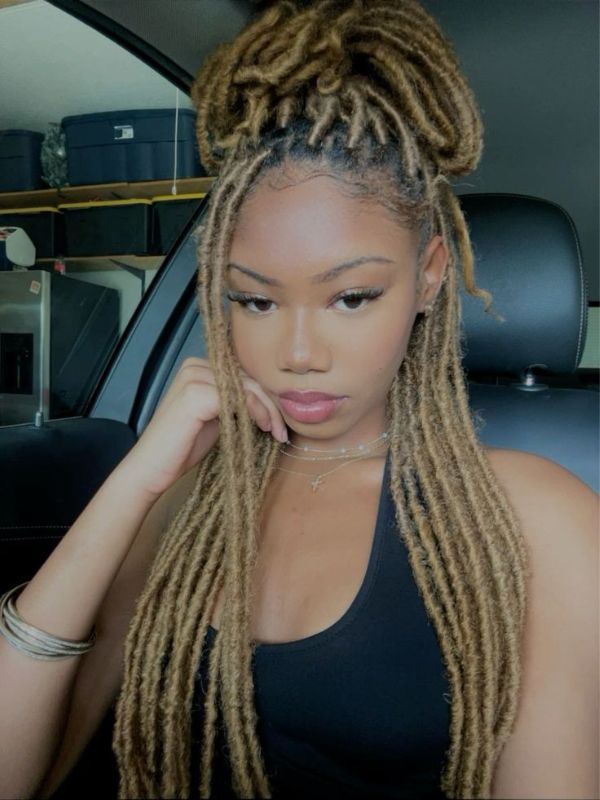
Honey blonde faux locs bring warmth and brightness to a loc-inspired hairstyle. The shade has a golden appearance that can make even a simple installation feel more distinctive.
You can choose an all-over honey-blonde finish or combine the colour with darker roots. The second option creates a gradual transition that looks particularly attractive with textured and curly loc styles.
Honey blonde also works well with wooden accessories, gold cuffs and loose curls. These details complement the warmth of the colour without making the hairstyle appear too busy.
If you want something more subtle, consider mixing honey-blonde extensions with dark brown. This gives the hairstyle dimension and allows the lighter sections to stand out without dominating the entire look.
Before installation, ask your stylist to show you the actual extension colour in natural lighting. Photographs and product images can make blonde shades appear different depending on the lighting and screen.
12. Side-Parted Faux Locs With Loose Waves
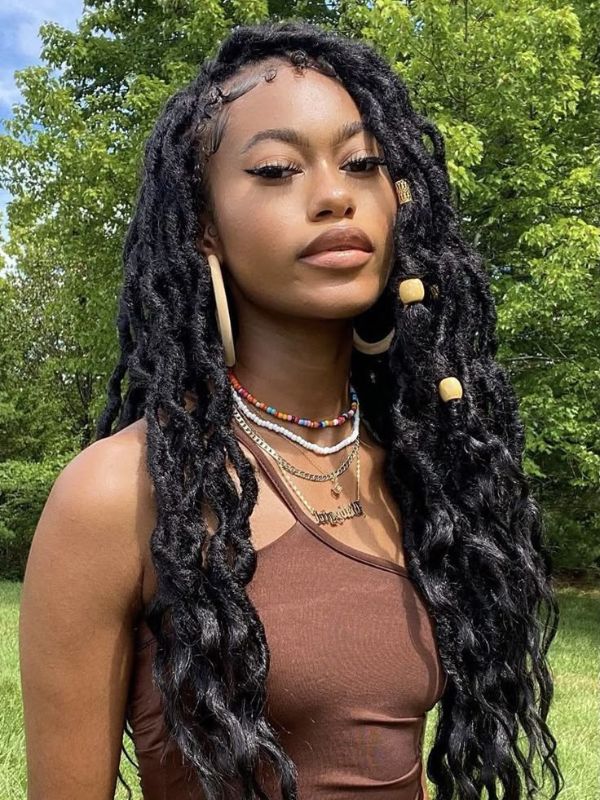
A side part can change the entire appearance of faux locs without requiring a different installation technique. By allowing more hair to fall over one side, you create a fuller, more dramatic shape.
This look becomes even more interesting when paired with loose wavy strands. The contrast between the locs and the waves gives the hairstyle movement while keeping the familiar loc-inspired texture.
You can wear the waves around the ends or incorporate them more generously throughout the hairstyle. The amount of loose hair you choose will determine if the finished look feels subtle or more romantic.
A side part also offers a simple way to change your appearance during the wear period. You can shift the locs to the opposite side or tuck a few sections behind your ear when you want something different.
Just make sure the installation is comfortable around the parting. The hair shouldn’t feel excessively tight or place unnecessary pressure on one area of your scalp.
13. Short Bob Faux Locs
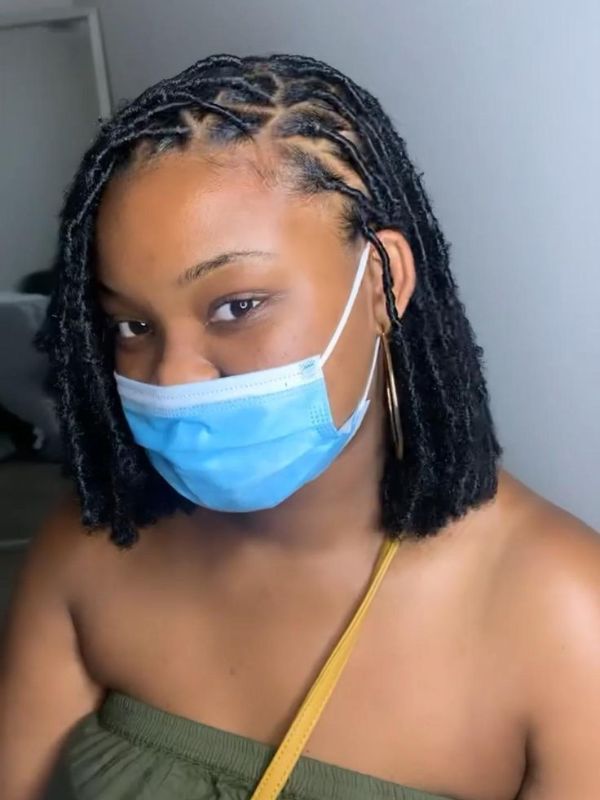
Short bob faux locs are a beautiful choice if you enjoy hairstyles with a defined shape. Instead of extensions flowing down your back, the locs fall around the jawline, chin or shoulders.
The shorter length gives the hairstyle a slightly structured appearance while the loc texture keeps it from looking too formal. You can choose neat wrapped locs for a polished bob or textured soft locs for a more relaxed finish.
A centre part creates a balanced appearance, while a side part can introduce more volume around one side of the face.
This style is also worth considering if you don’t enjoy the feeling of long extensions. Shorter locs can be easier to arrange and may require less extension hair, although the actual weight still depends on the thickness and density of the installation.
Add a few subtle cuffs or beads if you want a little decoration, but the bob shape is attractive enough to stand on its own.
14. Caramel Brown Faux Locs
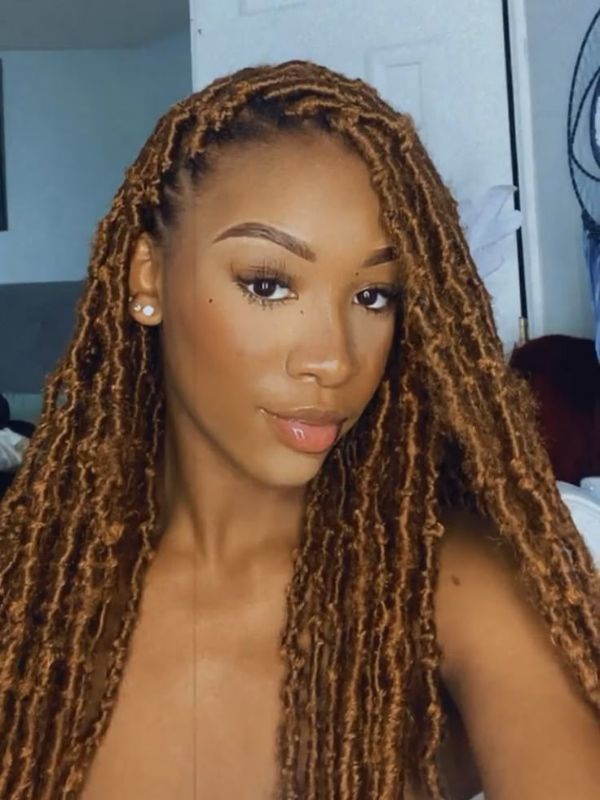
Caramel brown faux locs offer a warm alternative to traditional black extensions. The shade creates a softer colour contrast and works beautifully with bohemian-inspired textures.
You can choose one consistent caramel shade or mix different brown tones to create a more dimensional finish. Darker roots with caramel lengths are particularly attractive because the transition feels gradual rather than abrupt.
This colour also pairs nicely with goddess locs and loose curly ends. The lighter strands help bring attention to the curls and give the hairstyle a little extra depth.
If you want a subtle change, ask your stylist about mixing caramel extensions with dark brown. The result can be more understated than using caramel throughout the entire installation.
Consider the colour of the curly extension hair as well. Keeping the locs and loose strands within a similar colour family helps the overall hairstyle look more cohesive.
15. Faux Locs With Gold Cuffs and Accessories
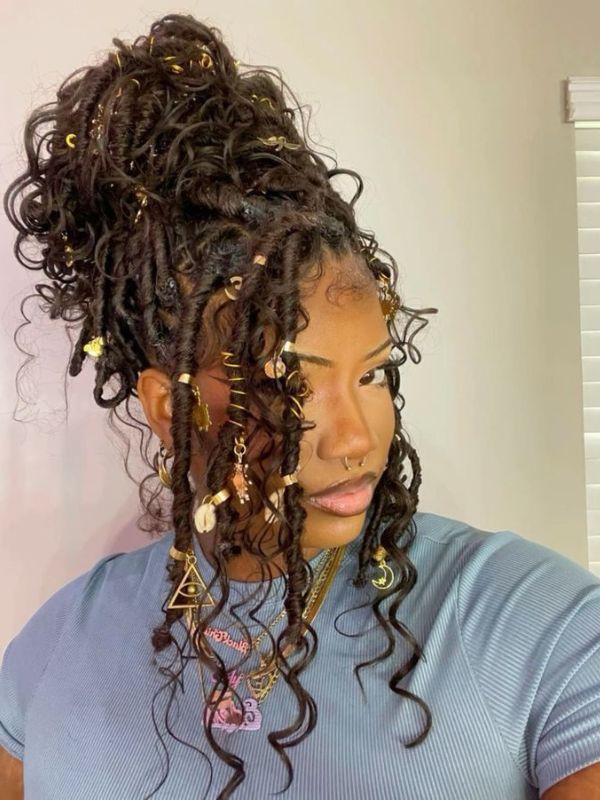
Sometimes you don’t need a completely different hairstyle to create a fresh appearance. A few carefully chosen accessories can transform ordinary faux locs into something more personal.
Gold cuffs are particularly popular because they add a decorative detail without requiring additional colours or curls. You can position them near the ends, around the middle or on a few locs near the front.
Other options include decorative thread, small rings and lightweight beads. Combining several accessory types can work, but it’s best to keep the arrangement balanced.
For example, you might place a few gold cuffs around the sides and add one or two decorative pieces near the ends. This creates interest without making every section look crowded.
Pay attention to weight and placement. Heavy accessories can pull on individual locs, especially when attached near the roots. Choose pieces that sit comfortably and don’t snag neighbouring strands.
16. Extra-Long Waist-Length Faux Locs
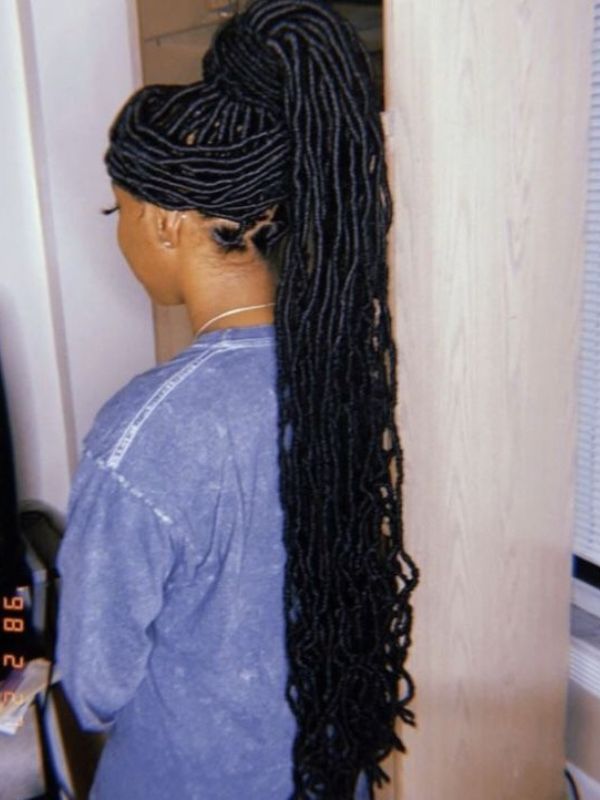
For women who love dramatic hairstyles, waist-length faux locs create a striking appearance. The extensions flow down the back, making the length one of the most noticeable features of the hairstyle.
This look is particularly beautiful with bohemian textures because loose curls can break up the long, uniform sections. You can also add a few accessories to highlight the length without distracting from it.
The main consideration is weight. Very long extensions require careful planning because the added hair hangs from your natural hair at the roots. The more extension hair used, the greater the potential strain, especially if the installation is also very full.
Discuss the desired length, loc size and overall density with your stylist before booking. You may find that medium-sized locs with a moderate amount of hair give you the appearance you want without unnecessary fullness.
Also consider your everyday routine. Waist-length extensions can take more time to arrange, protect and manage than shoulder-length alternatives.
17. Side-Swept Bohemian Faux Locs
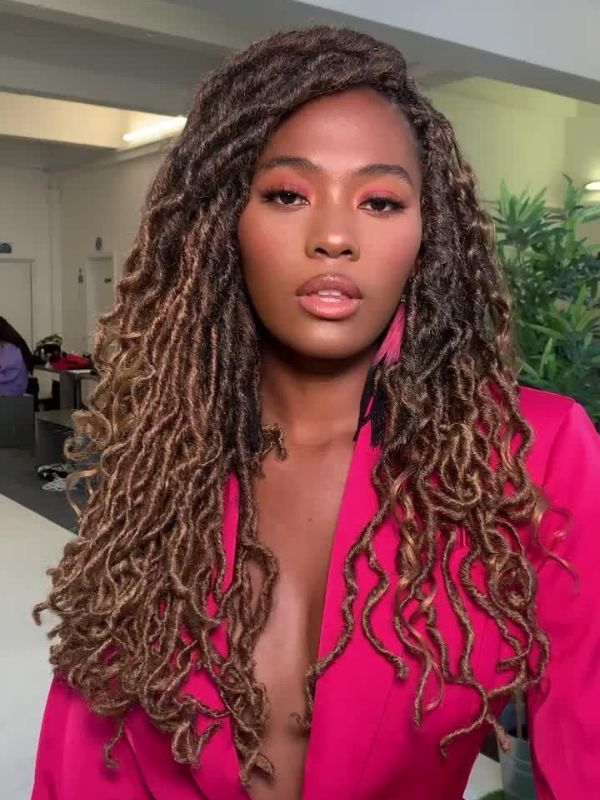
Side-swept faux locs offer an easy way to showcase the texture and length of your extensions. Instead of allowing the hair to fall evenly around both shoulders, you arrange most of it over one side.
This creates an attractive asymmetrical appearance and allows the locs to frame the face differently. It’s especially lovely when the hairstyle includes loose curls because the curly strands fall naturally alongside the wrapped sections.
You can achieve the look with a simple side part or gently gather the locs over one shoulder. If you want the arrangement to stay in place, use a discreet pin or soft accessory rather than pulling the hair tightly.
This hairstyle works well for both everyday activities and special occasions. It also gives you an opportunity to show off decorative details, such as gold cuffs or wooden beads.
If your extensions are very long or full, make sure the weight is distributed comfortably. Constantly wearing all the locs on one side may become uncomfortable if the hairstyle is particularly heavy.
18. Faux Locs With Curly Ends and Wooden Accessories
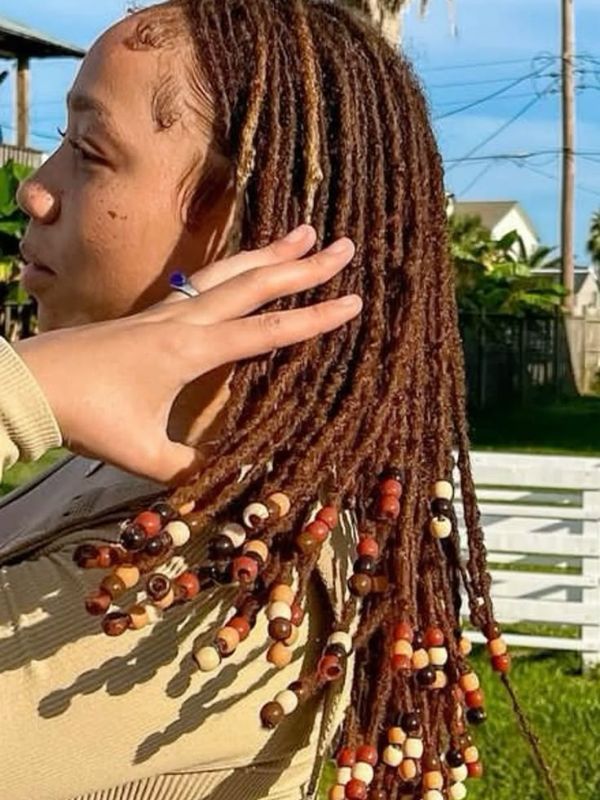
Combining curly ends with wooden accessories is a beautiful way to create a natural-looking bohemian hairstyle. The curls soften the overall appearance, while the wooden details introduce an earthy element.
This style works particularly well with dark brown and natural black extensions. The colours allow the wooden beads to stand out without creating too much contrast.
You can leave the curls loose at the ends and add a few beads to selected locs. Alternatively, position a small number of wooden accessories along the length for a more decorated appearance.
The key is to avoid overloading the hairstyle. Too many beads can add unnecessary weight, and too many decorative details can take attention away from the texture.
When choosing the curly extension hair, look for a texture that blends naturally with the locs. You want the ends to flow into the rest of the hairstyle rather than appearing like a completely separate addition.
This is a particularly lovely option if you enjoy hairstyles that feel relaxed and expressive without relying on bright colours.
19. Ombre Faux Locs With Dark Roots
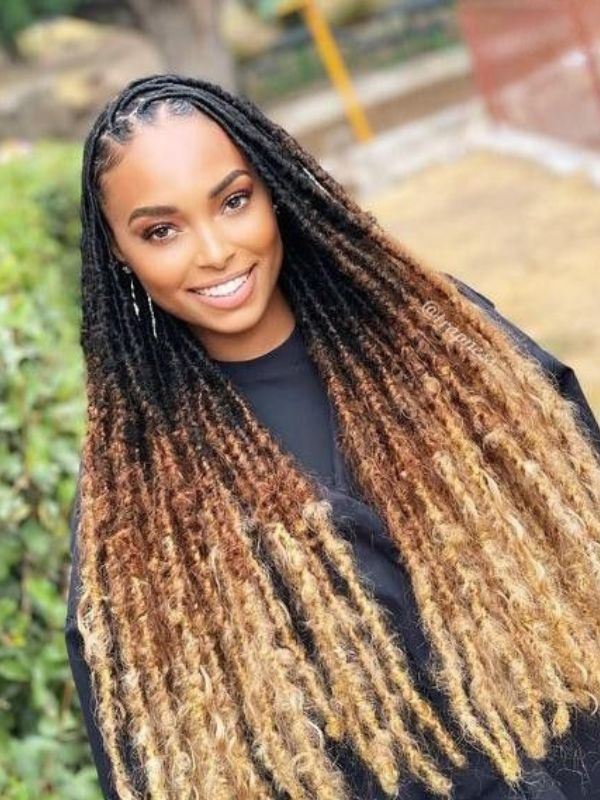
Ombre faux locs are a great option if you want to experiment with colour while keeping the roots darker. The extensions gradually transition from a deeper shade near the base to a lighter colour towards the ends.
Popular combinations include black fading into honey blonde, dark brown transitioning into caramel and black blending into burgundy.
The gradual colour change creates dimension, particularly when the locs are worn loose. It also gives you an opportunity to introduce a brighter shade without making the entire hairstyle one colour.
Ombre works with different faux loc textures, including traditional wrapped locs, soft locs and goddess-inspired styles. Loose curls can make the colour transition even more noticeable because the different shades catch the light as they move.
Before choosing your extensions, look carefully at where the lighter colour begins. A gradual transition generally creates a softer finish than a sudden change between two contrasting shades.
20. Full, Voluminous Bohemian Faux Locs
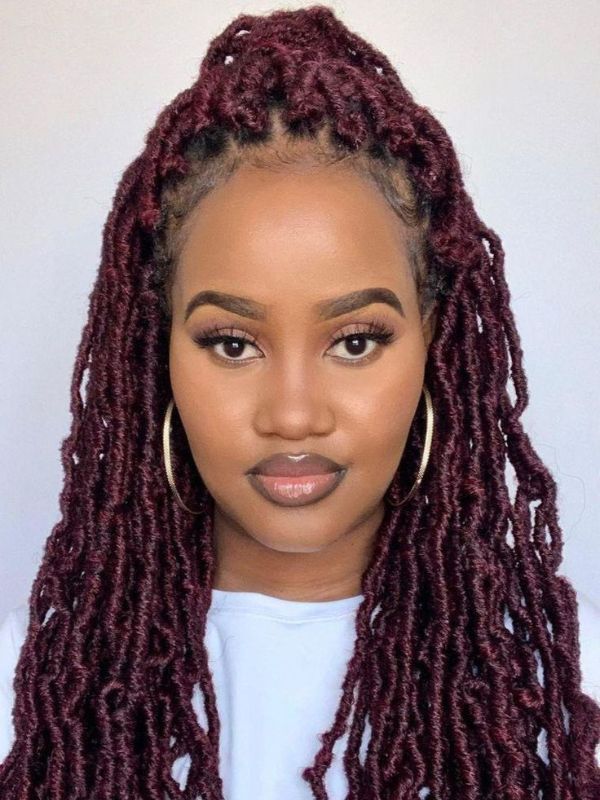
If you love hairstyles with plenty of texture and movement, full bohemian faux locs may be exactly what you’re looking for. This style combines a generous amount of locs with loose curly strands to create a fuller appearance.
The curls add softness, while the locs provide the structure that makes the hairstyle recognisable. Depending on the installation, you can have a mixture of tightly wrapped and textured sections for a more relaxed finish.
This look is particularly attractive in natural black, dark brown and mixed brown shades. The fullness allows the texture to stand out, especially when the locs are worn down.
However, more volume doesn’t always mean a better installation. Adding too much extension hair can make the style unnecessarily heavy and place extra tension on the natural hair.
Discuss the desired fullness with your stylist and consider a balanced installation rather than simply requesting the maximum number of locs. A hairstyle that looks beautiful and feels comfortable will be much more enjoyable to wear.
How to Choose the Right Faux Locs Length for Your Look
The length of your faux locs affects much more than their appearance. It also influences how much extension hair is needed, how heavy the finished style feels and which hairstyles you can comfortably create.
Before choosing a length, think about your everyday routine, how often you like to style your hair and if you prefer a hairstyle that stays close to your shoulders or falls further down your back.
Short Faux Locs for an Easygoing Look
Short faux locs are ideal if you prefer a more compact hairstyle. Bob-length and shoulder-length versions are easy to arrange and can look beautiful with traditional wrapping or textured finishes.
They also provide a lovely way to experiment with accessories. A few beads, cuffs or decorative threads can make a short installation feel distinctive without requiring long extensions.
If you’re concerned about the weight of faux locs, shorter lengths are worth discussing with your stylist. They generally require less extension length, although thickness and the amount of hair used still matter.
Medium-Length Faux Locs for Everyday Versatility
Medium-length faux locs offer a balance between short and long hairstyles. They provide enough length for half-up styles, side-swept arrangements and loose ponytails without requiring extremely long extensions.
This length is particularly useful if you want to change your hairstyle throughout the week. You can wear the locs down during the day, gather the front sections for a different appearance or create a simple bun when appropriate.
Medium-length extensions are also a good option if you want the appearance of long locs without choosing a dramatic waist-length installation.
Long Faux Locs for a Dramatic Bohemian Appearance
Long faux locs create a flowing appearance that works particularly well with loose curls and textured finishes. They are a beautiful choice for women who enjoy having plenty of hair to style.
However, longer extensions require more consideration. The additional length can increase the amount of extension hair and the weight hanging from the roots.
Think about how often you’ll wear the locs up, if you enjoy having hair around your shoulders and how comfortable you are with the additional care they require.
Don’t choose a very long installation simply because it looks beautiful in a photograph. Consider how it will feel during ordinary activities, including sleeping, exercising and getting dressed.
Best Colours for Natural-Looking Faux Locs
Colour is another detail that can change the entire appearance of faux locs. You might prefer the simplicity of natural black extensions, or you may want something warmer that introduces a little brightness.
The best colour depends on your personal taste and the finish you’re trying to achieve.
Natural Black Faux Locs
Natural black remains a beautiful choice for women who prefer a classic loc-inspired appearance. It works particularly well with traditional wrapped locs, soft locs and bohemian styles.
Black extensions also provide a lovely background for accessories. Wooden beads, gold cuffs and decorative threads stand out without competing with the hair.
If you enjoy changing your outfits and accessories frequently, natural black is a versatile option that doesn’t require you to coordinate your wardrobe around a brighter hair colour.
Dark Brown Faux Locs
Dark brown extensions create a slightly warmer appearance while remaining relatively understated. They are particularly attractive when combined with loose curls because the colour adds subtle dimension.
You can also mix different brown shades to create a more natural-looking finish. This is useful if you want the hairstyle to have depth rather than appearing like one flat colour.
Honey Blonde Faux Locs
Honey blonde is a beautiful option if you enjoy warm, golden tones. It brings brightness to the hairstyle and works especially well with long bohemian locs.
You can use the shade throughout the installation or combine it with darker roots. The second option creates a softer transition and allows you to experiment with blonde without making the entire hairstyle too bright.
Burgundy Faux Locs
Burgundy offers a richer alternative to natural shades. Deep wine tones create a subtle colour change, while brighter burgundy extensions make a more noticeable statement.
The colour pairs particularly well with goddess locs and curly ends because the texture allows different sections of the shade to catch the light.
Ombre Faux Locs
Ombre is ideal if you enjoy two-tone hairstyles. The darker roots gradually transition into a lighter colour, creating a dimensional appearance.
You can choose combinations such as black and caramel, dark brown and honey blonde, or black and burgundy.
When choosing ombre extensions, pay attention to the transition. A gradual blend generally looks softer than a sudden change between contrasting colours.
How to Make Faux Locs Look More Natural
A beautiful faux loc installation isn’t only about choosing attractive extension hair. The way the hair is sectioned, wrapped and finished has a significant influence on the final appearance.
If you want your faux locs to look natural rather than overly bulky or artificial, pay attention to the following details.
Choose extension hair with a suitable texture. The texture should complement the appearance you want. For example, a textured Marley-style extension can create a different finish from smoother synthetic wrapping hair. If you want a bohemian appearance, consider if loose curls or wavy strands will blend well with the main loc texture.
Pay attention to loc size. Very thick locs create a different silhouette from small or medium-sized ones. Neither is automatically better, but the sections should be proportionate to the amount of natural hair and the desired finish.
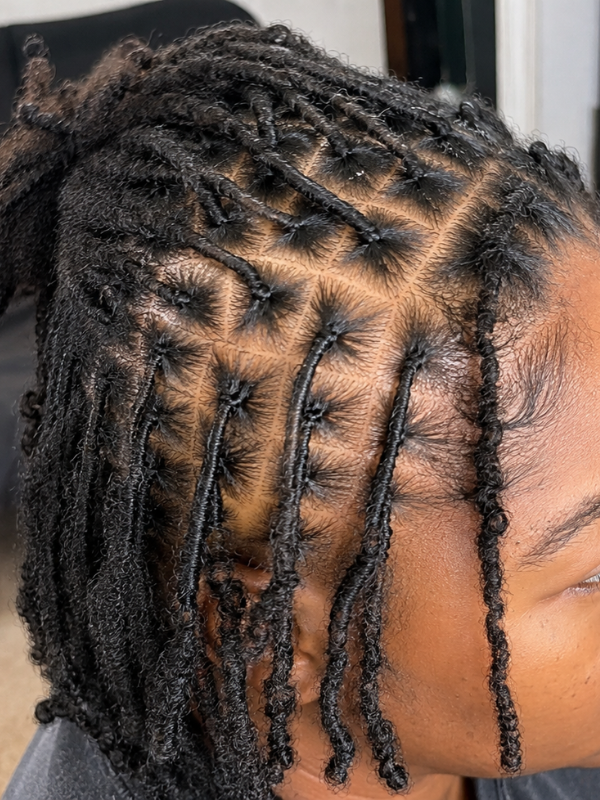
Avoid unnecessarily bulky roots. The base should be secure without having excessive amounts of extension hair gathered around the scalp. Bulky roots can make the installation look less natural and may increase the weight at the base.
Choose a parting pattern you like. Centre parts, side parts and more flexible parting arrangements all change the finished hairstyle. Look at photographs from different angles so you know what the roots and sides will look like.
Don’t add too many loose curls. Curly pieces create a beautiful bohemian finish, but excessive amounts can make the hairstyle difficult to manage. Think about how much loose texture you want before installation.
Keep the proportions balanced. Very long locs with excessive fullness can become heavy. If you prefer a dramatic length, discuss a suitable loc size and extension density with your stylist.
Finally, communicate clearly during your appointment. Bring reference photographs showing the front, sides, back and overall texture. Explain which details you like and which ones you would prefer to avoid.
A photograph can help a stylist understand your desired finish much more accurately than simply saying you want bohemian faux locs.
How to Prepare Your Natural Hair Before Installing Faux Locs
Although most of your natural hair will be tucked underneath the extensions, preparation still matters. Installing faux locs over neglected, tangled or irritated hair doesn’t make those concerns disappear.
A little preparation before your appointment can make the installation process easier and help you maintain your natural hair underneath.
Cleanse Your Hair and Scalp
Start with a gentle cleansing routine to remove product buildup, sweat and dirt. Pay attention to the scalp, especially if you regularly use oils, gels or styling products.
You don’t need to use an aggressive shampoo or scrub the scalp excessively. The aim is to start with clean hair without leaving it feeling stripped or uncomfortable.
Deep Condition and Moisturise
Conditioning helps improve the feel and manageability of your natural hair before it is tucked away.
Choose a conditioner suitable for your hair type and follow the product instructions. Rinse thoroughly so that heavy residue isn’t left behind.
After washing, use an appropriate moisturising product if your hair needs it. Avoid applying excessive amounts of oil or butter simply because you won’t be able to access every section easily after installation.
Detangle Your Hair Properly
Detangling before installation makes sectioning easier and helps reduce unnecessary pulling.
Work through your hair gently, starting at the ends and moving towards the roots. If you encounter a knot, use your fingers or a suitable detangling tool rather than pulling the hair apart.
Your stylist should also handle the hair carefully during installation.
Check Your Hairline and Scalp Condition
Pay attention to the condition of your edges and scalp before choosing a style. If your hairline is already thinning or your scalp is irritated, discuss this with a qualified professional before installing extensions.
Faux locs should not be used to conceal a scalp problem without understanding what is causing it.
If you have existing breakage, tender areas or signs of hair loss, consider postponing the installation and seeking appropriate advice.
Choose Your Extension Hair in Advance
Before your appointment, confirm the extension type, colour, length and quantity with your stylist.
Don’t assume that every soft loc or goddess loc installation uses exactly the same hair. Different techniques may require different extension materials.
If possible, agree on the desired size and fullness beforehand. This helps avoid an installation that looks much heavier or thicker than the reference photograph you brought.
How to Maintain Faux Locs and Keep Them Looking Beautiful
Once your faux locs are installed, maintaining the hairstyle involves more than keeping the extensions looking neat. Your natural hair and scalp still need attention underneath.
If you also wear permanent locs or want to improve your general hair-care habits, this guide to a locs maintenance routine for beginners explains how to keep your scalp and locs clean, moisturised and properly maintained.
A simple routine can help you enjoy the hairstyle without allowing sweat, buildup or excessive manipulation to become problems.
Keep Your Scalp Clean
Wearing extensions doesn’t mean you should stop cleansing your scalp.
Sweat, dead skin and styling products can accumulate between the sections, particularly if you exercise regularly or live in a warm climate.
Use a gentle cleansing method that allows you to reach the scalp without aggressively rubbing or pulling the locs. You can use an appropriately diluted shampoo or a product recommended by your stylist.
Work carefully between the parts and rinse thoroughly. Leaving cleansing products behind can contribute to buildup and irritation.
You don’t necessarily need to wash the entire installation every time you cleanse your scalp. The appropriate routine depends on the installation method, products used and your individual scalp needs.
Moisturise Your Natural Hair Underneath
Your natural hair still needs moisture while wearing faux locs.
A lightweight, water-based moisturising product can help, depending on your hair’s needs. Apply it sparingly along accessible sections and avoid soaking the extensions.
Heavy products may leave residue around the roots or make the locs feel coated. Using more product doesn’t automatically mean your hair will be better moisturised.
Pay attention to how your hair responds and adjust your routine accordingly.
Protect Your Faux Locs While Sleeping
Sleeping with loose extensions rubbing against your pillow every night can encourage tangling and frizz.
A satin or silk bonnet, scarf or pillowcase can help reduce friction. Choose a covering large enough to accommodate the length and fullness of your locs without squeezing them tightly.
If your extensions are long, gather them loosely before covering them. Avoid pulling them into a tight bun just to make them fit inside a bonnet.
Manage Loose Curls and Frizz
Bohemian and goddess faux locs often include loose curly strands. These pieces can become tangled or lose their definition with repeated handling.
Use your fingers to separate the curls gently when necessary. If a small section becomes tangled, work through it patiently rather than pulling it apart.
Avoid brushing loose curls aggressively because this can create additional frizz and disturb the intended texture.
Some frizz is expected with textured hairstyles, but excessive unraveling or tangling around the roots should be addressed rather than ignored.
Avoid Heavy Products and Excessive Styling
You don’t need to apply several styling products to keep faux locs looking good.
Too much gel, wax, butter or oil can leave buildup, particularly when the natural hair underneath is difficult to reach.
Use products according to your needs and avoid repeatedly coating the extensions to make them look shiny.
It’s also worth alternating your hairstyles. Wearing a tight high bun every day can create repeated tension around the same sections of your scalp.
A relaxed style is often the better choice when you want to keep the installation comfortable.
How Long Do Faux Locs Last and When Should You Remove Them?
Faux locs are temporary extensions, so they should have a planned takedown rather than being treated as a permanent hairstyle.
How long you can comfortably wear them depends on several factors, including the installation method, the amount of extension hair, your natural hair growth, scalp condition and maintenance routine.
Some installations may remain presentable for several weeks, while others may need attention sooner. Your stylist should give you an appropriate wear-time recommendation for the specific method used.
Don’t wait until the locs become severely tangled or matted before considering removal.
There are several signs that your installation may need to come down:
- Your natural hair is becoming tangled around the roots.
- The sections are growing out enough to affect the appearance and security of the installation.
- You notice persistent itching, irritation or buildup that you cannot manage comfortably.
- The locs are becoming excessively heavy or difficult to maintain.
- You notice breakage or thinning around the hairline.
- The extensions are unraveling or becoming difficult to separate.
If you experience pain, bumps, stinging or persistent pulling, don’t simply wait for the hairstyle to loosen naturally. Have the tension assessed promptly.
The condition of your scalp and natural hair should matter more than keeping the extensions installed for a particular number of weeks.
Are Faux Locs a Good Protective Style for Natural Hair?
Faux locs can be a useful low-manipulation hairstyle when they are installed and maintained appropriately. Your natural hair is generally tucked underneath the extensions, which can reduce the need to handle every strand during your everyday routine.
This can be helpful if you regularly wear your hair in styles that require frequent combing, twisting or heat styling.
However, it’s important not to confuse a protective style with a completely risk-free hairstyle.
Extensions add weight, and the installation process can place tension on the natural hair. If the base is too tight or the extensions are too heavy, the hairstyle may contribute to breakage and traction-related hair loss.
The British Association of Dermatologists advises against tight braiding and highlights the risks associated with the additional weight of long extensions and decorative accessories. The American Academy of Dermatology also explains that repeated pulling from tight hairstyles can cause traction alopecia. These are important considerations when choosing faux locs.
There are a few ways to make your installation more considerate of your natural hair.
Choose a comfortable installation. Your scalp should not be painful after your appointment. Pain, stinging and persistent pulling are not signs that the style simply needs time to settle.
Be careful with extension weight. Very long and full installations can place additional strain on the roots. Choose a length and density that your natural hair can comfortably support.
Don’t neglect your scalp. Cleanse and care for the natural hair underneath rather than assuming that extensions remove the need for a hair care routine.
Give your hair a break between installations. After removing faux locs, assess the condition of your hair before immediately installing another heavy style.
Avoid tight updos. Even a comfortable installation can become uncomfortable when repeatedly pulled into tight buns or ponytails.
If you already have thinning edges, breakage or a history of traction-related hair loss, speak with a dermatologist before choosing extensions.
The goal should be to enjoy the appearance of faux locs without sacrificing the health of the hair underneath.
How to Remove Faux Locs Without Damaging Your Natural Hair
Removing faux locs requires just as much care as installing them. The extensions may be temporary, but the natural hair underneath still needs to be protected throughout the takedown process.
One of the biggest mistakes is rushing through the removal because you’re eager to see your natural hair again.
Start by identifying how the locs were installed. Some methods involve wrapping extension hair around a braid, while others use crochet attachments or pre-made extensions. The removal technique should match the original installation.
If you’re unsure where your natural hair ends and the extension hair begins, it’s safer to have an experienced stylist remove them.
For wrapped faux locs, the extension hair needs to be carefully unwrapped. Never assume that cutting into the loc is safe without first identifying where your natural hair is positioned.
Once the extensions have been removed, separate the natural hair gently. Some shed hair is normal because strands that would usually fall away during daily combing may have remained trapped underneath the installation.
This can make the amount of shed hair appear surprising during takedown.
Work through each section patiently, removing tangles with your fingers before using a suitable detangling tool. If the hair is difficult to separate, use an appropriate conditioner or detangling product to help with the process.
After removing the extensions, cleanse your scalp and natural hair. Follow with a conditioner suitable for your hair and give your strands time to recover from the installation.
Pay attention to your hairline, roots and the sections that carried the most extension weight. If you notice unusual thinning, persistent soreness or broken areas, seek professional advice rather than immediately covering the problem with another hairstyle.
A break between installations is also a good opportunity to enjoy your natural hair, assess its condition and decide what style you want next.
Frequently Asked Questions About Faux Locs
Are faux locs suitable for natural hair?
Yes, faux locs can be installed on natural hair of different textures and lengths, provided the hair is suitable for the chosen installation method.
The stylist usually creates a braided or twisted base before wrapping or attaching the extensions. The important consideration is ensuring that the natural hair is handled gently and that the installation isn’t too tight or heavy.
If your hair is already fragile or thinning, discuss your options with a professional before proceeding.
Do faux locs damage your natural hair?
Faux locs do not automatically damage natural hair, but poor installation and maintenance can cause problems.
Excessive tension, heavy extensions, tight updos and careless removal can contribute to breakage and traction alopecia.
The best way to reduce these risks is to choose a suitable length, avoid painful installations and maintain your natural hair while wearing the extensions.
Which faux locs look the most natural?
The answer depends on the finish you prefer.
Traditional wrapped faux locs can create a uniform loc-inspired appearance, while soft locs offer a more flexible texture. Bohemian and goddess styles introduce loose curls, and butterfly locs have a more distressed finish.
For a natural-looking result, pay attention to the extension texture, loc size, parting and installation technique rather than relying on the style name alone.
What is the difference between faux locs and butterfly locs?
Faux locs are a broad category of temporary loc extensions. Butterfly locs are a particular variation known for their deliberately distressed appearance and loose loops along the length.
Traditional faux locs generally have a more uniform, wrapped finish, while butterfly locs are designed to look more textured and undone.
Both can be beautiful, but they create different overall appearances.
Can you wash your hair with faux locs?
Yes, your scalp still needs to be cleansed while wearing faux locs.
Use a gentle cleansing method that allows you to reach the scalp and remove buildup without pulling or aggressively rubbing the extensions.
Make sure the hair dries thoroughly after washing. The appropriate cleansing routine depends on your installation method and the products you use.
Can you style faux locs in a bun or ponytail?
Yes, many faux locs hairstyles can be arranged into buns, ponytails and half-up styles.
The main considerations are length, fullness and weight. A loose bun or ponytail is generally preferable to an arrangement that pulls tightly at the roots.
If the extensions feel heavy when gathered, choose a lower or looser hairstyle instead.
Are faux locs heavy?
They can be, but the weight depends on the extension material, length, thickness and amount of hair used.
Long, very full installations generally require more extension hair than shorter, less dense styles.
If you’re concerned about weight, discuss a lighter installation with your stylist. Don’t assume that a style will be comfortable simply because it looks soft in a photograph.
Can you install faux locs on short natural hair?
It may be possible, depending on your natural hair length, condition and the installation technique.
Some methods require enough length to create a secure braided base, while crochet methods may offer different options.
A stylist should assess your natural hair before recommending an installation. Avoid forcing extensions onto hair that isn’t long or strong enough to support them.
Can you swim with faux locs?
You can wear faux locs while swimming, but it’s important to consider the additional care involved.
Water can make extensions heavier, and swimming in chlorinated or salt water may affect the feel and appearance of some synthetic hair.
If you swim, follow your stylist’s guidance on protecting and cleansing the installation. Rinse away pool or seawater residue when appropriate and allow the hair to dry thoroughly.
How do you stop faux locs from getting frizzy?
Some texture and frizz are normal, especially with distressed and bohemian styles. However, excessive friction and rough handling can make the extensions look untidy sooner.
Protect the hair while sleeping, avoid aggressive brushing and separate loose curls gently with your fingers.
If individual locs begin unraveling, have the affected areas assessed rather than repeatedly pulling or tightening them yourself.
Conclusion
Faux locs offer so many ways to enjoy the appearance of locs while experimenting with different lengths, textures and colours. If you prefer the flowing appearance of long bohemian locs, the softness of goddess styles or the relaxed texture of butterfly locs, there is plenty of room to make the hairstyle your own.
You don’t have to choose the longest extensions or the fullest installation to create a beautiful result. Sometimes a shoulder-length style with natural black extensions and a few wooden beads is all you need. Other times, loose curls, warm colours and decorative accessories can create the romantic bohemian appearance you’ve been looking for.
Before making your choice, consider how the hairstyle will fit into your everyday routine, how much weight your natural hair can comfortably support and how much maintenance you’re willing to do.
Most importantly, don’t forget the hair underneath. A beautiful installation should feel comfortable, allow you to care for your scalp and be removable without unnecessary damage.
Choose a style you genuinely enjoy wearing, communicate your preferences clearly to your stylist and give your natural hair the attention it deserves throughout the process.
3 Comments