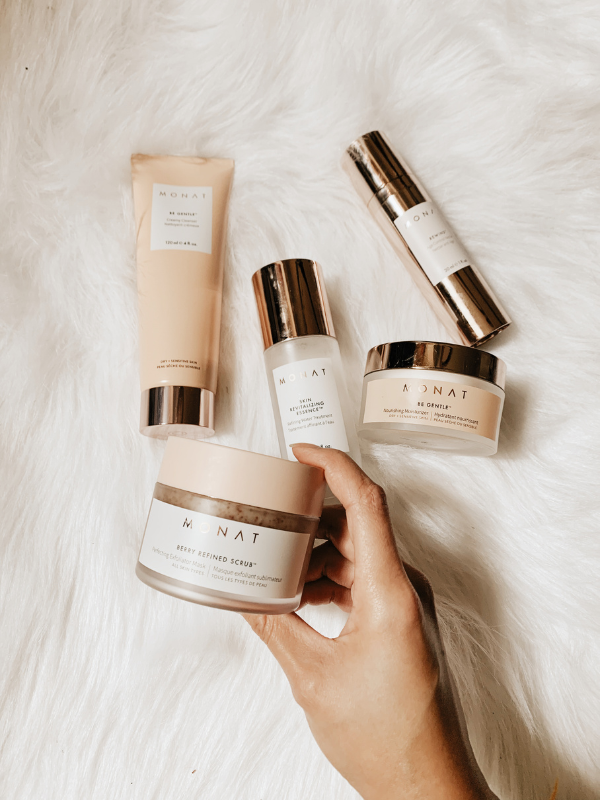
Starting a Simple Skincare Routine can make taking care of your skin much easier. You do not need a shelf full of expensive products or a complicated 10-step routine to have healthy-looking skin. In fact, beginners are often better off starting with a few basic products and learning how their skin responds.
A simple routine usually focuses on three important things: cleansing, moisturizing, and protecting the skin from the sun. Once you understand these basics, you can add other products for specific concerns when necessary.
The key is to keep your routine realistic. A routine that takes five minutes and you can follow consistently is more useful than a complicated routine that you stop after a few days.
What Is a Simple Skincare Routine?
A simple skincare routine is a basic series of skincare steps designed to keep your skin clean, moisturized, and protected without using unnecessary products.
For most beginners, the routine does not need to be complicated.
A basic morning routine can be:
Cleanser → Moisturizer → Sunscreen
At night, you can use:
Cleanser → Moisturizer
A treatment product can be added between cleansing and moisturizing if you have a specific concern you want to address.
The goal is not to use as many products as possible. Instead, choose products that have a clear purpose and work well with your skin.
The Basic Simple Skincare Routine for Beginners
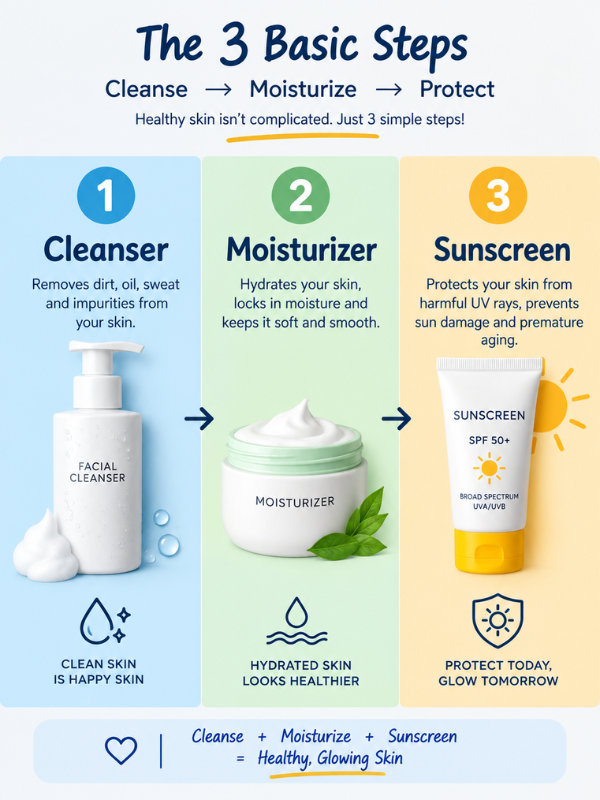
If you are completely new to skincare, start here. You can build a more personalized routine later.
1. Cleanse Your Skin
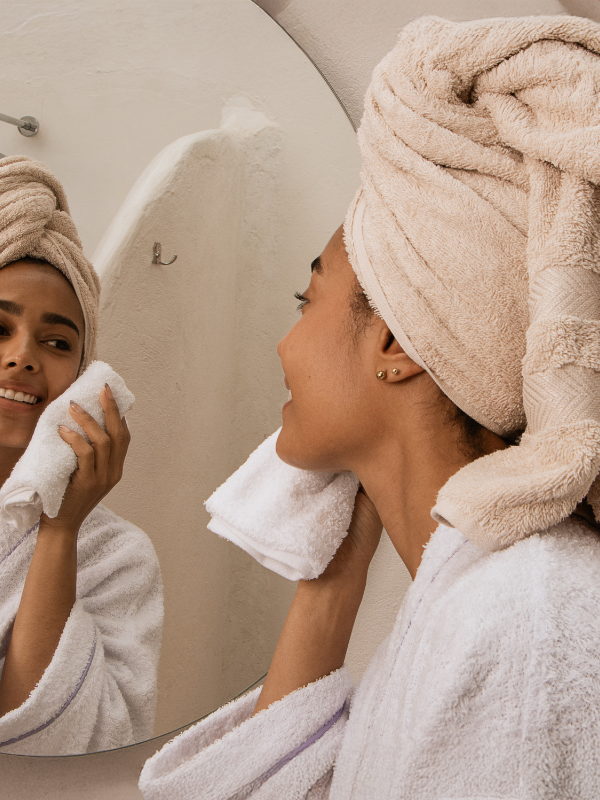
Cleansing is usually the first step in a skincare routine. A cleanser helps remove sweat, excess oil, dirt, makeup, and other buildup from the surface of your skin.
However, your face does not need to feel extremely tight or squeaky after cleansing. That feeling can sometimes mean the cleanser is too harsh for your skin.
Choose a gentle cleanser that suits your skin type.
If your skin is oily, you may prefer a lightweight cleanser that removes excess oil without leaving your face feeling stripped.
If your skin is dry or sensitive, look for a gentle, hydrating cleanser that does not leave your skin uncomfortable after washing.
You can generally cleanse in the morning and at night. However, your needs may vary depending on your skin type and lifestyle.
When cleansing, use lukewarm water rather than very hot water. Gently massage the cleanser over your face and rinse thoroughly. Avoid scrubbing aggressively.
2. Apply a Moisturizer

After cleansing, moisturizer helps keep your skin hydrated and supports the skin barrier.
Even if you have oily skin, you may still need moisturizer. Skipping it can leave your skin feeling uncomfortable and may encourage you to use overly harsh products in an attempt to control oil.
Choose the texture based on your skin.
Lightweight lotions or gel moisturizers may feel comfortable on oily or combination skin. Creamier moisturizers may work better for dry skin.
If your skin is sensitive, consider choosing a simple moisturizer with ingredients designed to support hydration and the skin barrier.
Apply moisturizer while your skin is slightly damp if that feels comfortable for you. This can help your skin retain moisture.
3. Use Sunscreen in the Morning
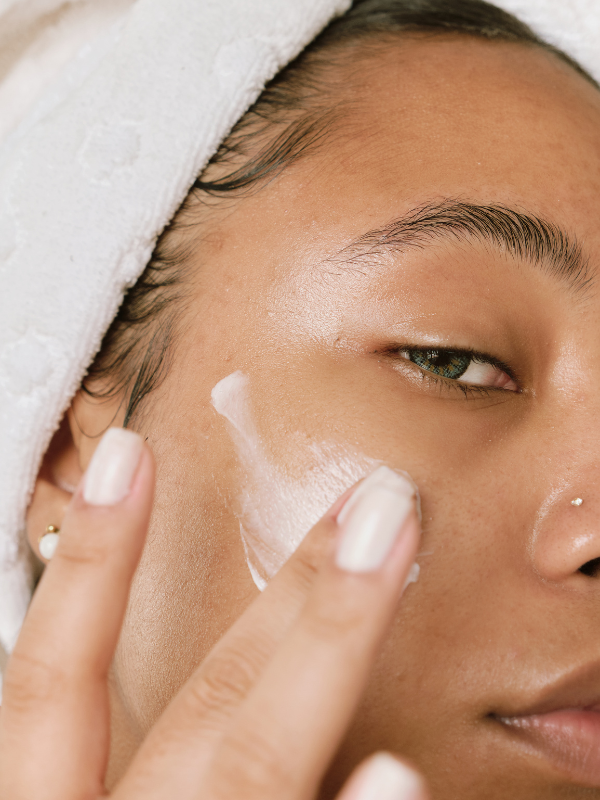
Sunscreen is one of the most important parts of a daytime skincare routine.
Sun exposure can contribute to premature skin aging and can worsen the appearance of some types of dark spots and uneven pigmentation. Using sunscreen regularly helps protect your skin from ultraviolet radiation.
Look for a broad-spectrum sunscreen with an appropriate SPF and apply it as the final step of your morning skincare routine.
Remember to apply it to areas that are exposed to the sun, including your face, ears, and neck.
If you spend a lot of time outdoors, sweating or swimming can affect sunscreen protection, so follow the product’s reapplication instructions.
4. Add Targeted Products Only When Needed
Once you are comfortable with your basic routine, you can consider adding a treatment product.
For example, someone dealing with clogged pores may consider a product containing salicylic acid. Someone interested in improving the appearance of uneven skin tone may consider ingredients such as vitamin C or niacinamide.
However, you do not need to add a serum simply because it is popular.
Every additional product increases the chance of irritation or an unwanted reaction. Start with the basics first, then add products based on an actual skin concern.
Simple Morning Skincare Routine
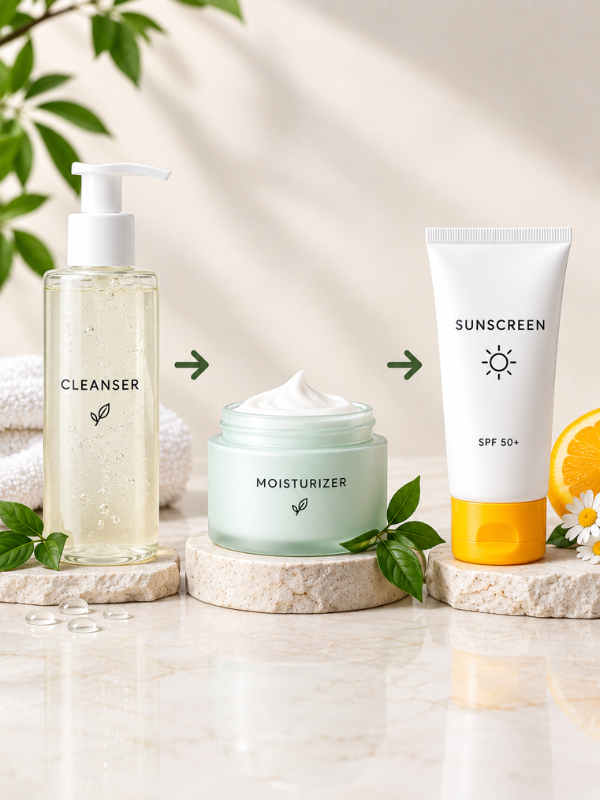
A beginner-friendly morning routine can be very short.
Step 1: Cleanser
Start by gently cleansing your face. If your skin is dry or sensitive, you may find that a gentle approach works better than aggressive cleansing.
Step 2: Moisturizer
Apply a moisturizer that feels comfortable on your skin. You do not need a thick layer. A small amount that covers your face evenly is usually enough.
Step 3: Sunscreen
Finish with sunscreen. Give it enough time to settle before applying makeup if you wear it.
Your morning routine can therefore be as simple as:
Cleanser → Moisturizer → Sunscreen
You do not need five different serums before leaving the house.
Simple Night Skincare Routine
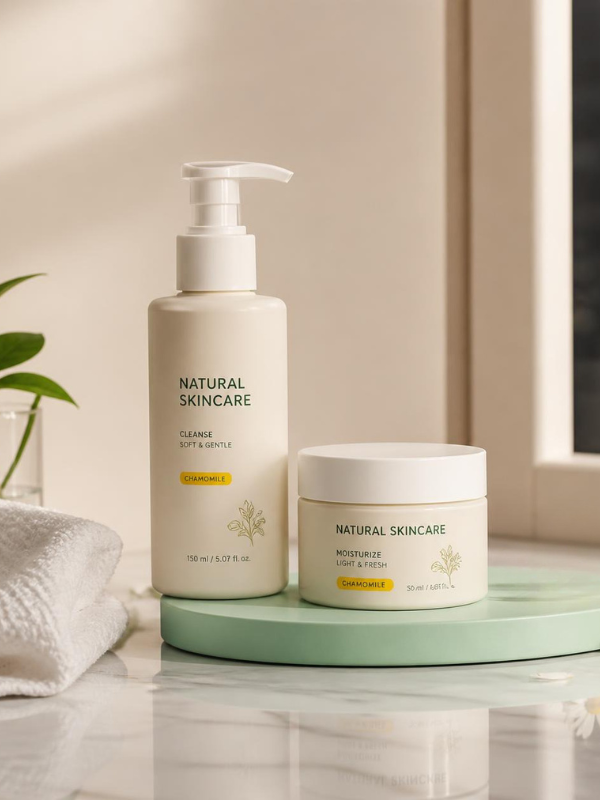
Your nighttime routine can be even simpler.
Step 1: Cleanse
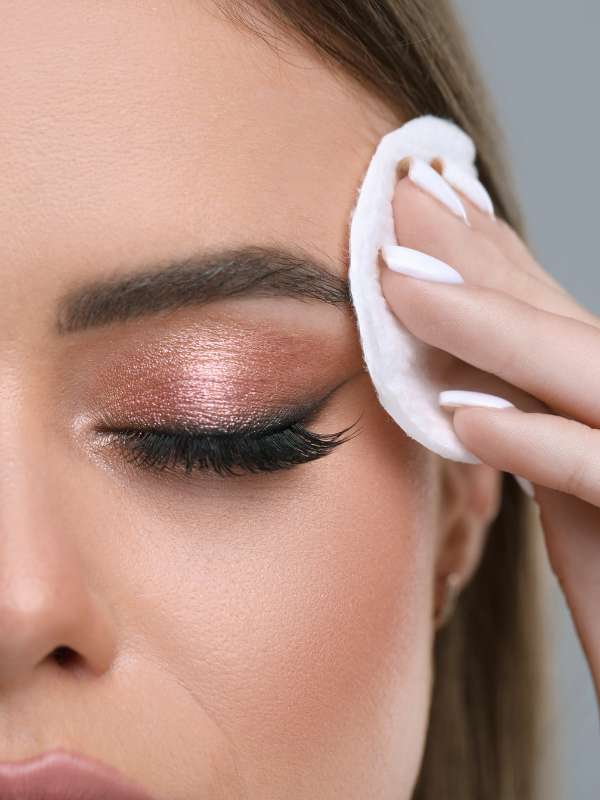
Remove makeup, sunscreen, sweat, oil, and other buildup from your skin.
If you wear heavy makeup or water-resistant products, you may need a suitable makeup remover or first cleansing step before your regular cleanser.
Step 2: Treatment
A treatment is optional.
If you are using one, apply it according to the product instructions. Beginners should avoid combining several strong active ingredients without understanding how they work together.
Step 3: Moisturize
Finish with moisturizer to help keep your skin hydrated overnight.
Your basic nighttime routine is:
Cleanser → Treatment (optional) → Moisturizer
That is enough for many beginners.
How to Choose Skincare Products for Your Skin Type
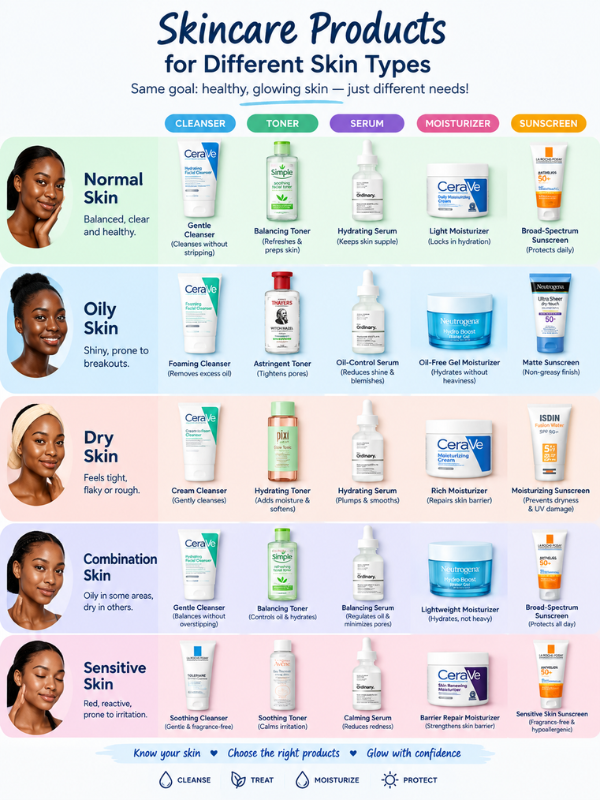
Knowing your skin type can make choosing products much easier.
For Oily Skin
Oily skin tends to produce more sebum, which can make the face look shiny and may contribute to clogged pores.
Look for lightweight products that feel comfortable without leaving a heavy, greasy layer.
Gel or lightweight moisturizers may be a good option. A gentle cleanser can also help remove excess oil without aggressively stripping the skin.
Avoid assuming that you need to dry your skin out completely. Healthy skin still needs hydration.
For Dry Skin
Dry skin may feel tight, rough, flaky, or uncomfortable.
Look for gentle cleansers and moisturizing products that help support hydration. Cream-based moisturizers may feel more comfortable than very lightweight formulas.
Ingredients such as glycerin and ceramides can be useful additions to a routine focused on hydration and skin-barrier support.
Try to avoid very hot water and harsh cleansing, as these can make dryness feel worse.
For Combination Skin
Combination skin can have both oily and dry areas.
For example, the forehead, nose, and chin may become oily while the cheeks feel normal or dry.
A balanced routine is usually more helpful than trying to treat your entire face as extremely oily or extremely dry.
A gentle cleanser and lightweight moisturizer can be a good starting point. You can then adjust products based on how different areas of your skin respond.
For Sensitive Skin
Sensitive skin can react easily to certain products or ingredients.
Keep your routine simple and introduce new products slowly. Fragrance-free products may be worth considering if fragrance tends to irritate your skin.
Avoid introducing several new products at the same time. If your skin reacts, it becomes much harder to determine which product caused the problem.
For Normal Skin
If your skin generally feels balanced, your main goal may simply be to maintain it.
A gentle cleanser, moisturizer, and sunscreen can provide a solid foundation.
There is no need to create problems where there are none. If your skin is comfortable with a simple routine, you do not have to constantly change it.
What Skincare Ingredients Should Beginners Look For?
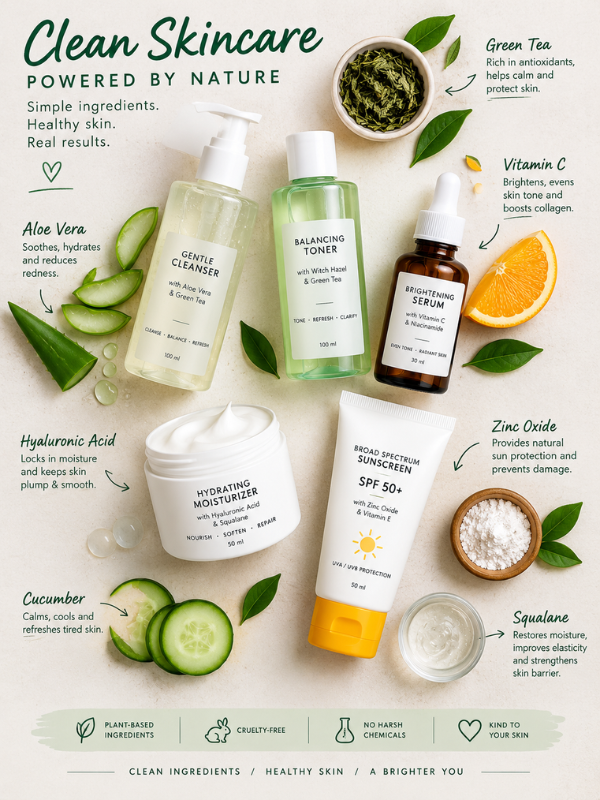
You do not need to memorize every skincare ingredient on the market. Learning a few common ones can help you make better choices.
Hyaluronic Acid
Hyaluronic acid is a humectant that helps attract and hold water. It is commonly found in hydrating serums and moisturizers.
It can be useful when your main goal is improving the feeling of dryness or dehydration.
Ceramides
Ceramides are lipids naturally found in the skin barrier. Skincare products containing ceramides can help support the skin barrier and are often included in moisturizers.
Niacinamide
Niacinamide is a form of vitamin B3. It is commonly used in skincare products designed to support the skin barrier, improve the appearance of uneven skin tone, and help manage excess oil.
It is available in many different products, including moisturizers and serums.
Vitamin C
Vitamin C is an antioxidant commonly used in morning skincare routines.
It can help protect the skin from oxidative stress and may improve the appearance of uneven skin tone over time.
If you are new to vitamin C, introduce it gradually rather than adding several new active ingredients at once.
Salicylic Acid
Salicylic acid is a beta hydroxy acid commonly used in products for oily and acne-prone skin.
It can help exfoliate inside pores and may be useful for blackheads and clogged pores.
However, using too much can cause dryness or irritation.
Retinoids
Retinoids are vitamin A derivatives used for several skincare concerns, including acne and signs of skin aging.
They can be effective but may also cause irritation, especially when first introduced. Beginners should start carefully and follow the instructions for the specific product.
If you are pregnant or trying to become pregnant, talk with a healthcare professional before using retinoid products.
Glycerin
Glycerin is another common hydrating ingredient. It helps attract moisture to the skin and is found in many cleansers and moisturizers.
How to Introduce New Skincare Products
One of the biggest mistakes beginners make is changing everything at once.
You might buy a cleanser, toner, serum, exfoliant, mask, moisturizer, and several other products and start using all of them on the same day.
Then your skin becomes irritated.
Now you have no idea which product caused the problem.
Instead, introduce new products gradually.
Start with your basic routine and give your skin time to adjust. When you add a new product, introduce it on its own so you can observe how your skin responds.
Patch testing can also be helpful for reducing the risk of a widespread reaction.
If a product causes significant burning, swelling, a rash, or persistent irritation, stop using it and seek appropriate medical advice if needed.
Common Skincare Mistakes Beginners Should Avoid
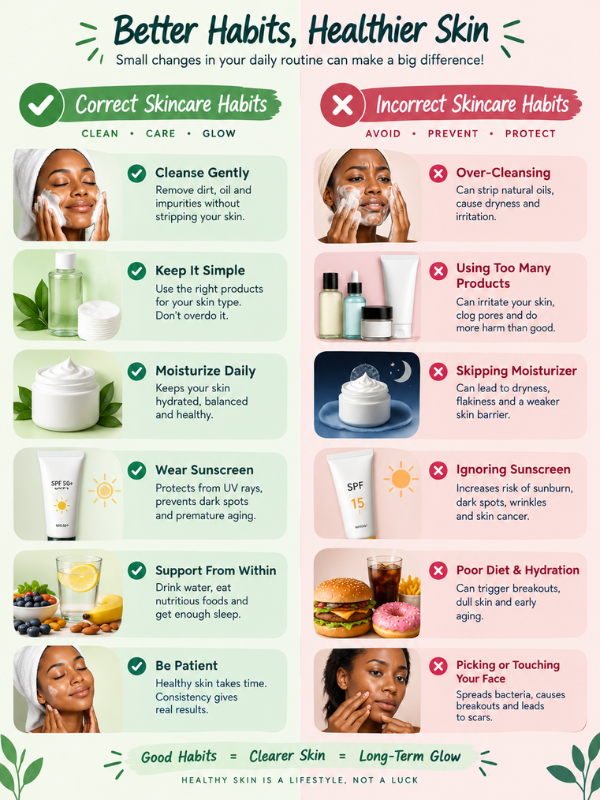
Building a routine is not only about knowing what to use. It is also about knowing what not to do.
Using Too Many Products
More products do not automatically mean better skin.
Start with the essentials and only add products that serve a specific purpose.
Skipping Sunscreen
You can spend money on serums and treatments, but skipping daytime sun protection can work against your skincare goals.
Make sunscreen a regular part of your morning routine.
Over-Exfoliating
Exfoliation can help remove dead skin cells, but doing it too frequently can irritate the skin.
Beginners should be especially careful with strong exfoliating products.
Scrubbing Your Face Too Hard
Your skin does not need aggressive scrubbing to be clean.
Use gentle movements when cleansing and drying your face.
Following Every Skincare Trend
A product can be popular online without being right for your skin.
Before buying something, ask yourself what problem the product is supposed to solve and whether you actually have that concern.
Constantly Changing Products
Skincare usually requires patience.
Changing products every few days makes it difficult to know what is helping and can increase irritation.
Picking at Pimples
Picking or squeezing pimples can irritate the skin and increase the risk of marks and scarring.
Try to resist the temptation, even when that tiny spot seems determined to ruin your entire day.
How Often Should You Follow a Simple Skincare Routine?
Consistency is more important than creating an elaborate routine.
Try to follow your basic routine regularly rather than doing a complicated routine once in a while.
A simple schedule can be:
Morning: Cleanser → Moisturizer → Sunscreen
Night: Cleanser → Moisturizer
If you have a specific concern, you can add a treatment product according to its instructions.
On busy days, keep your routine as simple as possible. Having a few products you actually use is better than owning a large collection that sits untouched.
How Long Does It Take to See Skincare Results?
Skincare results are rarely instant.
Some products can make your skin feel more comfortable or hydrated relatively quickly. Other concerns, such as acne and uneven pigmentation, can take considerably longer to improve.
The timeline depends on your skin, the concern you are treating, the product you are using, and how consistently you use it.
Do not assume a product has failed simply because you do not see dramatic changes after a few days.
At the same time, do not continue using a product that causes significant irritation just because you are waiting for results.
How to Keep Your Skincare Routine Simple
A routine is easier to maintain when it fits naturally into your lifestyle.
Start with the essentials.
Choose products that have a clear purpose.
Avoid buying multiple products that promise to do exactly the same thing.
You can also keep your products somewhere convenient. If your moisturizer and sunscreen are easy to reach in the morning, you are more likely to use them consistently.
Most importantly, learn to pay attention to your skin.
If your skin feels comfortable, hydrated, and healthy-looking with a simple routine, there may be no reason to keep adding products.
When Should You See a Dermatologist?
A basic skincare routine can help with everyday skin care, but some concerns require professional attention.
Consider seeing a dermatologist or other qualified healthcare professional if you have:
- Persistent or severe acne.
- Painful skin breakouts.
- A rash that does not improve.
- Severe or ongoing irritation.
- Sudden changes in your skin.
- Persistent pigmentation concerns.
- A skin problem that does not improve with appropriate over-the-counter care.
A professional can help identify the cause of the problem and recommend appropriate treatment.
Frequently Asked Questions
What is the best simple skincare routine for beginners?
A good starting point is cleanser, moisturizer, and sunscreen. Use cleanser and moisturizer as part of your nighttime routine, and use sunscreen during the day. Add treatment products only when you have a specific reason to use them.
How many skincare products does a beginner need?
You can start with as few as three essential products: a cleanser, moisturizer, and sunscreen. You can add other products later if your skin has a specific concern.
Should I use moisturizer if I have oily skin?
Yes. Oily skin still needs hydration. Choose a lightweight moisturizer that feels comfortable and does not leave your skin excessively greasy.
Do beginners really need sunscreen?
Sunscreen is an important part of daytime skin care because it helps protect the skin from ultraviolet radiation. Apply a broad-spectrum sunscreen as the final step of your morning routine.
Should I use a serum in my skincare routine?
A serum is optional. You do not need one simply because it is popular. Choose a serum only if it contains an ingredient that addresses a specific concern you want to target.
How often should beginners exfoliate?
It depends on the exfoliating product and your skin. Beginners should avoid over-exfoliating and follow the instructions for the specific product. If your skin becomes dry, irritated, or uncomfortable, reduce use or stop the product.
Can I use the same skincare routine every day?
Yes. A consistent basic routine is often easier to maintain than constantly changing products. You can adjust your routine when your skin’s needs change.
How long does it take for a skincare routine to work?
The timeline varies. Hydration may improve how your skin feels relatively quickly, while concerns such as acne and uneven skin tone can take longer. Consistency and patience are important.
Building a Simple Skincare Routine does not have to be complicated or expensive. Start with the basics: cleanse your skin, moisturize it, and protect it with sunscreen during the day.
Once you understand how your skin behaves, you can introduce targeted products for specific concerns. Add new products gradually, avoid unnecessary steps, and give your routine time to work.
The best skincare routine is not necessarily the longest one. It is the one that suits your skin, fits your lifestyle, and is simple enough for you to follow consistently.


2 Comments