If you have ever seen beautiful designs covering someone’s hands and wondered, what is henna, you are not alone. Henna is a natural dye that has been used for centuries to create temporary designs on the skin. It is also used as a hair dye in many cultures. Today, henna art is loved around the world for weddings, festivals, celebrations, and simple everyday body art.
But there is more to henna than pretty patterns on your hands. There is a long history behind it, different styles to explore, and a few important things beginners should know before using it.
So, let’s get into it.
What Is Henna
Henna is a natural dye made from the leaves of the Lawsonia inermis plant. This plant is also commonly called the henna tree.
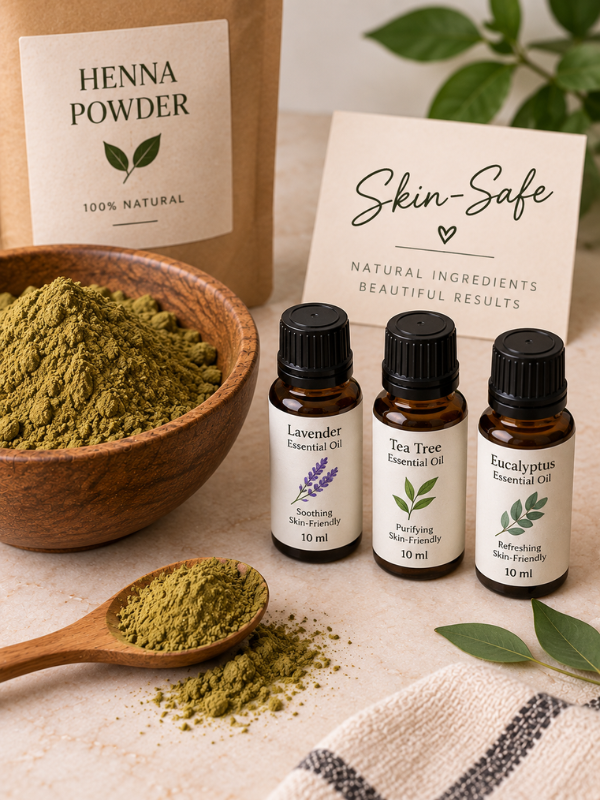
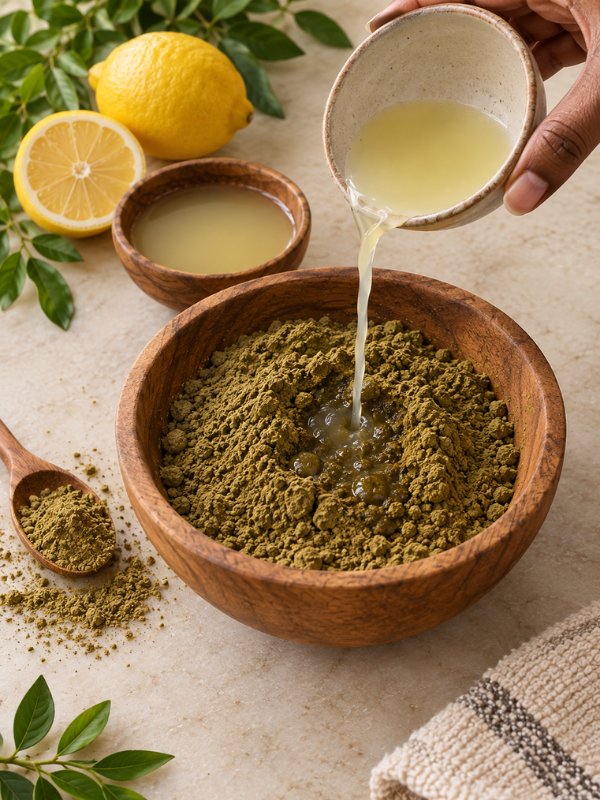
The leaves are dried and ground into a fine green powder. The powder can then be mixed with liquid to create a paste. When this paste is applied to the skin, it leaves behind a temporary stain.
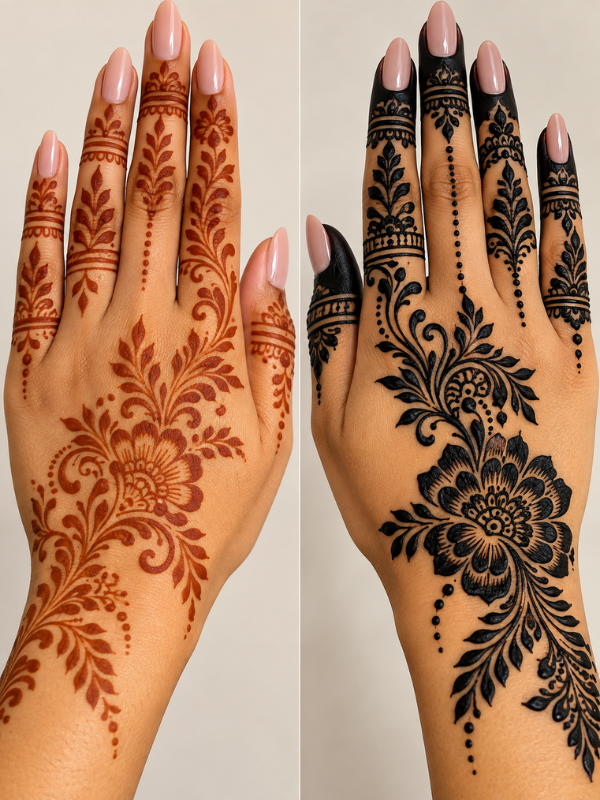
Natural henna usually creates shades of orange, reddish-brown, or deep brown. The final color depends on several things. This includes the quality of the henna, how long the paste stays on the skin, and where it is applied.
Henna is often used to decorate the hands and feet. However, designs can also be placed on other parts of the body.
Where Does Henna Come From
Henna has been used across parts of North Africa, the Middle East, South Asia, and other regions for a very long time.
Different communities have their own ways of using henna. The designs, patterns, and occasions can vary from one culture to another.
For some people, henna is closely connected to weddings and other celebrations. For others, it is simply a form of beauty and self-expression.
This is one reason henna art is so interesting. The same natural dye can be used in many different ways.
The History of Henna Art
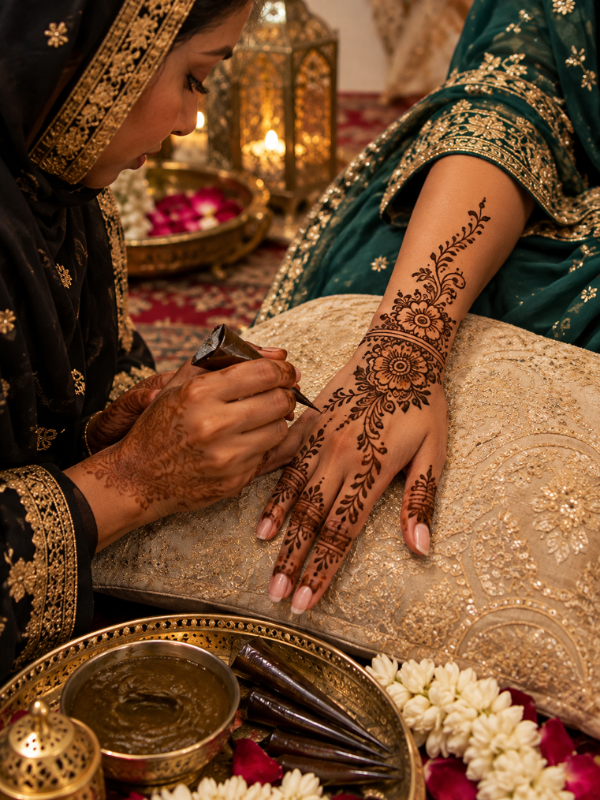
Henna has a long history as a natural body dye and decorative art.
People in different regions have used it to decorate their skin for celebrations and special occasions. Over time, artists developed different patterns and techniques.
Wedding henna is one of the most well-known examples. In many traditions, brides have their hands and feet decorated with detailed designs before their wedding.
Henna is also used during festivals, religious celebrations, family gatherings, and other important events.
Today, the art has also moved beyond traditional settings. Many people enjoy simple henna designs simply because they like the look.
What Is Henna Used For
There are several ways henna can be used.
Body Art
This is probably the use most people know. Henna paste is applied to the skin to create temporary designs.
Hands and feet are especially popular areas.
Wedding Henna
Henna plays an important role in many wedding traditions. Bridal designs can be very detailed and may cover much of the hands and feet.
Festivals and Celebrations
Henna is often used during festivals and celebrations. It can be a fun way to decorate the skin for a special occasion.
Temporary Body Art
You do not need a wedding or festival to enjoy henna. Simple designs can also be worn just for fun.
Hair Dye
Henna can also be used on hair. It can add warm red, copper, or reddish-brown tones depending on the person’s natural hair color and the product used.
How Does Henna Stain the Skin
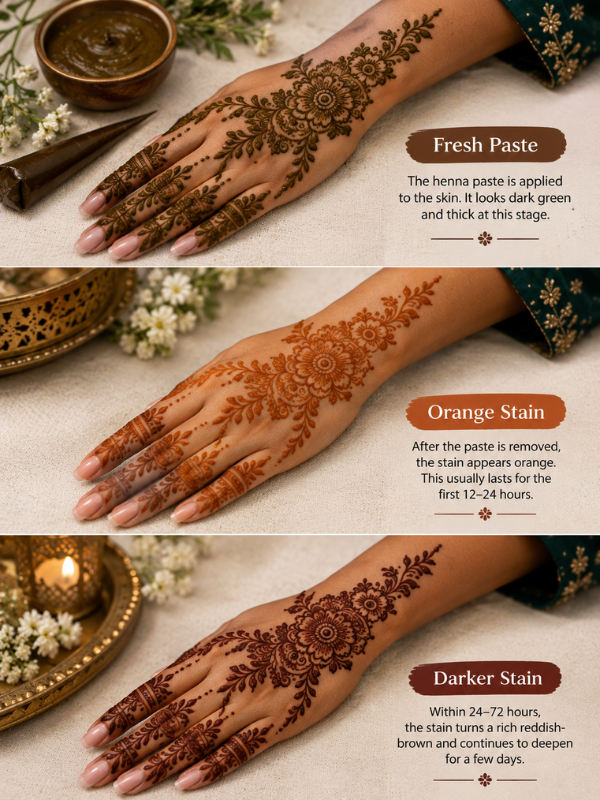
This part can seem a little confusing when you first start using henna.
Henna paste contains a natural dye called lawsone. When the paste sits on the skin, the dye interacts with proteins in the outer layer of the skin.
After the paste is removed, the stain may look light orange. Do not worry if it does not look very dark right away.
The stain usually becomes deeper over the next day or two. This is why freshly removed henna can look very different from the final result.
The palms and soles often develop especially deep stains because the skin in these areas can take up more dye.
How Long Does Henna Last
Henna is temporary.
A henna stain can usually last for several days to around two weeks. However, the exact length varies.
Your skin type, the location of the design, how often you wash the area, and how quickly your skin naturally sheds can all affect how long the stain remains.
Hands may fade faster because they are washed and used so often.
As the stain fades, it usually becomes lighter and lighter until it disappears.
What Does Natural Henna Look Like
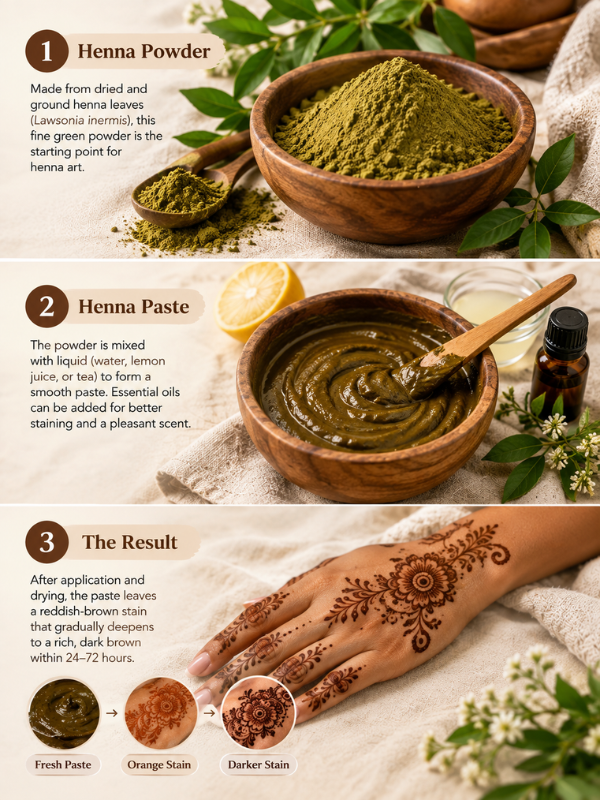
Natural henna powder is usually green or olive-green.
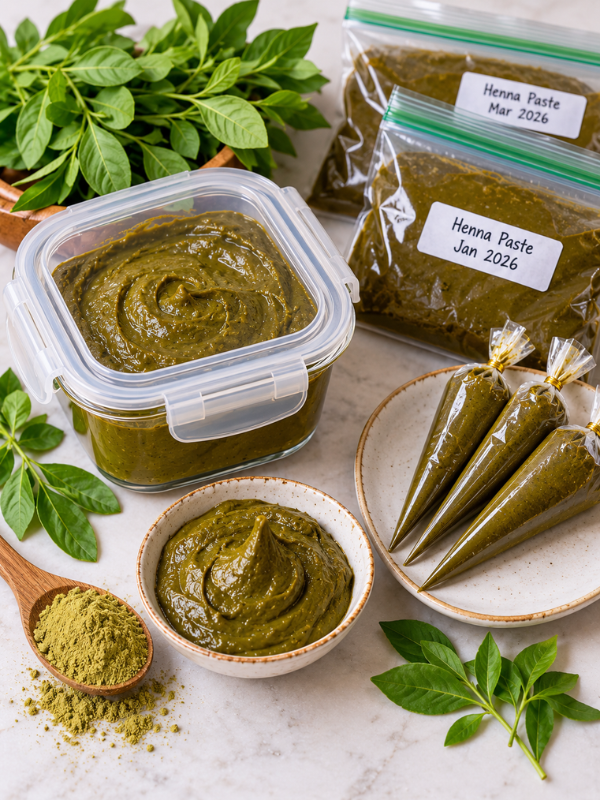
When mixed into a paste, it can look greenish, brownish, or muddy. That does not mean the final stain will be green.
After the dried paste is removed, the stain may initially look orange. Over time, it can develop into a deeper reddish-brown shade.
The final color can vary. Therefore, do not expect every henna design to look exactly the same.
What Is Henna Paste Made Of
Traditional henna paste starts with henna powder made from the henna plant.
Depending on the recipe, other ingredients may be added. These can include:
- Liquid for mixing the paste
- Sugar
- Essential oils
- Other ingredients used by individual artists
Different henna artists have different recipes. Some prefer to make their own paste, while others purchase premade cones.
If you are buying henna, always check the ingredients instead of assuming every product sold as “henna” is the same.
How Is Henna Applied
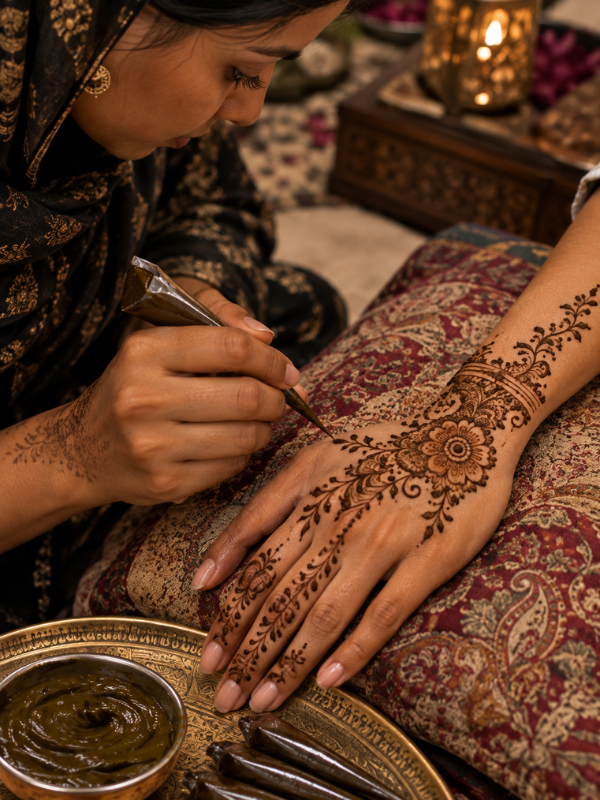
Applying henna is easier once you understand the basic process.
First, the skin should be clean and dry. Oils, creams, and lotions can affect how the paste interacts with the skin.
The henna paste is then placed into an applicator cone. The artist gently squeezes the cone while drawing the design.
Once the design is finished, the paste needs time to dry and stain the skin.
After the recommended time, the dried paste can be gently removed.
The stain may look orange at first. Give it time to develop before judging the final color.
Popular Henna Design Styles
Henna art comes in many different styles.
Some designs are very detailed. Others are simple and minimal.
Indian Henna
Indian-inspired designs can include detailed flowers, paisleys, vines, leaves, and fine lines.
Bridal designs can be especially intricate.
Arabic Henna
Arabic-inspired designs often feature larger flowers, leaves, vines, and open spaces.
They can have a slightly less crowded appearance than some highly detailed bridal designs.
Moroccan-Inspired Designs
These designs often feature bold geometric shapes and patterns.
Minimalist Henna
Minimalist henna is perfect if you prefer something simple.
Think small flowers, tiny vines, delicate lines, dots, or a small mandala.
Modern Henna
Modern artists often mix traditional patterns with contemporary ideas.
This can create very unique designs that do not fit into just one traditional style.
What Are Common Henna Designs
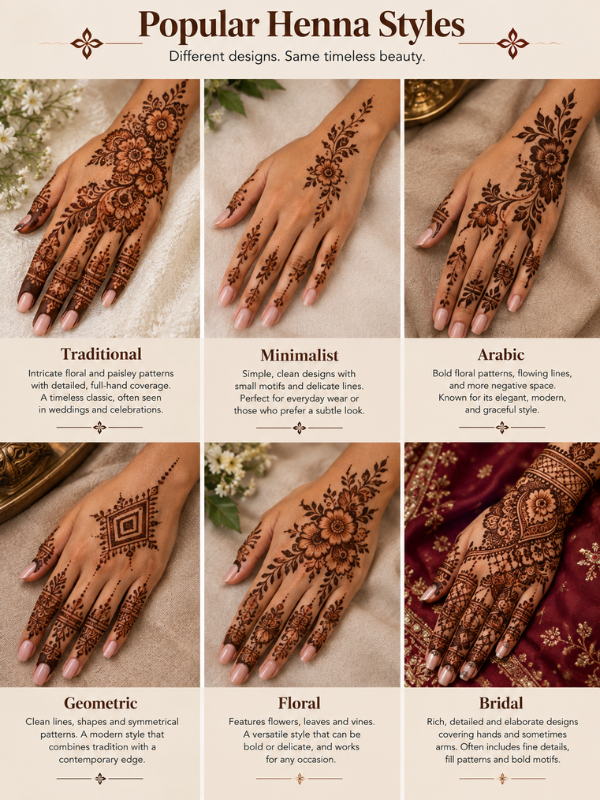
There are so many designs to choose from.
Some popular options include:
- Flowers
- Leaves
- Paisleys
- Vines
- Mandalas
- Dots
- Geometric shapes
- Sun designs
- Moon designs
- Lace-inspired patterns
- Finger designs
- Bracelet-style designs
If you are new to henna, start with simple shapes. You can always move to more detailed designs as your skills improve.
Is Henna Safe for Everyone
Natural henna has been used as a skin dye for a very long time. However, that does not mean every product sold as henna is automatically safe.
The ingredients matter.
It is also better to avoid applying henna to broken, irritated, or damaged skin.
If you are trying a product for the first time, consider testing a small amount on a small area of skin first.
Most importantly, know exactly what you are putting on your skin.
What Is Black Henna
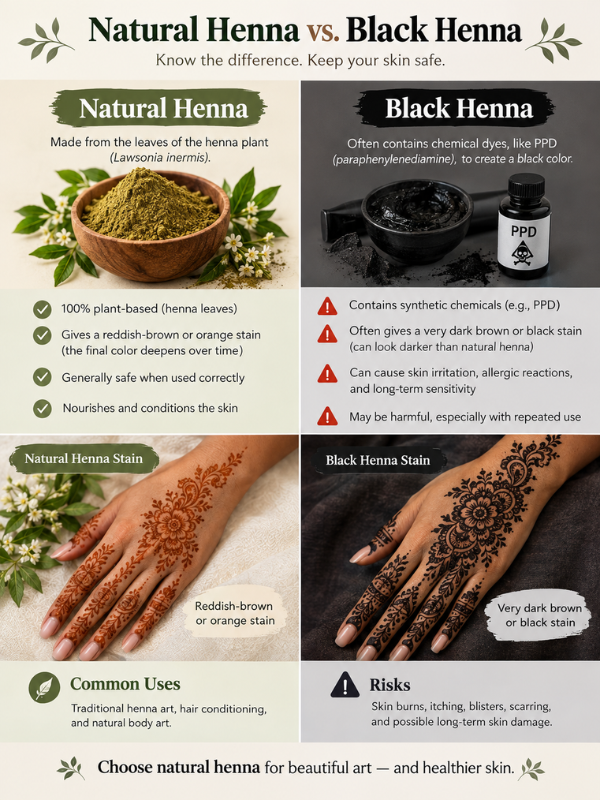
Black henna deserves special attention.
Natural henna does not normally produce a jet-black stain on the skin. Products marketed as “black henna” may contain chemicals such as PPD, which is not the same thing as the natural dye from the henna plant.
PPD can cause serious skin reactions in some people.
Therefore, be very careful with products advertised as black henna. Do not assume that a product is natural simply because the package says “henna.”
When in doubt, check the ingredients and ask the seller what is actually in the product.
How to Tell If Henna Is Natural
There are a few things you can check when buying henna.
Start with the ingredients.
A natural henna product should clearly identify henna or henna leaf powder as its main dye ingredient.
Also look at the product claims. Be cautious about products promising an extremely dark or almost instant black stain.
You should also consider who you are buying from. A reputable seller or artist should be able to explain what is in the product.
However, remember that you cannot always determine whether henna is safe simply by looking at its color.
Can You Use Henna on Your Hair
Yes, henna can also be used on hair.
Henna can add warm tones to the hair. Depending on your starting hair color, the result can range from coppery to reddish-brown.
The result is not identical for everyone.
Also, be careful when choosing a henna product for hair. Some hair products marketed as henna may contain other dyes or ingredients.
Body-art henna and hair products should not automatically be treated as interchangeable.
How to Get Started With Henna Art
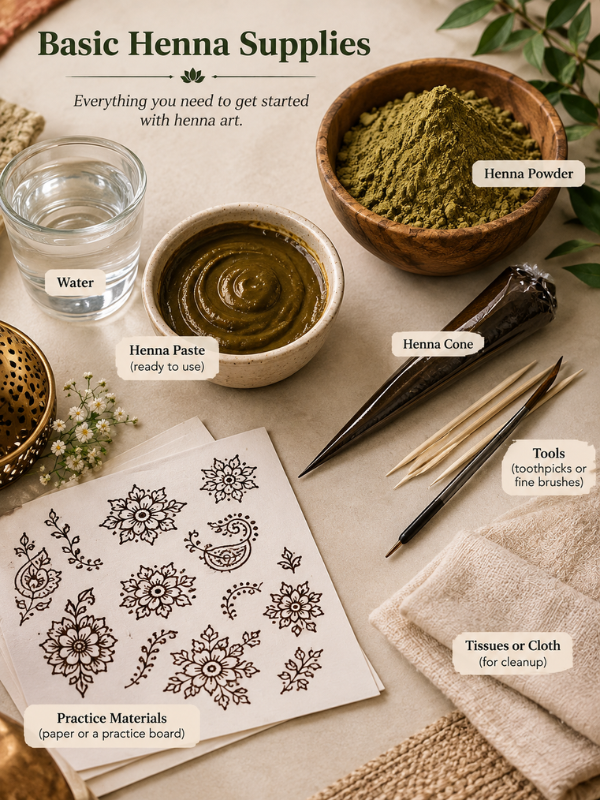
You do not need a huge collection of supplies to start practicing.
A simple beginner setup can include:
- Henna powder or a reputable premade paste
- An applicator cone
- Clean skin
- Simple design references
- Tissue or cotton swabs for small mistakes
- A comfortable place to practice
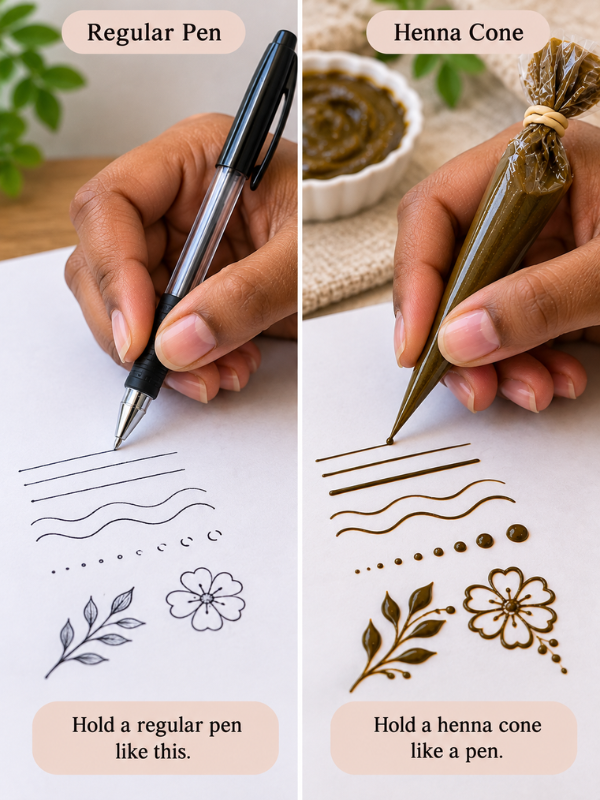
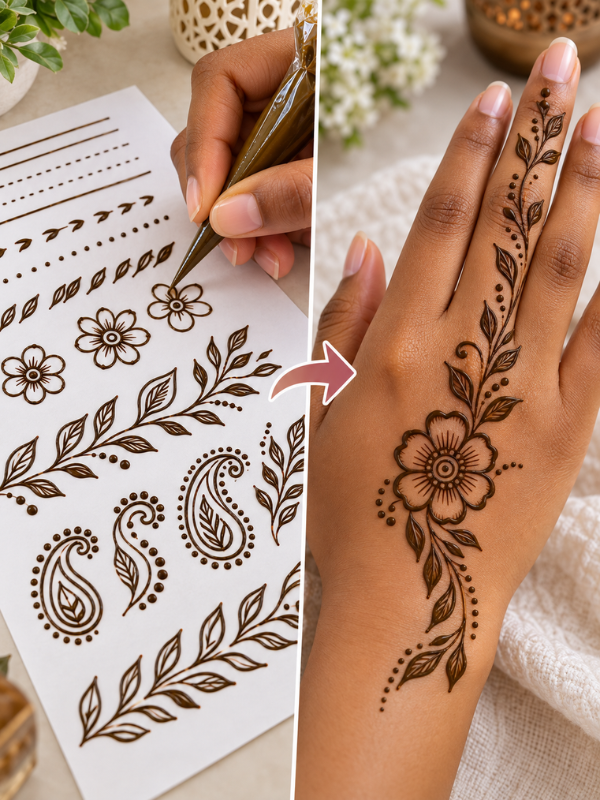
Start with basic lines.
Then practice dots, leaves, flowers, and simple vines.
Once you feel more comfortable, you can start combining the shapes into larger designs.
Beginner Henna Tips
If you are learning henna art for the first time, keep things simple.
Start with basic designs.
Do not begin with a complicated bridal design. Simple patterns are much easier to control.
Practice your lines.
Smooth lines make a big difference. Spend some time practicing before working on your skin.
Keep your skin clean.
Clean, dry skin can help the paste stain properly.
Do not rush.
Henna art takes patience. Your design does not need to be perfect.
Give the stain time to develop.
The stain may look orange at first. It can become darker afterward.
Choose your products carefully.
Knowing what is in your henna paste is important.
Common Beginner Mistakes
Learning henna can take a little practice. So, do not worry if your first few designs are not perfect.
One common mistake is starting with a design that is too complicated.
Another is removing the paste too quickly.
Some beginners also expect the stain to be dark immediately. However, henna usually needs time to develop.
Using old or poor-quality henna can also affect the result.
Finally, one of the biggest mistakes is using a product without checking what is actually in it.
Frequently Asked Questions
What is henna made from?
Henna is made from the leaves of the Lawsonia inermis plant. The leaves are dried and ground into powder, which can then be turned into a paste for skin or hair use.
Is henna permanent?
No. Henna creates a temporary stain on the skin. It gradually fades as the outer layer of your skin naturally sheds.
How long does henna stay on the skin?
A henna stain can last several days to around two weeks. The exact length depends on factors such as the body area, washing, skin type, and natural skin shedding.
Why does henna turn orange first?
The stain can appear orange when the dried paste is first removed. It usually becomes deeper over the next day or two.
Is natural henna safe for skin?
Natural henna has a long history of use as a temporary skin dye. However, products can contain different ingredients, so it is important to check what you are using.
What is black henna?
“Black henna” is a term used for products designed to create a very dark or black stain. Some may contain PPD, a chemical that can cause serious skin reactions.
Can henna be used on hair?
Yes. Henna can be used as a hair dye and can give hair warm red, copper, or reddish-brown tones depending on the starting hair color and product.
Can beginners learn henna art at home?
Absolutely. Start with simple designs and practice basic lines, dots, leaves, and flowers. With regular practice, you can gradually work toward more detailed patterns.
So, what is henna? In simple terms, henna is a natural dye made from the leaves of the henna plant. It can be used to create temporary body art and is also used as a hair dye.
But henna is more than just a pretty stain. It has a long history across different cultures and continues to be enjoyed in both traditional and modern ways.
If you are completely new to henna art, start small. Try a few simple flowers, leaves, dots, or vines. Most importantly, choose your products carefully and give yourself time to practice.
You might be surprised by how quickly those simple little lines turn into beautiful designs.
This Post Showed You What Is Henna? A Beginner’s Guide to Henna Art
You may also like:
15 Beautiful Henna Designs for Feet
15 Full Hand Henna Designs for Special Occasions
One Comment