Henna is one of my favorite ways to decorate the skin. It can make the hands and feet look so beautiful without being permanent. However, not every henna product is the same. This is especially important when comparing Natural Henna vs Black Henna.
Natural henna and black henna can look very different on the skin. They can also have very different ingredients. While natural henna comes from the henna plant, some products sold as black henna contain added chemicals.
So, how can you tell them apart? And which one should you be careful with? Let’s break it down.
What Is Natural Henna?
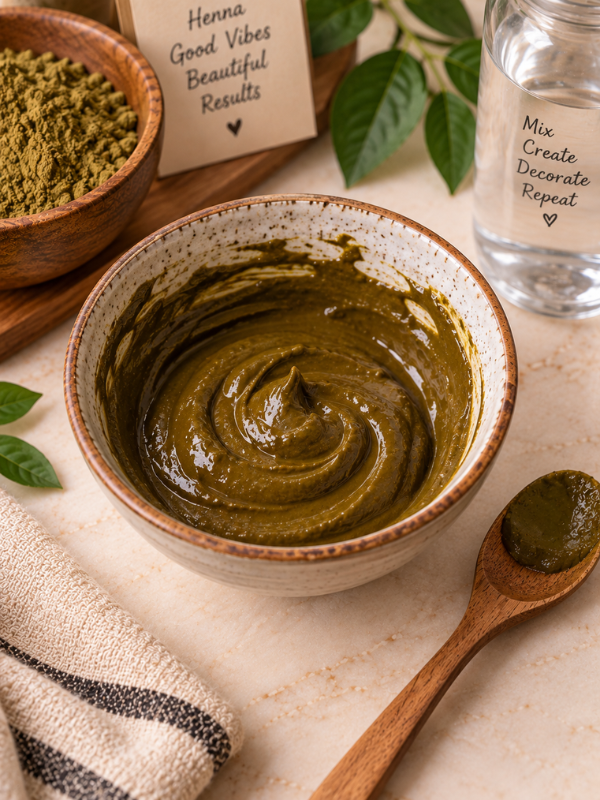
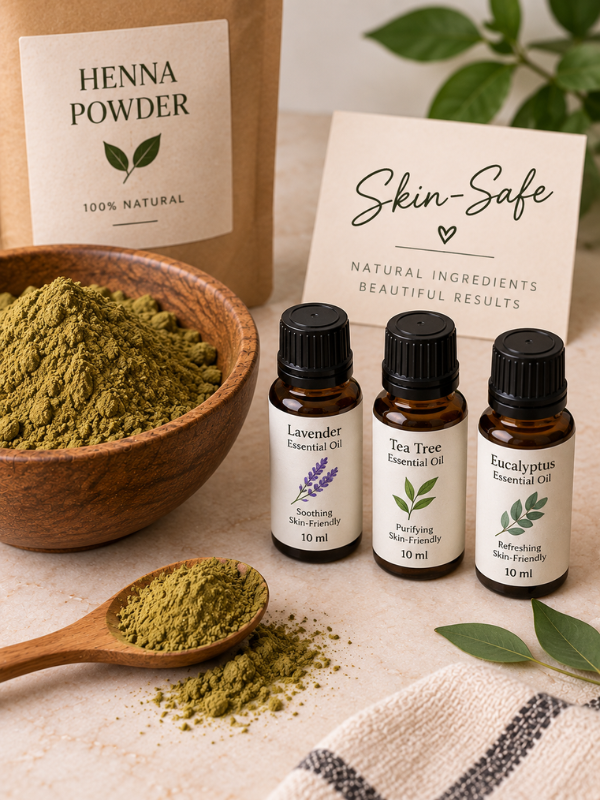
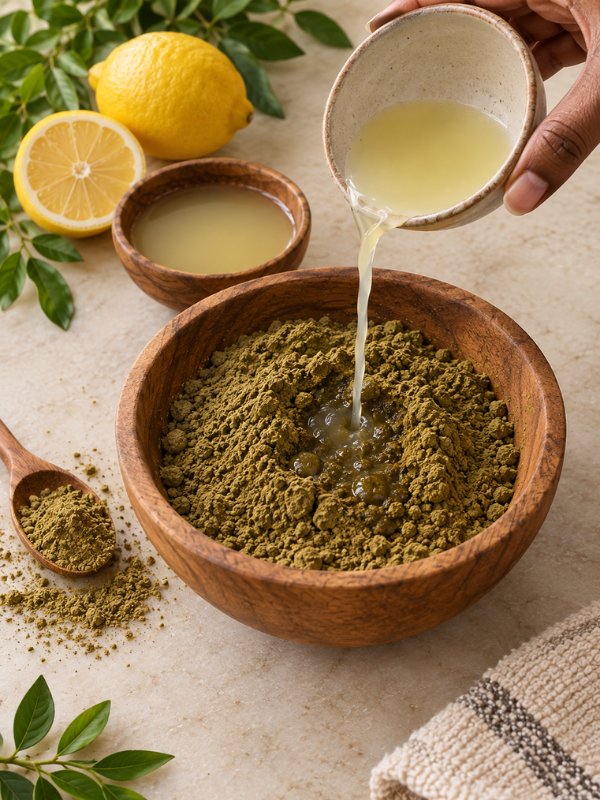
Natural henna comes from the leaves of the henna plant, also known as Lawsonia inermis. The leaves are dried and ground into a fine powder. The powder is then mixed with liquids and other suitable ingredients to create henna paste.
Natural henna has a warm, earthy color. When applied to the skin, it does not usually look black.
The fresh stain can start out looking orange. However, it usually becomes darker as it develops. After some time, it can turn into shades of orange, reddish-brown, brown, or deep brown.
This gradual color change is one of the easiest ways to recognize natural henna.
What Is Black Henna?
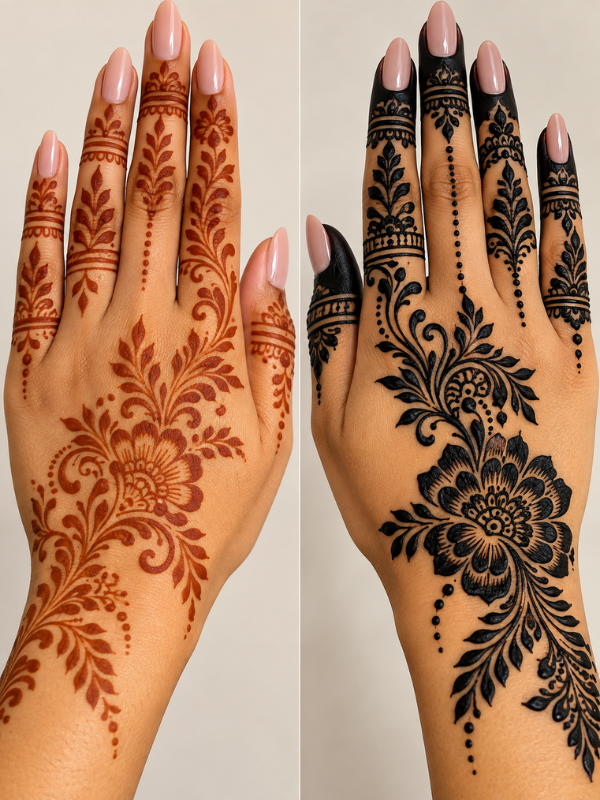
Black henna is a name commonly used for very dark henna-like products. However, this name can be confusing.
Natural henna does not normally produce a true black stain. Therefore, a product that creates an instant or very dark black stain may contain added coloring agents.
Some black henna products have been found to contain paraphenylenediamine (PPD). PPD is a chemical commonly used in hair dyes and other products. It can cause skin reactions when used incorrectly on the skin.
This is why you should not assume that something called “black henna” is simply natural henna in a darker form.
Natural Henna vs Black Henna — The Main Differences
The biggest difference between natural henna and black henna is the ingredients and the color they produce.
| Feature | Natural Henna | Black Henna |
|---|---|---|
| Source | Henna plant | May contain added chemicals |
| Typical color | Orange, red, or brown | Very dark brown or black |
| Stain development | Develops gradually | May appear very dark quickly |
| Ingredients | Properly prepared henna paste | Ingredients vary by product |
| Scent | Usually earthy or herbal | May have a stronger chemical smell |
| Skin concerns | Generally well tolerated when properly prepared | Some products may cause serious skin reactions |
| Final appearance | Warm and natural | Very dark or black |
Keep in mind that “black henna” is not one specific formula. Different products can contain different ingredients. Therefore, checking the ingredients is more useful than judging a product by its name alone.
How Natural Henna Stains the Skin
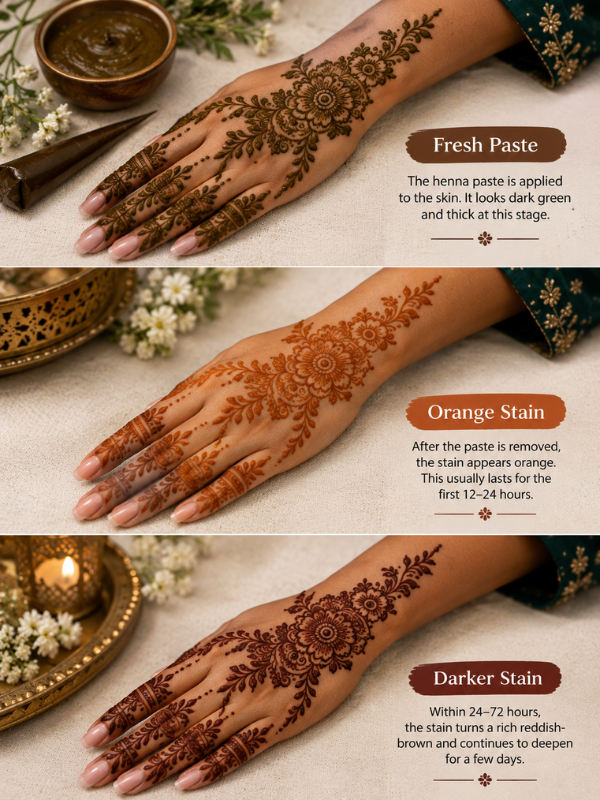
One thing I love about natural henna is that the stain changes over time.
When you first remove the dried henna paste, the design may look light orange. It does not always look impressive right away.
However, give it some time.
The stain usually becomes deeper as it develops. This process is called oxidation. The final color can depend on the quality of the henna, how long the paste stayed on the skin, the body area, and your aftercare.
Hands and feet often develop a deeper stain than some other parts of the body.
So, if your fresh henna looks orange, do not panic. It may become much darker later.
Why Is Natural Henna Usually Orange or Brown?
Natural henna contains a plant pigment called lawsone. This is the compound that gives henna its staining ability.
When the pigment binds with proteins in the skin, it creates the familiar henna stain.
That is why natural henna has its own warm color range. You can get beautiful deep brown or reddish-brown results, but natural henna should not be expected to give an instant ink-black stain.
This is also why a very dark black stain can be a reason to look more closely at the product you are using.
Why Does Black Henna Look So Dark?
The answer depends on the product.
Some products marketed as black henna contain ingredients that make the stain appear much darker and develop much faster than natural henna.
One ingredient that has raised safety concerns is PPD. It can make a henna-like product produce a dark stain quickly. However, PPD can also cause unwanted skin reactions.
Therefore, do not choose a henna product simply because it gives you the darkest color.
A beautiful stain is not worth putting your skin at risk.
Natural Henna vs Black Henna Safety
Safety is one of the biggest things to consider when looking at Natural Henna vs Black Henna.
Is Natural Henna Safe?
Properly prepared natural henna is generally considered suitable for use on the skin.
However, “natural” should not be treated as a magic safety label. A product can contain other ingredients, even when it is sold as henna.
Therefore, it is still important to know what you are applying to your skin.
Buy henna from a reliable source when possible. Also, check the ingredients of premixed products.
Is Black Henna Safe?
This is where you need to be more careful.
Some black henna products contain PPD. When PPD is applied directly to the skin in an unsuitable concentration, it can cause reactions such as itching, redness, burning, swelling, or blistering.
Some reactions can be severe. They can also leave the skin sensitive to PPD in the future.
That is why health authorities have warned consumers about temporary tattoos and black henna products that contain PPD.
If you are not sure what is inside a black henna product, it is better not to put it on your skin.
How to Tell if Henna Is Natural
It can be difficult to know exactly what is inside a product just by looking at it. Still, there are some things you can check.
First, look at the ingredient list.
A good henna product should clearly tell you what it contains. Be careful with products that have no ingredient information.
Next, look at the color it promises.
If a product promises an instant jet-black stain, that should make you pause. Natural henna normally develops through shades of orange, red, and brown.
You can also look at the seller. Choose a seller or brand that is open about its ingredients and product information.
Most importantly, do not assume that every dark henna cone is natural.
How Long Does Natural Henna Last?
Natural henna is temporary. It does not stay on the skin forever.
The exact length of time varies from person to person. It also depends on where the design is placed.
Henna on the hands and feet can often last longer because those areas can take a deeper stain. Other areas may fade faster.
Washing, exfoliating, sweating, and normal skin shedding can also make the design fade.
Eventually, the stain becomes lighter and disappears as the outer layer of skin naturally sheds.
Can Natural Henna Be Made Darker?
Yes, you can help your natural henna develop a deeper stain.
The key is good application and aftercare.
Keep the paste on for an appropriate amount of time. Once the paste has dried, follow the aftercare instructions that came with your henna.
Avoid washing the area immediately after removing the paste. Give the stain time to develop.
Also, remember that natural henna has its own color range.
You can encourage a rich, deep stain. However, you should not expect natural henna to suddenly become true black.
If someone tells you that you need to add unknown chemicals to make your natural henna black, I would be very careful.
Natural Henna vs Black Henna for Bridal Designs
Bridal henna is where this difference becomes especially important.
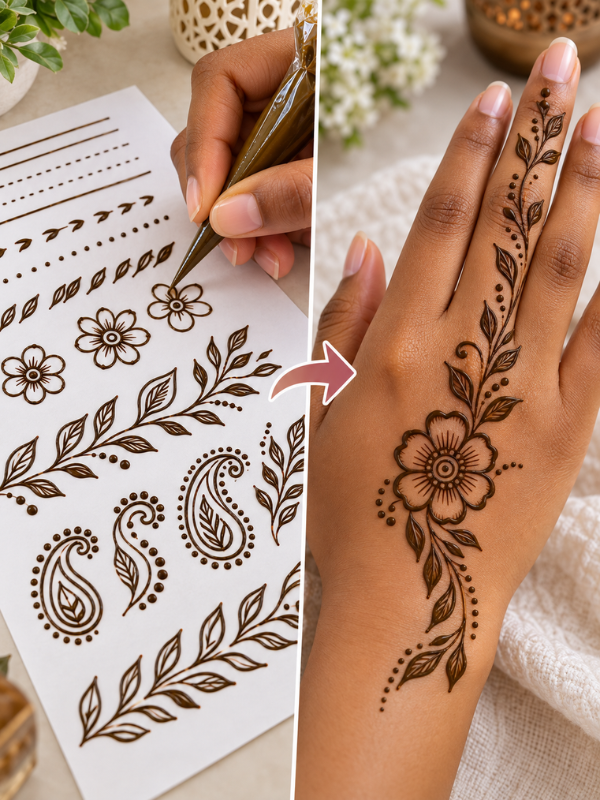
There are so many beautiful bridal henna styles. You can choose traditional Indian mehndi, Arabic henna, floral designs, mandalas, paisleys, peacocks, or detailed full-hand designs.
Natural henna can create a gorgeous warm stain that looks beautiful with bridal outfits.
It also works well for feet henna. A detailed design can make the feet look elegant without needing a permanent tattoo.
If you are a bride, do not wait until the last minute to try a new henna product.
If you have never used a particular product before, you may not know how your skin will react to it. It is better to know exactly what you are using before your wedding day.
What to Avoid When Buying Henna
When shopping for henna, take a few extra minutes to check the product.
Avoid products that:
- Do not clearly list their ingredients.
- Promise an instant black stain.
- Come in unlabeled cones.
- Have no information about the manufacturer or seller.
- Make very strong chemical claims.
- Contain ingredients you do not recognize and cannot verify.
- Are marketed as “black henna” without clear ingredient information.
A cheap henna cone may look tempting. However, your skin is not the place to take unnecessary chances.
What to Do If You Have a Reaction
If you develop burning, severe itching, swelling, blistering, or another unusual reaction after using henna, stop using the product.
Do not apply more of it to another area of your skin.
For a serious reaction, seek medical attention. A healthcare professional can assess your symptoms and recommend the right treatment.
Also, keep the product packaging if possible. The ingredient information may be useful when explaining what you used.
Frequently Asked Questions
Is natural henna better than black henna?
Natural henna and black henna are different products. Natural henna is made from the henna plant and normally creates an orange, red, or brown stain. Some products sold as black henna may contain added chemicals, including PPD.
Therefore, the most important thing is to know what ingredients are actually in the product.
Does natural henna turn black?
No. Natural henna normally develops into orange, reddish-brown, brown, or deep brown shades. It does not normally create a true black stain.
Why is my henna stain black?
If your henna creates a very dark or black stain, the product may contain added coloring ingredients. Check the ingredients carefully, especially if the product was sold as black henna.
Can black henna burn your skin?
Some black henna products can cause burning, itching, redness, swelling, or blistering. This can happen when the product contains ingredients such as PPD.
How long does natural henna last?
Natural henna is temporary. How long it lasts depends on the body area, your skin, how often you wash or exfoliate the area, and other factors.
Can I use black henna for a wedding?
Be careful with black henna products, especially when the ingredients are unknown. If you want bridal henna, choose a product with clear ingredients and know what you are applying to your skin.
How can I get dark natural henna?
Use good-quality natural henna and follow proper application and aftercare. Let the stain develop naturally. A rich brown stain is a normal result of natural henna.
Summary
The difference between Natural Henna vs Black Henna is more than just color.
Natural henna comes from the henna plant and normally creates a warm orange, red, or brown stain. Black henna products, on the other hand, can contain added ingredients that make the stain much darker.
That is why I would always look beyond the color.
Check the ingredients. Know what you are putting on your skin. And be especially careful with products that promise an instant black stain.
Henna should be a fun part of your beauty routine. Whether you are getting a small hand design or covering your hands and feet with beautiful bridal mehndi, you should be able to enjoy it without putting your skin at unnecessary risk.
This Post Showed You Natural Henna vs Black Henna: What Is the Difference?
You may also like:
How to Make Henna Last Longer and Keep Your Stain Dark
One Comment