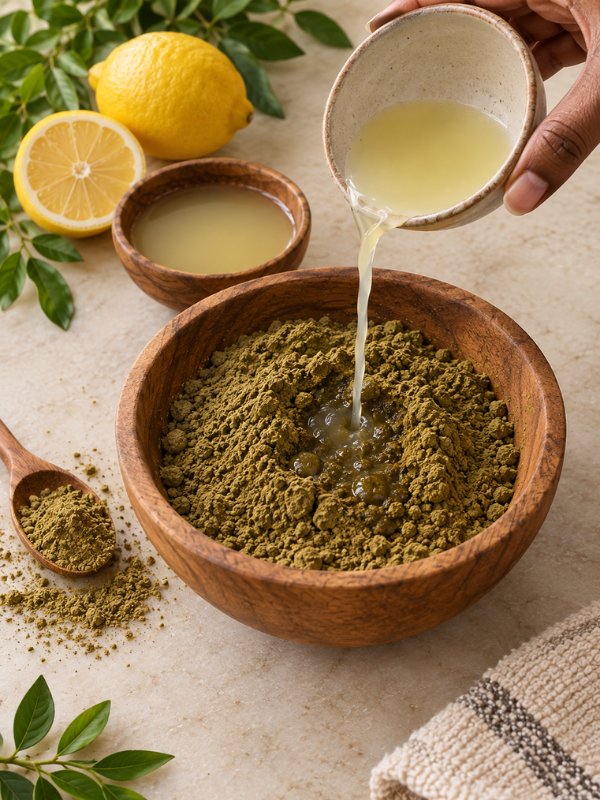
Learning how to store homemade henna paste properly can help you keep your paste fresh, smooth, and ready to use when you need it. Homemade henna paste can give beautiful stains when it is fresh. However, leaving it in a warm place or storing it without proper protection can affect its quality.
This is especially important when you make a large batch. You may not need to use everything at once. Instead of throwing the extra paste away, you can store it and use it later.
The good news is that storing henna paste is not difficult. You just need to choose the right storage method and protect the paste from heat and air.
In this guide, I will show you how to store homemade henna paste properly for short-term and long-term use. I will also cover refrigeration, freezing, henna cones, thawing, storage mistakes, and how to tell if your stored henna is still good.
Why You Should Learn How to Store Homemade Henna Paste Properly
Henna paste contains a natural dye called lawsone. This is what gives henna its familiar reddish-orange to deep reddish-brown stain on the skin.
Once henna powder is mixed with liquid, the dye release process begins. The longer the paste sits, the more this process continues.
Temperature can affect this process.
For example, keeping your paste in a hot room can speed things up. This may not be a problem if you plan to use the paste quickly. However, it can become a problem when you want to keep the paste for several days or weeks.
Air can also affect your paste.
When you leave henna uncovered, the top can dry out. You may notice a hard layer forming on the surface. The paste underneath may still be usable, but the dried layer can make application messy.
Proper storage helps protect the paste from unnecessary exposure.
It also helps you save leftover paste instead of wasting it.
This is especially useful if you make henna regularly. You can prepare enough for several applications and store the extra in small portions.
How to Store Homemade Henna Paste Properly
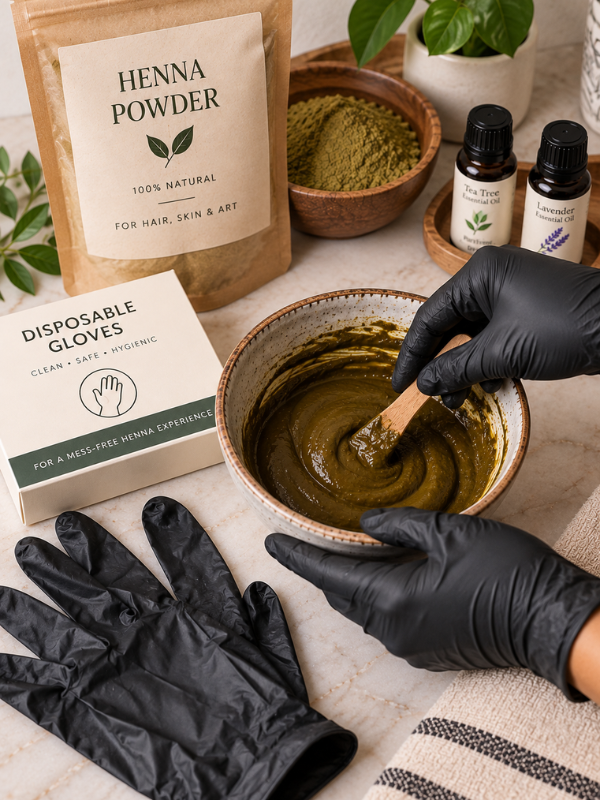
The best storage method depends on when you plan to use your henna.
If you are using it within a short period, refrigeration can be useful. If you want to keep it for much longer, freezing is a better option.
Start with a clean and dry storage container.
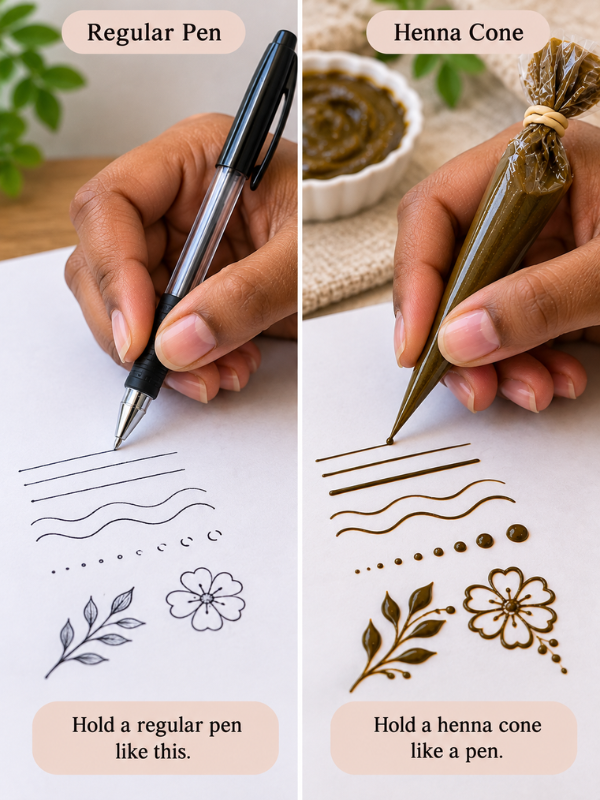
An airtight container works well for loose henna paste. You can also store the paste in individual henna cones.
If you are using a container, place the paste inside and close the lid tightly.
Try not to leave a lot of empty space in the container. Less air exposure is better.
If you are using a freezer bag, gently press out excess air before sealing it.
Do not forget to label the container.
Write down the date you made the paste. If you have more than one batch, you can also write a simple name or number on each one.
This may seem unnecessary at first. However, it becomes very helpful when you have several batches stored.
Another useful tip is to divide your paste into smaller portions.
For example, if you usually use two or three cones for one design, store enough paste for that amount in one portion.
That way, you do not have to thaw everything when you only need a little.
How to Store Homemade Henna Paste Properly in the Refrigerator
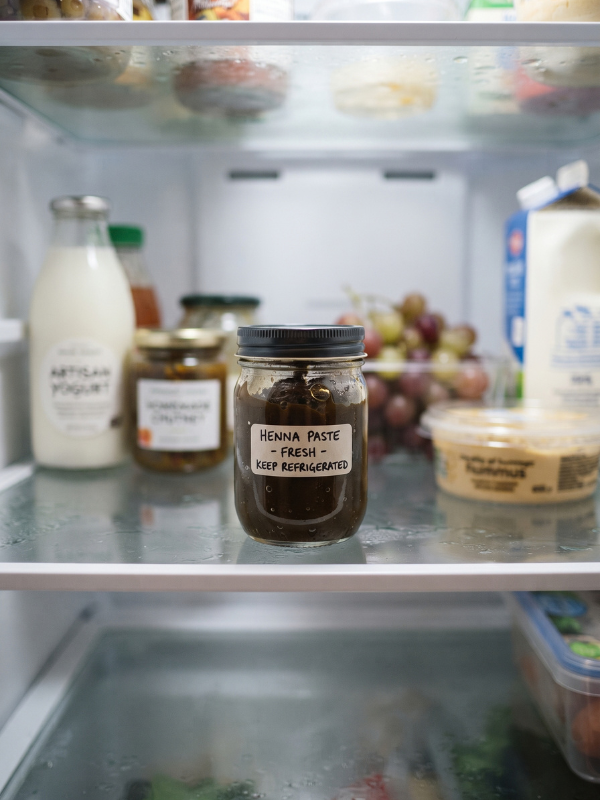
The refrigerator is a good option when you plan to use your henna paste within a few days.
The cold temperature slows down the dye release process. It can also help keep the paste fresh for longer than leaving it at room temperature.
To refrigerate your henna, place it inside a clean airtight container.
If you have already filled your henna cones, put the cones inside a sealed freezer bag or another airtight container.
This helps protect the cones from air.
It can also prevent the henna from picking up strong smells from other foods in your refrigerator.
And trust me, you do not want your beautiful henna paste smelling like onions or yesterday’s stew!
Keep the container in the refrigerator until you are ready to use it.
Try to avoid taking the same batch out repeatedly.
For example, do not take the entire container out every morning and return it to the refrigerator every evening.
Repeated temperature changes are not ideal.
Instead, take out only the amount you plan to use.
This is another reason why smaller portions are so convenient.
How Long Can Refrigerated Henna Paste Last?
There is no exact number of days that applies to every homemade henna paste.
The ingredients you used, the freshness of your henna powder, preparation method, and refrigerator temperature can all affect how long it lasts.
As a general guide, refrigerated henna paste is better used within several days.
The longer it sits, the more its staining strength can change.
Therefore, do not assume that your paste will give the same result as a freshly made batch.
If you are using stored paste for something important, test it before starting your final design.
This is particularly useful for bridal henna.
A small test can tell you whether the paste is still staining well.
How to Store Homemade Henna Paste Properly in the Freezer
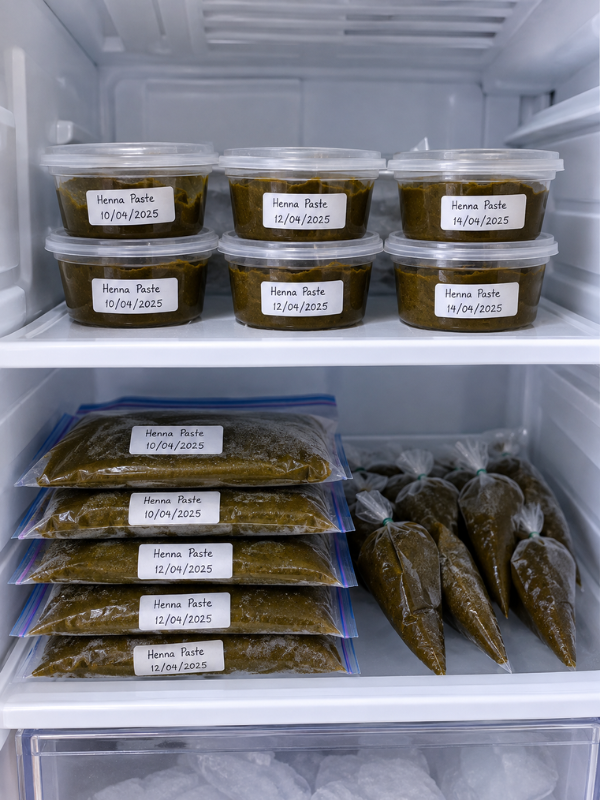
Freezing is one of the easiest ways to keep homemade henna paste for longer.
If you made a large batch, you do not have to use everything immediately.
You can divide the extra paste into smaller portions and freeze them.
There are several ways to do this.
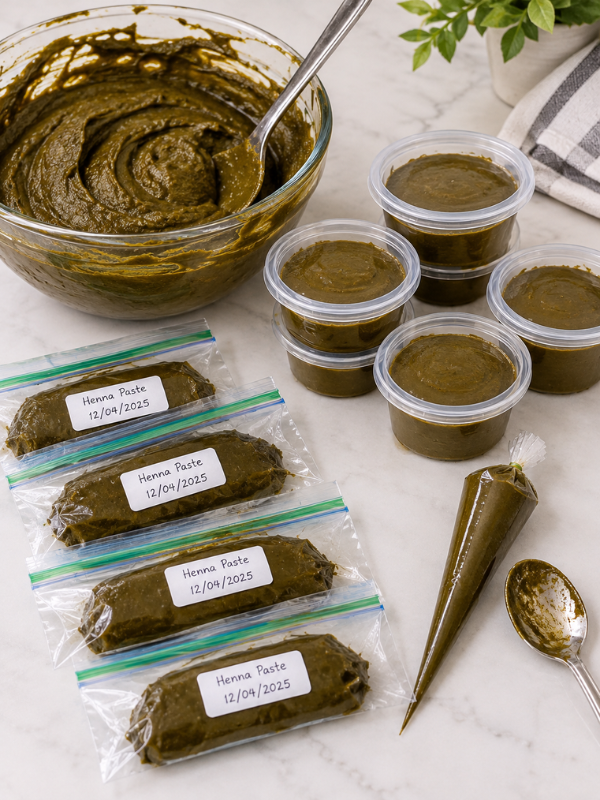
You can use small freezer-safe containers. You can also use freezer bags or fill the paste into henna cones before freezing.
Whichever method you choose, make sure the storage is sealed properly.
If you are using freezer bags, remove as much excess air as possible before closing them.
If you are using cones, make sure the ends are properly sealed.
Then label each portion with the date.
I recommend freezing henna in portions instead of freezing everything together.
Imagine making a large batch and freezing it as one big block. Later, you only need two cones.
You would have to thaw the entire batch.
That is unnecessary.
Small portions make everything easier.
You can simply take out the amount you need and leave the rest frozen.
How Long Does Frozen Henna Paste Last?
Properly stored henna paste can generally be kept in the freezer for several months.
However, storage time does not guarantee that the paste will have exactly the same staining strength as fresh paste.
The quality of the henna powder matters too.
Storage conditions also matter.
A paste that is well sealed and kept consistently frozen will usually hold up better than one that is repeatedly thawed and refrozen.
For this reason, I prefer smaller portions.
It gives you more control over how much paste you use at a time.
How to Thaw Homemade Henna Paste After Storage
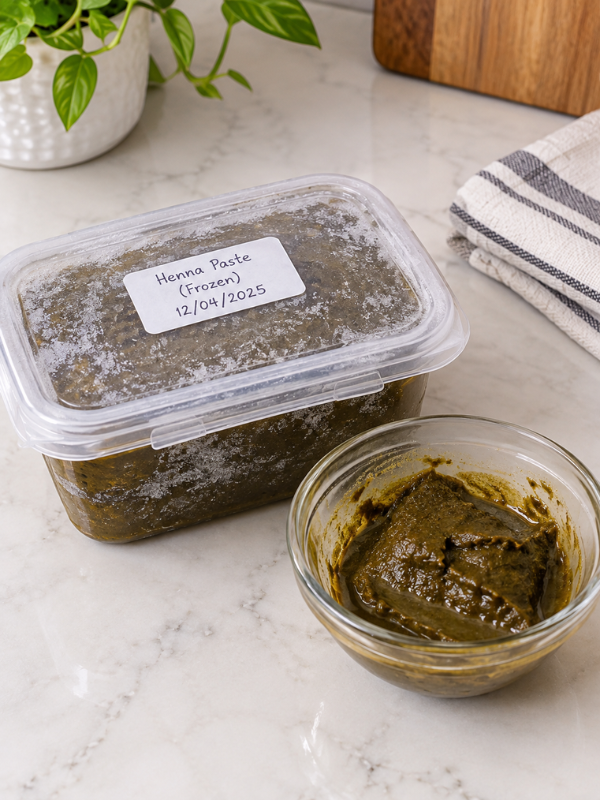
Knowing how to store homemade henna paste properly is only part of the process. You also need to thaw it correctly.
When you are ready to use frozen henna, take out only the amount you need.
If you have enough time, move the frozen paste from the freezer to the refrigerator first.
Allow it to thaw gradually.
After it has completely thawed, let it return to a comfortable working temperature.
The texture may look slightly different after freezing.
Do not worry immediately.
Some changes can happen when the paste is frozen and thawed.
If needed, gently mix the paste.
Avoid adding extra liquid right away.
First, allow the paste to fully thaw and check its consistency.
If you froze henna cones, let them thaw before squeezing them.
A frozen cone can become stiff. Trying to force it can cause the cone to split.
Also, avoid using a microwave to thaw henna.
Rapid heating is not necessary and can expose the paste to too much heat.
Gentle thawing is much simpler.
How to Store Homemade Henna Cones Properly
Henna cones need proper storage just like loose henna paste.
If you have already filled your cones, you can refrigerate them for short-term storage.
Place the cones inside a sealed bag or airtight container.
This helps prevent the paste from drying out.
For longer storage, you can freeze the cones.
Before freezing them, make sure they are sealed properly.
You can place several cones in one freezer bag. However, try to keep them flat so they do not become bent or crushed.
If you have different batches, label them.
For example, you could write the date and the type of henna on the bag.
When you are ready to use a frozen cone, allow it to thaw completely.
Do not try to squeeze it while it is still frozen.
Once the cone is soft again, check the tip.
If dried paste has blocked the opening, clear it carefully before applying the henna.
Can You Refreeze Henna Paste?
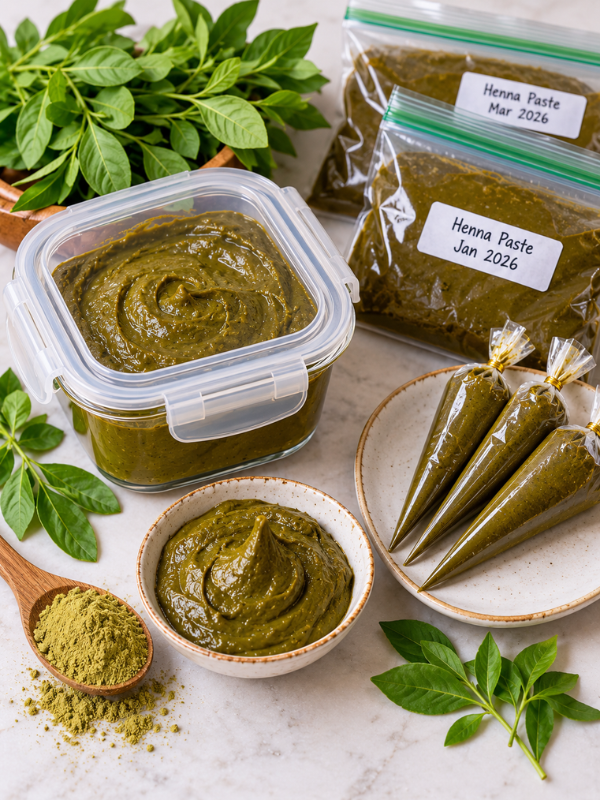
It is better to avoid repeatedly freezing and thawing the same henna paste.
Every time you thaw it, the temperature changes.
Doing this again and again can affect the quality of the paste.
The easiest solution is to freeze the paste in small portions from the beginning.
Think about how much you normally use.
If you usually need three cones, freeze enough paste for three cones.
If you do larger designs, use a larger portion.
This makes storage much easier.
It also reduces waste.
You only thaw what you need instead of exposing the entire batch to temperature changes.
How to Tell If Stored Henna Paste Has Gone Bad
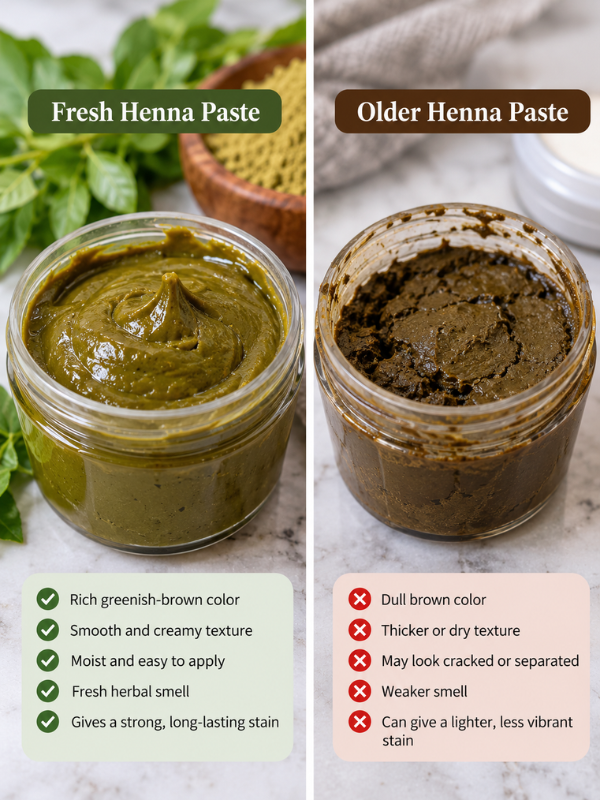
One of the most important parts of how to store homemade henna paste properly is knowing when the paste should no longer be used.
Always inspect your henna before applying it to your skin.
Start with the smell.
Fresh henna has an earthy smell. The exact smell can vary depending on the ingredients you use.
However, if the paste develops a very unpleasant or unusual smell, it is better to be cautious.
Next, look at the paste.
Check for mold or unusual growth.
If you see mold, do not use the paste.
You should also check the texture.
Some texture changes can happen after refrigeration or freezing. This does not automatically mean the paste is bad.
However, if the paste has several unusual changes at the same time, it is safer to discard it.
For example, if it has visible mold and an unpleasant smell, do not try to save it.
When in doubt, make a fresh batch.
Henna is applied directly to the skin, so questionable paste is not worth the risk.
Does Weak Henna Mean the Paste Has Gone Bad?
Not always.
This is something many people confuse.
A henna paste can become weaker without being spoiled.
Over time, the natural dye can lose some of its staining strength.
The paste may still look normal.
It may still smell normal.
However, the stain may not develop as deeply as it did when the paste was fresh.
This is why doing a test stain can be helpful.
Take a small amount of the stored paste and apply it to a small area of skin.
Allow it to dry and follow your usual henna aftercare.
Then check the resulting stain.
If it is much lighter than expected, your paste may have lost some of its strength.
For everyday designs, you may still decide to use it.
For a wedding or other special event, however, I would personally prefer a batch that I know is fresh and strong.
Common Mistakes When Storing Homemade Henna Paste
Even when you understand how to store homemade henna paste properly, it is easy to make small mistakes.
Here are some common ones to avoid.
Leaving Henna at Room Temperature for Too Long
This is probably one of the easiest mistakes.
You finish making your paste and leave the bowl on the counter.
Then you get busy.
Hours later, you remember it.
If you are not planning to use the paste soon, store it instead.
Leaving the Paste Uncovered
Always cover your henna when you are not using it.
An uncovered bowl allows air to reach the surface.
The top can dry out quickly.
Keeping Henna Near Heat
Avoid placing henna near a stove, oven, sunny window, or another warm area.
Heat can affect the paste.
Using a Loose Container
A container that does not close properly is not ideal.
Choose a container with a tight seal.
Freezing One Large Batch
One huge frozen batch may seem convenient.
However, it can become difficult to use later.
Small portions are much easier.
Forgetting the Storage Date
Always label your henna.
Write the date on the container, freezer bag, or cone package.
You will not have to guess later.
Repeatedly Thawing and Refreezing
Try to avoid this.
Freeze your henna in portions so you can take out only what you need.
How to Get the Best Results From Properly Stored Henna Paste
Good storage can help preserve your paste, but it is not the only thing that affects your final stain.
Your skin type can make a difference.
The location of the design can also affect the result.
The amount of time you leave the henna on your skin matters too.
Aftercare is important as well.
When using stored henna, make sure it has completely thawed.
The paste should be smooth enough to apply comfortably.
If you are unsure about the strength, test it first.
After applying henna, allow the paste to dry naturally.
Try not to wash the area immediately after removing the dried paste.
Many people gently scrape the dried henna away instead.
You can then follow your preferred henna aftercare routine.
Remember that stains develop over time.
Fresh henna may look bright at first and become darker during the following hours.
So, do not judge the final color immediately after removing the paste.
How to Store Homemade Henna Paste Properly for a Special Event
If you are preparing henna for a wedding, birthday, festival, or another special occasion, plan your storage ahead of time.
Do not wait until the day of the event.
If you are making a large batch, divide it into smaller portions.
Freeze the portions that you will not need immediately.
Then thaw only what you need as the event approaches.
It is also a good idea to test the stored paste before the big day.
Apply a small amount and check how the stain develops.
This gives you time to make a fresh batch if the stored paste is not performing as expected.
For bridal henna especially, I would rather do a little extra preparation than discover at the last minute that my paste is too weak.
A few minutes of planning can save you a lot of stress.
Should You Make Fresh Henna Instead?
Sometimes, fresh henna is the easiest option.
If you only need a small amount for one simple design, there may be no need to make a large batch.
You can prepare just enough for what you need.
However, if you regularly use henna, storing extra paste can be very convenient.
It can save time.
It can also reduce waste.
For people who create henna designs often, having properly stored paste ready to go can make preparation much easier.
The important thing is to know how the paste was stored.
If it was left in a warm room for too long or repeatedly thawed and frozen, you may be better off making a fresh batch.
Frequently Asked Questions
Can homemade henna paste be stored overnight?
Yes. If you plan to use it the next day, you can store it in an airtight container in the refrigerator.
Can I freeze homemade henna paste?
Yes. Freezing is a practical way to store extra homemade henna paste for longer periods.
How long does henna paste last in the refrigerator?
Refrigerated henna paste can generally last for several days. However, the exact storage time depends on the ingredients, preparation, and temperature.
How long does henna paste last in the freezer?
Properly stored henna paste can generally last for several months in the freezer. However, the staining strength may change over time.
Can I store henna paste in a plastic container?
Yes. A clean, airtight, freezer-safe plastic container can work well.
Can I freeze henna cones?
Yes. Filled henna cones can be frozen. Seal them properly and let them thaw completely before use.
Can I keep henna paste at room temperature?
Fresh henna can remain at room temperature while you are preparing or using it. However, if you are not using it soon, it is better to refrigerate or freeze it.
Why did my frozen henna paste change texture?
Freezing and thawing can cause some changes in texture. Let the paste thaw completely and gently mix it if needed.
Can I refreeze thawed henna paste?
It is better to avoid repeatedly freezing and thawing the same batch. Instead, freeze your paste in small portions.
How do I know if my henna paste is still good?
Check the smell, appearance, and texture. If you notice mold, unusual growth, or a strong unpleasant smell, do not use the paste.
Summary
Once you understand how to store homemade henna paste properly, keeping your extra paste becomes much easier.
For short-term storage, the refrigerator can be a convenient choice. For longer storage, freezing is usually more practical.
The main goal is to protect your henna from heat, air, and unnecessary temperature changes.
Use an airtight container. Divide large batches into smaller portions. Label everything with the date.
When you freeze your paste, thaw only what you need. Let it thaw completely before using it, and avoid repeatedly freezing and thawing the same batch.
Most importantly, always check your henna before applying it to your skin.
If you are preparing for a special occasion, test your stored paste beforehand. This will help you know whether the stain is still strong enough for the design you have planned.
A little preparation can go a long way. With the right storage method, your homemade henna paste can be ready whenever you need it.
This Post Showed You How to Store Homemade Henna Paste Properly
You may also like:
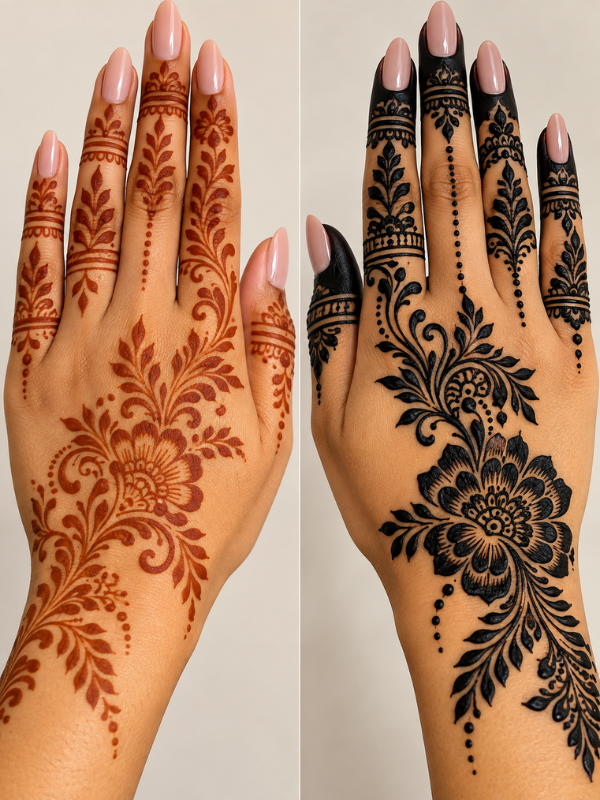
Natural Henna vs Black Henna: What Is the Difference?